Golden chicken breasts tucked into a bright tomato basil skillet sauce are the kind of dinner that disappears fast because every bite gets a little of everything: browned edges, juicy meat, sweet burst tomatoes, and basil that still tastes fresh at the table. The sauce is light but still clings to the chicken, which matters here. Too often this kind of pan dinner turns watery or flat. This version keeps the skillet moving in the right direction, from sear to quick tomato reduction to a glossy finish with Parmesan and balsamic.
The trick is using high enough heat to get color on the chicken before the tomatoes go in, then letting the tomatoes break down just enough to create their own sauce. White wine gives the pan a fast little lift, but chicken broth works if that’s what you have. Basil goes in at the end so it stays fragrant instead of turning dull and black in the heat.
Below, I’ve included the one timing detail that keeps the chicken juicy and the sauce from thinning out, plus a few smart swaps if you need to work with what’s in the kitchen.
The tomatoes broke down into the sweetest little sauce and the chicken stayed juicy all the way through. I loved that the basil stayed bright at the end instead of disappearing into the pan.
Save these tomato basil chicken breasts for a fast skillet dinner with juicy seared chicken, burst tomatoes, and a bright basil finish.
The Part That Keeps the Chicken Juicy While the Tomatoes Turn Saucy
The biggest mistake in skillet chicken dinners is rushing the sauce before the chicken has enough color. If the pan is crowded or the heat is too low, the chicken steams and the tomatoes just sit there, pale and wet. You want a real sear first: golden on both sides, with the meat released from the pan before you turn it. That crust gives the final dish more depth, and it also keeps the chicken from tasting like it was just poached in tomato juice.
Once the tomatoes go in, they need a few minutes to burst and collapse. Don’t stir them constantly. Let them hit the hot pan, soften, and give up their juices. That’s what turns a pile of halved tomatoes into a pan sauce that coats the chicken instead of pooling underneath it.
What Each Ingredient Is Actually Doing in This Skillet
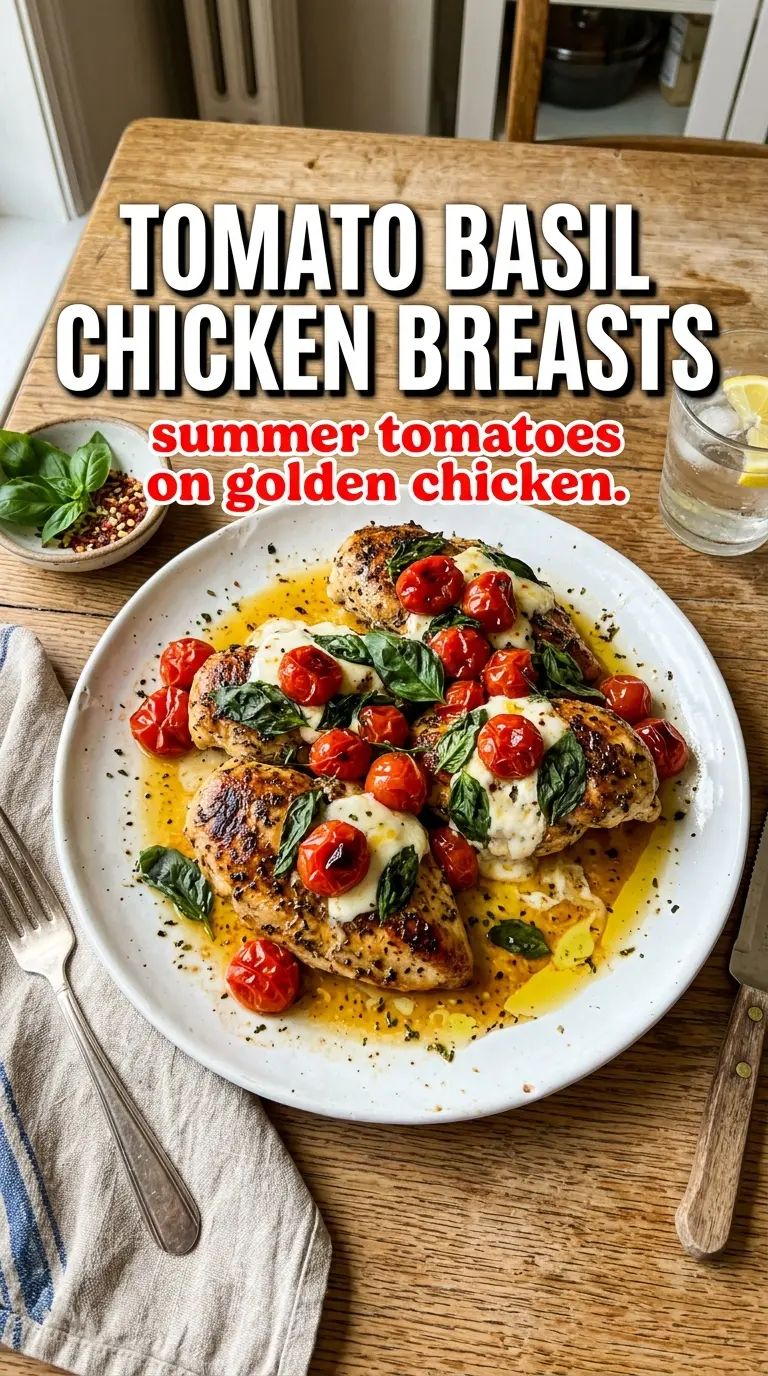
- Chicken breasts — Boneless, skinless breasts give you a fast-cooking main that plays well with the light sauce. If yours are uneven, pound them to a more even thickness so the thinner end doesn’t dry out before the center is done.
- Cherry tomatoes — These are the backbone of the sauce. They soften and burst in a way larger tomatoes usually don’t in a quick skillet recipe, so they’re worth using fresh here.
- Dry white wine or chicken broth — Wine adds a sharper, more layered finish, while broth gives you a gentler sauce. Broth works fine, but if you use wine, let it bubble for a minute so the raw edge cooks off.
- Fresh basil — Basil needs to go in at the end. If you cook it too long, it loses its perfume and turns dark, which flattens the whole dish.
- Balsamic vinegar and Parmesan — The balsamic sharpens the tomatoes and keeps the sauce from tasting one-note, while Parmesan adds salt and body. Use a good shave if you can; it melts softly without disappearing.
- Red pepper flakes — This doesn’t make the dish hot. It just wakes up the tomatoes and gives the sauce a little edge.
Building the Sauce in the Same Pan Without Losing the Sear
Searing the Chicken
Season the chicken generously before it hits the pan, then cook it in hot olive oil until the surface is deeply golden and the meat releases without fighting you. That usually takes 5 to 6 minutes per side, depending on thickness. If the chicken sticks, it needs another minute; if it’s pale, the pan wasn’t hot enough. Pull it once it reaches 165°F, then move it to a plate so it doesn’t overcook while the sauce comes together.
Turning the Tomatoes into Sauce
Add the garlic to the same skillet and stir only until fragrant, about 30 seconds. Garlic burns fast in a hot pan, so don’t walk away. Add the cherry tomatoes and let them sit long enough to blister and burst, then press a few with the back of a spoon to help the juices flow. You’re looking for a pan that goes from glossy and crowded to saucy and a little jammy.
Finishing with Basil and Parmesan
Pour in the wine and let it bubble for about a minute so the flavor concentrates and the pan lifts. Stir in the seasonings and balsamic, then return the chicken and spoon the sauce over the top. Add the basil at the very end, along with the shaved Parmesan and a final drizzle of olive oil. If the sauce looks thin, give it another minute before serving; once it cools slightly, it thickens just enough to cling.
How to Adapt This for Different Kitchens and Different Nights
Make It Dairy-Free
Skip the Parmesan and finish with a little extra olive oil and an extra pinch of salt. You’ll lose the savory, salty finish that cheese brings, but the tomatoes and basil stay bright and the dish still feels complete.
Use Chicken Thighs Instead
Boneless thighs work well if you want a richer, more forgiving cut. They need a few extra minutes to cook through, and they’ll release a little more fat into the pan, which makes the sauce taste deeper and a bit silkier.
No Wine in the House
Use chicken broth and add a tiny extra splash of balsamic at the end. The sauce will be softer and less sharp, but it still reduces nicely and keeps the skillet from tasting flat.
Storage and Reheating
- Refrigerator: Store leftovers in an airtight container for up to 3 days. The basil will darken a bit, but the flavor stays good.
- Freezer: The chicken and tomato sauce freeze well for up to 2 months, though the tomatoes soften more after thawing. Freeze in a flat container for faster cooling and easier reheating.
- Reheating: Warm gently in a covered skillet over low heat with a splash of broth or water. High heat dries out the chicken and tightens the sauce, which makes it taste dull instead of fresh.
Answers to the Questions Worth Asking
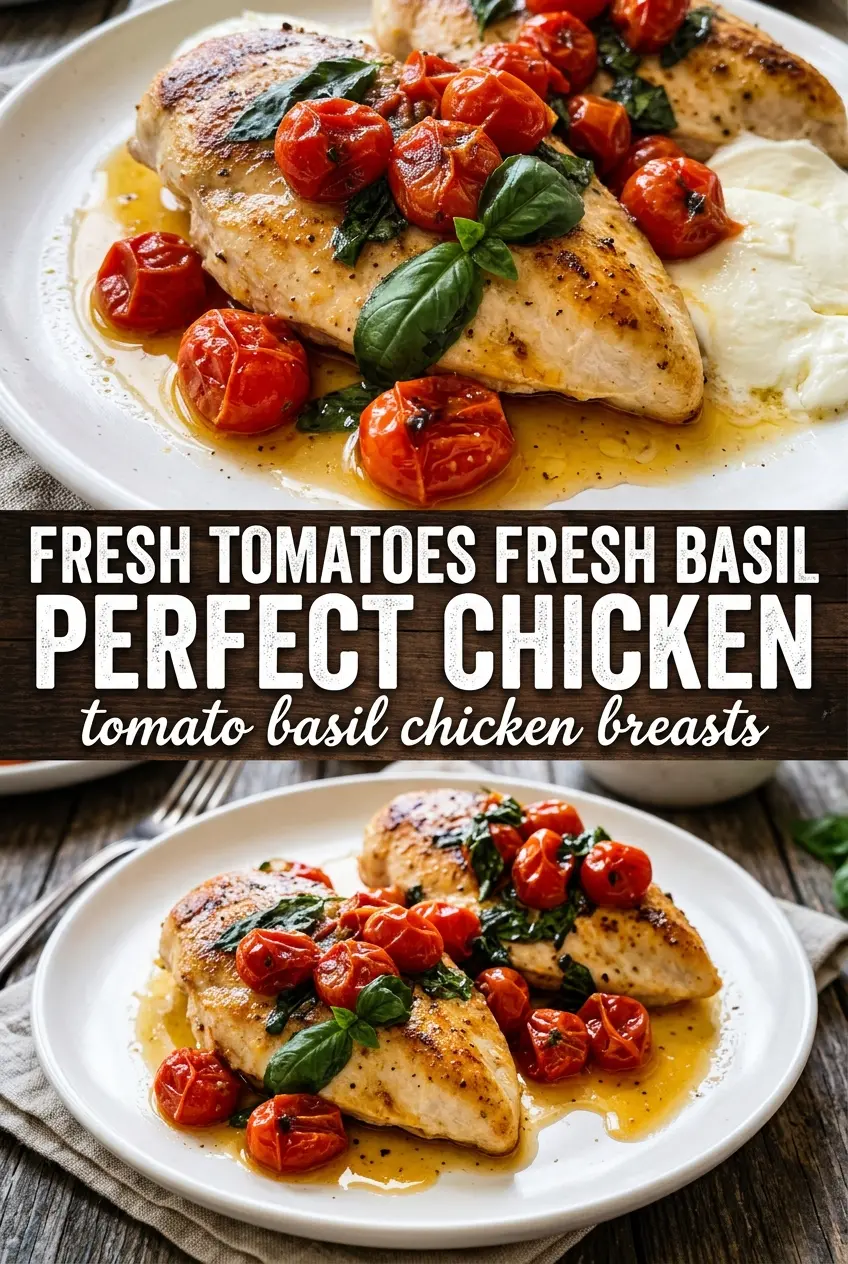
Tomato Basil Chicken Breasts
Ingredients
Equipment
Method
- Season the boneless skinless chicken breasts with salt, pepper, garlic powder, and Italian seasoning to taste. Heat olive oil in a large cast iron skillet over medium-high heat and sear the chicken for 5-6 minutes per side until golden, reaching 165°F internal temperature, then remove.
- In the same skillet, cook the minced garlic for 30 seconds, stirring constantly so it doesn’t brown. Add the halved cherry tomatoes and cook for 3-4 minutes until they burst and release their juices.
- Pour in the dry white wine or chicken broth and let it bubble for 1 minute, scraping up any browned bits. Stir in dried Italian seasoning, red pepper flakes, and balsamic vinegar.
- Return the chicken to the pan and spoon the tomato sauce over each breast, then simmer for 2 minutes. Scatter the fresh basil over the top, finish with shaved Parmesan and a drizzle of olive oil, and serve.