Silky, savory, and packed with the kind of tomato depth that clings to every ridge of rigatoni, this sun-dried tomato vegan pasta earns its place in the weeknight rotation fast. The sauce turns glossy and rich without any dairy, and the spinach folds in just at the end so it stays tender instead of turning muddy. Every bite gets that punch of garlic, tomato paste, and sun-dried tomatoes, balanced by basil on top and a little nutritional yeast for a parmesan-like finish.
The trick here is building the sauce in layers. Sun-dried tomato oil carries the garlic and chopped tomatoes, tomato paste cooks long enough to lose its raw edge, and coconut cream gives the sauce body without needing flour or cashews. Pasta water does the last bit of work, loosening everything into a sauce that coats instead of sitting heavy at the bottom of the bowl. If you’ve ever had vegan pasta turn bland or greasy, this version fixes both problems.
Keep reading for the exact moment to add the spinach, the reason the sauce needs a short simmer, and a few swaps that still keep the final bowl creamy and satisfying.
The sauce coated the pasta beautifully and didn’t feel heavy at all. I loved how the tomato paste cooked down first — the flavor was deeper than most vegan pasta recipes I’ve tried.
Love this creamy sun-dried tomato vegan pasta? Save it to Pinterest for a fast dinner with a rich dairy-free sauce and plenty of spinach.
The Reason This Sauce Stays Creamy Without Dairy
Most vegan cream sauces break down for one of two reasons: the base is too thin, or the heat is too aggressive once the cream goes in. This sauce avoids both. Coconut cream has enough fat to stay stable, and the tomato paste gets cooked in the pan first so it doesn’t taste sharp or raw under the richness.
The other piece that matters is the pasta water. It contains starch, which helps the sauce emulsify and cling to the pasta instead of sliding off. Add it a splash at a time after the coconut cream has simmered; if you pour in too much at once, the sauce turns loose before it has a chance to tighten back up.
What Each Ingredient Is Actually Doing In This Dish
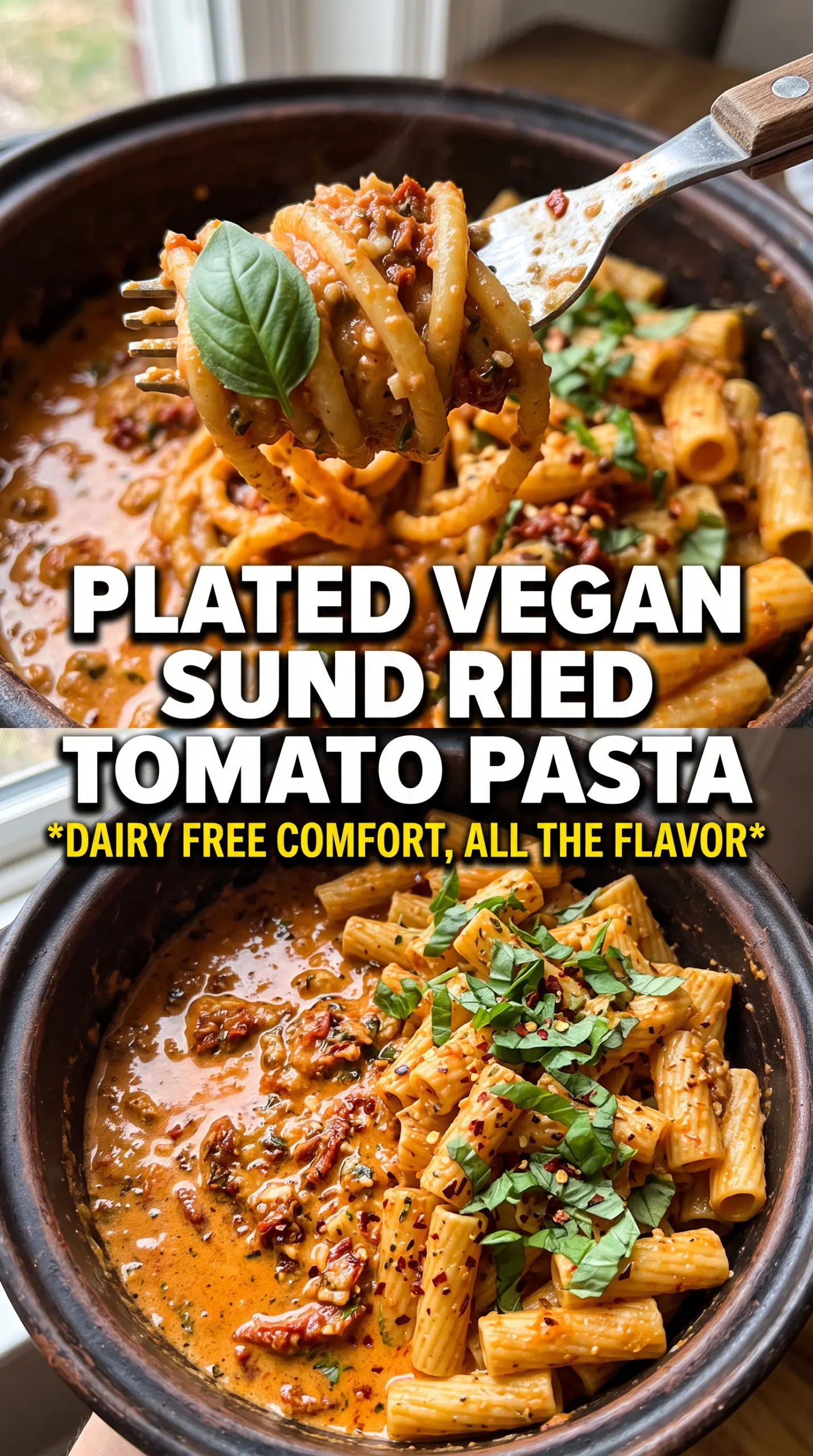
- Sun-dried tomatoes in oil — These bring concentrated tomato flavor and a little chew. Oil-packed tomatoes work best here because the oil becomes part of the sauce, carrying flavor into the garlic instead of leaving the pan dry.
- Coconut cream — This is what makes the sauce lush and spoonable. Use full-fat coconut cream, not light coconut milk, or the sauce will taste thin and won’t coat the pasta properly.
- Tomato paste — A small amount gives the sauce backbone and color. Cooking it for a full minute deepens the flavor and removes the metallic edge raw paste can have.
- Nutritional yeast — This adds the savory, slightly cheesy note that rounds out the sauce. If you skip it, the dish still works, but it tastes flatter and less complete.
- Pasta water — The starch in it helps bring the sauce together. Save a full cup, then use only what you need so the sauce stays creamy instead of watery.
- Rigatoni or penne — Short pasta with ridges traps the sauce best. Long noodles work in a pinch, but you lose some of that thick, clingy bite that makes this dish satisfying.
Building the Sauce So It Clings Instead of Splitting
Start With the Sun-Dried Tomato Oil
Heat the oil from the jar first, then add the garlic and chopped sun-dried tomatoes. That oil already carries flavor, so it gives the garlic a head start without burning it. Keep the heat at medium and stir often; if the garlic browns hard, it turns bitter and the whole sauce picks up that edge.
Cook Out the Tomato Paste
Once the paste hits the pan, let it cook for about a minute before you add the cream. It should darken slightly and smell sweet instead of sharp. That short cook is what keeps the sauce from tasting canned or acidic, and it helps the final color stay deep red-orange instead of pale.
Finish With Cream and Pasta Water
Pour in the coconut cream with the seasoning and let it simmer gently for about five minutes. You want small bubbles at the edge, not a rolling boil. Add the drained pasta and splash in reserved water only as needed until the sauce loosens and coats every piece; if it looks soupy, keep tossing over low heat and it will tighten as the starch activates.
Wilt the Spinach at the End
Add the spinach last and toss just until the leaves collapse. It only needs a minute or two. If you cook it too early, it turns dull and loses that fresh green contrast against the sauce, which is part of what keeps the bowl tasting bright.
How to Adapt This for Different Pantry Situations
Make It Gluten-Free
Swap in your favorite gluten-free rigatoni or penne. The sauce stays the same, but you’ll want to cook the pasta just until it’s tender with a little bite left, since gluten-free pasta can go soft fast once it hits the sauce.
Use Cashew Cream Instead of Coconut
If you don’t want any coconut flavor, use thick cashew cream in the same amount. The sauce will taste a little more neutral and slightly less rich, but it still finishes silky. Blend the cashews until completely smooth or the texture will feel grainy.
Make It Spicier
Double the red pepper flakes or add a pinch of smoked paprika for a warmer finish. That extra heat plays well with the sweet tomato paste, but don’t add it all at the end or it can sit on top of the sauce instead of blending in.
Storage and Reheating
- Refrigerator: Store in an airtight container for up to 4 days. The sauce thickens as it chills, so the pasta may look a little firm at first.
- Freezer: Freezes well for up to 2 months, though the spinach will soften more after thawing. Freeze in portions for the easiest reheating.
- Reheating: Warm gently on the stovetop with a splash of water or unsweetened plant milk. Low heat matters here; high heat can make the coconut cream separate and the pasta dry out before the sauce loosens.
Questions I Get Asked About This Recipe
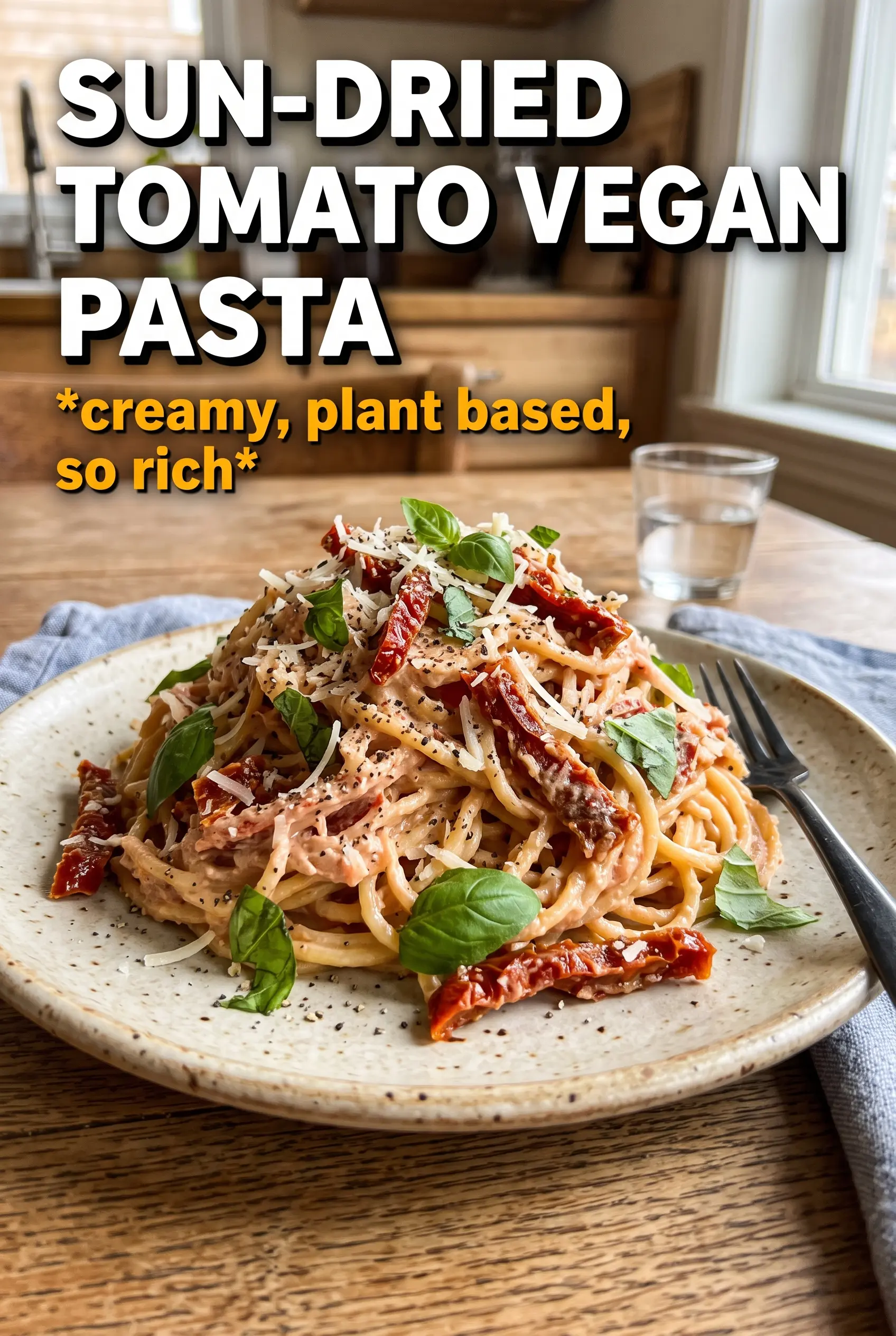
Sun-Dried Tomato Vegan Pasta
Ingredients
Equipment
Method
- Bring a large pot of salted water to a boil and cook the rigatoni or penne until al dente. Reserve 1 cup of pasta water, then drain.
- In a Dutch oven over medium heat, warm the sun-dried tomato oil until it shimmers. Sauté the garlic and chopped sun-dried tomatoes for 2 minutes, stirring until fragrant.
- Add the tomato paste and cook for 1 minute, stirring to deepen the color. Keep it moving to avoid scorching.
- Stir in the coconut cream, Italian seasoning, red pepper flakes, and nutritional yeast. Simmer for 5 minutes, stirring occasionally, until the sauce looks creamy.
- Add the drained pasta to the sauce and toss to coat, adding reserved pasta water as needed for a silky texture. Use more water if it looks too thick.
- Add the baby spinach and toss until wilted, about 1 minute. Stir through so the spinach is evenly distributed.
- Season with salt and pepper to taste, then top with fresh basil. Finish with extra nutritional yeast if desired.