Shakshuka earns its place on the table because the sauce turns jammy and concentrated while the eggs stay silky in the center. You get sweet onion, soft peppers, warm spices, and bright tomato all in one pan, then a yolk that runs into the sauce when you break in with bread. It’s the kind of breakfast that feels modest while you’re cooking it and special the moment it hits the table.
The trick is giving the tomato base enough time to lose its raw edge before the eggs go in. If the sauce is still loose, the whites take too long to set and the yolks overcook while you wait. A wide skillet helps the liquid cook off faster, and using both crushed and diced tomatoes gives the sauce body without turning it smooth or soupy.
Below, I’ve included the exact cues I look for in the pan, plus a few smart swaps for different diets and a handful of questions that come up every time someone makes shakshuka for the first time.
The sauce thickened up beautifully before I added the eggs, and the whites set right on schedule while the yolks stayed perfectly runny. We ended up scooping every last bit with pita.
Save this shakshuka for the mornings when you want a bubbling tomato pan with runny eggs and bread meant for scooping.
Why the Tomato Base Has to Thicken Before the Eggs Go In
Shakshuka falls flat when the sauce is too thin. The eggs need a stable bed so the whites set where you crack them and the yolks stay centered instead of drifting into a loose, watery pan. Letting the tomatoes simmer until they look glossy and a little reduced gives you that structure.
The other mistake is rushing the spices. Cumin, paprika, chili powder, and cayenne bloom in the oil and vegetables, which wakes them up and keeps the dish from tasting raw or dusty. If you add them after the tomatoes, they taste flatter and the sauce never gets that deep, layered warmth.
- Crushed tomatoes — These build the body of the sauce. They’re the reason the pan turns spoonable instead of brothy.
- Diced tomatoes — These keep the sauce from becoming completely smooth. You get little pockets of texture around the eggs.
- Smoked paprika — This is one place where quality matters. It brings depth and a faint smoky edge that makes the dish taste finished.
- Feta — Add it at the end so it stays tangy and crumbly. If you stir it in early, it softens too much and disappears into the sauce.
What Each Ingredient Is Actually Doing in the Skillet

Use a sweet onion and a red bell pepper here because they soften into the sauce and bring natural sweetness that balances the tomatoes. Garlic only needs a short cook; once it turns fragrant, it’s ready for the spices. If it browns, it turns bitter fast, and that bitterness hangs around in the finished dish.
The eggs are the point, so use the freshest ones you have. Fresh eggs hold their shape better in the wells, which helps the whites cook neatly instead of feathering out across the pan. If you need a dairy-free version, leave off the feta and finish with chopped herbs and a drizzle of olive oil. The dish still feels complete.
The 15 Minutes That Decide Whether the Eggs Stay Tender
Softening the Vegetables
Cook the onion and bell pepper until they’re softened and the onion looks translucent with a few golden edges. You’re not trying to brown them deeply; you’re building a sweet, soft base that melts into the tomatoes. If the pan looks dry before the vegetables have softened, lower the heat and add a small splash more oil.
Waking Up the Spices
Add the garlic first, then the cumin, paprika, chili powder, and cayenne for just long enough to smell them bloom. That 30-second window is enough. Any longer and the garlic can burn, which gives the whole skillet a harsh edge. The spices should smell warm and vivid, not dry.
Reducing the Sauce
Pour in the tomatoes, season, and simmer until the sauce thickens and the bubbles look slow and lazy instead of sharp and watery. Stir now and then so the bottom doesn’t catch, but don’t keep it moving constantly. You want the sauce to lose excess liquid so the eggs sit on top instead of sinking into soup.
Setting the Eggs
Make six wells with the back of a spoon, then crack each egg into its own pocket. Cover the pan and keep the heat on medium-low so the tops of the whites set without overcooking the yolks. If the lid is trapping too much moisture and the tops look watery, uncover for the last minute or two. Pull the pan the moment the whites are opaque and the yolks still wobble.
How to Adapt Shakshuka Without Losing the Pan Sauce
Dairy-Free and Still Finished
Skip the feta and finish with chopped parsley, black pepper, and a little extra olive oil. You lose the salty tang, but the tomato sauce stays front and center and the dish still feels bright and complete.
Make It More Hearty with Chickpeas
Stir in a drained can of chickpeas after the tomatoes simmer. They soak up the sauce and turn the dish into a fuller meal, though the pan will need a few extra minutes to thicken back up around them.
Lower the Heat for a Milder Version
Cut the cayenne or leave it out entirely if you want more tomato and less heat. The cumin and smoked paprika still give the sauce plenty of backbone, so the dish won’t taste flat.
Storage and Reheating
- Refrigerator: Store leftovers for up to 3 days. The eggs will firm up, and the sauce may thicken more as it sits.
- Freezer: The tomato base freezes well, but the eggs don’t. Freeze the sauce alone, then add fresh eggs when you reheat it.
- Reheating: Warm gently in a covered skillet over low heat. High heat will overcook the eggs fast and can make the sauce separate around the edges.
Answers to the Questions Worth Asking
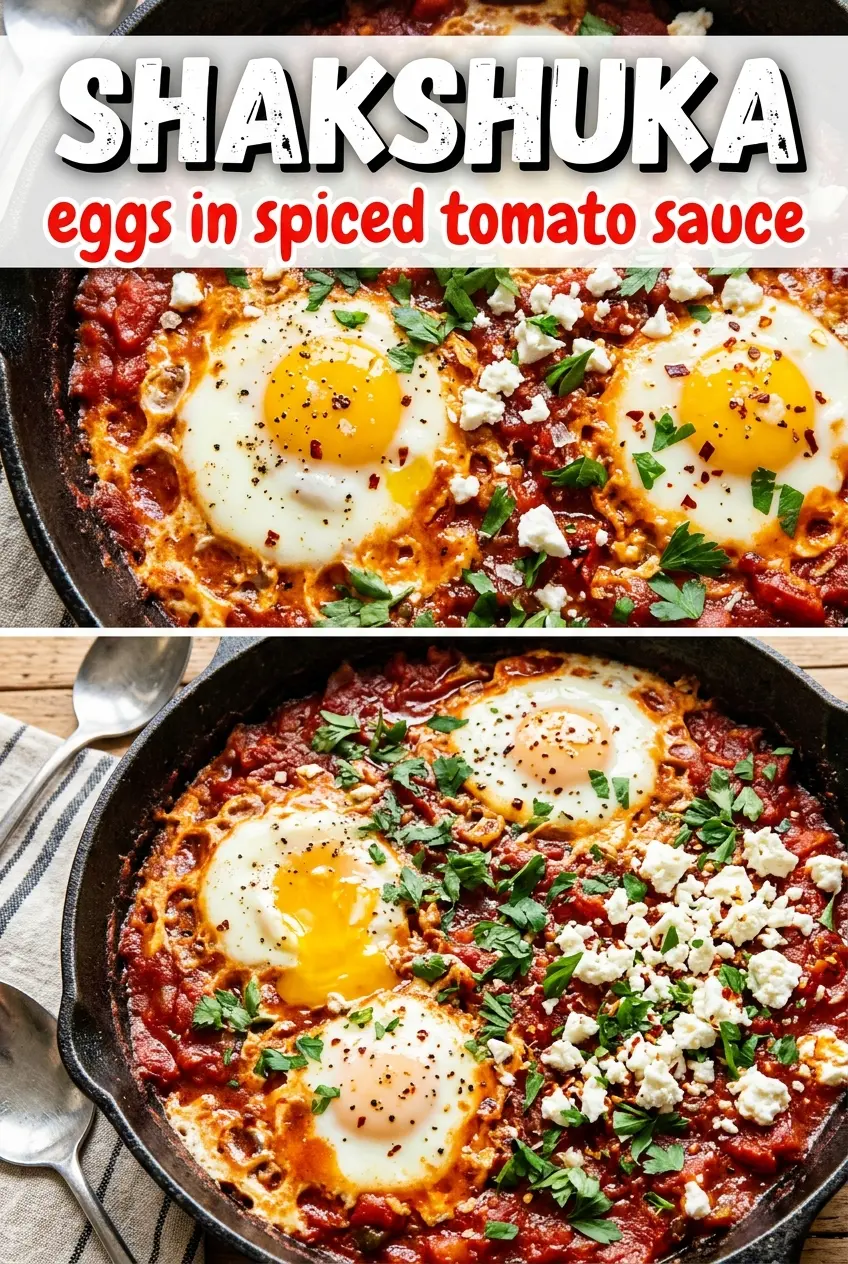
Shakshuka
Ingredients
Equipment
Method
- Heat olive oil in a large oven-safe skillet over medium heat, then add onion and bell pepper and cook for 6 minutes until soft, stirring so the vegetables soften evenly.
- Add garlic and cook for 1 minute, then add cumin, smoked paprika, chili powder, and cayenne and toast for 30 seconds until fragrant.
- Add crushed tomatoes and diced tomatoes, season with salt and black pepper, and simmer for 10 minutes until the sauce thickens and looks vivid red and bubbling.
- Make 6 wells in the sauce and crack an egg into each well, keeping the yolks intact so they sit in the tomato base.
- Cover and cook over medium-low heat for 8–10 minutes until the whites are set but the yolks are still runny, watching for gentle bubbling at the edges.
- Top with crumbled feta and fresh parsley, letting the feta soften slightly from the hot sauce.
- Serve directly from the pan with crusty bread or pita for dipping through the red sauce and eggs.