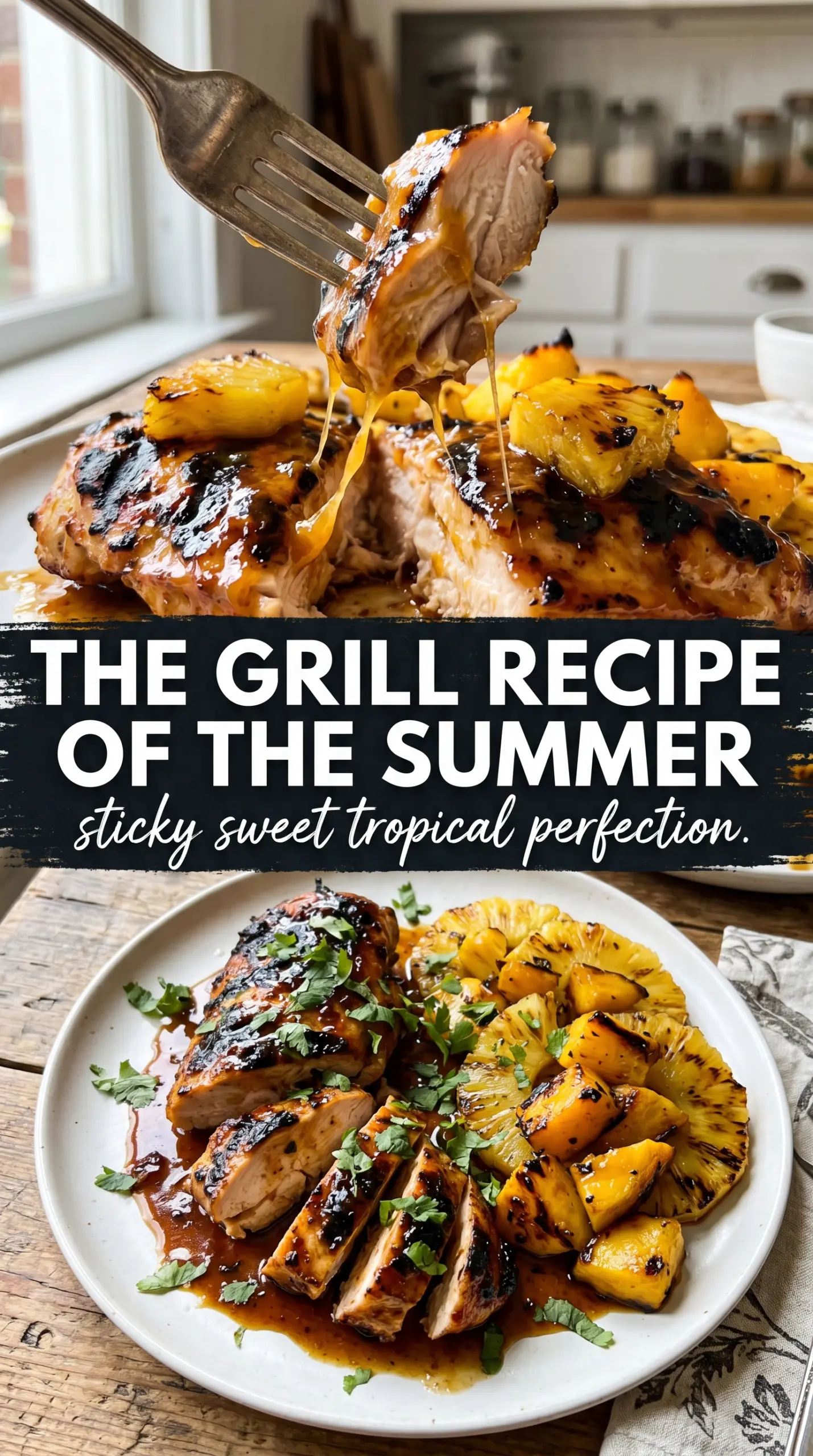
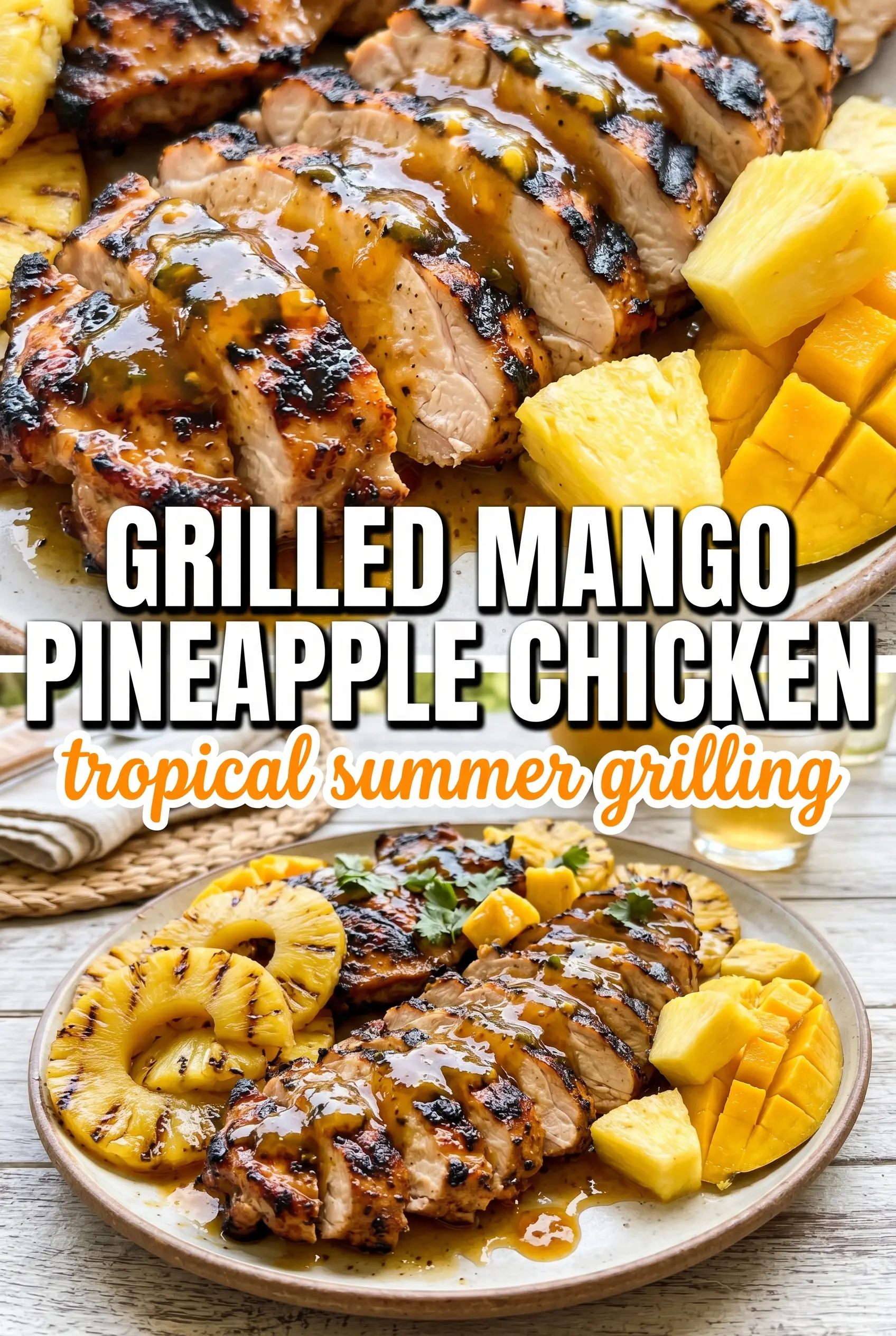
Golden grill marks and a sticky mango pineapple glaze give this chicken the kind of finish that makes people linger at the table. The fruit brings sweetness, but the soy sauce, lime, and ginger keep it from drifting into candy territory, so every bite lands bright, savory, and clean. Grilled pineapple rings on the side push the tropical flavor even further and give the plate a caramelized edge that works with the chicken instead of overpowering it.
What makes this version hold up is the split marinade-and-glaze method. Half of the mixture seasons the chicken from the inside while the reserved half gets cooked down into a glossy sauce that actually clings to the meat. If you brush raw marinade onto chicken at the end, you get a thin, watery coating. Reducing it first gives you a glaze with body, and the cornstarch slurry finishes that job without making it gummy.
Below, I’ve laid out the small details that matter: how to keep the glaze from burning on the grill, when to start brushing, and what to do if your mango is less than perfect. The technique is simple, but the order matters.
The glaze thickened up beautifully and stuck to the chicken instead of sliding off. I cooked the pineapple rings right on the grate, and that little smoky sweetness made the whole plate taste restaurant-level.
Like this grilled mango pineapple chicken? Save it to Pinterest for the nights when you want sticky tropical glaze, smoky grill marks, and dinner that looks as good as it tastes.
The Trick to Keeping Fruit Glaze on the Grill Instead of in the Pan
Most fruit-based chicken marinades fail for one of two reasons: they’re too thin to cling, or they’re brushed on raw and burn before the chicken cooks through. This recipe avoids both problems by separating the marinade from the glaze and cooking the glaze before it ever touches the meat. That gives you a sticky finish with enough body to coat the chicken in visible layers instead of soaking off into the grates.
Grill temperature matters here. Medium-high heat gives you quick browning without turning the sugars in the mango and honey bitter. If the flames are licking up under the chicken, move it to a cooler spot and keep going; the glaze can take heat, but only after the chicken has already started to set.
- Chicken breasts — Boneless, skinless breasts cook fast and slice cleanly, which matters when you’re glazing during grilling. Pound them lightly if one side is much thicker so they finish at the same time.
- Mango puree — Fresh or frozen both work. Frozen mango is a smart shortcut as long as you puree it smooth; chunky fruit leaves the marinade uneven and makes the glaze harder to brush.
- Pineapple juice — This adds sharp sweetness and helps the marinade taste bright instead of flat. Canned juice is fine here, but use unsweetened if you can find it.
- Soy sauce — This is the savory backbone. If you need gluten-free, use tamari or coconut aminos, but coconut aminos will taste a little sweeter and less salty.
- Cornstarch slurry — This is what turns the reserved marinade into a glaze that coats the chicken. Stir it into a simmering sauce, not a boiling one, so it thickens smoothly instead of clumping.
What Each Ingredient Is Actually Doing in This Grilled Dish
- Protein (meat, chicken, or seafood) — Cut into uniform pieces so everything cooks evenly. Marinade helps keep lean proteins moist.
- Vegetables (if using on skewers) — Cut by cooking time so everything finishes together. Hard vegetables go first; softer ones go last.
- Marinade (oil, acid, and aromatics) — This seasons the protein and keeps it moist. 30 minutes to 2 hours is ideal.
- Acid (vinegar, citrus, or wine) — This tenderizes slightly and adds brightness. Don’t marinate too long or the protein gets mushy.
- Aromatics (garlic, ginger, onion) — These add depth and complexity. Mince finely so they distribute throughout the marinade.
- Oil (the cooking medium) — This helps proteins brown and prevents sticking. High-heat oil is essential for proper searing.
- High heat (the technique) — This creates char marks and seals in juices. Don’t move proteins too early or you’ll lose the crust.
- Rest before serving (5 minutes minimum) — This allows juices to redistribute so the protein stays moist when sliced.
Building the Glaze Before the Chicken Hits the Heat
Mixing the Marinade the Right Way
Blend or whisk the mango puree, pineapple juice, soy sauce, honey, lime juice, garlic, ginger, and red pepper flakes until the mixture looks smooth and glossy. Reserve half before it ever touches raw chicken; that portion is your safe glaze base. If you skip that split, you’ll be stuck boiling marinade that has already contacted raw meat, which is both unsafe and wasteful.
Letting the Chicken Absorb Flavor
Coat the chicken breasts in the remaining marinade and let them sit for at least 30 minutes. That’s enough time for the salt and acid to season the surface without turning the meat mealy. Don’t leave it for hours; the lime and pineapple can start to soften the texture too much if the chicken sits in it all afternoon.
Cooking the Glaze Until It Clings
Pour the reserved marinade into a small saucepan and bring it to a gentle simmer over medium heat. Stir in the cornstarch slurry and cook for 2 to 3 minutes until it turns thick and shiny. If it looks cloudy or watery, keep going for another minute; if it turns pasty, it went too far and the heat was too high.
Grilling and Brushing Without Burning
Oil the grates well and place the chicken on a preheated medium-high grill. Brush with glaze each time you flip the chicken, not before the first sear, so the surface has a chance to mark up before the sugars start caramelizing. The chicken is done when the thickest part reaches 165°F and the juices run clear, but pull it off the heat before the glaze starts to blacken.
Finishing With the Pineapple
Grill the pineapple rings for 2 to 3 minutes per side until you get dark caramel spots and the edges soften. The fruit should look warmed through and slightly jammy, not collapsed. Let the chicken rest for 5 minutes before slicing so the juices stay inside the meat instead of running onto the board.
What to Swap When You Want a Different Kind of Sweetness
Dairy-Free and Gluten-Free Without Losing the Glaze
This recipe is naturally dairy-free. For gluten-free cooking, swap the soy sauce for tamari or coconut aminos. Tamari keeps the closest savory balance; coconut aminos taste a little softer and sweeter, so you may want an extra pinch of salt in the glaze.
Using Chicken Thighs Instead of Breasts
Boneless thighs give you more forgiveness on the grill and stay juicier if you’re working with uneven heat. They need a little longer than breasts, so cook by temperature, not time, and keep brushing with glaze once the outside has started to color.
No Fresh Mango on Hand
Frozen mango works well here and often blends smoother than fruit that’s underripe. If you use canned mango, drain it first and taste the puree before adding honey, since some brands are much sweeter than fresh fruit.
Turning It Into a Spicier Tropical Chicken
Add another half teaspoon of red pepper flakes or a little minced fresh chile to the marinade. That sharper heat cuts the sweetness and makes the grilled pineapple taste even brighter, but it should stay in the background, not turn the glaze into a burn.
Storage and Reheating
- Refrigerator: Store leftovers in an airtight container for up to 4 days. The glaze will thicken and set as it chills, which is normal.
- Freezer: The cooked chicken freezes well for up to 2 months, though the pineapple is best fresh. Freeze the chicken and extra glaze separately if you can.
- Reheating: Warm gently in a covered skillet over low heat with a splash of water or pineapple juice. High heat will dry out the chicken and make the glaze sticky in the wrong way.
Questions I Get Asked About This Recipe
Grilled Mango Pineapple Chicken
Ingredients
Equipment
Method
- Blend or whisk together mango puree, pineapple juice, soy sauce, honey, lime juice, garlic, ginger, and red pepper flakes until smooth. Reserve half of the mixture for the glaze.
- Simmer the reserved marinade in a small saucepan over medium heat and stir in the cornstarch slurry. Cook 2-3 minutes until thickened into a glaze, then set aside.
- Marinate the chicken breasts in the remaining mixture for at least 30 minutes. Keep refrigerated while marinating for safe results.
- Preheat the grill to medium-high and oil the grates to prevent sticking. Grill the chicken for 5-6 minutes per side.
- Brush the chicken with glaze each time you flip. Continue grilling until the internal temperature reaches 165°F.
- Grill the pineapple rings alongside the chicken for 2-3 minutes per side until caramelized. Add them to the plate as soon as they’re browned and glossy.
- Rest the chicken for 5 minutes, then serve with grilled pineapple rings. Drizzle extra glaze over the top and finish with fresh cilantro and lime wedges.