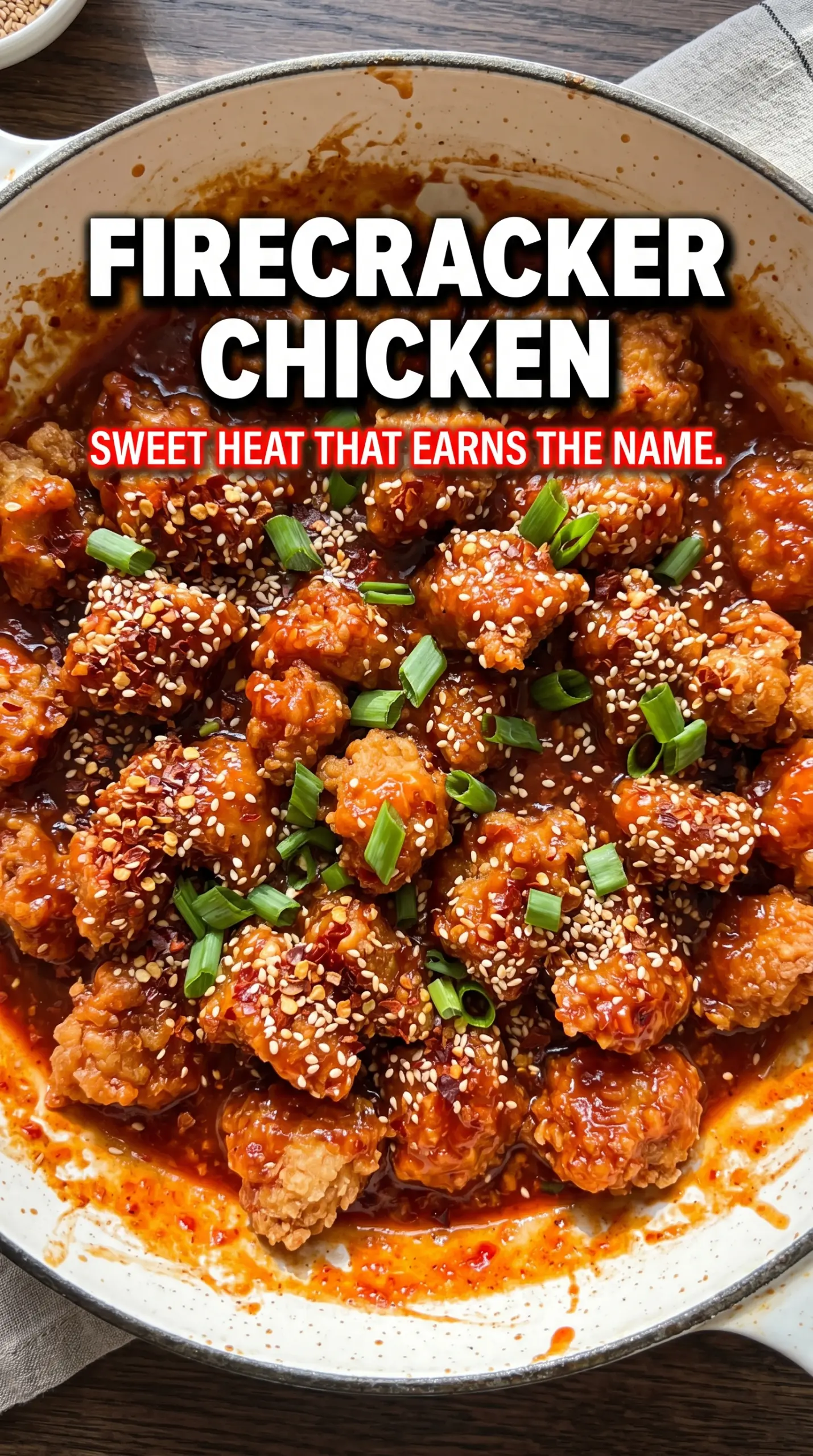
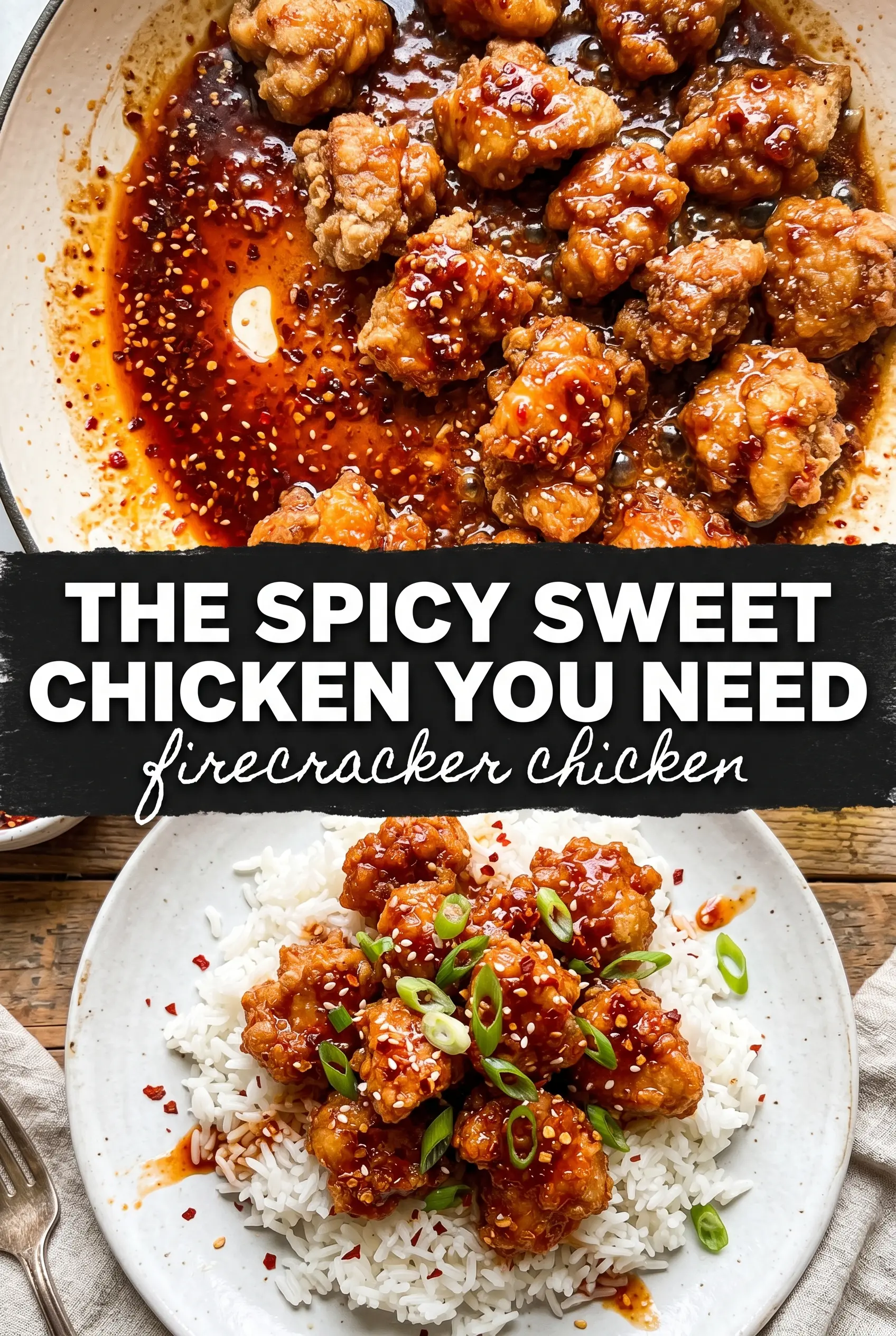
Crispy firecracker chicken hits that sweet spot between takeout comfort and home-cooked crunch. The coating stays light and shattery instead of heavy, and the sauce clings in a glossy red-orange layer that tastes sweet, tangy, and hot without turning into a sticky mess on the plate. When it’s done right, every bite has a little crunch before the sauce comes in.
The trick is building two textures on purpose: a dry, seasoned coating that fries up crisp, and a sauce that thickens just enough to lacquer the chicken instead of soaking into it. Cornstarch helps with that brittle edge, while the butter, brown sugar, hot sauce, and vinegar balance each other so the sauce tastes bold instead of flat. A short rest in the sauce pan at the end gives it that caramelized finish you want.
Below, I’m walking through the part that matters most — how to keep the chicken crisp, how to get the sauce glossy, and what to change if you want the heat gentler or the recipe easier to adapt for a weeknight dinner.
The chicken stayed crisp even after tossing it in the sauce, and the sweet heat was spot on. I added the red pepper flakes at the lower end and it still had plenty of kick without being overwhelming.
Save this firecracker chicken for the nights when you want sticky, crispy chicken with real sweet heat and zero takeout wait.
The Coating Has to Fry Before It Sauces
The biggest mistake with firecracker chicken is rushing the coating into the sauce before it has a chance to set in the oil. If the chicken isn’t properly crisped first, the sauce turns it soft within minutes and you lose the contrast that makes this dish worth making. The flour and cornstarch work together here: flour gives the coating body, while cornstarch helps it fry up with a lighter, crisper shell.
Keep the oil hot enough that the chicken sizzles the second it hits the pan. If the oil drops too low, the coating absorbs grease instead of browning, and the pieces come out pale and heavy. Let the chicken drain for a minute before saucing so the coating isn’t carrying extra oil into the pan.
What the Sauce Is Doing, and Why Each Part Matters
- Hot sauce — This is the backbone of the dish. Frank’s gives the sauce that sharp vinegar heat that cuts through the butter and sugar, and a different hot sauce can change the balance fast. Use a cayenne-style hot sauce, not a thick chili sauce, or the sauce loses that classic firecracker bite.
- Brown sugar — This doesn’t just sweeten the sauce. It helps it thicken and cling while also rounding out the vinegar and heat. Light or dark brown sugar both work, though dark brown sugar gives a deeper molasses note.
- Butter — Butter smooths out the sauce and gives it that glossy finish. If you use less, the sauce can taste harsh; if you use more, it softens the heat. Add it over medium heat so it melts into the sauce instead of separating.
- Cornstarch — The cornstarch is what helps the chicken fry up with that crisp shell. There isn’t a true substitute that gives the same texture, though you can use potato starch in a pinch. Don’t skip it if you want the coating to stay light.
- Apple cider vinegar — This keeps the sauce from turning one-note sweet. It sharpens the glaze and helps the chicken taste bold instead of sugary. White vinegar works if that’s what you have, but apple cider vinegar adds a little more warmth.
Frying, Saucing, and the Final Caramelized Finish
Coating the Chicken Evenly
Toss the chicken pieces until every side looks dusted, then shake off the excess before frying. You want a thin, even coat, not a paste. If the pieces look clumpy before they hit the oil, they’ll fry up bumpy and patchy instead of crisp.
Frying Until the Crust Turns Golden
Fry in a shallow layer of oil at 375°F and work in batches so the temperature stays steady. The chicken should audibly sizzle and turn deeply golden in 3 to 4 minutes per side. If the pieces brown too fast before they’re cooked through, the heat is too high; if they sit there looking blond, the oil is too cool.
Building the Firecracker Sauce
Stir the sauce ingredients together over medium heat until the butter melts and the mixture turns smooth and glossy. You’re not looking for a hard boil. A steady simmer is enough to dissolve the sugar and bring the sauce together without reducing it too fast.
Tossing and Caramelizing
Add the fried chicken to the sauce and toss until every piece is coated. Then let it sit in the pan for 1 to 2 minutes so the sauce tightens and clings. That short final cook is what gives you the sticky, lacquered finish instead of a thin glaze that runs off onto the plate.
How to Adapt Firecracker Chicken Without Losing the Crunch
Make it a little milder
Cut the red pepper flakes to 1/2 teaspoon and use the lower end of the hot sauce amount. You’ll still get the sweet-tangy firecracker flavor, but the heat lands in the background instead of taking over.
Gluten-free version
Swap the all-purpose flour for a 1:1 gluten-free flour blend and use gluten-free soy sauce or tamari. The coating still fries up crisp, though the texture is a touch more delicate, so handle the chicken gently once it’s sauced.
Baked instead of fried
Bake the coated chicken on a wire rack set over a sheet pan at 425°F until cooked through and browned, about 18 to 22 minutes, flipping once. It won’t be as shattery as frying, but the rack helps air circulate so the coating still dries out instead of steaming.
Storage and Reheating
- Refrigerator: Store leftovers in an airtight container for up to 3 days. The coating softens once it sits in the sauce, which is normal.
- Freezer: Freeze the fried chicken pieces without sauce if you want the best texture. Sauced chicken freezes poorly because the coating turns soggy as it thaws.
- Reheating: Reheat in a 375°F oven or air fryer until hot and the edges re-crisp. If you microwave it, the coating will steam and the sauce will turn loose, so that’s the last option I’d pick.
Answers to the Questions Worth Asking
Firecracker Chicken
Ingredients
Equipment
Method
- Toss the chicken with cornstarch, flour, salt, pepper, and garlic powder until every piece is evenly coated. Keep the coating dry-looking and clinging before frying.
- Marinate the coated chicken for 20 minutes. Let it rest so the breading adheres closely to the chicken surface.
- Heat about 1/2 inch of vegetable oil to 375°F in a cast iron skillet. Drop in chicken in a single layer and avoid overcrowding.
- Fry chicken for 3-4 minutes per side until golden and cooked through, turning once. The coating should look crisp and deep golden with a sturdy crust.
- Drain the fried chicken on a rack or paper towels immediately. Remove excess oil so the sauce clings instead of sliding off.
- Combine hot sauce, brown sugar, butter, apple cider vinegar, soy sauce, garlic powder, and red pepper flakes in a saucepan over medium heat. Stir until the butter melts and the sauce becomes smooth.
- Continue cooking the sauce 2-3 minutes until glossy and slightly thickened. Watch for a vivid red-orange color with visible red pepper flakes.
- Toss the crispy chicken in the sauce until every piece is fully coated. Coat thoroughly so the caramelized glaze forms around the crust.
- Return the sauced chicken to the pan and cook 1-2 minutes to caramelize. Look for a sticky, shiny coating that glows red-orange and clings firmly.
- Serve the firecracker chicken over steamed rice. Finish with sesame seeds and sliced green onions for bright contrast.