Golden seared chicken breasts in a garlic Parmesan sauce have a way of making a plain skillet dinner feel finished and complete. The chicken stays juicy because it gets a hard sear first, then finishes gently in the sauce, and that sauce turns velvety instead of watery when the Parmesan goes in over a steady simmer, not a roar.
This version leans on a few small details that matter: well-seasoned chicken, enough heat to build a proper crust, and freshly grated Parmesan so the sauce melts smooth instead of clumping. The white wine adds a little sharpness that keeps the cream from tasting heavy, and the garlic cooks just long enough to bloom without turning bitter.
Below, I’ve included the cue I watch for when the sauce is ready, plus a few swaps that still keep the skillet creamy and glossy.
The sauce thickened up perfectly and stayed smooth when I added the Parmesan off the heat. I’ve made chicken like this before, but this version had the best garlic flavor without tasting burnt.
Save this creamy garlic Parmesan chicken for the night you want a glossy skillet sauce that clings to every bite.
The Key to a Creamy Sauce That Stays Smooth Instead of Turning Grainy
The two mistakes that break this kind of sauce are rushing the heat and adding the cheese too aggressively. Parmesan wants gentle simmering, not a hard boil, because high heat pushes the dairy apart and leaves you with a sauce that looks speckled or greasy instead of glossy. Pull the pan back to a steady simmer before the cheese goes in, and stir until it melts in completely.
The other thing that matters is what’s left in the pan after you sear the chicken. Those browned bits are concentrated chicken flavor, and they’re doing a lot of the heavy lifting here. When the wine hits the hot pan, it loosens those bits fast and turns them into the base of the sauce instead of leaving you with a flat cream gravy.
What Each Ingredient Is Actually Doing in the Skillet
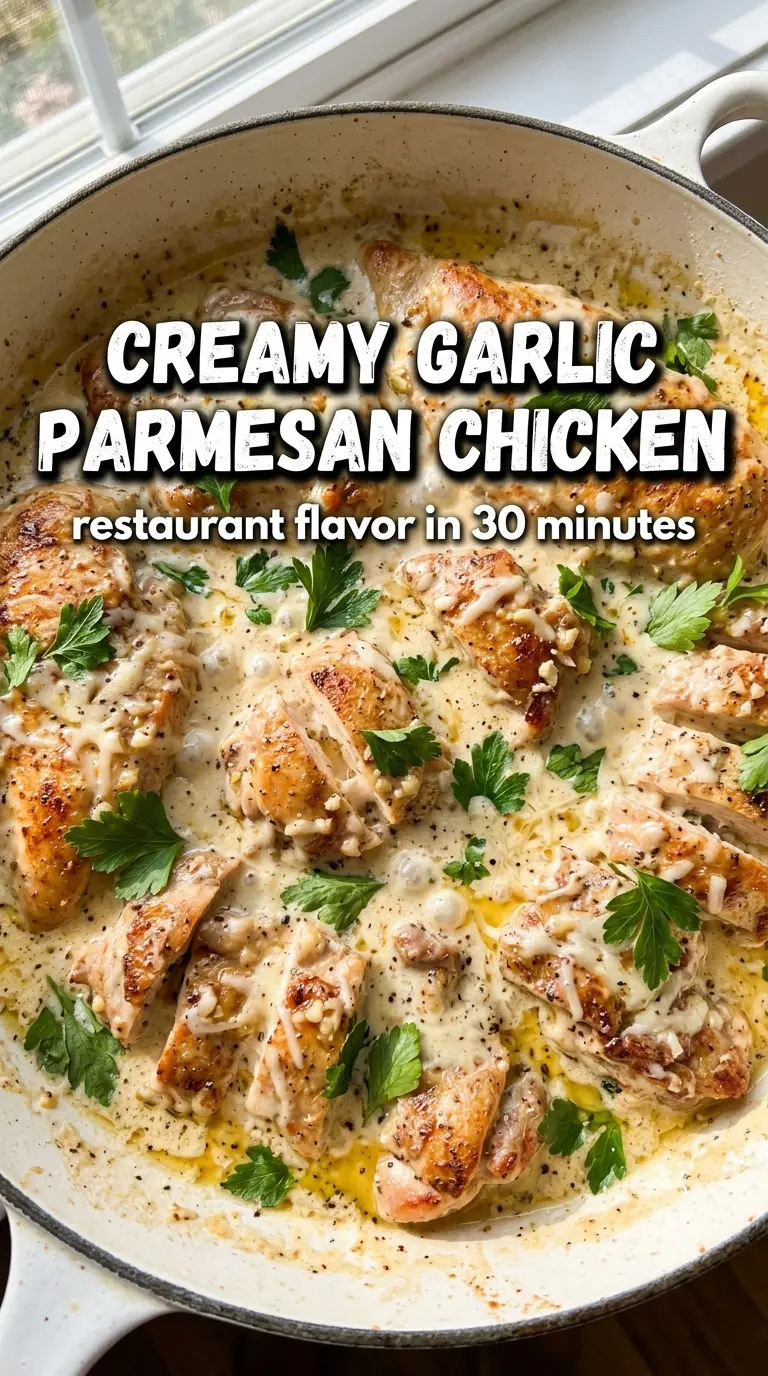
- Chicken breasts — Boneless, skinless breasts give you a clean sear and a quick cook, but they dry out fast if they’re uneven. If one side is much thicker, pound it to an even thickness so the whole piece reaches 165°F at the same time.
- Freshly grated Parmesan — This is the ingredient that changes the sauce from thin to silky. Pre-shredded cheese often contains anti-caking starches that can make the sauce dull or slightly sandy, so grate it yourself if you want the smoothest result.
- Dry white wine or chicken broth — Wine adds brightness and gives the sauce a little edge, which matters in a cream-based dish. If you skip it, use broth and add a small squeeze of lemon at the end to replace some of that lift.
- Heavy cream — Use heavy cream, not half-and-half, if you want the sauce to reduce without splitting. Lower-fat dairy can work in a pinch, but it won’t thicken with the same confidence and it’s more likely to curdle once the Parmesan goes in.
- Garlic — Fresh garlic gives the sauce its backbone, but it only needs about a minute in the butter before the liquid goes in. If it browns, it turns sharp and bitter, and you’ll taste that all the way through the finished sauce.
Building the Chicken and Sauce in the Right Order
Seasoning and Searing the Chicken
Season the chicken generously on both sides so the crust has flavor before it ever hits the sauce. Heat the olive oil until it shimmers, then add the chicken and leave it alone long enough to form a deep golden crust. If you move it too early, it sticks and tears; if the pan is crowded, the chicken steams instead of searing.
Waking Up the Garlic and Deglazing the Pan
Once the chicken is out, add the butter and garlic and cook just until fragrant, about a minute. The garlic should smell warm and sweet, not toasted. Add the wine or broth right away and scrape up every browned bit from the pan, because that’s where the sauce picks up its depth.
Reducing the Creamy Base
Stir in the cream, broth, Parmesan, and Italian seasoning, then keep the heat at a gentle simmer. The sauce will look thin for the first minute or two, then it starts to coat the spoon and leave a trail when you drag a spatula through it. If it boils hard, it can separate, so stay patient and let the heat do the work.
Finishing the Chicken in the Sauce
Return the chicken to the skillet and spoon sauce over the top so every piece gets coated. Let it sit just long enough to come back to temperature and soak up the sauce, then finish with thyme and parsley. The herbs matter here because they cut through the richness and keep each bite from feeling heavy.
How to Adapt This Skillet for Different Nights
Dairy-Free Version
Use full-fat canned coconut milk in place of the cream and skip the Parmesan, then add nutritional yeast for a little savory depth. The sauce won’t taste exactly the same, but it will still be rich and spoonable if you simmer it slowly and keep the heat low.
Chicken Thigh Swap
Boneless skinless thighs work well if you want darker, juicier meat with a little more forgiveness on the stove. They’ll need a few extra minutes to cook through, but they stay tender even if the skillet runs a touch hot.
Gluten-Free Friendly Dinner
This recipe is naturally gluten-free as written if your broth is gluten-free. The sauce gets its body from reduction and Parmesan, not flour, so you don’t need any extra thickeners.
Make It a Little Brighter
Add a small squeeze of lemon at the end if you want the sauce to taste lighter and less creamy. Do it after the heat is off so the acid stays fresh and doesn’t dull the Parmesan.
Storage and Reheating
- Refrigerator: Store leftovers in an airtight container for up to 3 days. The sauce will thicken as it chills.
- Freezer: It’s not my first choice for freezing because cream sauces can separate when thawed. If you do freeze it, reheat it gently and expect the texture to be a little less silky.
- Reheating: Warm it in a covered skillet over low heat with a splash of broth or cream. The common mistake is blasting it in the microwave, which tightens the chicken and can make the sauce oily.
Answers to the Questions Worth Asking
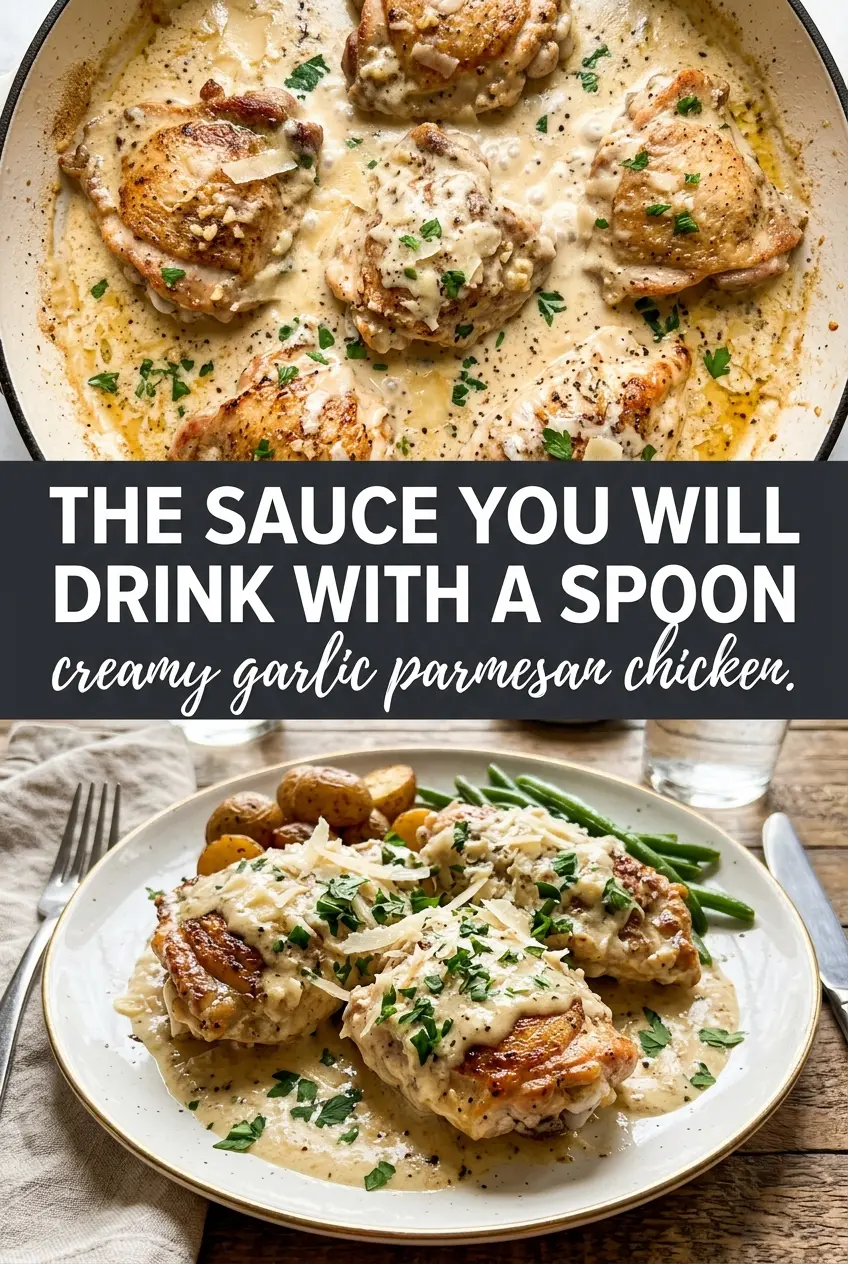
Creamy Garlic Parmesan Chicken
Ingredients
Equipment
Method
- Season the chicken breasts generously on both sides with salt, pepper, garlic powder, and smoked paprika. Visual cue: dry spice coverage should look even on the surface.
- Heat olive oil in a large cast iron skillet over medium-high heat, then sear the chicken for 5-6 minutes per side until golden and cooked through to 165°F; remove. Visual cue: the edges should be deeply browned and the center should read 165°F when checked.
- Add butter and minced garlic to the same pan and cook for 1 minute until fragrant. Visual cue: small garlic bits should turn lightly golden without burning.
- Pour in the dry white wine or chicken broth to deglaze and cook for 2 minutes. Visual cue: browned bits should dissolve and the liquid should reduce slightly.
- Stir in heavy cream, chicken broth, Parmesan cheese, and Italian seasoning, then simmer for 4-5 minutes until the sauce is thick and glossy. Visual cue: it should coat the back of a spoon and look shiny.
- Return the chicken to the pan and spoon the sauce over each breast. Visual cue: the sauce should cling to the chicken surface.
- Garnish with fresh thyme and parsley and serve. Visual cue: green herb flecks should be visible on top of the sauced chicken.