These campfire cinnamon roll ups on a stick bake up with a crisp, golden outside and a soft, pull-apart center that tastes like a fair treat with less fuss. The dough blisters over the fire, the cinnamon sugar melts into the butter, and the glaze soaks into the warm ridges just enough to make each bite sticky without turning messy. They’re the kind of dessert people gather around for before they even cool.
The trick is using breadstick dough instead of a sweet, rich dough that can collapse or burn before the center cooks. Breadstick dough holds its shape on the stick and gives you enough structure to rotate it slowly over the heat until the outside is browned and the inside is done. The butter does more than add flavor here; it helps the cinnamon sugar cling and encourages that lacquered finish that tastes like a bakery roll cooked outdoors.
Below, I’ve included the fire-management tip that keeps these from scorching, plus a few swaps for when you only have biscuit dough or want to make them ahead for a camping trip.
The dough held on the stick perfectly and rotated evenly over the coals. I was worried the middle wouldn’t cook, but after 9 minutes it was golden outside and soft inside, and the glaze melted right into the cracks.
Campfire Cinnamon Roll Ups On A Stick are the kind of gooey, golden dessert worth saving for your next fire night.
Why the Dough Choice Keeps These From Sliding Off the Stick
The biggest mistake with campfire dough desserts is picking something too soft, too rich, or too sticky to hold its shape over the flame. Breadstick dough gives you a tighter, sturdier spiral that grips the roasting stick and cooks through before the outside turns too dark. Biscuit dough works in a pinch, but it puffs more aggressively and can tear if you wrap it too thin.
Keep the spiral even and don’t stretch the dough as you wrap it. Stretching makes thin spots that dry out before the rest is cooked, and those spots are the ones that split and slip. The other thing that matters is heat control: these need steady rotation over medium campfire heat, not direct flames licking one side. If the fire is roaring, wait a few minutes for the coals to settle first.
What Each Ingredient Is Doing in the Fire and on the Plate
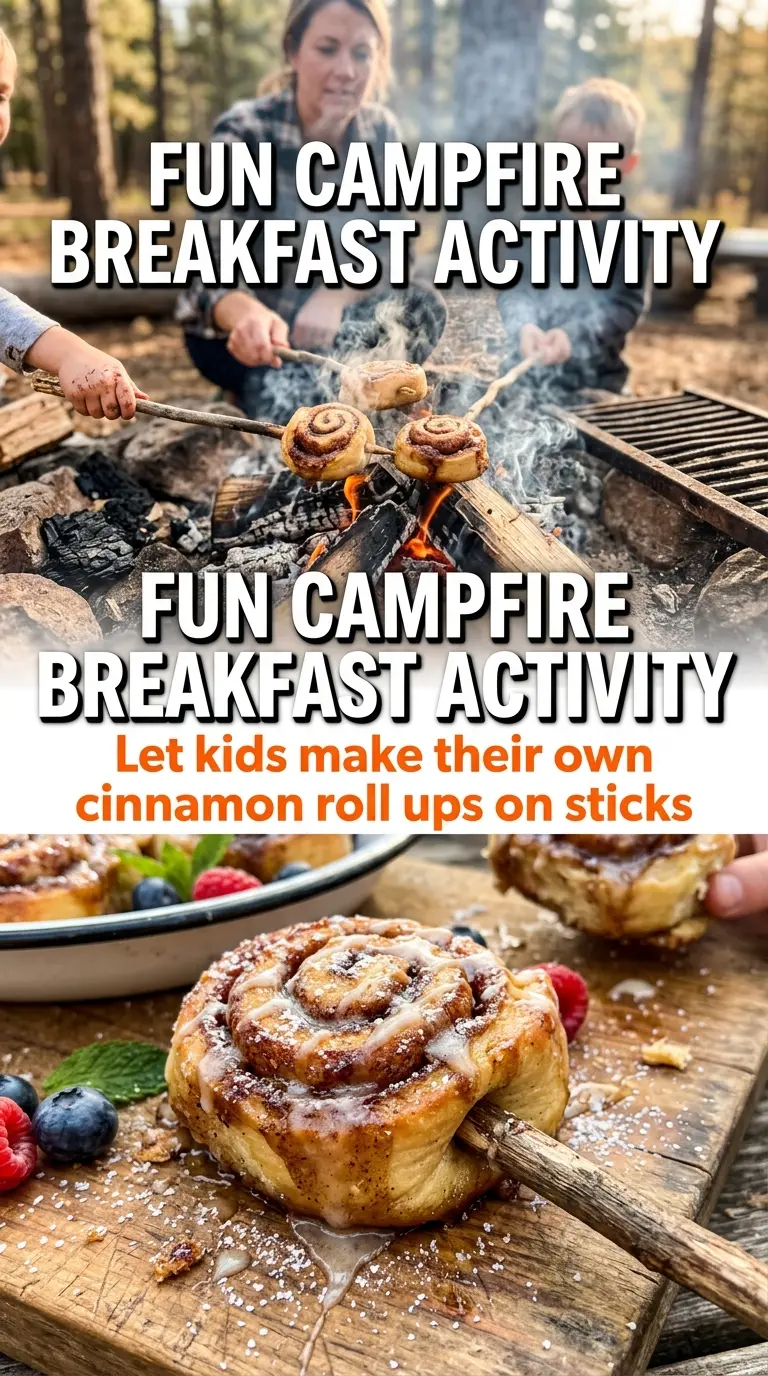
- Refrigerated breadstick dough — This is the structure of the whole dessert. It wraps cleanly around the stick and bakes into a chewy, tender shell without collapsing. Biscuit dough can work, but it turns puffier and a little more irregular, so the spiral won’t look as neat.
- Melted butter — Butter helps the cinnamon sugar stick and gives the outside that glossy, browned finish. Brush it on after the dough is wrapped so it doesn’t make the dough slippery while you’re working.
- Cinnamon sugar — This is the flavor that turns a plain dough spiral into a campfire roll up. Pre-mixed cinnamon sugar is convenient, but if yours is old and dull, add a touch more cinnamon so it doesn’t taste flat after the heat mellows it.
- Roasting sticks — Use sturdy sticks that hold the dough away from the flame and let you rotate without wobbling. If the handle gets hot, wrap it with foil or use longer sticks so your hands stay safely back from the fire.
- Powdered sugar and milk — The glaze should be thin enough to drizzle, not paste-thick. Add the milk a little at a time; if it gets too loose, it will slide right off the warm roll ups instead of settling into the cracks.
Getting the Spiral Cooked Without Burning the Outside
Wrapping the dough evenly
Separate the dough into individual pieces first, then wrap each piece around the tip of the stick in a neat spiral. Leave a little overlap between coils so the dough fuses as it cooks, but don’t pack it so tightly that the center stays raw. If the spiral looks lopsided before it goes over the fire, it will cook lopsided too, so take the extra few seconds to adjust it now.
Coating and seasoning before the fire
Brush the dough with melted butter, then sprinkle on the cinnamon sugar while the surface is still tacky. That order matters because dry sugar won’t cling as well and will fall into the fire. A generous coating gives you better browning, but if it piles on in thick clumps, those spots can char before the dough is done.
Rotating over steady heat
Hold the sticks over hot coals or a gentle flame and rotate constantly for 8 to 10 minutes. The dough should turn deep golden and feel firm when pressed lightly with a utensil or clean finger at the thickest part. If you see blackened patches forming fast, move the stick higher or farther from the heat, because the outside is cooking faster than the center and the sugar is starting to burn.
Finishing with the glaze
Let the roll ups cool for 2 minutes before you slide them off the stick. That short rest keeps the glaze from melting off the moment it hits the surface. Mix the powdered sugar and milk until smooth, then drizzle over the warm dough so it melts into the ridges instead of sitting in a chalky layer on top.
What to Change When You Need a Different Campfire Dessert
Use biscuit dough for a softer, puffier finish
Biscuit dough gives you a more tender, slightly breadier roll up with a bigger rise. It’s a little harder to keep perfectly even on the stick, so wrap it more loosely and watch the heat closely. The result is less tidy than breadstick dough, but it tastes great and browns well.
Make it dairy-free with plant butter and a simple icing
Swap in a dairy-free butter that melts cleanly, then use unsweetened almond milk or oat milk for the glaze. The texture stays close to the original, though the glaze may taste a little less rich, so a tiny pinch of salt helps it pop. Keep the butter cool until you’re ready to use it so it doesn’t separate in the container.
Add chopped nuts for more crunch
A small sprinkle of finely chopped pecans or walnuts over the buttered dough adds crunch and a toasted note that works well with the cinnamon sugar. Keep the pieces small so they don’t fall off into the fire or create rough spots that tear the dough. This version tastes a little more like a coffee-shop pastry and less like a straight-up cinnamon roll.
Storage and Reheating
- Refrigerator: Store leftovers in an airtight container for up to 2 days. The glaze softens the crust, so they’re best eaten the same day.
- Freezer: These don’t freeze well once cooked because the dough turns gummy after thawing. If you want to prep ahead, bring the dough, cinnamon sugar, and glaze ingredients separately and assemble at the campsite.
- Reheating: Warm leftovers in a dry skillet over low heat or wrap them loosely in foil and set them near the coals. High heat will harden the outside before the middle warms, which makes the texture tough instead of soft.
Questions I Get Asked About This Recipe
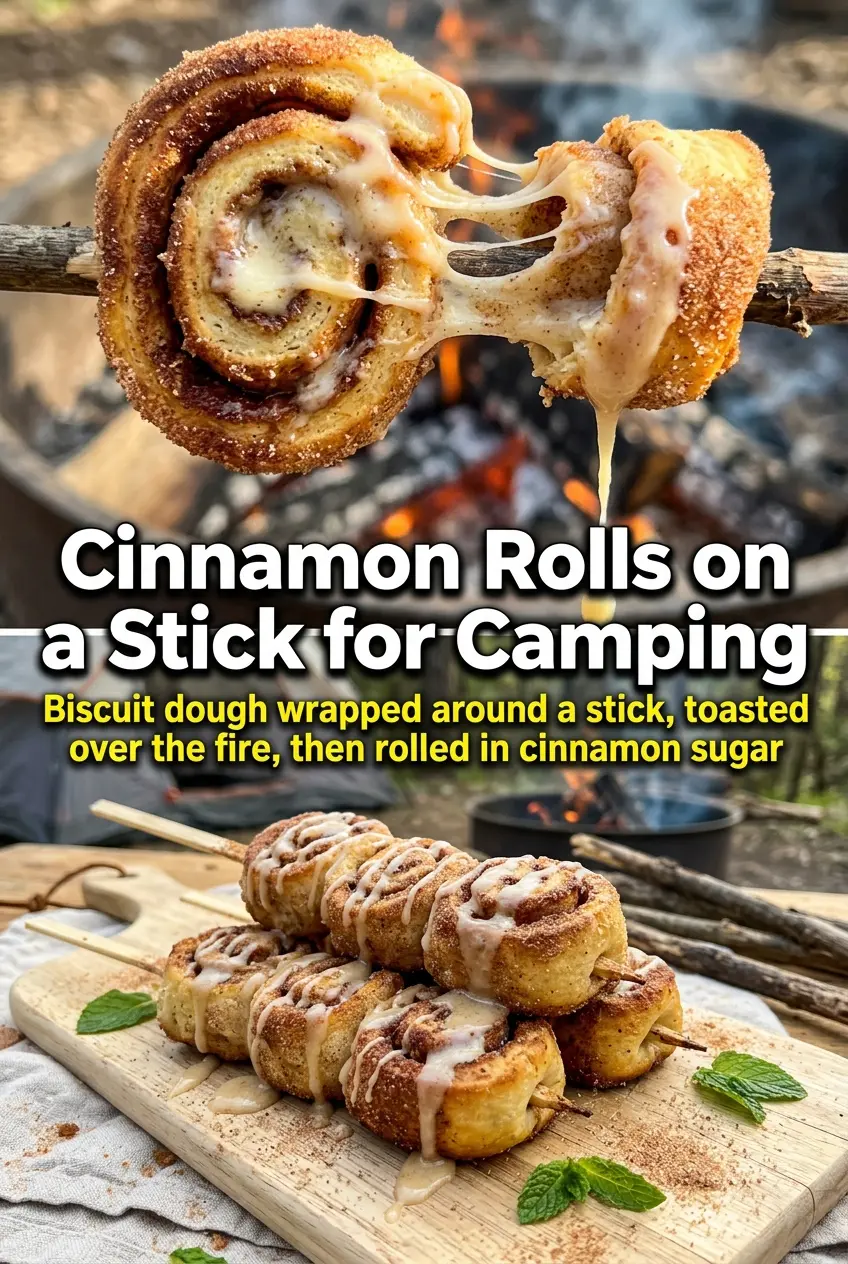
Campfire Cinnamon Roll Ups On A Stick
Ingredients
Equipment
Method
- Separate the refrigerated breadstick dough into individual pieces.
- Wrap each dough piece around the end of a roasting stick in a tight spiral pattern.
- Brush the dough on the sticks with melted butter, then sprinkle cinnamon sugar all over.
- Hold the sticks over campfire heat and rotate constantly for 8-10 minutes until golden brown and cooked through.
- Slide the roll ups off the sticks and let them cool for 2 minutes.
- Mix powdered sugar and milk until smooth, then drizzle the glaze over warm roll ups.