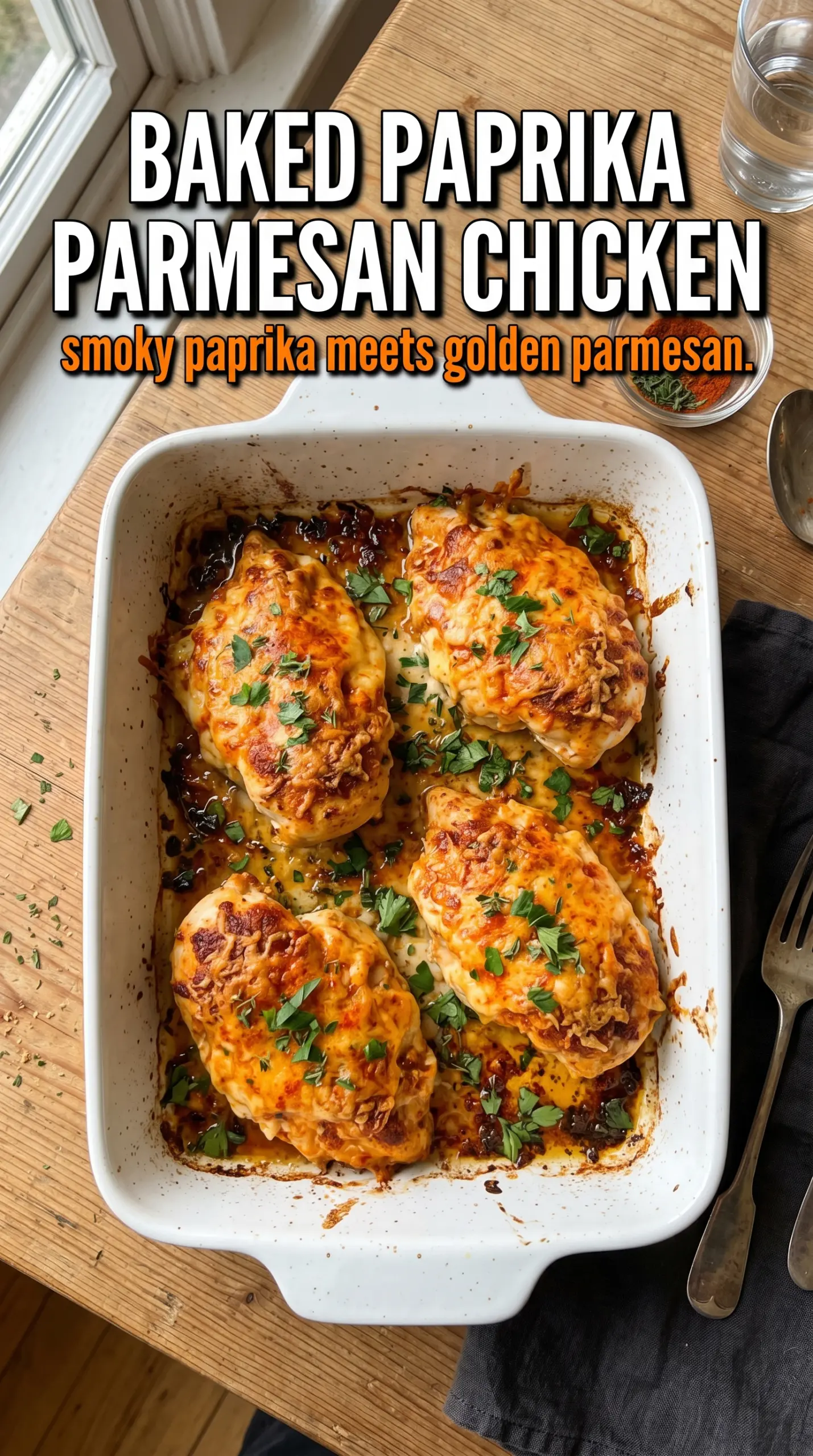
Baked paprika Parmesan chicken lands with a crust that’s smoky, savory, and just crisp enough to hold its shape when you cut into it. The paprika blooms in the oven and turns the chicken a deep orange-red, while the Parmesan melts into the breadcrumbs and bakes into a crackly top instead of sliding off into the pan. The result is weeknight chicken that looks like you put in far more effort than you did.
What makes this version work is the way the flavor gets layered before the chicken ever hits the oven. The oil carries the paprika and spices across the surface, which keeps the breast meat from drying out under the hot heat, and the Parmesan-panko mixture gives you a coating that browns fast without needing a deep fry. Smoked paprika does the heavy lifting here, so fresh, good-quality paprika matters more than fancy add-ins.
Below, you’ll find the trick for getting the coating to stick, what kind of Parmesan gives the best crust, and a few smart swaps if you want to change the texture or make it fit what’s already in your kitchen.
The paprika oil gave the chicken such a bold color, and the Parmesan crust stayed crisp even after it sat for a few minutes. I baked it right to 165 and the breasts were still juicy, which never happens for me.
Like this baked paprika Parmesan chicken? Save it to Pinterest for the nights when you want a crispy crust and juicy chicken without a complicated cleanup.
The Part That Keeps the Crust on the Chicken
The coating falls off when the chicken is wet, the oven is too cool, or the crumbs never get pressed in firmly enough. This recipe avoids all three. The oil-spice mixture goes on first, and that gives the Parmesan and panko something to cling to, almost like glue, while the hot oven dries and browns the surface at the same time.
Thin, even chicken breasts cook best here. If one side is much thicker, the crust on the thinner end will overbake before the center is done. Pounding the breasts to an even thickness is the simplest fix, and it pays off in juicier meat and a more even crust.
- Smoked paprika — This is the flavor anchor, and it’s worth using a fresh jar. If yours has been sitting in the pantry for years, the color and smoke note will be duller.
- Parmesan — Freshly grated Parmesan melts and browns better than the shelf-stable kind. Pre-grated cheese can work in a pinch, but it won’t give you the same crisp, lacy edges.
- Panko — These breadcrumbs stay lighter and crunchier than regular breadcrumbs. If you only have regular crumbs, the texture will be tighter and less airy, but the chicken will still work.
- Olive oil — This carries the spices and helps the coating toast instead of burn. Don’t cut it back too much or the paprika can taste dusty rather than blooming into the crust.
What Each Ingredient Is Actually Doing in This Chicken
- Chicken (the protein star) — Choose the right cut for the method. Pat dry before cooking so it browns instead of steams.
- Oil or butter (the browning medium) — This helps develop flavor through browning. High-heat oil is essential.
- Seasonings (salt, pepper, spices, herbs) — Don’t hold back. The chicken carries the entire flavor profile.
- Aromatics (garlic, onion, herbs) — Cook with fat to bloom the flavors. They become part of the dish foundation.
- Sauce or liquid (the moisture keeper) — This prevents the chicken from drying and adds flavor. Balance richness with acid.
- Acid (lemon, vinegar, wine, or tomato) — This brightens and prevents one-dimensional flavor.
- Optional vegetables — Layer by cooking time so everything finishes together. Hard vegetables first.
- Proper doneness (165°F internal temperature) — Use a thermometer. Overcooked chicken is dry; undercooked is unsafe.
Building the Crust Before the Chicken Hits the Oven
Mixing the Paprika Oil
Stir the olive oil with both paprikas, garlic powder, onion powder, salt, and pepper until the oil turns a rich brick red. That color tells you the spices are evenly dispersed. Brush it generously over both sides of the chicken so every bite carries seasoning, not just the crust. If the chicken looks dry in spots, the crumbs won’t stick there and those patches will bake up pale.
Pressing on the Parmesan Layer
Combine the Parmesan and panko, then press the mixture firmly onto the top of each coated breast. Don’t just sprinkle it on. Pressing compacts the crumbs enough to form a proper crust that browns in the oven instead of drifting off onto the pan. A parchment-lined sheet keeps the bottom from sticking and makes cleanup easy, but the tops still need direct heat to get those caramelized edges.
Baking Until Juicy, Not Dry
Slide the chicken into a fully preheated 425°F oven and bake until the crust is golden-red and the center reaches 165°F, usually 22 to 25 minutes. The color will deepen first, then the cheese will start to look toasted at the edges. Pull it as soon as it hits temperature; if you wait for the crust to look dark brown all over, the breast meat will be overcooked. Let it rest for a few minutes before slicing so the juices stay in the chicken instead of running out onto the board.
How to Adapt This for What’s in Your Kitchen
Gluten-Free Crunch
Swap the panko for gluten-free breadcrumbs or crushed gluten-free crackers. You’ll still get a crisp top, though crackers usually bake into a slightly denser crust with a more pronounced saltiness.
Dairy-Free Version
Use nutritional yeast in place of the Parmesan and add another tablespoon or two of breadcrumbs for bulk. You’ll lose the same sharp, nutty melt, but the topping still browns nicely and keeps the smoky paprika front and center.
Chicken Thighs Instead of Breasts
Boneless, skinless thighs work well if you want a juicier result and don’t mind a slightly less tidy shape. They usually need a few extra minutes in the oven, and the crust may not look as uniform, but the flavor is excellent.
Storage and Reheating
- Refrigerator: Store leftovers in an airtight container for up to 3 days. The crust softens a bit, but the flavor stays strong.
- Freezer: Freeze cooked chicken for up to 2 months. Wrap pieces tightly and thaw in the fridge before reheating so the coating doesn’t steam into a soggy layer.
- Reheating: Warm in a 375°F oven or air fryer until heated through. The biggest mistake is microwaving it hard, which makes the crust rubbery and pulls moisture out of the chicken.
Answers to the Questions Worth Asking
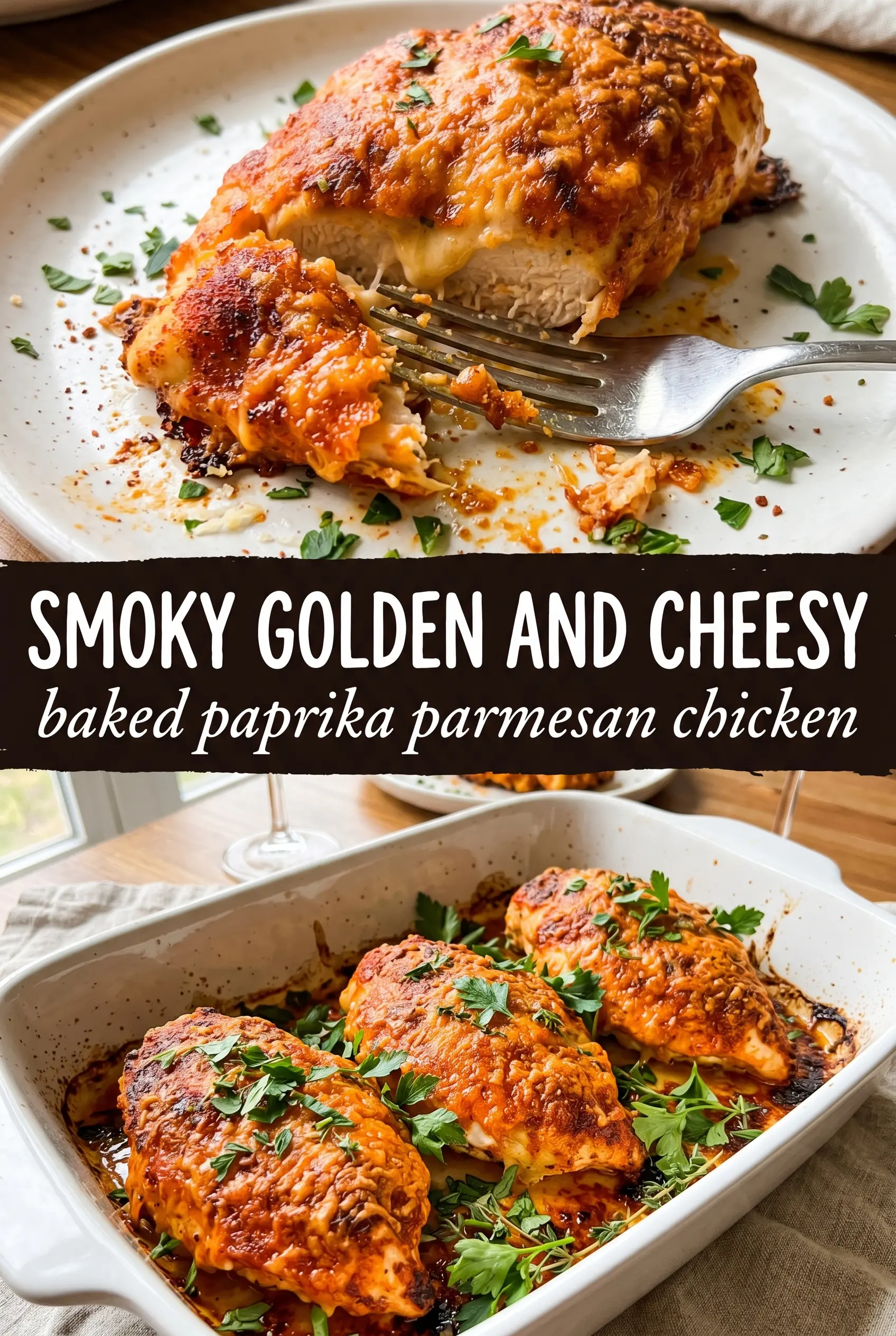
Baked Paprika Parmesan Chicken
Ingredients
Equipment
Method
- Preheat the oven to 425°F and line a baking sheet with parchment.
- Mix the olive oil with smoked paprika, sweet paprika, garlic powder, onion powder, salt, and pepper.
- Brush the paprika oil generously over both sides of each chicken breast.
- Combine Parmesan and panko, then press firmly onto the oiled chicken to coat the tops.
- Bake at 425°F for 22-25 minutes until the crust is golden-red and the internal temperature reaches 165°F.
- Garnish with fresh parsley and serve with lemon wedges.