Golden apple fritter bites land somewhere between a donut hole and a cider stand treat: crisp at the edges, soft in the middle, and packed with little pockets of tender apple. The best ones stay light enough to eat warm by the handful, but still carry that fried, crackled shell that makes the glaze cling in all the right places.
What keeps this batch from turning heavy is the batter. It’s mixed just until the flour disappears, then the apples go in at the end so they don’t bleed too much moisture into the dough. The oil also needs to stay hot enough to set the outside fast; if it drifts too low, the bites soak up grease and lose that shattering crust.
Below, you’ll find the trick for getting the centers cooked without burning the glaze, plus a few swaps if you need to use a different apple or make them a little less sweet.
The fritter bites puffed up beautifully and stayed crisp after glazing. I used Honeycrisp apples and the little chunks stayed tender without turning mushy.
Like these apple fritter bites? Save them to Pinterest for the next time you want warm apple donuts with a crisp glaze.
The Reason These Fritters Stay Light Instead of Greasy
Most fritter batter problems start before the first bite ever hits the oil. If the batter is overmixed, the flour develops too much structure and the fritters turn bready. If the oil is too cool, they absorb fat before the outside has a chance to set, which is how you end up with pale, heavy centers instead of crisp little rounds with a clean bite.
The other thing that matters here is size. A tablespoon is enough. Bigger scoops look tempting, but they brown too fast on the outside while the apple pieces inside are still a little raw. Keep the batter loose enough to drop, but thick enough to hold the fruit in place.
What the Apples, Spices, and Glaze Are Each Doing Here
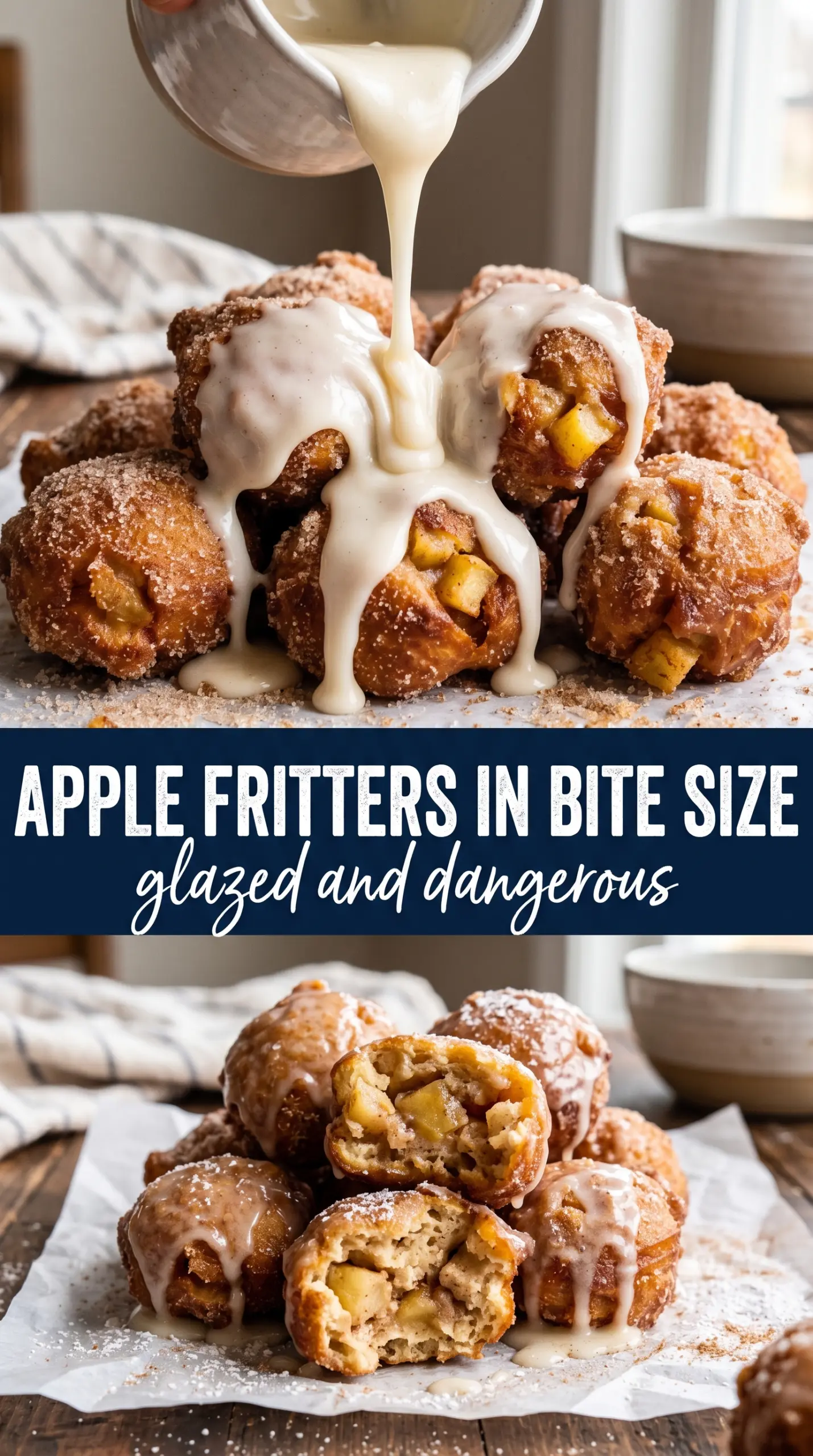
- Apples — Use a firm, tart-sweet apple that keeps some shape after frying. Honeycrisp, Granny Smith, and Fuji all work, but softer apples can melt into the batter and disappear. Dice them small so every fritter gets fruit in each bite.
- Cinnamon and nutmeg — These do the heavy lifting for the warm bakery flavor. Cinnamon gives the obvious apple fritter note, while nutmeg rounds it out. Skip the nutmeg only if you have to; the bites taste flatter without it.
- Whole milk — The fat helps the batter stay tender and gives the glaze enough richness to cling instead of sliding off. Lower-fat milk works in a pinch, but the glaze will taste thinner and the fritters won’t feel as plush.
- Powdered sugar glaze — This is the finish that makes them taste like a true fritter instead of fried cake. Milk gives you a clean white glaze, while apple cider adds a little sharpness and makes the apple flavor come forward. Add the liquid slowly so you can choose between a drizzle and a dip.
Getting the Batter in the Oil Before the Apples Wilt
Mix the Dry Base First
Whisk the flour, baking powder, sugar, cinnamon, nutmeg, and salt until the spices are evenly distributed. That step matters more than it sounds, because cinnamon clumps can leave some fritters bland while others taste aggressive. You want the dry mix looking uniform before any wet ingredients go in.
Stir Just Until It Comes Together
Beat the eggs, milk, and vanilla in a separate bowl, then add them to the dry ingredients and stir until the flour is just absorbed. The batter should look thick and a little shaggy, not smooth like cake batter. If you keep stirring until it’s glossy, the fritters turn dense instead of tender.
Fold in the Apples at the End
Add the diced apples last and fold gently so they stay evenly distributed. This keeps the fruit from breaking down and watering out the batter before it fries. If the mixture starts looking loose, let it sit for a minute; the flour will hydrate and tighten up a bit before frying.
Fry Until Deeply Golden
Scoop tablespoon-sized portions into 350°F oil and give them space to move. They should sizzle immediately and start turning golden within a minute or so. Flip when the bottom is deep amber, then fry the other side until the center feels set and the outside has that crackled, crisp shell. Pull them too early and the middle stays gummy; leave them too long and the sugar in the batter gets bitter.
Glaze While They’re Still Warm
Drain the fritters briefly, then glaze or dip them while they’re still warm enough to help the coating set. If they’re piping hot, the glaze will melt off; if they cool completely, it won’t cling as well. A warm fritter with a thin glaze gives you the best mix of shine, crackle, and soft interior.
How to Change These Fritters Without Losing the Texture
Make them with cider instead of milk
Swap the milk in the glaze for apple cider if you want a sharper apple finish. The batter still needs milk for structure, but the cider glaze adds a little tang and makes the fruit flavor read louder without changing the fry.
Use a gluten-free flour blend
A 1:1 gluten-free baking blend can work here, but the fritters may spread a little more and feel more delicate. Let the batter rest for 10 minutes before frying so the blend can hydrate and thicken, which helps the bites hold together in the oil.
Cut the sweetness a little
Reduce the sugar in the batter to 2 tablespoons and use a thinner glaze instead of a heavy dip. The fritters will still taste like a treat, but the apple and spice come through more clearly, which is nice if you’re serving them with coffee or cider.
Storage and Reheating
- Refrigerator: Store leftovers in an airtight container for up to 2 days. The glaze softens the crust, so the texture is best the day they’re made.
- Freezer: They freeze best unglazed. Freeze the cooled fritters on a tray, then pack them into a bag for up to 2 months.
- Reheating: Warm them in a 325°F oven or air fryer until heated through and the outside perks back up. The common mistake is microwaving them until they go soggy; that softens the crust instead of reviving it.
Questions I Get Asked About This Recipe
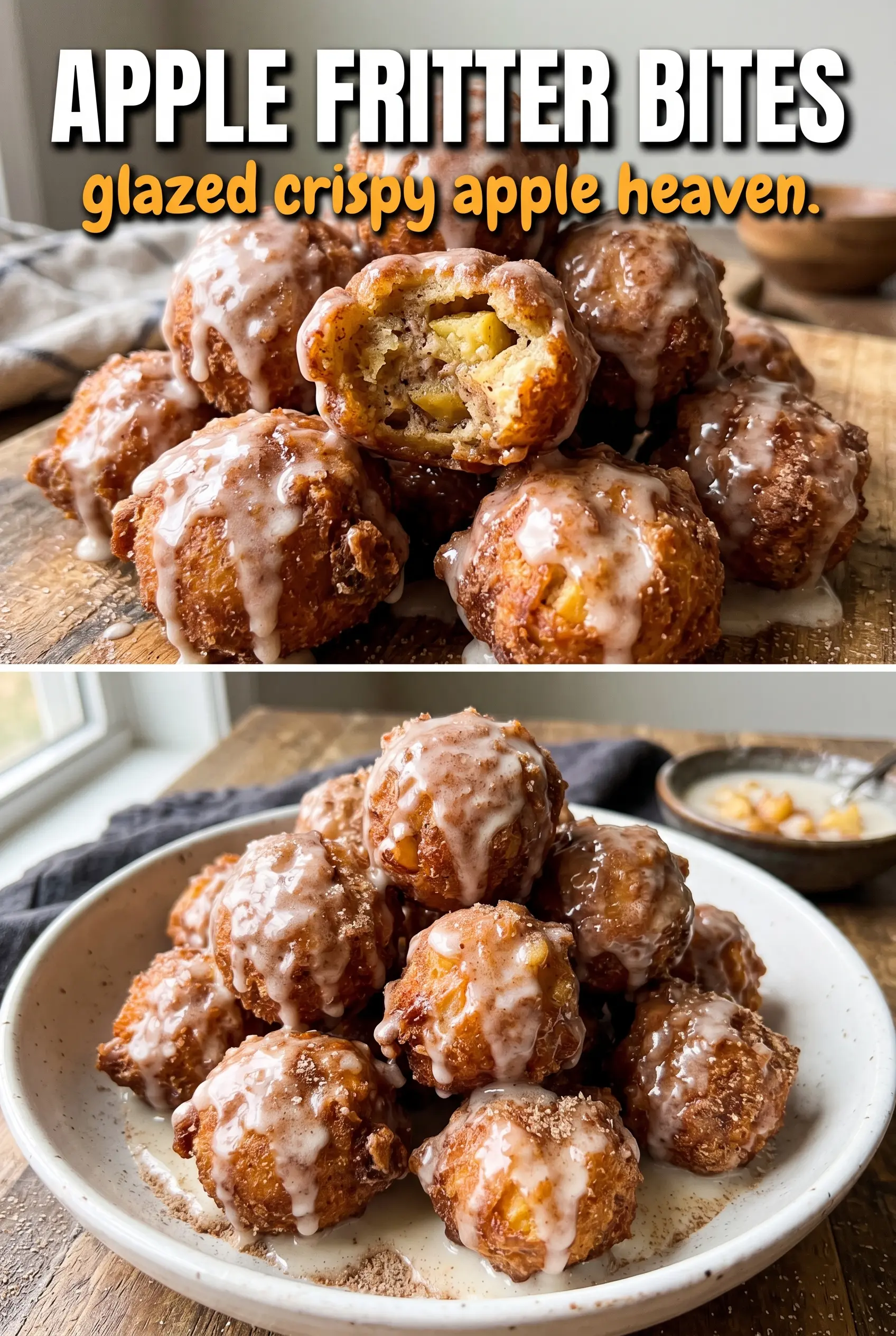
Apple Fritter Bites
Ingredients
Equipment
Method
- Heat 2 inches of oil to 350°F in a deep skillet or pot. Keep the oil at temperature so the fritter bites fry deeply golden with minimal greasiness.
- Whisk all-purpose flour, baking powder, sugar, cinnamon, nutmeg, and salt together. Whisk until the spices and leavening are evenly distributed.
- Beat eggs, whole milk, and vanilla extract together. Pour into the dry ingredients and stir just until no dry flour remains.
- Fold in diced apple. Stop mixing once the apple chunks are evenly dispersed.
- Drop tablespoon-sized balls of batter into the hot oil. Fry for 2–3 minutes per side until deeply golden and visually cooked through.
- Drain the apple fritter bites on paper towels. Let excess oil drip off so the glaze clings without sliding.
- Whisk powdered sugar with 2–3 tablespoons milk or apple cider and vanilla. Stir until smooth and thick enough to drizzle in a thin ribbon.
- Drizzle or dip the warm apple fritter bites in glaze. Serve while still warm so the exterior looks lightly crackled and the apple chunks show where bites are broken open.