Rich beef stew earns its place in the rotation when the broth turns glossy, the chuck goes fork-tender, and the vegetables hold their shape instead of melting into the pot. This Whole30 version keeps all the deep, slow-cooked comfort of the classic bowl, but the gravy thickens naturally without flour and the sweetness comes from sweet potato and carrots instead of added sugar.
The key is building flavor in layers. Browning the beef in batches creates the base, then tomato paste cooks long enough to lose its raw edge before the broth goes in. Coconut aminos and compliant Worcestershire bring that rounded, savory depth you want in a stew, while arrowroot finishes the sauce at the end so it stays silky instead of cloudy or gummy.
Below you’ll find the timing that keeps the vegetables from overcooking, plus the little details that make the gravy turn out thick and spoon-coating. If you’ve ever had stew that tasted flat or watery, this method fixes both problems.
The gravy thickened up beautifully at the end, and the sweet potatoes stayed intact instead of turning to mush. I made it on Sunday and the flavor was even better the next day.
Save this Whole30 Beef Stew for the nights when you want a thick, savory bowl with tender chuck and naturally reduced gravy.
The Difference Between Tender Beef and Tough Stew Meat
Beef stew goes wrong when the pot is rushed. Chuck needs a hard sear first, then low, steady heat long enough for the connective tissue to soften; if the simmer is aggressive, the meat tightens before it has a chance to relax. That is how you end up with chewy cubes floating in good broth.
The other common miss is adding the vegetables too early. Sweet potato, carrots, and mushrooms need enough time to absorb flavor, but not so much time that they collapse into the gravy. Staggering them after the beef has already turned tender keeps each part of the stew distinct, which is what makes the final bowl feel hearty instead of muddy.
- Browning in batches — Crowding the pan steams the beef instead of crusting it. Give the cubes space so they can pick up color.
- Low simmer, not a boil — Small bubbles are what you want. A boil makes the meat seize.
- Vegetables added later — This keeps the sweet potato and carrots from dissolving before the stew is done.
What Each Ingredient Is Actually Doing in This Stew

- Beef chuck — This cut has the collagen that turns silky during a long simmer. Leaner beef won’t give you the same body in the broth.
- Tomato paste — It deepens the color and adds a concentrated savory note once it cooks for a minute with the onions and garlic. That quick sauté keeps it from tasting tinny.
- Bone broth — Use a broth you would drink on its own if possible. Since the liquid is the stew, a weak broth gives you a flat final result.
- Coconut aminos and Worcestershire — Together they replace the salty, rounded depth you might expect from wine or soy sauce. If you need a swap, balsamic vinegar works, but it brings more tang and a little less savory complexity.
- Arrowroot slurry — This thickens the gravy at the end without flour. Stir it in only after the vegetables are tender, because arrowroot can turn gluey if it cooks too long.
How to Build the Stew So the Gravy Stays Glossy
Getting Color on the Beef
Season the beef before it hits the pan, then brown it in hot oil in batches. You want a deep brown crust on the outside, not a gray surface, because that browned layer is where the stew gets its roasted flavor. If the meat looks wet in the pan, the heat is too low or the pan is overcrowded, and the beef will steam instead of sear.
Cooking the Aromatics and Tomato Paste
Use the same pot after the beef comes out. The onion should soften and pick up some of the brown bits on the bottom, then the garlic and tomato paste go in briefly until fragrant and brick-red. That short cook removes the raw edge from the paste; if you skip it, the stew can taste sharp and metallic.
Simmering Until the Chuck Gives Easily
Once the broth and seasonings are in, cover the pot and keep the heat low enough that you see only small, lazy bubbles. After about 90 minutes, the beef should be close to tender enough to break apart with a spoon but still hold its shape. If the liquid is boiling hard, turn it down right away, because aggressive heat tightens the meat and clouds the broth.
Finishing With Vegetables and Arrowroot
Add the sweet potato, carrots, and mushrooms after the beef has already softened. They need the final 40 to 45 minutes to become tender without turning pasty. Stir in the arrowroot slurry at the very end and let it simmer just long enough to lose the raw starch taste; if you cook it much longer, the thickening can weaken instead of setting up cleanly.
How to Adapt This for Different Pans, Diets, and Leftovers
Swap the Sweet Potato for a Lower-Carb Version
Use celery root or more mushrooms in place of the sweet potato if you want a stew with less starch. The broth will be less naturally sweet, so the final flavor lands a little more savory and earthy. Keep the arrowroot the same if you still want a thick gravy.
Make It Dairy-Free Without Losing Body
This stew is already dairy-free as written if you use avocado oil instead of ghee. Avocado oil gives the beef a clean sear and doesn’t carry any milk solids into the pot, so the final gravy stays compliant and still tastes rich.
Use Balsamic Instead of Worcestershire
If your Worcestershire isn’t compliant, balsamic vinegar works in a pinch. Use the same amount, but expect a brighter, slightly sweeter finish instead of the deeper umami note Worcestershire brings.
Storage and Reheating
- Refrigerator: Store in an airtight container for up to 4 days. The stew thickens as it chills, so expect a denser gravy on day two.
- Freezer: Freeze for up to 3 months. Cool it completely first and leave a little headspace in the container so the broth can expand.
- Reheating: Warm gently on the stovetop over medium-low heat with a splash of broth if needed. A hard boil can make the beef stringy and can tighten the arrowroot-thickened gravy.
Questions I Get Asked About This Recipe
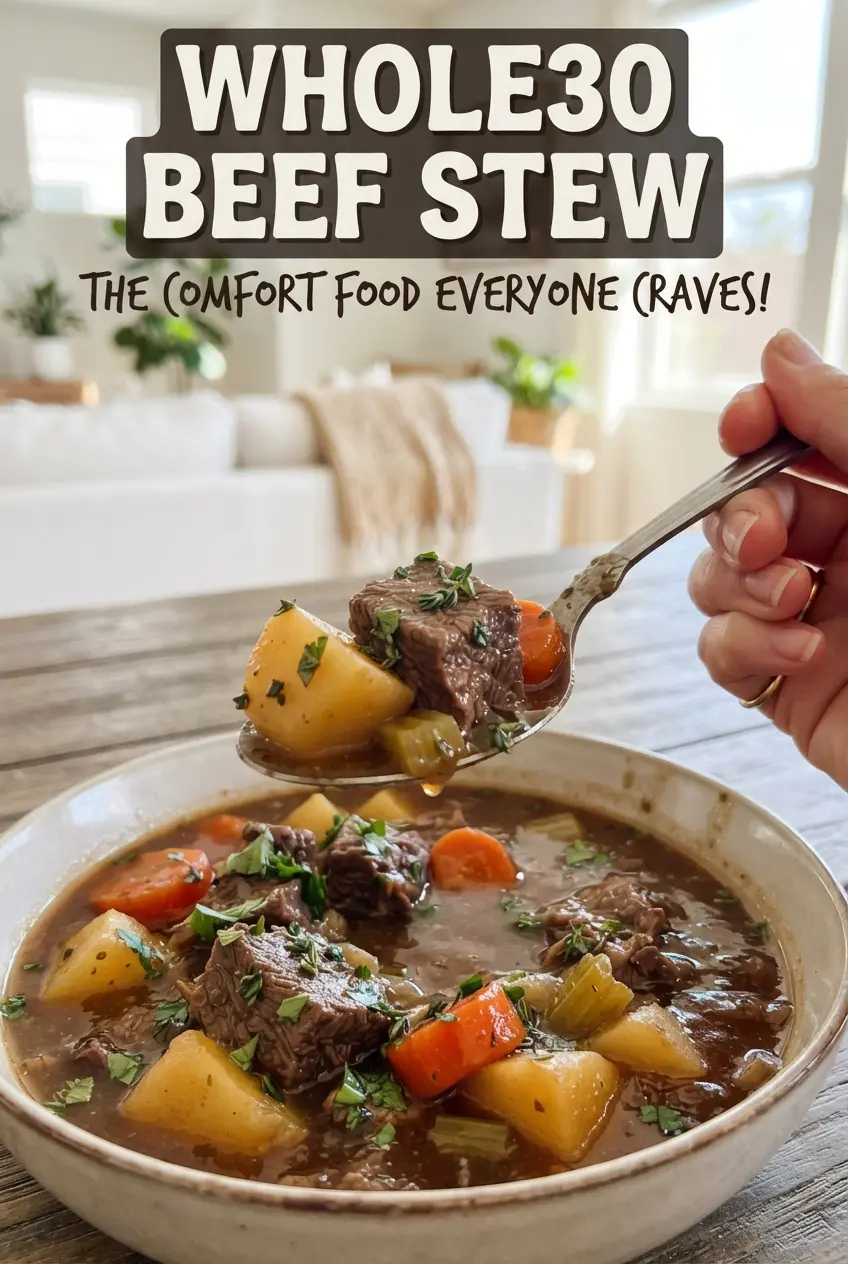
Whole30 Beef Stew
Ingredients
Equipment
Method
- Season the beef chuck cubes with salt and black pepper, then brown in batches in hot oil in a Dutch oven until browned on all sides. Keep the heat hot so the exterior colors quickly (about 8–10 minutes total per batch), then transfer to a plate.
- Cook the diced onion for 4 minutes in the Dutch oven. Add the minced garlic and tomato paste and cook for 1 minute, stirring until fragrant and darkened slightly.
- Add the beef bone broth, coconut aminos, compliant Worcestershire sauce or balsamic vinegar, dried thyme, bay leaf, and the browned beef. Bring to a simmer, cover, and simmer for 1 1/2 hours until the beef is starting to become tender.
- Stir in the cubed sweet potato, sliced carrots, and quartered cremini mushrooms. Cover and simmer for 40–45 minutes, until the vegetables are tender and the gravy looks thick from natural reduction.
- Stir in the arrowroot slurry (arrowroot powder mixed with 2 tablespoons water). Simmer for 2 minutes to thicken, stirring once or twice so the gravy becomes smooth and spoon-coating.
- Remove the bay leaf and taste for seasoning before serving. Serve hot with the thick gravy over the vegetables and beef.