White chicken enchiladas land on the table creamy, bubbling, and tucked under a blanket of melted cheese that turns faintly golden at the edges. The tortillas soften just enough to hold their shape without turning mushy, and the filling stays savory and juicy under the sauce. It’s the kind of pan that disappears fast because every bite has a little bit of everything: tender chicken, mild heat from poblanos, and that rich, silky sauce that clings instead of pooling.
The difference here is in the sauce and the tortilla treatment. A quick roux gives the cream sauce enough body to coat the enchiladas without breaking, and adding the broth slowly keeps it smooth instead of lumpy. Corn tortillas need a little help before rolling, too; a dry skillet warms them just enough that they flex instead of cracking, which makes assembly much cleaner and keeps the rolls tight in the baking dish.
Below, I’ve included the detail that matters most for keeping white chicken enchiladas from turning soggy, plus a few smart swaps if you need to work with what’s already in the kitchen.
The sauce thickened up perfectly and didn’t get watery at all after baking. I loved how the tortillas stayed soft but didn’t fall apart, and the poblano adds just enough flavor without taking over.
Creamy white chicken enchiladas with poblano filling and a bubbling cheese topping are worth saving for the next time you want comfort food that still feels a little special.
The Sauce Has to Coat, Not Flood, the Tortillas
The biggest mistake with white chicken enchiladas is a sauce that looks fine in the saucepan but turns loose and watery in the oven. This version avoids that by building a quick roux first, then whisking in the broth and cream gradually so the base thickens before it ever touches the tortillas. That extra body matters because corn tortillas absorb moisture as they bake. If the sauce is too thin going in, the whole pan can end up soft in a bland, soupy way instead of creamy.
There’s another detail that pays off: the sauce gets a little cheese stirred in before assembly, but most of the cheese stays on top. That gives the filling enough richness without making the sauce greasy or heavy. The goal is a spoonable sauce that clings to the enchiladas and bubbles around the edges without separating.
What Each Ingredient Is Actually Doing in This Pan
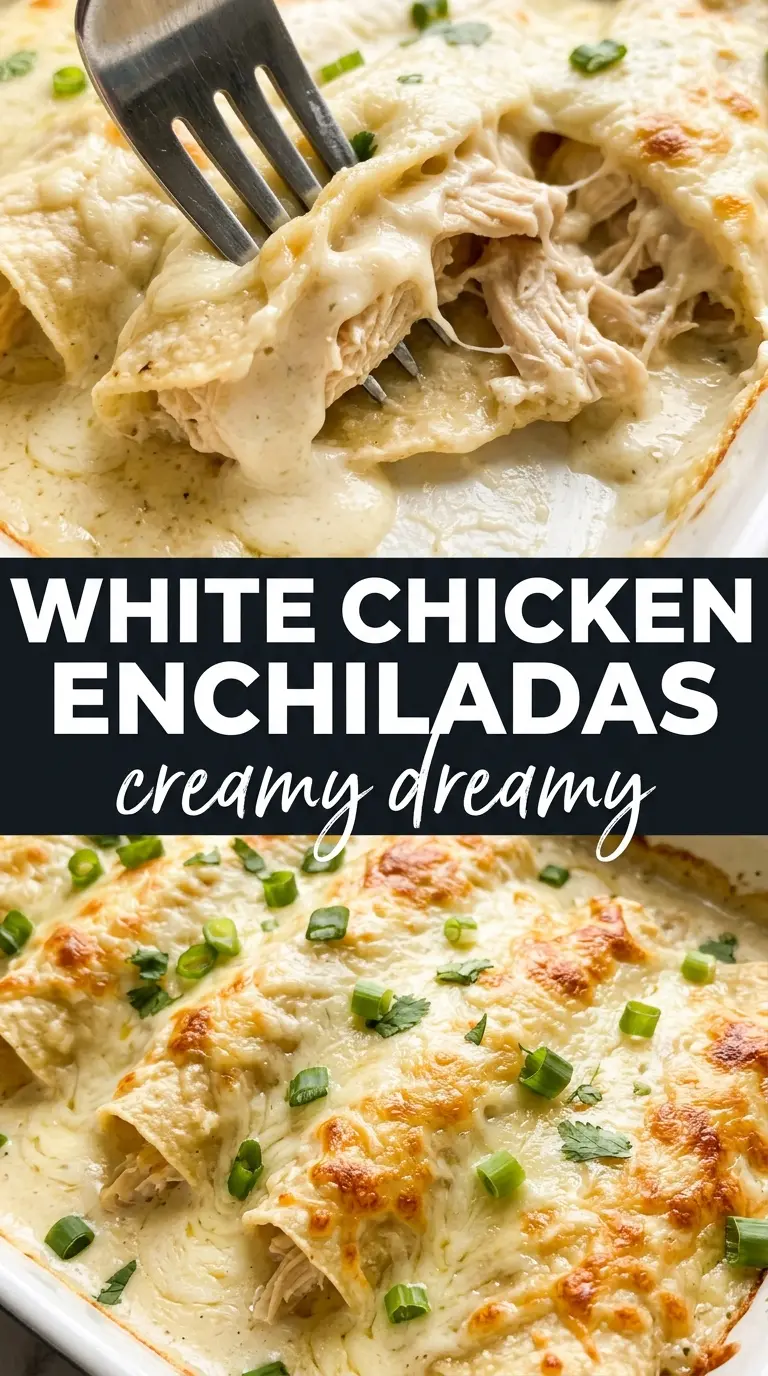
- Cooked shredded chicken — Use chicken that’s already tender and seasoned. Rotisserie chicken works well here because it stays juicy after baking, and shredding it by hand gives you better texture than chopping it into cubes. If you’re cooking it fresh, don’t overcook it; dry chicken won’t recover under the sauce.
- Corn tortillas — These give the enchiladas their classic flavor and hold up better than flour tortillas under a creamy sauce. They need warming before rolling so they don’t crack. A few seconds in a dry skillet is enough; oiling them heavily makes the final dish greasy.
- Oaxaca or mozzarella cheese — Oaxaca gives the best melt and a mild, stretchy finish, but mozzarella is a good stand-in if that’s what you have. Buy low-moisture mozzarella if possible, since fresh mozzarella can release too much liquid. Save some cheese for the top so it browns and bubbles instead of disappearing into the sauce.
- Poblano peppers — These add a gentle chile flavor without making the dish spicy. Dice them small so they tuck into the filling evenly. If you want more heat, roast and seed a poblano instead of adding a hotter pepper; that keeps the flavor balanced.
- Heavy cream — This is what gives the sauce its rich, velvety texture. Half-and-half can work in a pinch, but the sauce will be thinner and a little more prone to breaking if it boils hard. Keep the heat moderate and let it simmer gently.
Building the Rolls So They Stay Creamy, Not Soggy
Make the sauce first and watch the texture
Melt the butter, cook the garlic just until it smells sweet, then whisk in the flour and let it cook for about two minutes. You want the raw flour smell gone, but you don’t want the roux to brown. When you add the broth and cream, drizzle them in while whisking so the mixture stays smooth. By the time it simmers, it should look glossy and thick enough to coat the back of a spoon.
Warm the tortillas until they bend without tearing
Set each tortilla in a dry skillet for a few seconds per side until it becomes flexible. If they’re still stiff, they’ll split as soon as you roll them, and that usually leads to filling leaking out into the sauce. Keep them covered with a clean towel as you work so they stay warm and pliable. This small step makes assembly much easier and keeps the rolls neat.
Dip, fill, and roll with a light hand
Coat each tortilla lightly in the sauce before filling. That thin layer helps the enchiladas absorb flavor from the outside in, but don’t soak them until they fall apart. Add just enough chicken and poblano to roll without bursting the seam. Place them seam-side down so they hold their shape while baking.
Bake until the center is hot and the top is spotted with gold
Pour the remaining sauce over the top, finish with the rest of the cheese, and bake until the edges bubble and the cheese melts into a soft golden layer. The center should be hot all the way through, but not boiling aggressively. Let the pan rest for about 10 minutes before serving so the sauce settles and the enchiladas slice cleanly instead of sliding apart.
Three Ways to Work Around What You Have
Gluten-Free Enchiladas
Use a gluten-free all-purpose flour blend in the roux and check that your broth is gluten-free. The sauce should still thicken nicely, though some blends need an extra minute of simmering before they lose their starchy taste. Corn tortillas already fit this version naturally, so the rest of the dish stays the same.
Dairy-Light Version
You can swap the heavy cream for half-and-half, but the sauce will be thinner and a little less plush. If you go this route, let the sauce simmer a minute or two longer before assembling so it has time to thicken. The cheese topping will still melt well, but the finished pan won’t have quite the same rich finish.
Swap the Chicken for Beans
For a vegetarian pan, replace the chicken with seasoned black beans or pinto beans and keep the poblano in the filling. The texture will be softer and a little looser, so don’t overfill the tortillas. You’ll still get a satisfying, creamy enchilada, just with a different kind of bite.
Storage and Reheating
- Refrigerator: Store leftovers covered for up to 4 days. The tortillas will soften a bit more as they sit, but the flavor stays good.
- Freezer: This freezes well after baking. Cool completely, wrap tightly, and freeze in portions for up to 2 months. Thaw in the fridge before reheating so the sauce doesn’t separate from a sudden temperature shock.
- Reheating: Reheat covered in a 325°F oven until hot in the center, or warm single portions in the microwave at medium power. The common mistake is blasting it on high heat, which can split the sauce and make the edges dry before the middle is heated through.
Answers to the Questions Worth Asking
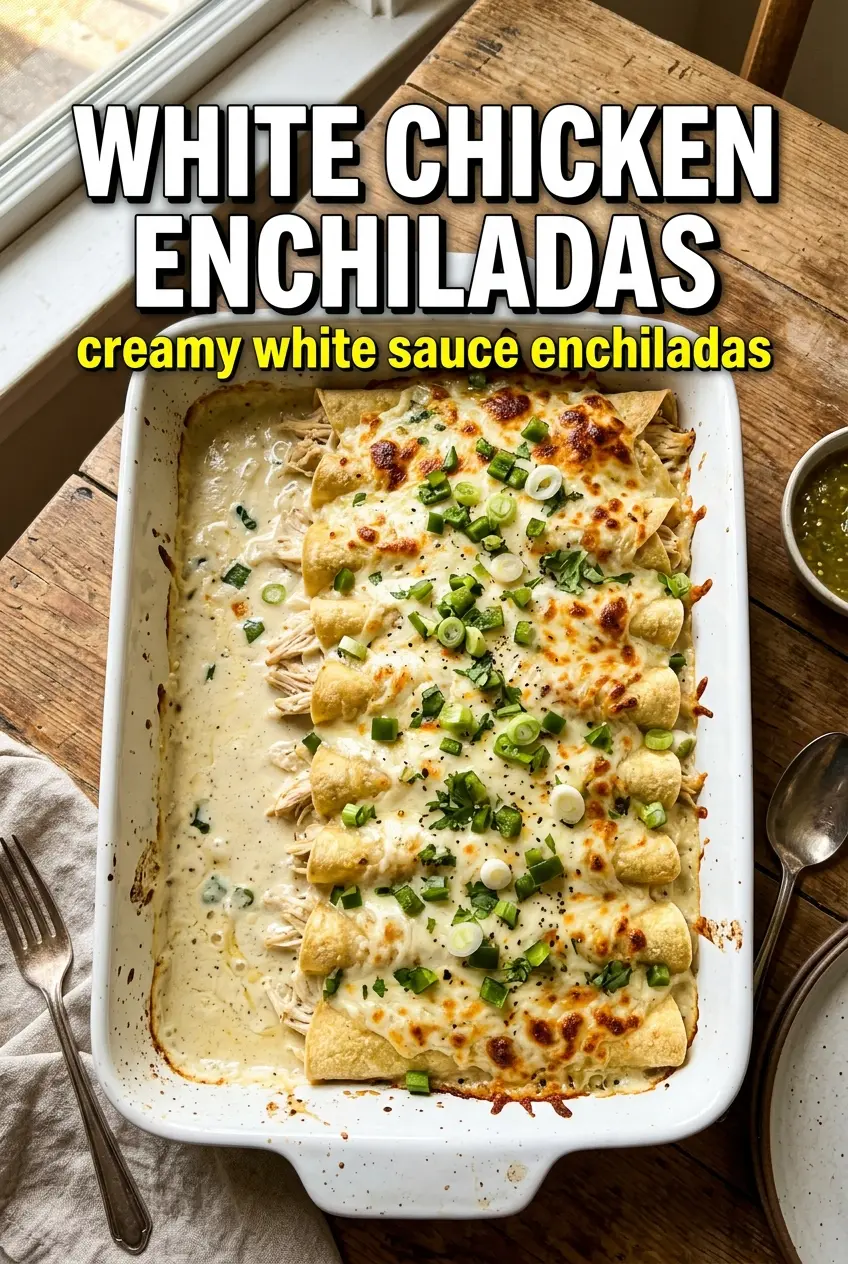
White Chicken Enchiladas
Ingredients
Equipment
Method
- Melt the butter in a saucepan over medium heat, letting it fully liquefy before adding aromatics.
- Add the minced garlic and cook for 1 minute, stirring so it doesn’t brown.
- Whisk in the flour to form a roux and cook for 2 minutes, stirring frequently until it smells nutty.
- Gradually whisk in the chicken broth and heavy cream until smooth, scraping the bottom to prevent lumps.
- Simmer the sauce for 5 minutes, stirring occasionally, until it thickens enough to coat a spoon.
- Stir in 1/2 cup of the cheese until melted, then season with salt and pepper to taste.
- Warm the tortillas in a dry skillet over medium heat until pliable, so they roll without cracking.
- Pour a thin layer of white sauce into a 9x13 inch baking dish.
- Dip each tortilla in the remaining sauce, then fill with 2 tablespoons chicken and poblano peppers and roll tightly seam-side down in the dish.
- Pour the remaining sauce over the rolls and top with the remaining cheese.
- Bake at 350°F for 25-30 minutes, until bubbly and golden on top.
- Rest for 10 minutes, then garnish with chopped cilantro and serve.