Juicy watermelon, salty feta, and torn mint make a salad that lands cold, crisp, and bright on the plate. The trick is keeping the fruit in big enough pieces to hold its shape, then finishing with just enough dressing to wake everything up without flooding the bowl. You get sweetness first, then a clean hit of herbs, then that creamy-salty bite from the cheese.
What makes this version work is restraint. Watermelon already brings plenty of juice, so the dressing stays light: lime for lift, honey for balance, olive oil for body, and a thin drizzle of balsamic glaze for depth. The red onion is sliced very thin so it adds sharpness without taking over, and the mint and basil go in at the end so they stay fragrant instead of bruised and dark.
Below, I’ve included the one detail that matters most for texture, plus a few ways to adapt this salad if you want to change the cheese, skip the onion, or make it a little more make-ahead friendly.
The watermelon stayed crisp even after the 15-minute chill, and the lime-honey drizzle kept the feta from tasting too salty. I added a little extra mint and it tasted like something from a good restaurant.
Love the contrast of watermelon, feta, and mint? Save this salad for the next time you want a cold, salty-sweet side that comes together in minutes.
Why This Salad Stays Crisp Instead of Getting Watery
The biggest mistake with watermelon salad is treating it like a tossed green salad. Watermelon gives off juice fast, and if you salt it too early or pile on the dressing, the platter turns soggy before it reaches the table. This version keeps the fruit intact, uses a shallow serving dish, and saves the final seasoning for the very end so the cubes stay glossy and fresh instead of soft and puddled.
The other thing that matters is balance. Feta and balsamic glaze both bring salt and acid, so the dressing itself stays light and clean. You’re building contrast, not saturation. If the watermelon is exceptionally sweet, the lime will keep it from tasting flat; if it’s a little pale, the honey rounds it out without making the salad feel heavy.
What Each Ingredient Is Actually Doing in the Bowl

- Seedless watermelon — Use the best melon you can find, because it’s the whole foundation of the salad. It should smell fragrant at the stem end and feel heavy for its size. Cut it into larger cubes or triangles so it doesn’t collapse once the dressing goes on.
- Feta — This is the salty counterpoint that keeps the salad from tasting like fruit on a plate. Block feta crumbles better than pre-crumbled, which is usually drier and less creamy. If you need a milder swap, goat cheese works, but it loses that firm salty bite.
- Fresh mint and basil — Mint gives the salad its cool lift, while basil adds a soft, peppery note underneath. Tear the leaves instead of chopping them; a knife can bruise the herbs and darken the edges. If you only have mint, the salad still works, but basil makes it taste more layered.
- Red onion — The onion should be sliced paper-thin so it reads as sharpness, not crunch. If yours is intense, soak the slices in cold water for 10 minutes and drain well. That takes off the harsh edge without killing the flavor.
- Lime, honey, olive oil, and balsamic glaze — Lime gives the dressing its brightness, honey smooths the acid, and olive oil helps it cling lightly to the fruit. The balsamic glaze is a finishing move, not a mixing ingredient; it adds a dark, sweet note that makes the whole salad taste more complete.
Assembling It So the Layers Stay Clean
Whisk the dressing first
Start with the lime juice, honey, olive oil, and a tiny pinch of salt in a small bowl and whisk until the honey disappears into the liquid. You want a loose dressing, not something thick enough to coat like a vinaigrette for greens. If the honey is stubborn, warm the bowl in your hands for a minute and whisk again.
Build the base on a wide platter
Spread the watermelon in a single layer or a very loose pile on a shallow platter. A deep bowl traps juice and makes the bottom pieces slippery, which is where the texture goes first. Give the fruit some space so the feta and herbs can sit on top instead of sinking into the gaps.
Add the sharp elements with a light hand
Scatter the red onion over the fruit, then crumble the feta across the top. The onion should disappear into the salad in small flashes, not stand out in thick strands. If your feta is packed in brine, pat it dry first so it doesn’t bring extra moisture with it.
Finish right before serving
Drizzle on the dressing and balsamic glaze, then add the mint and basil last so they stay bright and aromatic. Finish with flaky salt and cracked pepper. If you’re chilling the salad for 15 minutes, hold back the herbs until just before serving so they don’t wilt and stain the watermelon.
How to Change the Salad Without Losing the Point of It
Dairy-Free Watermelon Salad
Leave out the feta and add a handful of toasted pumpkin seeds or sliced almonds for contrast. You lose the creamy-salty bite, so compensate with a little extra flaky salt and an extra squeeze of lime. The salad stays fresh and clean, just less rich.
No Balsamic Glaze Version
Skip the glaze and finish with a little extra lime zest for a brighter, sharper salad. The glaze adds depth and sweetness, but the dish still works beautifully without it if you want a cleaner Mediterranean feel. Use the zest sparingly so it perfumes the salad instead of making it bitter.
Make It More Substantial
Add cucumber, avocado, or a handful of arugula if you want the salad to eat more like a lunch plate. Cucumber keeps the same cooling feel, avocado adds creaminess, and arugula brings peppery bite. Add those just before serving so nothing gets soggy.
How to Make It for a Crowd
Double everything, but keep the fruit in two separate platters if you can. A huge mound of watermelon sheds more juice and gets harder to serve cleanly. Dress each platter lightly and finish with the herbs right before it hits the table.
Storage and Reheating
- Refrigerator: Best eaten the day it’s made. Leftovers will keep for about 1 day, but the watermelon softens and the herbs lose their sparkle.
- Freezer: Don’t freeze this salad. Watermelon turns mushy and the feta changes texture in a way that doesn’t recover.
- Reheating: No reheating needed. If the salad has been chilled, let it sit at room temperature for 5 to 10 minutes so the flavors wake back up before serving.
Answers to the Questions Worth Asking
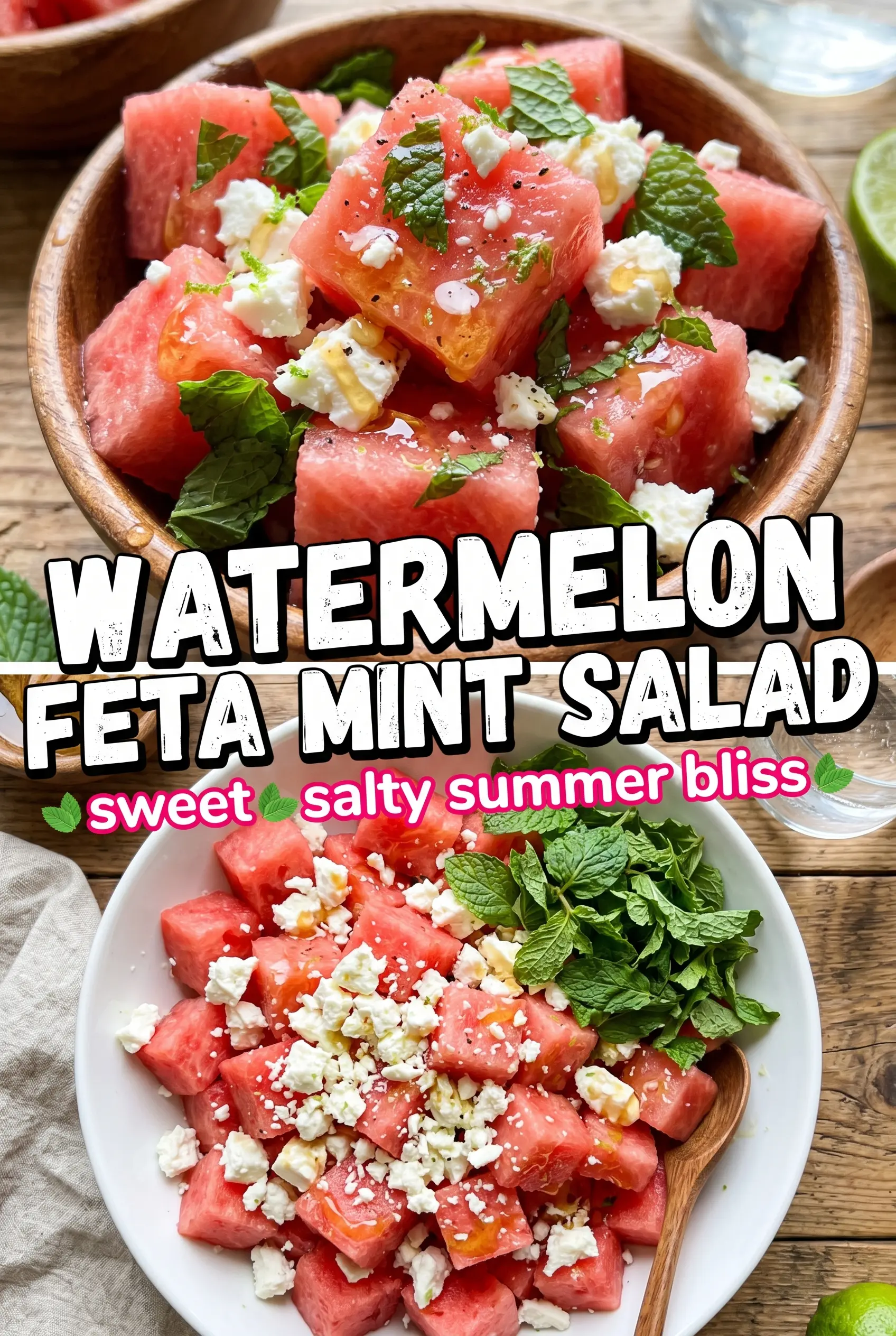
Watermelon Salad with Fresh Mint and Feta
Ingredients
Method
- Whisk together the lime juice, honey, and extra-virgin olive oil, then add a tiny pinch of salt to season. The mixture should look smooth and glossy before you use it.
- Arrange the watermelon cubes on a wide, shallow serving platter or in a large bowl so the red pieces are spread out in a single layer. This helps the dressing coat the fruit evenly.
- Scatter the red onion slices evenly over the watermelon so each bite gets a little crunch. Keep onion distribution consistent across the surface.
- Crumble or arrange the feta cheese generously over the top, leaving pockets of white visible among the red watermelon. Aim for a generous, uneven scatter for contrast.
- Drizzle the lime-honey dressing over everything, letting it lightly gloss the watermelon and feta rather than pooling. Use a steady pour across the full platter.
- Drizzle the balsamic glaze over the salad in thin streaks, creating small dark-red accents on the three-color surface. Keep the glaze light so it doesn’t overpower the fruit.
- Scatter the fresh mint and basil leaves over the top, then season with flaky sea salt and cracked black pepper. Serve immediately for the freshest herb flavor.
- After assembling, cover and chill the salad for 15 minutes to let the flavors meld. Serve again after chilling, keeping the herbs spread on top for a bright look.