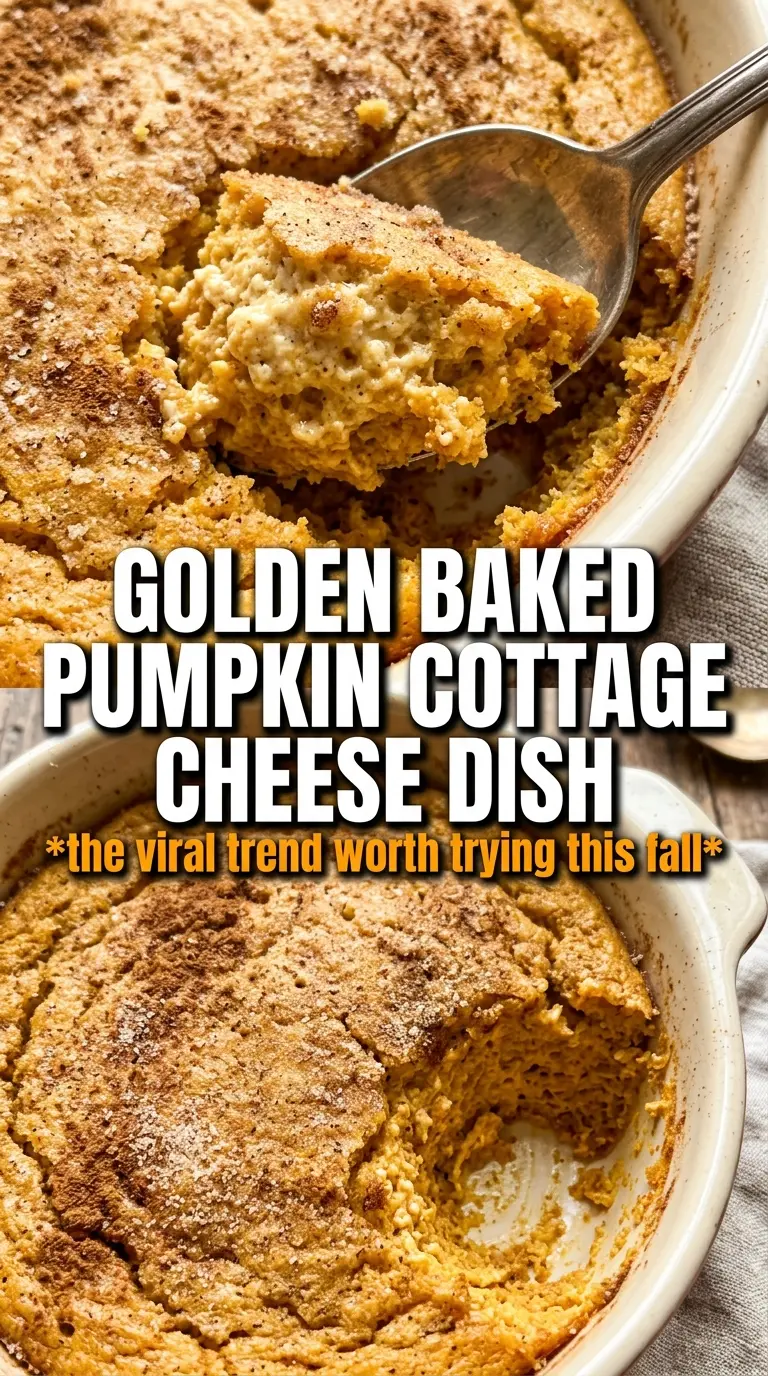
Viral pumpkin cottage cheese bake lands somewhere between custard and baked oatmeal, with a soft, spoonable center and a lightly bronzed top that tastes like pumpkin pie met breakfast. It’s the kind of dish that comes out of the oven looking humble, then gets polished off fast because the maple, spice, and pumpkin work together in a way that feels familiar but just different enough to keep people coming back.
The reason this version works is the texture balance. Blending the cottage cheese until completely smooth keeps the bake from turning lumpy, and the eggs set the mixture into something sliceable without making it dry. Pumpkin puree brings body and moisture, while the oats give just enough structure so the whole thing holds together once it cools for a few minutes.
Below, I’ll show you how to get the center set without overbaking it, what matters most if you’re swapping ingredients, and how to serve it so the maple syrup and pecans actually make sense instead of just sitting on top.
I blended the cottage cheese first like you said, and the bake came out smooth instead of grainy. The top got that nice golden crust, and the middle set perfectly after 45 minutes.
Save this pumpkin cottage cheese bake for a high-protein breakfast with a custardy center and a maple-pecan finish.
The Trick to a Smooth Cottage Cheese Bake, Not a Grainy One
The biggest mistake in a cottage cheese bake is skipping the blend. Cottage cheese curds don’t melt into a silky custard on their own, so if you whisk them straight into the batter, you end up with a speckled, curdled texture instead of that smooth, almost cheesecake-like middle. Blending the cottage cheese first changes everything.
Oats are the other detail that matters more than people expect. They absorb moisture as the bake sits, which helps the center set without turning dense. If you add too many, the bake gets heavy; if you skip them, it can lean too soft and wobble longer than it should. The goal here is a custardy slice that holds together once it rests for a few minutes.
- Blend the cottage cheese until completely smooth — this is what gives the bake its clean texture. A food processor works if that’s what you have, but a blender is best for getting rid of every last curd.
- Use pure pumpkin puree, not pumpkin pie filling — pie filling is already sweetened and spiced, which throws off both the texture and the balance of the batter.
- Don’t overdo the oats — old-fashioned oats give structure without turning the bake into oatmeal cake. Quick oats can work in a pinch, but the texture comes out softer and less distinct.
- Let it rest after baking — the center finishes setting as it cools. Cutting too soon makes the slices slump and look underdone even when they’re not.
What Each Ingredient Is Actually Doing in This Bake
- Cottage cheese — this is the base of the bake, and it needs to be blended smooth so it bakes into a custard instead of a curdled filling. Full-fat cottage cheese gives the richest result, but low-fat still works if you don’t mind a slightly lighter texture.
- Pumpkin puree — this brings the pumpkin flavor and most of the body. It also keeps the bake moist, so this is not the place to swap in watery homemade puree unless you’ve drained it well.
- Eggs — they set the custard. Four eggs sound like a lot, but they’re what keep the bake from collapsing into pudding once it comes out of the oven.
- Maple syrup and brown sugar — maple gives the flavor its clean sweetness, while brown sugar adds a deeper, rounder note. You can reduce the brown sugar a little if you like a less sweet breakfast, but don’t remove both or the pumpkin spice will taste flat.
- Pumpkin pie spice, cinnamon, and vanilla — these are what make the bake taste finished instead of just pumpkin-flavored. Vanilla softens the spice and keeps the whole dish from tasting sharp.
- Old-fashioned oats — they thicken the batter just enough and give the bake some structure. Quick oats can be used, but the bite will be softer.
Building the Batter So the Center Sets Cleanly
Blending the Cottage Cheese
Start by blending the cottage cheese until it looks completely smooth, with no visible curds. That step matters because the batter depends on a uniform base; if the cottage cheese stays lumpy, the final bake will look uneven and can taste a little squeaky. Use a blender or food processor and scrape down the sides once or twice so nothing is left behind. When it’s ready, it should look like a thick, glossy cream.
Mixing the Pumpkin Custard
Whisk the blended cottage cheese with the pumpkin, eggs, maple syrup, brown sugar, spices, vanilla, and salt until the mixture is fully combined. You’re looking for a smooth orange batter with no streaks of egg white or pockets of spice. If you see specks of unmixed cottage cheese or egg, keep whisking before adding the oats. A well-mixed batter bakes more evenly and sets at the same rate across the dish.
Adding the Oats and Baking
Stir in the oats last so they don’t break down too much before the bake goes into the oven. Pour the mixture into a greased 8×8 or 9×9 dish and bake until the top is golden and the center is set with just the slightest jiggle in the middle. If the edges are puffed and the center still sloshes, it needs more time; if the top is deeply browned before the center is set, cover it loosely with foil and finish baking gently.
The Finish and Toppings
Let the bake sit for at least 10 minutes before serving. That rest time tightens the custard so you can spoon it cleanly instead of chasing a soft puddle around the pan. Finish with maple syrup and pecans right before serving so the nuts stay crunchy and the syrup doesn’t disappear into the top. Warm is the sweet spot here, when the center is tender and the spice smells strongest.
How to Change the Bake Without Losing the Texture
Dairy-Free Swap
Use a thick dairy-free cottage cheese alternative if you can find one, but expect a softer set and a slightly less rich finish. Because the eggs are doing the main structural work, the bake will still hold together, but the flavor will be less creamy and a little less tangy.
Gluten-Free Version
Use certified gluten-free oats and keep everything else the same. The oats are the only ingredient here that usually create a gluten issue, and the texture stays nearly identical when you swap them carefully.
Less Sweet Breakfast Version
Cut the brown sugar in half and drizzle a little maple syrup on top after baking instead. That keeps the pumpkin and spice front and center without making the custard taste like dessert.
Storage and Reheating
- Refrigerator: Store covered for up to 4 days. The texture firms up in the fridge, which is normal.
- Freezer: It can be frozen, but the custard texture softens after thawing. Freeze slices individually, wrap them well, and thaw overnight in the fridge.
- Reheating: Warm slices in the microwave in short bursts or in a 300F oven until just heated through. Overheating makes the eggs tighten and the bake turn rubbery.
Answers to the Questions Worth Asking

Viral Pumpkin Cottage Cheese Bake
Ingredients
Equipment
Method
- Preheat oven to 350°F and grease an 8x8 or 9x9 baking dish. Set the dish aside so it’s ready to fill.
- Blend the cottage cheese until completely smooth in a blender. Stop and scrape the sides as needed for a silky base.
- Whisk the blended cottage cheese, pumpkin puree, eggs, maple syrup, brown sugar, pumpkin pie spice, cinnamon, vanilla, and salt until evenly combined. The mixture should look uniform with no streaks.
- Stir in the old-fashioned oats, then pour the batter into the prepared dish. Make sure the surface is level for even browning.
- Bake at 350°F for 40–45 minutes until the center is set and the top is golden. Look for a slightly puffed surface and a springy middle that isn’t liquid.
- Serve warm with maple syrup and pecans. Drizzle over each portion and scatter pecans on top for crunch.