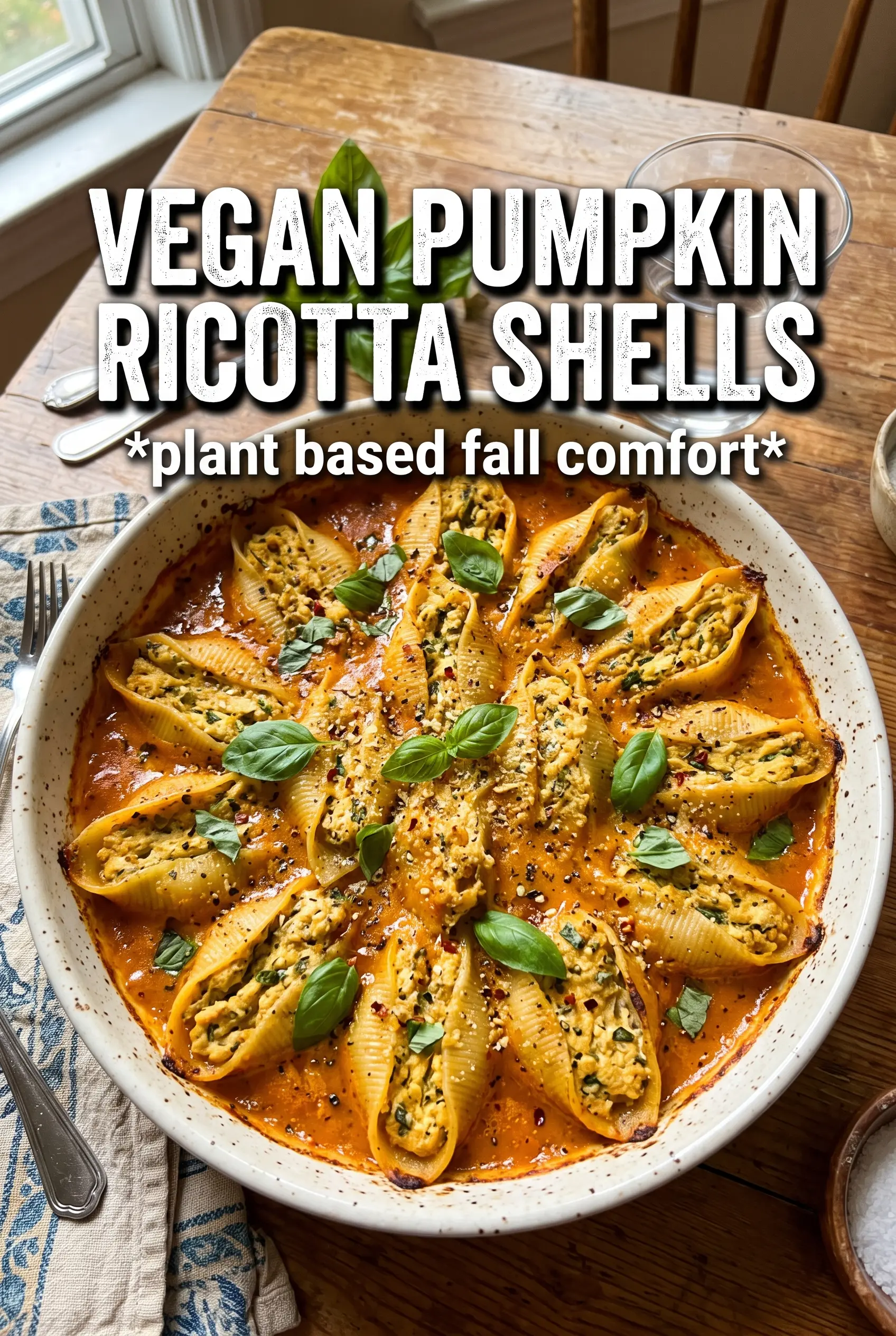
Vegan pumpkin ricotta stuffed shells bake up creamy, savory, and deeply comforting, with tender pasta holding a smooth tofu-cashew filling under a velvety pumpkin sauce. The shells stay distinct instead of collapsing into the pan, and the top turns bubbling and lightly browned in the oven, which gives the whole dish that baked pasta payoff people come back for.
What makes this version work is the balance: pumpkin puree brings body and color, while coconut cream gives the sauce enough richness to coat the shells without turning it heavy or bland. The tofu ricotta needs to be blended until completely smooth so it tastes creamy instead of crumbly, and the nutritional yeast pulls both the filling and sauce toward that cheesy, savory edge without any dairy.
Below you’ll find the little details that keep the sauce silky, the shells easy to fill, and the bake from drying out. I also included a few smart swaps and make-ahead notes for the nights when you need dinner to come together without a lot of fuss.
The pumpkin sauce was silky and the tofu ricotta held its shape in the shells instead of turning mushy. I baked it the full 40 minutes and the top came out bubbly with just enough browning around the edges.
Love creamy vegan pumpkin ricotta stuffed shells? Save this one for a cozy baked pasta that brings together pumpkin, tofu ricotta, and bubbling vegan mozzarella.
The Trick to Keeping the Filling Creamy Instead of Grainy
The filling needs to be smooth enough to spoon, not stiff enough to fight with. That is where tofu and cashew cream pull their weight together: the tofu gives structure, while the cashew cream brings the soft, rich texture that keeps the shells from tasting dry after baking. If your tofu ricotta tastes chalky, it usually means the mixture was under-blended or the tofu went in too firm and too cold.
Press the tofu first so it doesn’t water down the filling, then blend until the mixture looks almost whipped. You want it to mound on a spoon but still spread easily into the shells. The pumpkin sauce below does a lot of the moisture work, so the filling can stay on the thicker side without turning pasty.
What Each Ingredient Is Actually Doing in This Dish
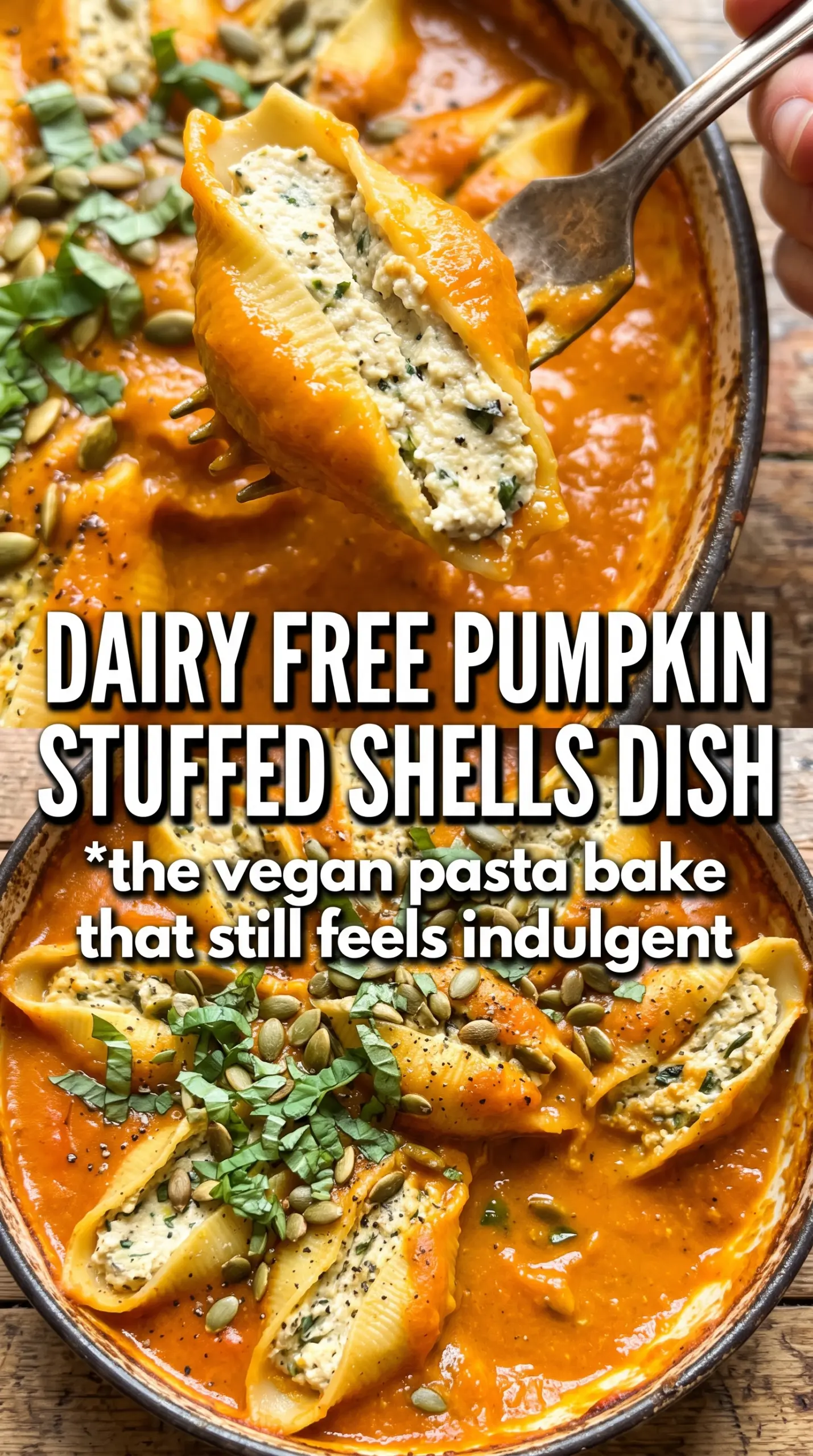
- Firm tofu — This is the backbone of the ricotta. Soft tofu turns the filling loose, while firm tofu holds enough shape to mimic a ricotta-like texture after blending. Press it before using it, or the filling will taste watered down.
- Cashew cream — This adds the lush, dairy-style richness that tofu alone can’t give. If you don’t have cashew cream, blend soaked cashews with a little water until completely smooth; a gritty blend will show up in the final filling.
- Pumpkin puree — Use plain pumpkin puree, not pie filling. It thickens the sauce and gives it that earthy sweetness, but it needs coconut cream and seasoning to taste balanced instead of flat.
- Coconut cream — This is what makes the sauce cling to the shells. Full-fat coconut milk can work in a pinch, but the sauce will be thinner and a little less luxurious.
- Nutritional yeast — It adds the savory, cheese-like note that keeps both the filling and sauce from tasting one-dimensional. Don’t skip it unless you replace it with another concentrated savory ingredient.
- Vegan mozzarella — This is mostly for the top, where it can melt and brown a bit. A lower-quality brand is fine here because it isn’t carrying the whole dish.
Building the Sauce and Shells So the Pan Stays Saucy
Start with the garlic and let it soften, not brown
Sauté the garlic just until it smells fragrant and starts to turn translucent. If it browns, the sauce picks up a bitter edge that the pumpkin can’t cover. Keep the heat moderate and move right into the liquid ingredients once the garlic wakes up.
Let the sauce simmer until it coats a spoon
Once the pumpkin, coconut cream, broth, and seasonings are in the pan, let everything simmer for about 5 minutes. You’re looking for a sauce that looks smooth and glossy, not boiling hard or separating around the edges. If it feels too thick at this stage, add a splash more broth; if it’s too thin, give it another minute or two uncovered.
Fill the shells after they cool just enough to handle
Cook the pasta shells al dente so they can finish in the oven without tearing apart. Drain them and lay them out briefly so they stop sticking together, then fill them with the ricotta mixture while they’re still pliable. If they overcook on the stove, they split when you try to stuff them and the whole dish turns messy fast.
Cover the shells with enough sauce to protect the edges
Most of the sauce should go in the bottom of the baking dish before the shells do, and the rest should spoon over the top. That top layer matters because exposed pasta edges dry out in the oven before the centers finish heating. Scatter the vegan mozzarella on top and bake until the sauce bubbles around the edges and the cheese looks melted with a few browned spots.
How to Adapt These Shells for Different Kitchens and Diets
Make It Gluten-Free
Use gluten-free jumbo shells if you can find them, or swap in a gluten-free baked pasta shape that can hold sauce well. The filling and sauce already work without wheat, so this is mostly about choosing a pasta that survives stuffing and baking without breaking apart.
Skip the Cashews
If cashews aren’t an option, blend silken tofu with a spoonful of olive oil until smooth and use that in place of the cashew cream. The texture will be a little lighter and less rich, but it still gives the filling enough body to hold up in the shells.
Add Greens Without Watering It Down
Wilt a handful of chopped spinach and squeeze it dry before folding it into the ricotta. Any extra moisture left in the greens will thin the filling and make the shells slide around in the pan, so dry them well before mixing.
Storage and Reheating
- Refrigerator: Store leftovers covered for up to 4 days. The shells will absorb more sauce as they sit, so expect the texture to get a little softer.
- Freezer: This freezes well after baking. Cool completely, portion into airtight containers, and freeze for up to 2 months; thaw overnight in the refrigerator before reheating.
- Reheating: Reheat covered in a 350F oven until hot in the center, adding a splash of broth or water if the sauce looks thick. The biggest mistake is microwaving it uncovered, which dries the pasta and makes the topping rubbery.