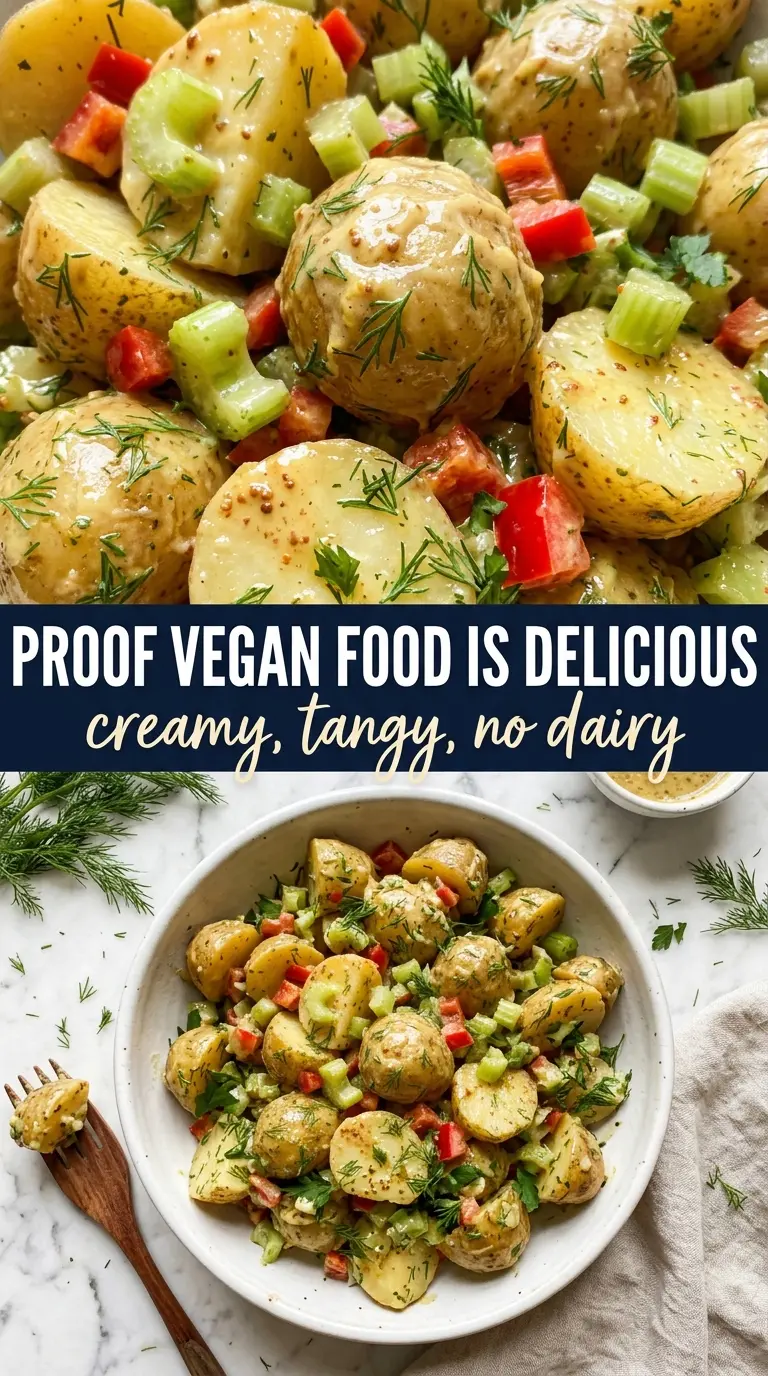
Tender baby potatoes make the best potato salad when they’re dressed while still warm, and this vegan version leans into that. The potatoes soak up the lemon-Dijon dressing instead of sitting under a heavy, dull coating, so every bite tastes bright, herbaceous, and clean. It’s the kind of side dish that disappears fast at cookouts, but it’s just as good piled next to a simple sandwich or roasted vegetables.
What makes this one work is the balance: creamy enough from the olive oil and mustard, sharp enough from the lemon and vinegar, and salty enough from the capers to keep it interesting without needing mayo or eggs. Warm potatoes matter here. They absorb the dressing better than fully chilled ones, and that’s what gives the salad flavor all the way through instead of only on the surface.
Below you’ll find the small details that make this salad hold together, the ingredients worth paying attention to, and the one timing step that keeps the potatoes from turning bland or mushy.
The dressing soaked into the potatoes while they were still warm, and the salad tasted seasoned all the way through instead of sitting on top. I made it the night before, and the herbs stayed bright after chilling.
Save this vegan potato salad for cookouts and meal prep nights when you want a bright, mayo-free side that actually tastes better after chilling.
Why Warm Potatoes Matter More Than the Dressing
The biggest mistake with potato salad is cooling the potatoes all the way down before they ever see the dressing. Cold potatoes stay tight and bland on the outside, which means the lemon-Dijon mixture sits on top instead of getting pulled into the potato. Warm potatoes absorb seasoning while their surfaces are still open, and that’s what gives this salad its depth.
This also helps the texture. Once the potatoes are drained and left for a few minutes, they’re dry enough to hold dressing but still tender enough to break at the edge when tossed. If they steam too long in the colander, they get watery and the dressing thins out. If they sit too long and go cold, the whole salad tastes flatter than it should.
- Baby potatoes — Waxy potatoes hold their shape and give you clean halves instead of a broken, starchy mash. Yukon Golds work if that’s what you have, but russets will fall apart too easily here.
- Dijon mustard — This is the backbone of the dressing. It emulsifies the oil and acid and keeps the salad from tasting oily or sharp.
- Capers — They replace the salty punch you’d normally get from eggs or mayo. Drain them well so they season the salad without adding excess brine.
- Fresh dill and parsley — Dried herbs won’t give you the same bright finish. If you need a swap, use chives or tarragon, but add them right before serving for the cleanest taste.
What the Lemon-Dijon Dressing Is Doing to Every Bite
- Olive oil — Use a good-tasting oil here because it’s one of the main flavors. You don’t need your most expensive bottle, but you do want something fresh, not flat or peppery to the point of overwhelming the herbs.
- Lemon juice and zest — Juice brings the acidity; zest brings the aroma. If you skip the zest, the dressing tastes thinner and less lively.
- Apple cider vinegar — This sharpens the dressing so it doesn’t read as heavy. White wine vinegar works in a pinch, but apple cider vinegar gives a softer edge that fits the potatoes well.
- Honey or maple syrup — Just enough sweetness rounds out the acid. Maple keeps the salad fully vegan, and you only need a small amount to keep the dressing balanced.
- Garlic — One clove is enough. Raw garlic gets louder as the salad chills, so mince it finely and don’t overdo it or the dressing will dominate the herbs.
The 20 Minutes That Turn Plain Potatoes Into Potato Salad
Cooking the Potatoes Until They’re Just Tender
Start the potatoes in well-salted water and cook them until a fork slips in without resistance, but the pieces still hold their shape. Overcooking is the fastest way to get a mushy salad, especially with halved baby potatoes that can go from perfect to broken in a minute. Drain them well and let them sit just long enough to stop steaming hard, about 10 minutes.
Whisking the Dressing Until It Looks Unified
The dressing should turn cloudy and slightly thick when the oil and lemon come together. If it separates immediately, keep whisking; Dijon is doing the emulsifying work here, and it needs a little motion to bind everything. Add the garlic, salt, and pepper early so they disperse evenly instead of clumping in one bite.
Tossing While the Potatoes Are Still Warm
Put the potatoes, celery, red onion, capers, dill, and parsley in a large bowl, then pour the dressing over while the potatoes are still warm. Toss gently so the halves stay intact, but don’t baby them too much or the dressing won’t spread into every cut edge. The salad will look a little glossy and loose at first; that’s right. It tightens up after chilling.
Chilling for Flavor, Then Tasting Again
Let the salad cool completely before refrigerating it for at least an hour. This is when the lemon settles, the onion softens, and the potatoes finish absorbing the dressing. Right before serving, taste it again. Cold food needs more seasoning than warm food, so a pinch more salt or a squeeze of lemon at the end can wake the whole bowl back up.
How to Adapt This Salad for Different Tables and Tastes
Make it fully vegan and maple-sweetened
Use maple syrup instead of honey and keep everything else the same. The sweetness stays subtle, but the salad becomes completely plant-based without changing the texture of the dressing.
Add crunch if you want a bigger contrast
A handful of diced celery is already built in, but you can add finely chopped cucumber or radish for more snap. Add extra crunchy vegetables right before serving so they stay crisp instead of softening in the dressing.
Swap the herbs based on what you have
Dill and parsley give the cleanest, brightest finish, but chives, tarragon, or basil can work if that’s what’s in the fridge. Basil makes the salad softer and sweeter, while tarragon adds a faint anise note that plays well with the lemon.
Keep it gluten-free without changing anything
This salad is naturally gluten-free as written, which makes it an easy side for mixed-diet gatherings. Just check that your Dijon mustard is certified gluten-free if cross-contact is a concern.
Storage and Reheating
- Refrigerator: Keeps for 3 to 4 days. The herbs will soften a little, but the flavor deepens overnight.
- Freezer: Don’t freeze it. Potatoes turn grainy and the dressing separates after thawing.
- Reheating: This salad is meant to be served cold or at cool room temperature. If it’s been in the fridge, let it sit out for 15 to 20 minutes and stir in a small squeeze of lemon if the flavors seem muted.
Answers to the Questions Worth Asking
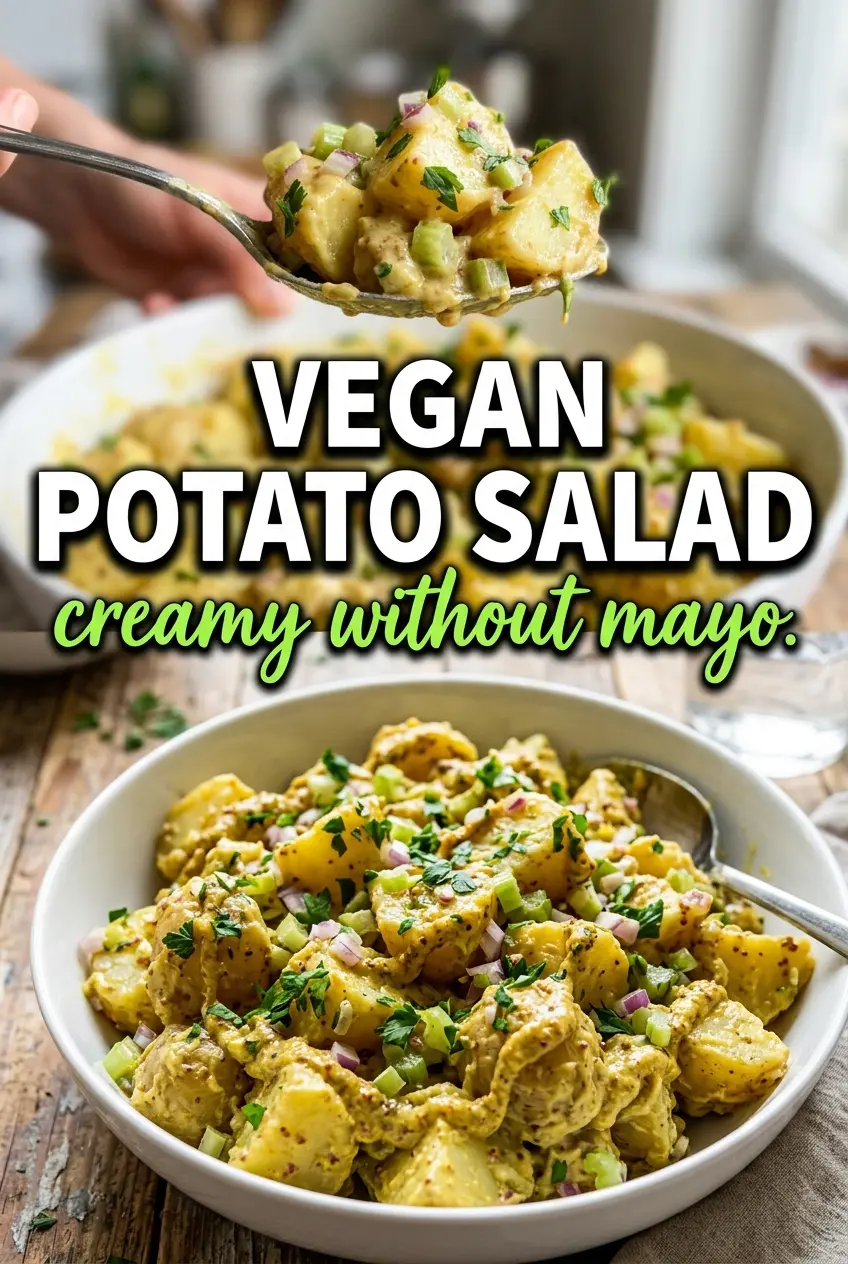
Vegan Potato Salad
Ingredients
Equipment
Method
- Bring a Dutch oven of well-salted water to a boil, then add halved baby potatoes and cook 12-15 minutes until fork-tender. Visual cue: potatoes should easily pierce with a fork.
- Drain the potatoes and let them cool for 10 minutes until still warm, then spread them on a sheet pan to stop cooking. Visual cue: surface looks slightly dry and steamy rather than fully cooled.
- Whisk olive oil, fresh lemon juice, lemon zest, Dijon mustard, apple cider vinegar, honey or maple syrup, minced garlic, salt, and pepper until emulsified. Visual cue: dressing turns glossy and uniformly creamy with no oil streaks.
- Combine warm potatoes, celery, red onion, capers, dill, and parsley in a large bowl, gently folding to distribute the herbs. Visual cue: green herbs and capers are visible throughout.
- Pour the lemon Dijon dressing over the warm potato mixture and toss to coat generously. Visual cue: potatoes look evenly coated with a bright yellow sheen.
- Let the salad cool completely, then refrigerate for at least 1 hour so flavors meld. Visual cue: it thickens slightly and tastes more balanced after chilling.
- Taste and adjust lemon, Dijon, or salt before serving, then top with extra fresh herbs. Visual cue: a final sprinkle of dill and parsley brightens the surface.