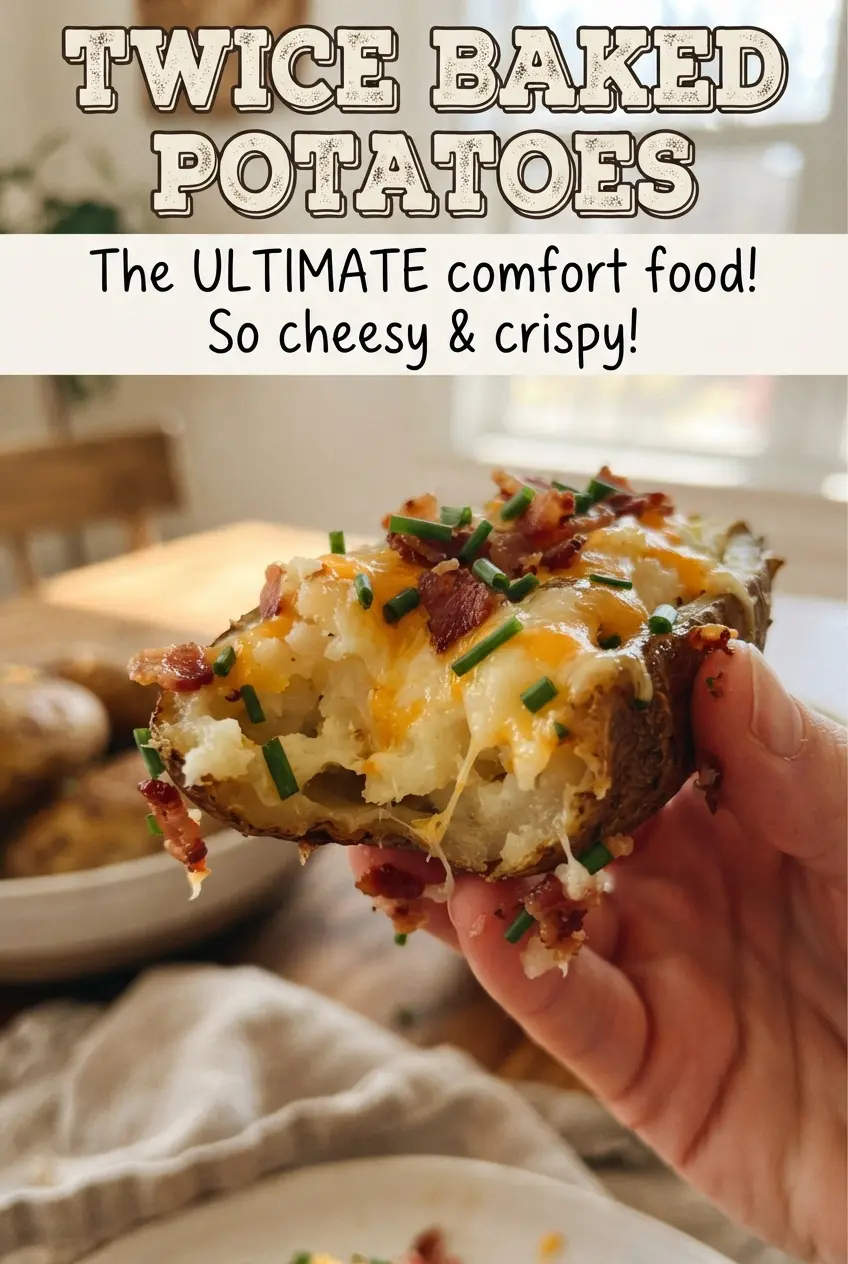
Crispy potato skins piled with fluffy, buttery filling are the kind of side dish that disappears before the main course gets much attention. These twice baked potatoes come out with crackly edges, a creamy middle, and enough sharp cheddar, bacon, and green onion in every bite to make them feel like more than a simple starch. The contrast is what keeps people going back for another half.
The trick is in how the potatoes are handled twice, not just baked twice. Roasting the whole russets first dries the skins enough to hold their shape, then the flesh gets mashed while it’s still warm so the butter and cheese melt in smoothly. Leaving a thin shell matters too; scoop too aggressively and the potatoes collapse instead of standing up for that generous second bake.
Below, you’ll find the timing that keeps the filling light instead of gluey, plus a few swaps if you want to adjust the mix without losing the texture that makes these worth serving.
The skins stayed crisp even after the second bake, and the filling was fluffy instead of dense. I added a little extra cheddar on top and they came out with that perfect melted layer my husband kept picking off first.
Save these twice baked potatoes for the nights when you want crisp skins, fluffy cheddar filling, and a side dish that steals the plate.
The Reason the Potato Shell Holds Its Shape Instead of Collapsing
Most twice baked potatoes fail because the flesh gets scooped too thin or mashed into a paste. Russet potatoes have enough starch to turn fluffy when baked, but that same starch turns gummy fast if you work it too hard. Leaving a 1/4-inch border around the shell gives the skins structure, and keeping the filling warm helps the butter and cheese blend without extra mixing.
The first bake also matters more than people think. A fully baked potato skin dries out just enough to stay sturdy on the second trip through the oven. If the potatoes still feel a little underdone when you scoop them, the shells will slump once the filling goes in.
What Each Ingredient Is Doing in the Filling

- Russet potatoes — These are the right choice because their dry, fluffy interior mashes into a light filling instead of a heavy one. Waxy potatoes hold too much moisture and the texture turns dense.
- Sour cream — This gives the filling tang and helps loosen the potato enough to spoon cleanly. Plain Greek yogurt works in a pinch, but the flavor is sharper and the filling can set up a little tighter.
- Butter and milk — The butter adds richness; the milk keeps the filling from feeling stiff after baking. Add the milk gradually so the mixture stays thick and moundable instead of runny.
- Sharp cheddar — Sharp cheddar brings the most flavor with the least amount of cheese. Mild cheddar melts fine, but it won’t give you the same salty bite.
- Bacon and green onions — Bacon adds salt and crunch, while green onions cut through the richness. Save some for the top so the finished potatoes look as good as they taste.
Building the Filling So It Stays Fluffy, Not Gluey
Baking the Potatoes Until the Skins Dry Out
Rub the potatoes with oil and coarse salt, then bake them until a knife slides in easily and the skins feel set. That outside layer is what keeps the shells from tearing when you split and scoop them. If the potatoes feel soft but the skins still look damp, give them a few more minutes so the structure firms up before handling.
Scooping With Enough Flesh Left Behind
Let the potatoes cool just long enough to handle, then cut them open and scoop out the flesh while the centers are still warm. Leave a thin shell so the halves can hold the filling without folding in on themselves. A melon baller or spoon works fine, but avoid scraping the inside bare; the shell needs that little layer for support.
Mashing the Filling Just Until It Comes Together
Mash the potato flesh with the sour cream, butter, milk, cheddar, bacon, green onions, salt, and pepper until it looks creamy with a few small bits left. Overmixing is what turns the filling pasty. If it seems stiff, add a spoonful more milk, but stop as soon as it mounds easily.
Finishing Hot and Golden
Spoon the filling back into the shells and mound it high. The second bake is for heating everything through and melting the cheese on top, not for cooking the potatoes again. Pull them once the tops are golden and the edges are sizzling, then finish with the remaining green onions so they stay fresh and bright.
How to Adjust These Potatoes Without Losing the Best Part
Make Them Ahead for a Crowd
Bake and fill the potatoes earlier in the day, then refrigerate them unbaked. Add a few extra minutes to the second bake so the centers heat all the way through. This is the easiest way to serve them for a dinner party without trying to mash potatoes while guests are already hungry.
Make Them Vegetarian
Skip the bacon and add extra green onions or a little smoked paprika for depth. You lose the salty crunch, so the potatoes need a stronger cheese flavor to keep them from tasting flat. A handful of sautéed mushrooms works well if you want more substance.
Make Them Gluten-Free
This recipe is naturally gluten-free as written, as long as the bacon and cheddar you buy are labeled gluten-free if that matters for your kitchen. The texture doesn’t need flour or any thickener, which is part of why it works so well.
Storage and Reheating
- Refrigerator: Store leftovers in an airtight container for up to 4 days. The skins soften a little, but the filling stays good.
- Freezer: Freeze fully baked potatoes wrapped well, then thaw in the refrigerator before reheating. The texture is a little softer after freezing, but they still hold together.
- Reheating: Reheat in a 350F oven until hot in the center, about 15 to 20 minutes depending on size. The oven keeps the skins from getting leathery, which happens fast in the microwave.
Answers to the Questions Worth Asking
Twice Baked Potatoes
Ingredients
Equipment
Method
- Preheat the oven to 400F and place a sheet pan inside to heat up.
- Rub the large russet potatoes with olive oil and coarse salt, then bake for 55-60 minutes until the centers are tender.
- Cool the potatoes for 10 minutes so you can handle them without steaming your hands.
- Cut each potato in half lengthwise and scoop out the flesh, leaving about a 1/4-inch shell.
- Mash the potato flesh with sour cream, softened butter, milk, 1 cup shredded sharp cheddar, half the bacon, half the green onions, 1/2 teaspoon salt, and black pepper until smooth and fluffy.
- Spoon the filling back into the shells, mounding it high so it browns on top.
- Top each potato with the remaining shredded cheddar and bacon, then bake at 400F for 15-20 minutes until hot and golden.
- Sprinkle with the remaining green onions right after baking for a fresh, bright finish.