Tuscan white bean soup lands in that perfect middle ground between hearty and light: brothy enough to feel clean, thick enough to eat with a spoon, and packed with enough savory depth that it doesn’t need much else on the table. The beans turn creamy without any cream, the kale softens just enough to stay interesting, and the rosemary gives the whole pot that unmistakable Italian-style warmth.
What makes this version work is the layering. Pancetta or bacon starts the base, so the onion, celery, and garlic cook in seasoned fat instead of plain oil. Then the parmesan rind and canned tomatoes do quiet background work while the beans simmer and soften. Mashing just a portion of the beans at the end thickens the soup naturally, which gives you body without turning it heavy or pasty.
Below, I’ve included the small details that matter most: how to keep the broth from tasting flat, when the kale goes in so it stays tender instead of dull, and a few smart ways to adapt the pot if you want it meatless or need to make it ahead.
The broth had so much flavor, and mashing just some of the beans made it turn out creamy without getting heavy. Even my picky eater went back for a second bowl.
Love the creamy beans and rosemary broth in this Tuscan white bean soup? Save it to Pinterest for cozy nights when you want a hearty bowl with very little fuss.
The Trick to Creamy Soup Without Adding Cream
The texture comes from the beans themselves, not from a splash of dairy at the end. If you simmer the beans long enough to soften and then mash a portion right in the pot, the starch thickens the broth and gives it that silky, spoon-coating feel. Skip that step and you’ll end up with a thinner soup that tastes fine but doesn’t have the same body.
The other place people go wrong is rushing the base. Onion, celery, and garlic need time in the pancetta fat to soften and sweeten before the broth goes in. If the garlic browns too hard, it turns sharp; if the vegetables stay undercooked, the soup tastes one-note even after a long simmer. Build the flavor early and the rest of the recipe gets easier.
What Each Ingredient Is Actually Doing in the Pot
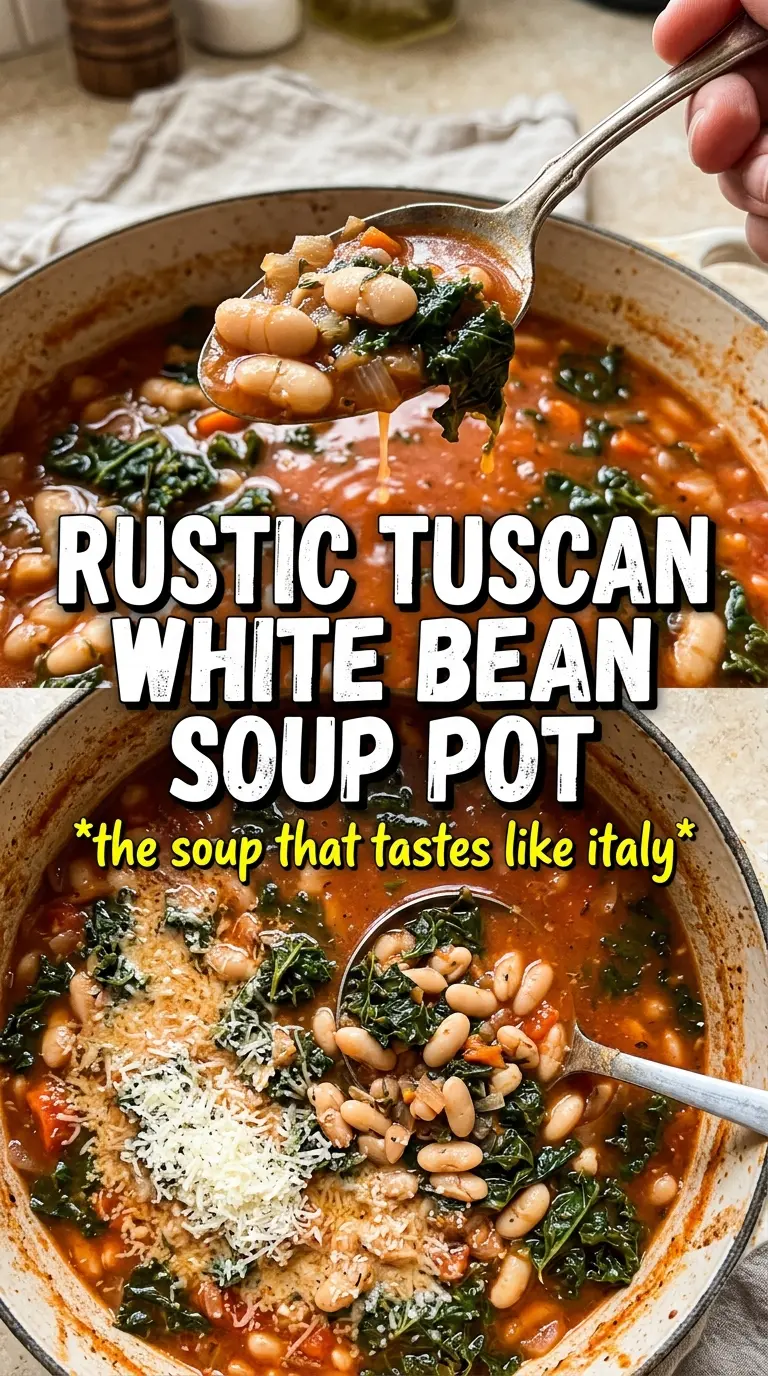
- Cannellini beans — These are the backbone of the soup. They soften enough to mash into the broth, which gives you thickness without needing flour or cream. Great northern beans can work, but cannellini are creamier and hold their shape a little better.
- Pancetta or bacon — This adds salt, smoke, and fat for the vegetables to cook in. Pancetta gives a cleaner Italian flavor; bacon is a little smokier. If you want a vegetarian soup, use olive oil and add a bit more parmesan rind or a pinch of smoked paprika for depth.
- Parmesan rind — This is optional, but it makes a noticeable difference. It melts slowly into the broth and gives a rounded, savory finish that you can’t fully fake with grated cheese alone. If you have it, use it.
- Kale — Add it near the end so it stays green and tender instead of turning muddy. Remove the stems; they stay tough in a soup like this. Lacinato kale is my first choice because it softens nicely without disappearing.
- Rosemary — Fresh rosemary perfumes the broth in a way dried rosemary can’t quite match. If you only have dried, use less and crush it between your fingers before it goes in, or it can taste woody.
Building the Broth, Then Letting It Finish Itself
Start with the pancetta and vegetables
Cook the pancetta until the fat renders and the edges are crisp, then pull it out before it starts to burn. Add the onion, celery, and garlic to the fat and cook until the onion turns translucent and the celery loses its raw crunch. That step builds the savory base of the soup; if the vegetables stay pale and firm, the broth will taste thin even after simmering.
Let the tomatoes and herbs simmer together
Once the broth, tomatoes, rosemary, parmesan rind, and Italian seasoning go in, bring the pot up to a real simmer and then settle it down. You want steady bubbles, not a hard boil that beats the beans apart before they’ve had time to soften. The broth should smell tomato-rich and woodsy from the rosemary before you add the beans.
Mash for body, then add the kale last
After the beans have simmered, remove the rosemary sprigs and parmesan rind, then mash about a third of the beans against the side of the pot. That gives the soup a thicker, more velvety texture without turning it into puree. Add the kale and cook just until wilted and deep green; if it simmers too long, it goes dull and loses its bite.
Make it vegetarian without losing depth
Skip the pancetta and start the vegetables in olive oil instead. Keep the parmesan rind if you eat dairy, since it replaces some of the savoriness you’d otherwise get from the meat. If you want it fully vegetarian, use vegetable broth and add a small splash of soy sauce or tamari to round out the broth.
Use bacon when you want a smokier bowl
Bacon gives the soup a more familiar, smoky backbone than pancetta. It’s great if you want a little extra richness, but it does push the flavor away from classic Tuscan territory. If the bacon renders a lot of fat, spoon off a little before adding the vegetables so the soup doesn’t taste greasy.
Swap the kale for another sturdy green
Swiss chard or escarole both work here. Chard softens faster and gives a gentler bite; escarole keeps a little more texture and a slight bitterness. Use spinach only if that’s what you have, and stir it in right at the end so it wilts without disappearing.
Storage and Reheating
- Refrigerator: Store in an airtight container for up to 4 days. The soup thickens as it sits because the beans continue to absorb liquid.
- Freezer: It freezes well for up to 3 months. Cool it completely first, then freeze in portions; the kale softens a bit after thawing, but the flavor holds up.
- Reheating: Warm gently on the stove over medium-low heat, adding a splash of broth or water if needed. Don’t blast it on high heat or the beans can break down too much and the broth can go from silky to muddy.
Questions I Get Asked About This Recipe
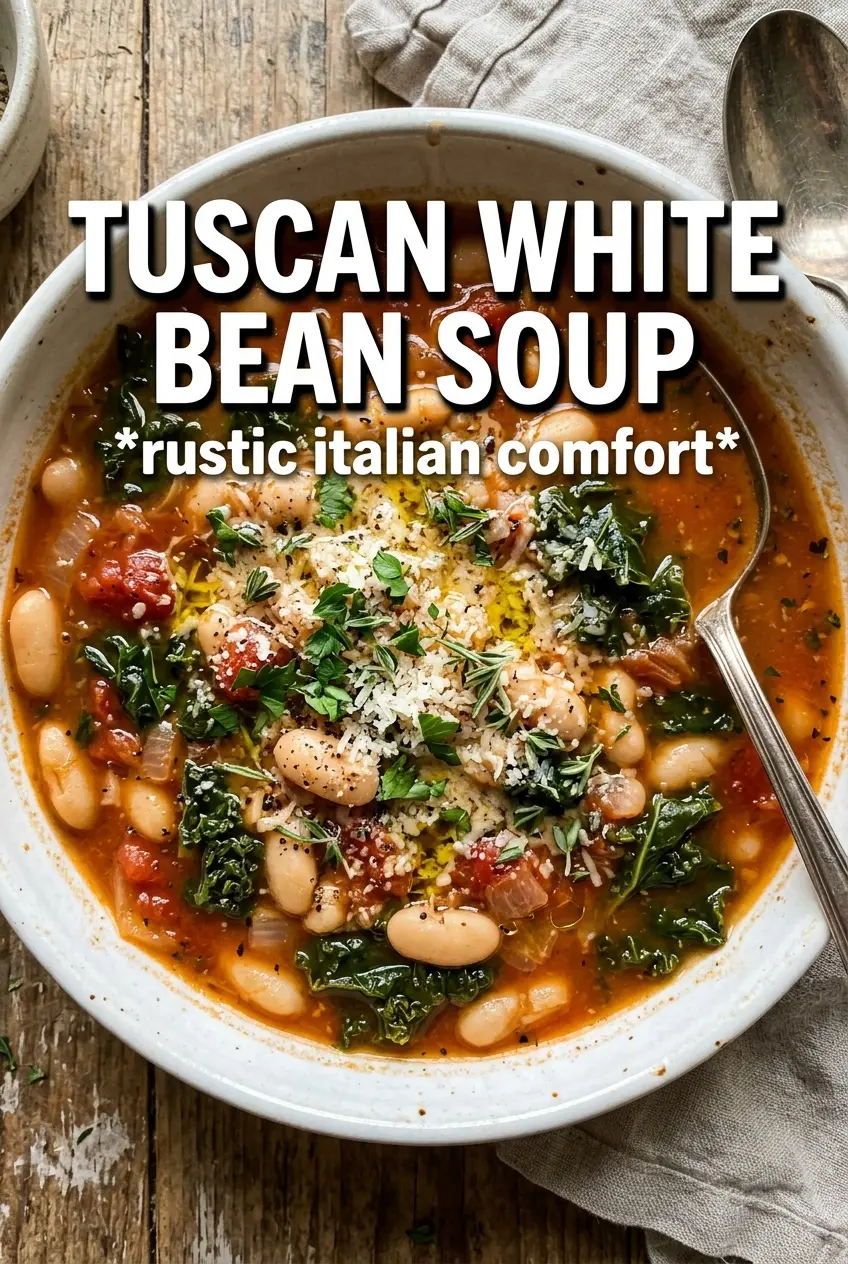
Tuscan White Bean Soup
Ingredients
Equipment
Method
- Cook pancetta in a large pot over medium heat until crispy, then remove and set aside.
- Sauté onion, celery, and garlic in the remaining fat for 5 minutes until softened.
- Add diced tomatoes, broth, rosemary sprigs, parmesan rind if using, and Italian seasoning, then bring the mixture to a boil.
- Add cannellini beans and simmer for 20 minutes until the flavors meld.
- Remove the rosemary sprigs and parmesan rind, then mash about a third of the beans in the pot to thicken the broth.
- Add kale and simmer for 5-8 minutes, until wilted and tender.
- Season with salt and pepper, then drizzle with olive oil and top with parmesan shavings and the reserved pancetta before serving.