Tuscan chickpea soup lands in that sweet spot between hearty and light. The broth tastes rich from rosemary, garlic, and tomatoes, while the chickpeas give it enough body to eat like a meal. A little kale at the end keeps the bowl from feeling heavy, and the finish of olive oil and parmesan makes each spoonful taste round and complete.
What makes this version work is the way the flavor builds in layers. The onion softens first, the garlic and red pepper flakes bloom in the oil, and then the broth simmers with rosemary and a parmesan rind so the soup tastes deeper than the short ingredient list suggests. I also like to mash a portion of the chickpeas near the end. That gives the broth a silky, slightly thickened texture without turning it into puree.
Below, I’ve added the small details that matter: how to keep the garlic from going bitter, why the kale goes in last, and the swaps that still give you a bowl with the same cozy, savory finish.
The broth got thicker than I expected once I mashed a few chickpeas, and the rosemary-garlic flavor was spot on. Even my picky eater went back for a second bowl.
Tuscan Chickpea Soup is the kind of one-pot dinner that gets richer as it simmers, with rosemary broth, tender chickpeas, and a finish of lemon and parmesan.
The Trick to Getting This Soup Thick Without Turning It Heavy
The texture comes from building body, not from dumping in cream or flour. Chickpeas give this soup a naturally hearty base, but they stay a little too loose if you leave every one of them whole. Mashing a portion of the beans near the end changes the broth just enough to make it cling to the spoon while keeping the soup brothy and bright.
The other detail that matters is the order of the aromatics. Onion has to soften before the garlic goes in, or the garlic can taste sharp and burn before the soup even starts. Once the tomatoes, broth, rosemary, and parmesan rind go in, the simmer does the real work. That is where the soup picks up the savory depth that makes it taste like it cooked all afternoon.
What Each Ingredient Is Actually Doing in This Bowl
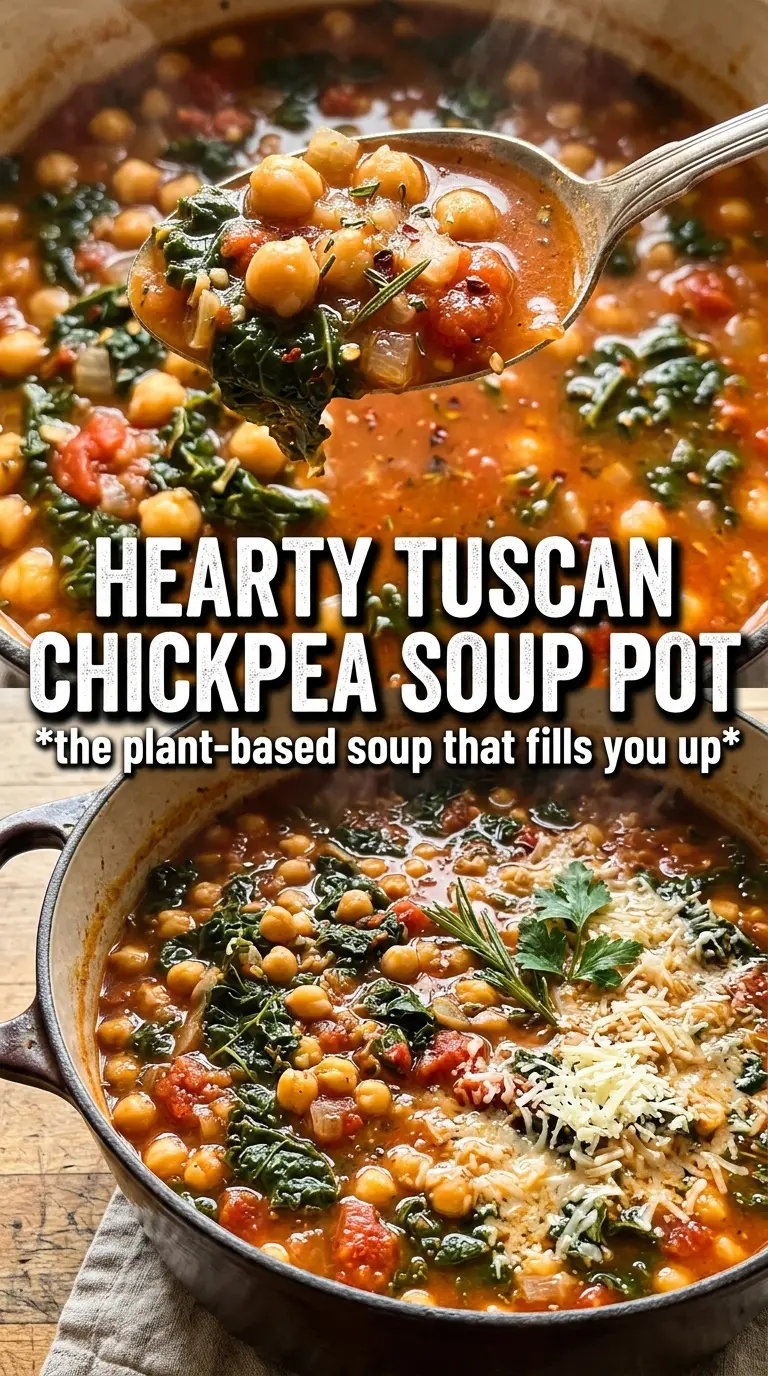
- Chickpeas — These are the backbone of the soup. Canned chickpeas work perfectly here because they hold their shape but still soften enough to mash for thickness. If you cook dried chickpeas, use them fully tender and keep the cooking liquid light so the soup doesn’t turn muddy.
- Fresh rosemary — This gives the broth its Tuscan feel. Dried rosemary can work in a pinch, but use less because it gets woody and can take over fast. Pull the sprigs before serving so you get the perfume, not the needles.
- Parmesan rind — This is the ingredient that sneaks in extra savoriness. It won’t make the soup cheesy, but it deepens the broth in a way salt alone can’t. Skip it if you need a vegetarian version without animal rennet, and add a little more parmesan at the table if that fits your diet.
- Kale — Add it at the end so it stays tender and green instead of dull and overcooked. Lacinato kale is my first choice because it softens nicely, but curly kale works too. Chop it small so it blends into the spoonful instead of sitting in long strips.
- Fire-roasted tomatoes — These bring a little smokiness that regular diced tomatoes won’t fully match. If you only have plain diced tomatoes, use them and add a pinch more red pepper flakes or a tiny splash of smoked paprika if you like that deeper note.
How to Build the Broth So It Tastes Slow-Simmered
Soften the Onion First
Warm the olive oil in a large pot and cook the diced onion until it turns soft and translucent, about 5 minutes. You want it sweet and glossy, not browned and sticky. If the onion is still crunchy when the garlic goes in, the finished soup tastes flat in the middle. Keep the heat at medium and stir often so the edges don’t catch.
Wake Up the Garlic and Heat
Add the garlic and red pepper flakes and cook them just until fragrant, about 2 minutes. The garlic should smell warm and nutty, not sharp or bitter. If it starts to color fast, lower the heat right away. Burnt garlic can’t be rescued, and it will overshadow the rosemary and tomatoes.
Let the Simmer Do the Heavy Lifting
Add the chickpeas, tomatoes, broth, rosemary, Italian seasoning, and parmesan rind, then bring everything to a boil before dropping it to a steady simmer. A gentle bubble is what you want; a hard boil can make the broth taste harsh and cause the tomatoes to break down unevenly. Simmer for about 20 minutes so the chickpeas absorb flavor and the rosemary has time to perfume the broth.
Finish With Body and Freshness
Remove the rosemary sprigs and parmesan rind, then mash or blend about a third of the chickpeas right in the pot. That gives the soup a creamier texture without changing the whole bowl into puree. Stir in the kale and cook just until it wilts, about 5 minutes. Season with salt, pepper, and a squeeze of lemon at the end, then top with olive oil and parmesan for the best finish.
How to Adapt This Soup for Different Tables
Dairy-Free Without Losing the Savory Depth
Leave out the parmesan rind and finish each bowl with a good olive oil and a squeeze of lemon. The soup will still taste layered because the rosemary, garlic, and tomatoes carry most of the flavor. If you want a little extra richness, stir in a teaspoon of nutritional yeast at the end, but keep it light so it doesn’t dominate.
Make It Gluten-Free Without Changing the Texture
This soup is naturally gluten-free as long as your broth and parmesan are certified gluten-free. The chickpea mash gives you the same body you would normally chase with bread, so nothing else needs to change. Serve it with a gluten-free crusty bread if you want something for dipping.
Turn It Into a More Filling Main
Add a cup of small pasta, cooked separately, or stir in shredded rotisserie chicken near the end if you want more protein. Pasta will thicken the broth as it sits, while chicken keeps the soup lighter in texture. If you add either one, hold back a little broth at first so the pot doesn’t get too thin.
Storage and Reheating
- Refrigerator: Store in an airtight container for up to 4 days. The broth thickens a bit as it sits because the chickpeas keep softening.
- Freezer: This freezes well for up to 3 months. Cool it completely first, then freeze in portions and leave a little space at the top for expansion.
- Reheating: Warm gently on the stove over medium-low heat with a splash of broth or water. Don’t boil it hard or the kale can overcook and the soup can get too thick before it heats through.
Questions I Get Asked About This Recipe
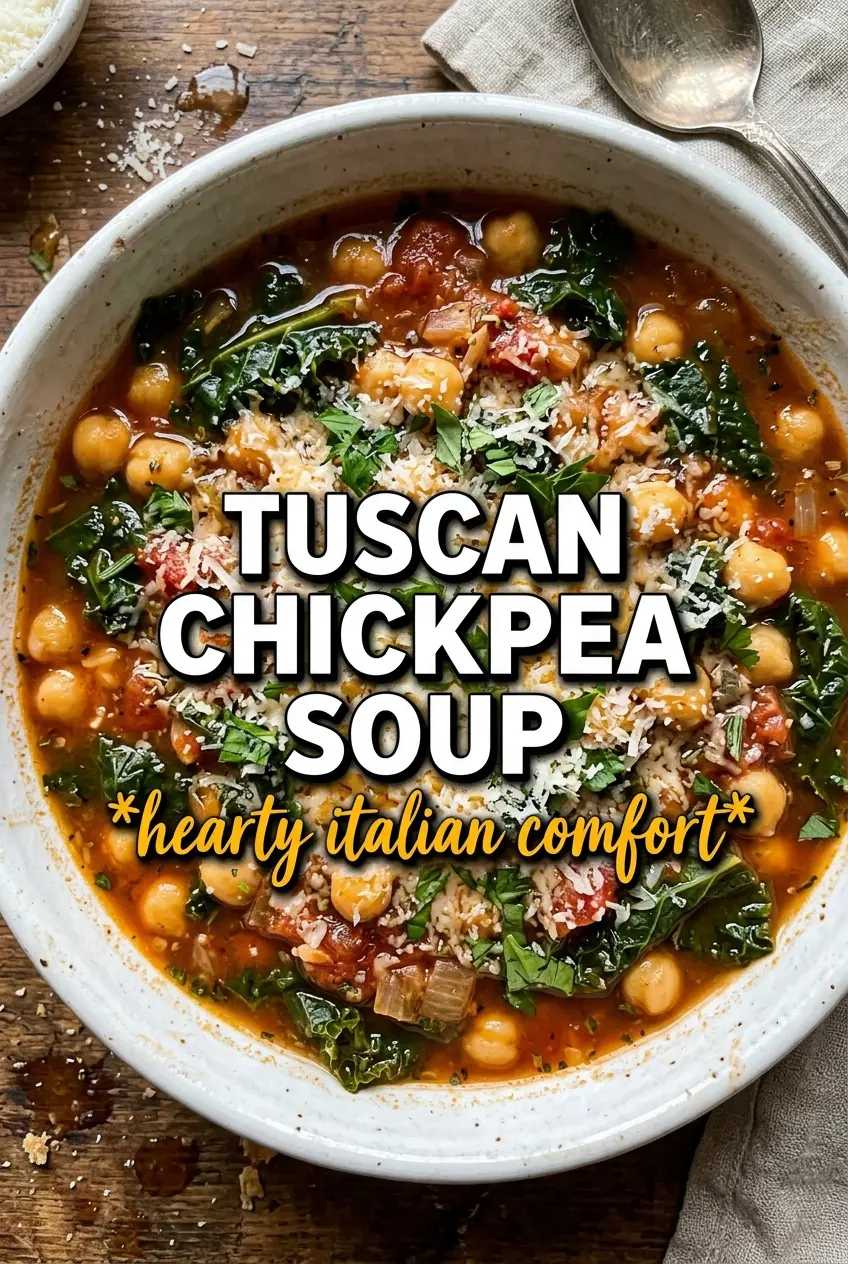
Tuscan Chickpea Soup
Ingredients
Equipment
Method
- Heat the olive oil in a large pot over medium heat, then sauté the onion for 5 minutes until softened and translucent.
- Add the garlic and red pepper flakes and cook for 2 minutes, stirring, until fragrant.
- Add the chickpeas, fire-roasted diced tomatoes, vegetable broth, rosemary, Italian seasoning, and parmesan rind, then bring to a boil.
- Simmer for 20 minutes, then remove the rosemary and the parmesan rind.
- Mash or blend about a third of the chickpeas in the pot for a thicker consistency.
- Add the kale and cook for 5 minutes until wilted and tender.
- Season with salt and pepper, then add lemon; drizzle with olive oil and top with parmesan before serving.