Plump cheese tortellini coated in a silky carbonara sauce hits that sweet spot between comforting and elegant. The filling gives you something more substantial than regular pasta, and the sauce clings to every curve instead of sliding off the plate. Crispy pancetta, sharp parmesan, and a heavy hand of black pepper keep each bite rich without tasting heavy.
The trick here is treating the sauce like a true carbonara, not a cream sauce. Hot pasta, off-heat eggs, and a little reserved cooking water do the work together, so the sauce turns glossy instead of scrambled. The tortellini needs to be lifted straight from the pot while it’s still steaming, and the egg mixture has to go in fast enough that the residual heat thickens it gently.
Below, you’ll find the exact moment to pull the pan off the burner, why finely grated parmesan matters, and how to rescue the sauce if it tightens up before serving. Once you’ve made it this way, it’s hard to go back.
The sauce turned out silky instead of clumpy, and the tortellini held onto it perfectly. My husband kept saying the crispy pancetta and black pepper made it taste restaurant-level.
Save this tortellini carbonara for the night you want silky egg sauce, crisp pancetta, and no cream in sight.
The Reason the Egg Sauce Stays Smooth Instead of Scrambling
Carbonara only works when the eggs thicken from residual heat, not direct heat. That’s the part most people rush, and it’s why they end up with little flecks of cooked egg instead of a glossy sauce. With tortellini, there’s a little extra insurance because the pasta carries sauce into every ridge, but the pan still needs to come off the burner before the eggs go in.
The pancetta fat helps, but it doesn’t replace technique. If the pan is too hot, the cheese seizes and the eggs tighten too fast. If it’s too cool, the sauce stays thin. You’re aiming for that middle ground where the mixture turns creamy in the time it takes to toss, not after you’ve already served it.
- Off-heat tossing matters — the pan should be removed from the burner before the egg mixture goes in so the yolks thicken gently instead of curdling.
- Reserved pasta water is the built-in emulsifier — the starch helps the parmesan and egg mixture turn silky. Add it in small splashes; too much at once makes the sauce loose.
- Freshly grated parmesan melts cleanly — the bagged finely shredded stuff often contains anti-caking agents that can leave the sauce grainy.
- Black pepper isn’t garnish here — it’s part of the sauce’s backbone, so don’t be shy with it.
What Each Ingredient Is Doing in the Bowl
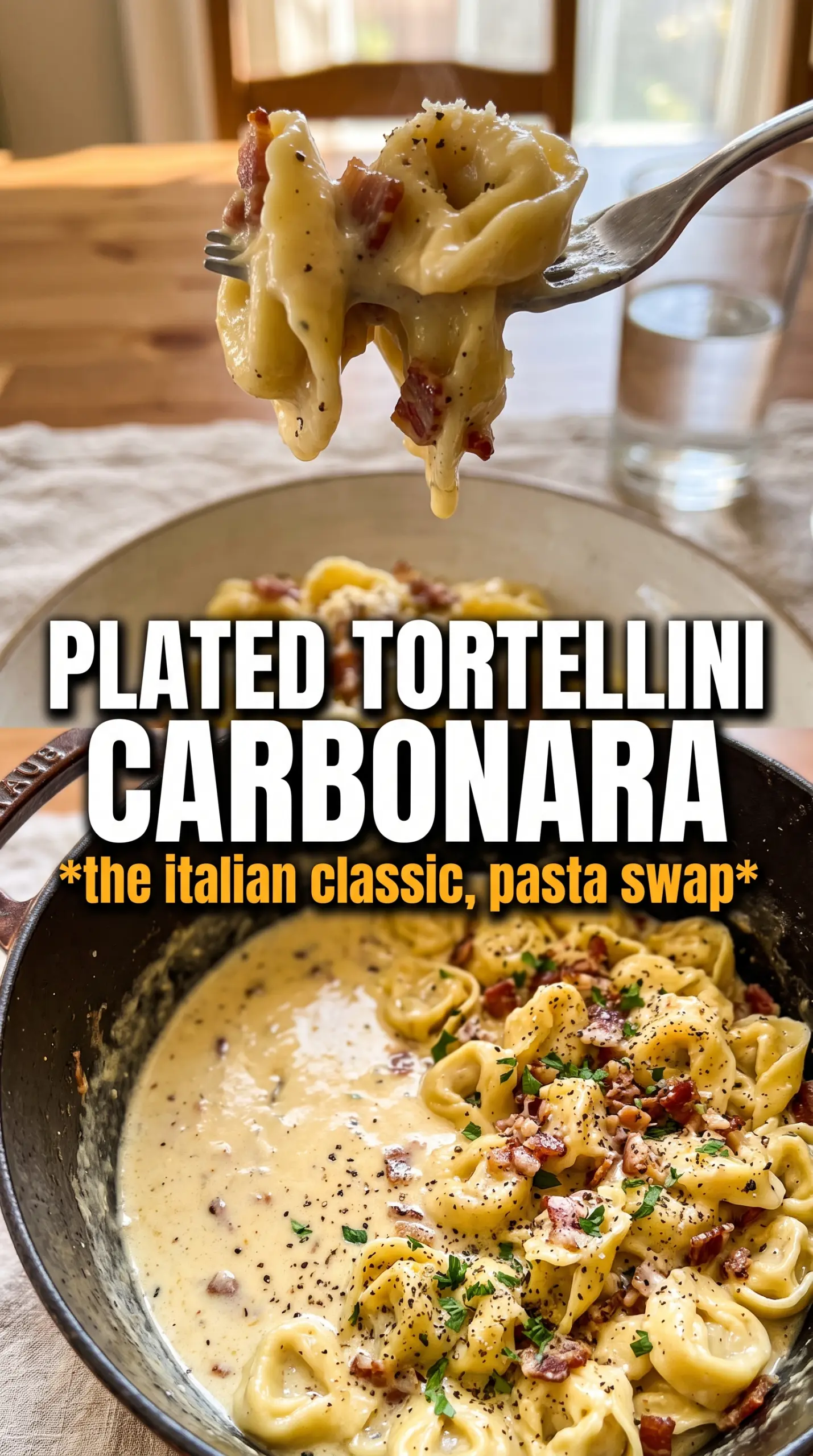
- Refrigerated cheese tortellini — this gives you a richer, more filling base than dried pasta. Fresh or refrigerated tortellini cooks fast and stays tender; dried tortellini can work, but it often needs a little more water and a closer eye so it doesn’t split.
- Pancetta or thick-cut bacon — pancetta gives the cleanest savory bite, while bacon brings a smokier edge. Use what you have, but cook it until the fat renders and the edges crisp so you get texture, not just salt.
- Egg yolks plus one whole egg — the yolks build body, and the whole egg keeps the sauce from feeling too heavy. If you use only yolks, the sauce gets denser; if you use too many whole eggs, it loosens too much.
- Finely grated parmesan — this is one place where texture matters. Finely grate it so it melts quickly into the hot pasta without clumping.
- Garlic — it needs just a minute in the pancetta fat. Any longer and it can turn bitter, which shows up fast in a dish with this few ingredients.
- Nutmeg — just a little rounds out the egg and cheese without making the dish taste sweet or spiced. It’s subtle, but it makes the sauce taste finished.
- Pasta cooking water — this is the tool that turns the mixture from thick paste into sauce. Reserve more than you think you’ll need so you can loosen it a splash at a time.
Building the Sauce Before the Pan Cools Down
Render the Pancetta Until It Lays the Groundwork
Cook the diced pancetta over medium heat until it’s crisp at the edges and the fat has rendered into the pan. That fat becomes part of the sauce, so don’t drain it unless there’s an obvious excess. Add the garlic at the end and stir for just about a minute, long enough for it to smell fragrant but not long enough to brown. If the garlic burns, the whole pan will taste harsh, and there’s no hiding it later.
Whisk the Egg Mixture Until It’s Completely Uniform
Mix the yolks, whole egg, parmesan, nutmeg, and a generous amount of black pepper in a bowl large enough to hold the tortellini later. The mixture should look thick and a little grainy from the cheese, not streaked with separate egg whites or clumps of dry parmesan. If the cheese sits in a mound, keep whisking; once it’s evenly coated, it will melt into the hot pasta more smoothly. This bowl should be ready before the tortellini finishes cooking.
Toss Fast While the Pasta Is Still Steaming
Use tongs or a spider to move the hot tortellini straight into the pancetta pan, then turn the heat off immediately. Add the egg mixture and toss vigorously so every piece gets coated before the heat disappears. If the sauce looks tight or sticky, add reserved pasta water a tablespoon at a time and keep tossing until it turns glossy and slides around the pan. The finished sauce should cling, not puddle.
Finish With Salt, Parsley, and a Final Hit of Cheese
Taste before salting, because pancetta and parmesan already bring plenty of salt to the bowl. Add only what the dish needs, then top with parsley and another shower of parmesan. The parsley gives the plate a fresh edge and keeps the rich sauce from tasting flat. Serve it right away while the sauce is still silky; carbonara waits for no one.
Three Ways to Make Tortellini Carbonara Fit Your Table
Swap pancetta for bacon when that’s what’s in the fridge
Bacon works well here and gives the dish a smokier finish. Since bacon can be saltier than pancetta, hold back on the final salt until you’ve tasted the finished pasta.
Make it gluten-free with gluten-free tortellini
Use a refrigerated gluten-free tortellini if you can find one that holds together well. The method stays the same, but keep a close eye on the texture because some gluten-free pasta softens faster and can break if it’s overcooked by even a minute.
Make it lighter by using fewer yolks and a little extra pasta water
You can reduce the richness by using 3 egg yolks and 1 whole egg instead of 4 yolks plus 1 whole egg. The sauce will be a touch less luxurious, but a little extra pasta water will still give it enough body to coat the tortellini.
Use leftover pasta water and extra parmesan to fix a sauce that tightened up
If the sauce looks thick or clumpy after the eggs go in, pull the pan off the heat and add warm pasta water in tiny splashes while tossing. The starch loosens the cheese-egg mixture without thinning the flavor, and a little extra parmesan at the end helps bring back that creamy finish.
Storage and Reheating
- Refrigerator: Store leftovers in an airtight container for up to 3 days. The sauce will firm up in the fridge, which is normal.
- Freezer: I don’t recommend freezing this dish. Egg-and-cheese sauces tend to separate after thawing, and the tortellini texture suffers.
- Reheating: Warm leftovers gently in a skillet over low heat with a splash of water or milk, stirring until the sauce loosens. High heat is the mistake here — it can turn the sauce grainy and make the tortellini tough.
Answers to the Questions Worth Asking
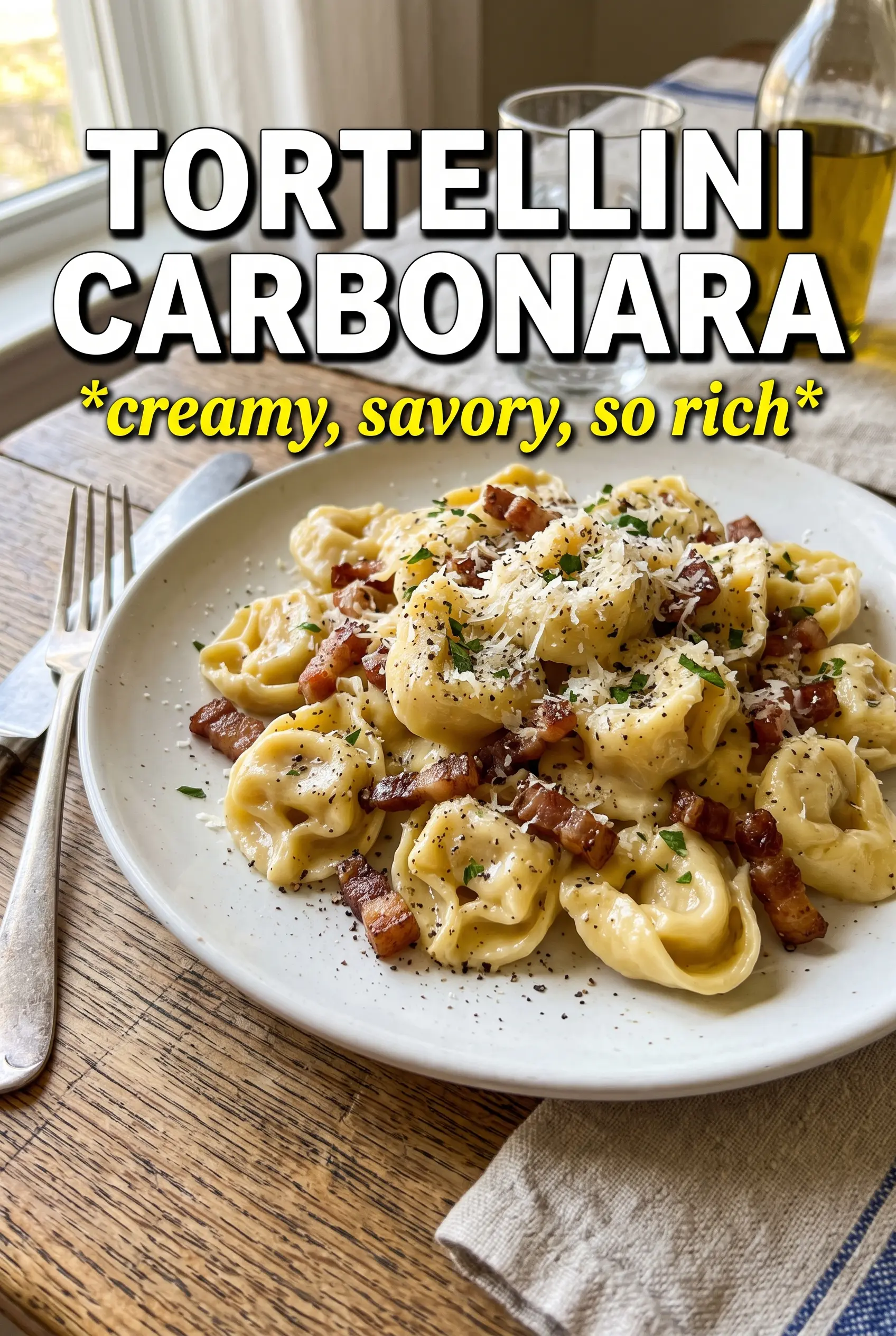
Tortellini Carbonara
Ingredients
Equipment
Method
- Bring a large pot of well-salted water to a boil, then cook the refrigerated cheese tortellini until tender, stirring occasionally. Reserve 1 cup of pasta cooking water before draining.
- Cook the diced pancetta (or thick-cut bacon) in a skillet over medium heat until crispy, about 6–10 minutes. Add the minced garlic and cook 1 minute, then remove the pan from the heat.
- In a bowl, whisk together the 4 egg yolks plus the whole egg, finely grated parmesan, nutmeg, and lots of freshly cracked black pepper until smooth and glossy.
- Add the hot tortellini to the pancetta pan off the heat, then quickly pour in the egg mixture. Toss vigorously so the egg thickens into a silky coating rather than scrambling.
- Add reserved pasta cooking water a splash at a time, tossing between additions, until the sauce looks creamy and coats the tortellini.
- Season to taste with salt, then top with fresh parsley and extra parmesan. Finish with another generous crack of black pepper across the top.