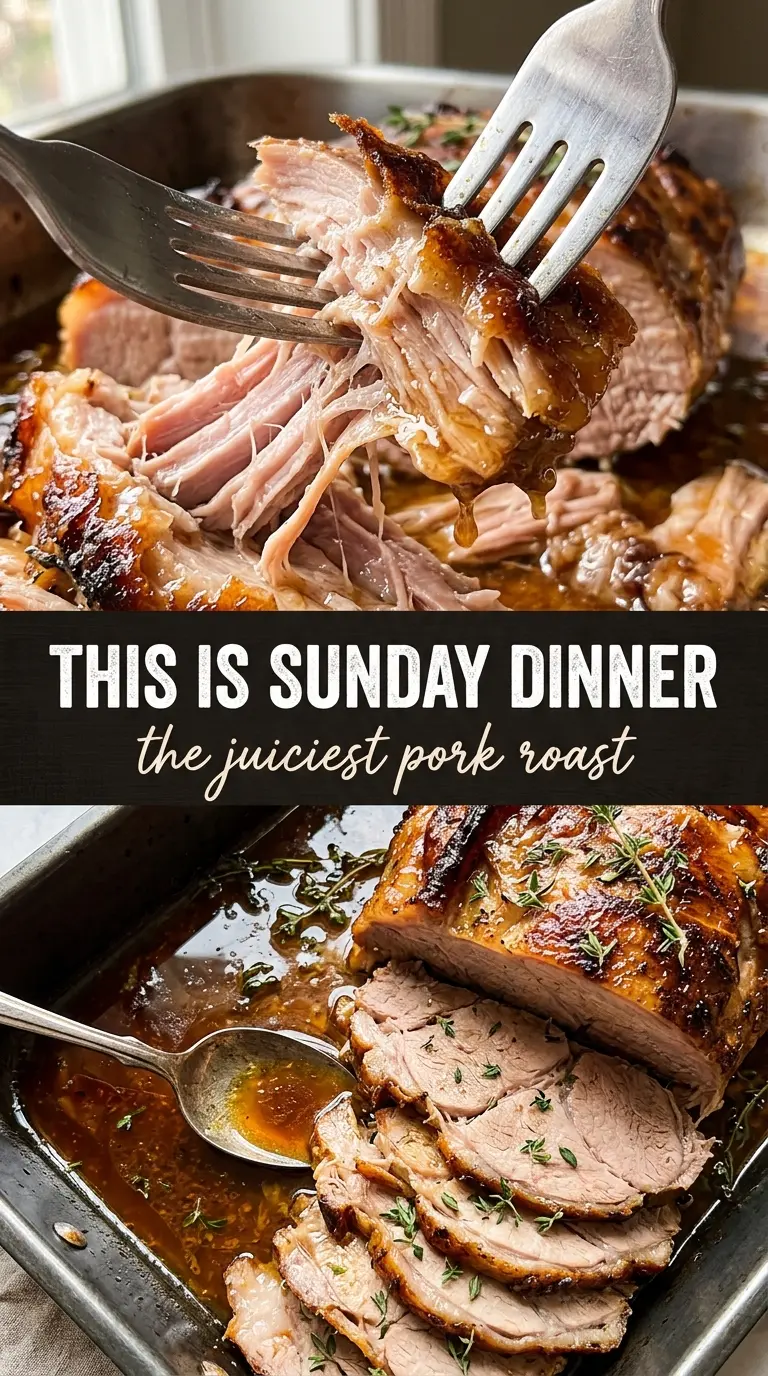
Golden crust, juicy slices, and pan drippings worth spooning over everything on the plate. That’s what you get when a pork loin roast is seasoned into a thick herb paste, seared hard first, and then roasted just until the center reaches 145°F. The result is a roast that carves cleanly instead of crumbling, with enough moisture left in each slice to make the whole dish feel generous.
The trick here is simple: dry meat, hot pan, and a roast that comes out of the oven before it has a chance to overcook. Pork loin is lean, so the herb paste does more than add flavor — it helps the surface brown and keeps the exterior from tasting flat. The broth in the pan catches all those browned bits and turns them into quick juices for serving.
Below, I’ve included the one detail that matters most when you’re slicing pork roast so it stays tender, plus a few easy swaps if you want to change the seasoning without losing that juicy center.
The roast came out so juicy, and the herb crust browned beautifully in the skillet. I usually worry about pork loin drying out, but pulling it at 145°F and letting it rest made all the difference.
Save this tender juicy pork roast for a golden herb crust and clean, juicy slices every time.
The Reason Pork Loin Stays Juicy Here Instead of Turning Dry
Pork loin is lean enough that it punishes overcooking fast. The only real protection is timing and temperature. Searing first gives you flavor on the outside, but the real job is stopping the roast at 145°F and letting the carryover heat finish the center while it rests. That pause matters. Slice too soon and the juices run out onto the board instead of staying in the meat.
- Patting the roast dry matters because wet surface moisture blocks browning. A dry roast picks up the herb paste better and develops a deeper crust.
- The roast needs a thermometer, not guesswork. Pork loin can go from perfect to chalky in a short window, and the center should still look faintly rosy when it comes out.
- Resting under loose foil keeps the outside warm without trapping steam that softens the crust.
What the Herb Paste and Pan Juices Are Doing for You
- Boneless pork loin roast — This cut gives you neat slices and a lean, clean pork flavor. It needs careful roasting, but that’s also why it’s ideal for the herb crust and pan juices here. If you swap in pork tenderloin, cut the cook time way down; it’s smaller and dries out faster.
- Olive oil — The oil helps the garlic and herbs spread into a paste and encourages browning in the skillet. Any neutral oil works in a pinch, but olive oil brings a little more flavor and a better crust.
- Garlic, rosemary, thyme, paprika, and onion powder — This is the backbone of the dish. Dried herbs hold up well in the oven, and the paprika adds color without making the roast taste smoky in a heavy way. Fresh rosemary and thyme can work, but use a bit less since they taste stronger and can burn if the pieces are too large.
- Chicken broth — It doesn’t flavor the meat from the inside. What it does is catch the fond and turn it into a simple pan juice that makes every slice taste richer. Water will work in an emergency, but the finished drippings will be thinner and less savory.
- Roasted vegetables — They’re a smart side because they can roast while the pork rests or alongside it if your pan has room. Use sturdy vegetables like carrots, potatoes, onions, or Brussels sprouts so they pick up the same pan flavor.
How to Build the Crust and Keep the Center Tender
Mixing the Herb Paste
Stir the oil, garlic, rosemary, thyme, paprika, onion powder, salt, and pepper into a thick paste before it touches the meat. It should cling to the roast instead of running off the surface. That coating is what helps the crust brown and stay flavorful. If the garlic pieces are too wet or the mixture looks loose, the seasoning slides into the pan instead of onto the pork.
Searing Until the Surface Turns Deep Gold
Heat the skillet until it’s hot enough that the roast sizzles on contact. Sear each side for 2 to 3 minutes until the surface looks evenly browned and smells nutty, not raw. Don’t crowd the pan or move the roast too early; if it sticks, it usually means the crust isn’t ready to release yet. This step is where the flavor starts.
Roasting to 145°F
Add the broth, then move the pan into the oven and roast until the center reaches 145°F. Start checking early if your roast is on the smaller end, because pork loin can finish faster than people expect. Pull it at temperature, not after the juices start bubbling out on the cutting board. A little blush in the center is normal and exactly what keeps it tender.
Resting Before Slicing
Let the roast rest for 15 minutes before you slice it. That gives the juices time to settle back into the meat instead of flooding out. Spoon the pan juices over the sliced pork right before serving. If the roast seems to leak a lot on the board, it was either sliced too soon or overcooked by a few degrees.
How to Adapt This Pork Roast Without Losing the Juicy Center
Swap the Herb Mix for a Different Dinner Mood
Keep the oil and garlic, then change the herbs to suit the meal. Sage and thyme give it a more classic roast dinner feel, while oregano and a little crushed fennel make it lean toward Italian-style pork. Just keep the paste thick so it stays on the surface and browns well.
Make It Gluten-Free Without Changing the Method
This recipe is naturally gluten-free as written, as long as your broth is certified gluten-free. The roasting method doesn’t need any adjustments, and the pan juices thicken up from reduction rather than flour, so nothing is lost in texture.
Use Pork Tenderloin for a Faster Version
Pork tenderloin works, but it cooks much faster and has less fat, so it needs closer attention. Start checking the temperature early and pull it as soon as it hits 145°F. You’ll get the same herb flavor, but the slices will be a little more delicate and less sliceable than a loin roast.
Storage and Reheating
- Refrigerator: Store sliced pork in an airtight container for up to 4 days. Keep the pan juices with it so the meat stays moist.
- Freezer: It freezes well for up to 2 months. Wrap slices tightly and freeze with a little broth or juice to help prevent dryness.
- Reheating: Reheat gently in a covered skillet with a splash of broth over low heat, or warm it in a low oven. High heat will dry the slices out fast, so heat just until the pork is warmed through.
Answers to the Questions Worth Asking

Tender Juicy Pork Roast
Ingredients
Equipment
Method
- Preheat the oven to 375°F and set an oven-safe skillet or roasting pan nearby.
- Mix olive oil, garlic, dried rosemary, dried thyme, smoked paprika, onion powder, salt, and black pepper into a paste.
- Pat the boneless pork loin roast dry and rub the herb paste all over every surface.
- Heat the oven-safe skillet or roasting pan over medium-high heat and sear the pork roast on all sides until golden, about 2–3 minutes per side.
- Pour the chicken broth into the pan and transfer to the oven.
- Roast for 60–75 minutes, until the internal temperature reaches 145°F.
- Rest the pork roast for 15 minutes before slicing.
- Spoon the pan juices over the top, then slice and serve with roasted vegetables for serving.