Split baked potatoes turn into a full dinner here: crisp skins, fluffy centers, and a mound of taco beef that soaks right into the potato instead of sliding off the plate. The cheese melts into the hot filling, the pico cools it down, and the sour cream and avocado finish it with just enough richness to keep every bite balanced.
The trick is treating the potato like part of the filling, not just a base. Russets bake up with sturdy skins and a light interior, which matters when you’re loading them with saucy beef. The beef mixture also needs to cook down until it’s thick, not loose; if there’s too much liquid, it pools in the potato and turns the whole thing mushy. A quick return to the oven after stuffing helps the cheese melt without overcooking the toppings.
Below, I’ve included the little details that keep the potatoes fluffy, the beef seasoned properly, and the toppings tasting fresh instead of heavy. There’s also a useful note on swapping the beef if you want to change up the filling without losing the Tex-Mex feel.
The potato skins got crisp, the beef thickened up perfectly, and the sour cream with pico kept it from feeling too heavy. My husband asked if I could put these on the rotation every week.
Save these taco stuffed baked potatoes for a weeknight dinner with crisp potato skins, saucy taco beef, and melty cheese.
The Secret to Keeping the Potato Fluffy Under All That Filling
The biggest mistake with stuffed baked potatoes is treating them like a blank bowl and overloading them before the center has any structure left. Russet potatoes work here because the flesh turns light and mealy, which is exactly what you want once you split them open and fluff them. The skin also gets sturdy enough to hold the filling without collapsing the second you cut into it.
Don’t rush the bake. The potato needs enough time for the center to go soft all the way through, or you’ll end up with a dry shell and a hard middle hiding under the toppings. A fork should slide through the thickest part with no resistance, and the skin should feel set and a little blistered. Once you split it, fluff the inside while it’s hot so the steam escapes and the texture stays airy instead of dense.
What Each Ingredient Is Actually Doing in This Dish
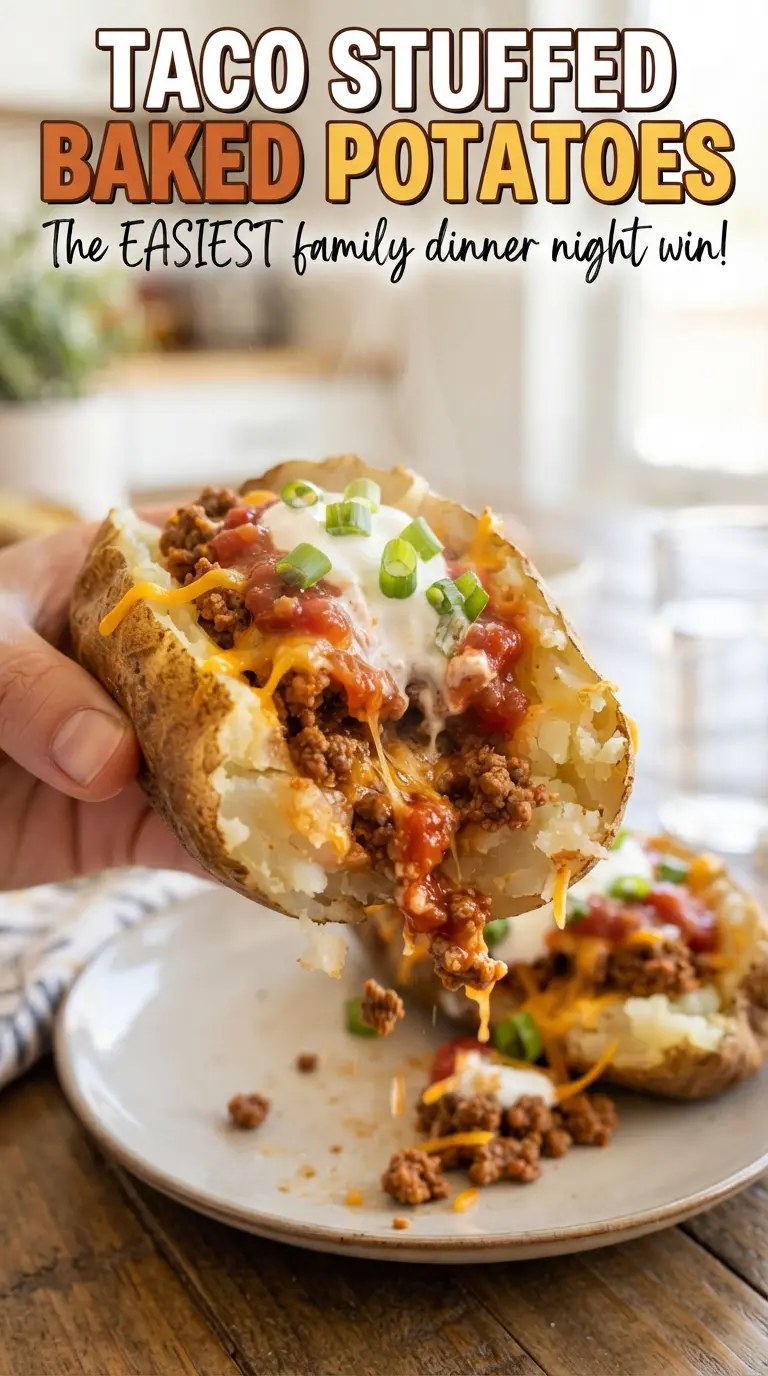
These are simple ingredients, but each one has a job. The potatoes need to be large russets because their skins hold up and their insides mash into a soft, fluffy bed for the taco meat. Olive oil and coarse salt go on the skins before baking so they dry out and crisp instead of staying leathery.
- Ground beef — Use an 80/20 blend if you can. It has enough fat to stay flavorful, but not so much that the filling turns greasy once you add the taco seasoning and water.
- Taco seasoning — This is doing the heavy lifting for salt, spice, and that familiar Tex-Mex profile. A homemade blend works too, but it needs enough paprika, cumin, garlic, and chili powder to taste bold against the potato.
- Shredded Mexican blend cheese — Pre-shredded is fine here because it melts on top and doesn’t need to be silky. If you want a cleaner melt, shred it yourself; bagged cheese has anti-caking starch that can make the melt a little less smooth.
- Pico de gallo — This is the freshness cut that keeps the potatoes from eating heavy. Drain off extra liquid if it’s very wet, or the topping will drip down and soften the potato skin.
- Avocado and sour cream — Both add cool creaminess, but they do it differently. Sour cream brings tang, while avocado adds richness and a soft bite, so the dish feels layered instead of one-note.
Building the Filling So It Stays Inside the Potato
Roasting the Potatoes Until the Skins Set
Start the potatoes in a hot oven and give them the full 55 to 60 minutes, depending on size. The outside should feel dry and crisp, and the inside should collapse easily when squeezed with a towel or pressed with a fork. If you pull them early, the flesh stays gummy and won’t fluff properly. The salted oil rub matters because it seasons the skin and helps it dry out instead of steaming.
Cooking the Beef Down to a Thick Spoonable Filling
Brown the beef until there’s no pink left and the edges have actual color, not just gray steam. Drain off excess fat, then add the taco seasoning and water and let it simmer until the liquid reduces and the mixture looks glossy and thick. If it still looks soupy, keep it on the heat; that extra minute or two is what keeps the filling from soaking the potato. You want something that mounds on a spoon, not a sauce that runs off the potato halves.
Melting the Cheese Without Overbaking the Potatoes
Once the potatoes are split and fluffed, pile the beef into the center and top with cheese before sending them back to the oven. Three to five minutes is enough, just until the cheese melts and the filling is hot. Don’t leave them in long enough to dry out the potato flesh. The goal is a hot center with soft, steamy potato underneath and melted cheese on top.
Adding the Cold Toppings at the End
Pico de gallo, sour cream, avocado, and cilantro go on after the potatoes come out of the oven. That contrast is what makes each bite work. If you add those toppings too early, they warm up, lose their freshness, and the avocado can turn dull. Finish with the toppings right before serving so the hot and cold layers stay distinct.
How to Adapt These Taco Potatoes for Different Nights
Swap the Beef for Ground Turkey
Ground turkey works well if you want a lighter filling, but it needs a little help to stay juicy. Use the same seasoning and water, then cook it just until the liquid reduces; if you dry it out, the whole potato tastes flat. A small splash of oil in the pan can help make up for the lower fat.
Make It Vegetarian with Black Beans
Replace the beef with mashed or lightly smashed black beans warmed with taco seasoning and a splash of water. You’ll get a softer, creamier filling with less richness, which works nicely if you lean on the cheese, sour cream, and avocado for balance. Keep the filling thick so it stays in the potato instead of slipping out.
Make It Dairy-Free
Skip the cheese and sour cream and finish with avocado, pico de gallo, and cilantro. The potatoes still eat like a full meal because the beef and seasoning carry enough flavor on their own. If you want extra creaminess, use a dairy-free sour cream substitute, but add it at the end just like regular sour cream.
Storage and Reheating
- Refrigerator: Store the stuffed potatoes in an airtight container for up to 3 days. The skins soften a bit, but the filling stays good.
- Freezer: Freeze the baked potatoes with the beef filling before adding pico, sour cream, avocado, and cilantro. Wrap tightly and freeze for up to 2 months; the fresh toppings should be added after reheating.
- Reheating: Warm in a 350F oven until hot through, usually 15 to 20 minutes depending on size. Microwaving works in a pinch, but it softens the skin, so the oven is better if you want the potato to stay sturdy.
Answers to the Questions Worth Asking
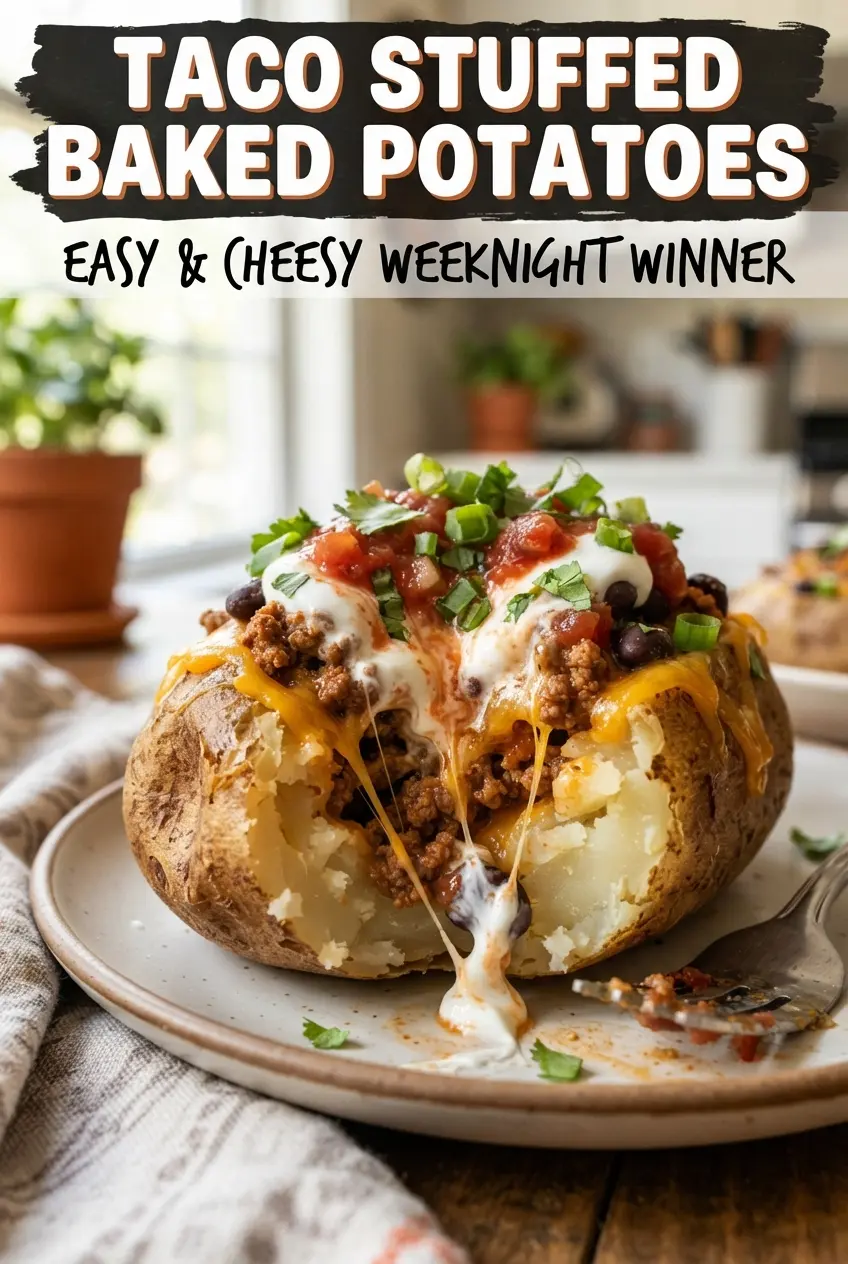
Taco Stuffed Baked Potatoes
Ingredients
Equipment
Method
- Preheat oven to 425F. Rub the russet potatoes with olive oil and coarse salt, then bake on a sheet pan for 55-60 minutes until tender.
- Check doneness by squeezing gently at the end of the bake. If they give easily, remove them; if not, continue baking in 5-minute increments.
- Split the baked potatoes open and fluff the insides with a fork. Keep the shells sturdy so the filling stays piled.
- Brown the ground beef for 8 minutes. Drain any excess fat after browning.
- Add the taco seasoning and water to the drained beef. Simmer until the mixture is thick, stirring so it clings to the meat.
- Spoon the taco beef into the fluffed potato halves. Pile it high so each potato gets plenty of filling.
- Top with shredded Mexican blend cheese. Return to the oven for 3-5 minutes until the cheese melts and turns glossy at the edges.
- Finish each potato with pico de gallo, sour cream, diced avocado, and chopped cilantro. Add them right away for the freshest color and crunch.