Deep chocolate layers with a tender, almost velvety crumb are exactly what sweet potato brings to the party. It doesn’t taste like a vegetable cake; it tastes like a richer, moister chocolate cake with a little more body and a softer finish. The ganache frosting takes it over the line, giving each slice that glossy, bakery-style look and a dense chocolate bite that holds up beautifully at room temperature.
The trick here is using sweet potato puree for moisture and structure without making the batter heavy. It blends into the butter-sugar mixture cleanly and helps the cake stay soft for days, while the buttermilk keeps the crumb fine and the cocoa tasting deep instead of dry. I also like that the frosting is built from melted chocolate and cream first, then whipped with powdered sugar until it turns fluffy enough to spread without sliding off the layers.
Below, I’ve included the part that matters most: how to keep the cake from baking up dense, how to get a smooth ganache frosting that sets without turning stiff, and a few swaps that still keep the cake tasting like itself.
The sweet potato made the cake unbelievably moist, and the ganache frosting set up just enough to slice cleanly without cracking. I’ve made a lot of chocolate cakes, but this one had that bakery-style texture I never get at home.
Save this sweet potato chocolate cake for the kind of dessert that stays moist for days and finishes with a glossy chocolate ganache.
The Sweet Potato Trick That Keeps Chocolate Cake from Drying Out
The biggest win in this cake is that sweet potato puree doesn’t just add moisture; it changes how the crumb behaves as it bakes. Chocolate cakes can go dry fast, especially when they’re cocoa-heavy, but the puree gives the batter enough body to stay tender without turning pudding-like. That’s why this cake slices cleanly instead of crumbling the second your knife goes in.
The other piece that matters is balance. There’s enough butter and sugar for a plush crumb, but the buttermilk and eggs keep the texture from becoming heavy. If your usual chocolate cake bakes up flat or tight, the problem is often an underbuilt batter that can’t hold moisture evenly. Here, the sweet potato helps the cake stay soft all the way to the center.
What Each Ingredient Is Actually Doing in This Cake
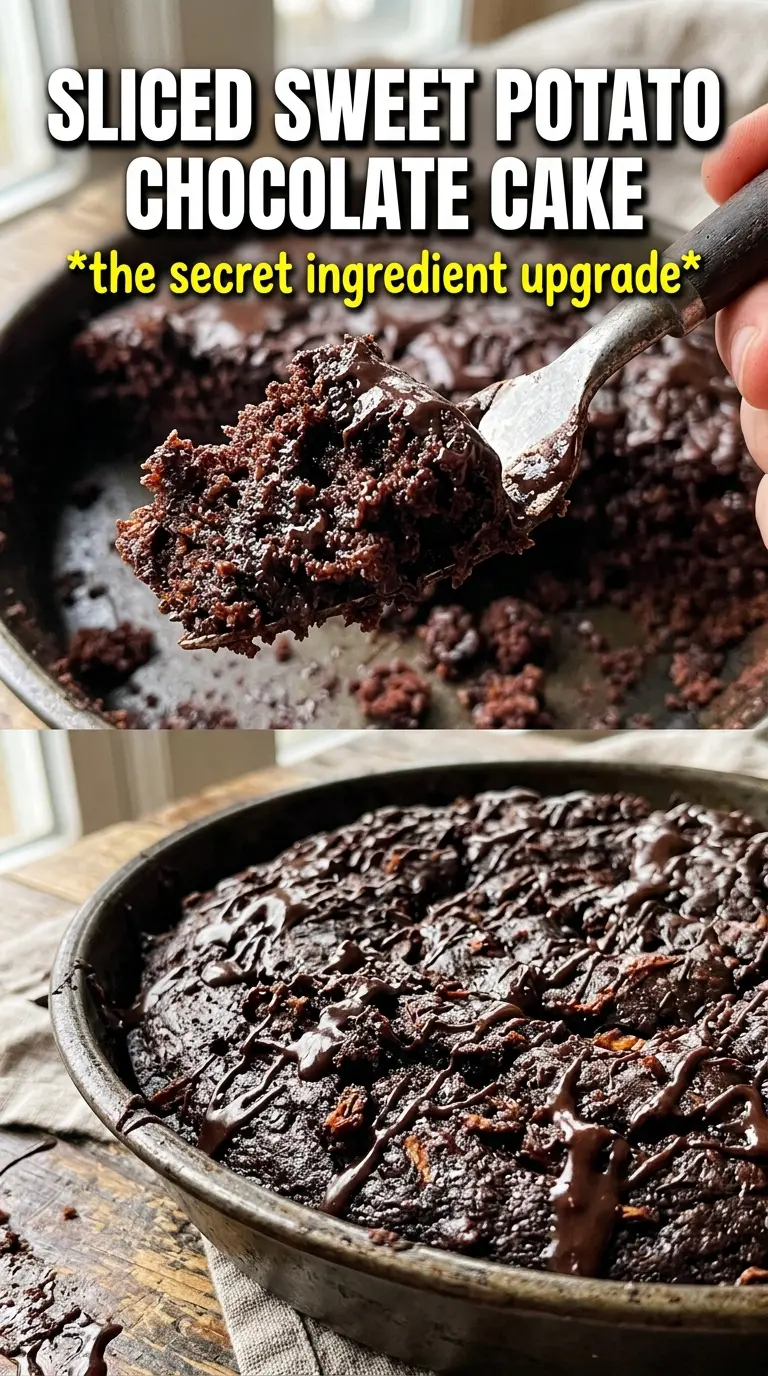
- Sweet potato puree — This is the ingredient that makes the cake stay plush for days. Use smooth puree, not chunky mashed sweet potato, or you’ll end up with little pockets in the batter. Canned puree works if it’s plain and unsweetened, but homemade puree gives you the cleanest texture.
- Buttermilk — It loosens the batter just enough and keeps the crumb soft. If you’re out, use regular milk plus 1 tablespoon lemon juice or vinegar per cup, then let it sit for 5 minutes. That substitute works in a pinch, though the cake won’t have quite the same tenderness.
- Cocoa powder and dark chocolate chips — The cocoa builds the cake flavor, and the chocolate chips make the frosting taste deep instead of sweet. Use a cocoa powder you like to bake with; this is where cheap cocoa can taste dusty. For the ganache, stick with a decent dark chocolate chip or chopped bar because the frosting only tastes as good as the chocolate in it.
- Butter in both cake and frosting — In the cake, butter gives richness and a softer bite. In the ganache, it adds sheen and helps the frosting spread without going greasy. Don’t skip it in the frosting unless you want a stiffer, less luxurious finish.
Building the Batter and Frosting It While the Cake Still Feels Bakery-Style
Starting with the Butter and Sugar
Beat the butter and sugar until the mixture looks lighter in color and a little fluffy. That step traps air, which keeps the cake from baking up dense. If you rush it, the cake will still taste good, but it’ll have a tighter crumb that feels heavier than it should.
Mixing in the Wet Ingredients
Add the eggs one at a time, then mix in the sweet potato puree, buttermilk, and vanilla. The batter may look slightly curdled for a moment, and that’s fine once the flour goes in. What you’re watching for is an evenly mixed base with no streaks of butter or egg left behind.
Folding in the Dry Ingredients
Add the flour, cocoa powder, baking powder, baking soda, cinnamon, and salt just until combined. Stop as soon as the last dry streak disappears. Overmixing at this point is how chocolate cakes turn tough, and this batter only needs a few gentle turns to come together.
Making the Ganache Frosting
Heat the cream until it’s steaming and just starting to shimmer, then pour it over the chocolate chips and butter. Let it sit for two minutes before stirring so the chocolate softens evenly. If you stir too early, you’ll fight lumps; if the mixture looks split later, it usually means the cream was too hot or the chocolate was stirred too aggressively.
Whipping It to Spreadable
Once the ganache is smooth, cool it until it thickens, then beat in the powdered sugar and vanilla until it turns fluffy and spreadable. This is the point that gives you that thick frosting you can drag across the cake without it running off the sides. If it gets too stiff, let it sit for a few minutes and stir again rather than adding more liquid.
Dairy-Free Version That Still Tastes Rich
Use plant-based butter, a rich dairy-free milk with a little acid for the buttermilk substitute, and coconut cream in place of the heavy cream for the frosting. The cake will still bake up moist, but the frosting will set a little softer and carry a slight coconut note unless you choose a neutral dairy-free cream.
Gluten-Free Cake Swap
Use a good 1:1 gluten-free baking flour in place of the all-purpose flour. The sweet potato already helps with moisture, so the texture stays soft instead of sandy, but don’t expect quite the same springy crumb. Let the batter rest for 10 minutes before baking so the flour hydrates evenly.
Cupcake Version for Easier Serving
Divide the batter into lined muffin tins and bake until the centers spring back and a tester comes out with a few moist crumbs. You’ll get about 24 cupcakes, and the bake time drops a lot, so start checking early. The frosting pipes nicely once it’s thickened, which makes this a good option for parties.
Storage and Reheating
- Refrigerator: Store covered for up to 4 days. The cake stays moist, and the frosting firms up a bit, which actually makes slicing easier.
- Freezer: Freeze unfrosted layers tightly wrapped for up to 2 months. The frosted cake can be frozen in slices, but the ganache texture softens a little after thawing.
- Reheating: Let slices sit at room temperature for 20 to 30 minutes before serving. Don’t microwave long enough to melt the frosting, or the ganache can turn greasy and lose its clean finish.
Answers to the Questions Worth Asking
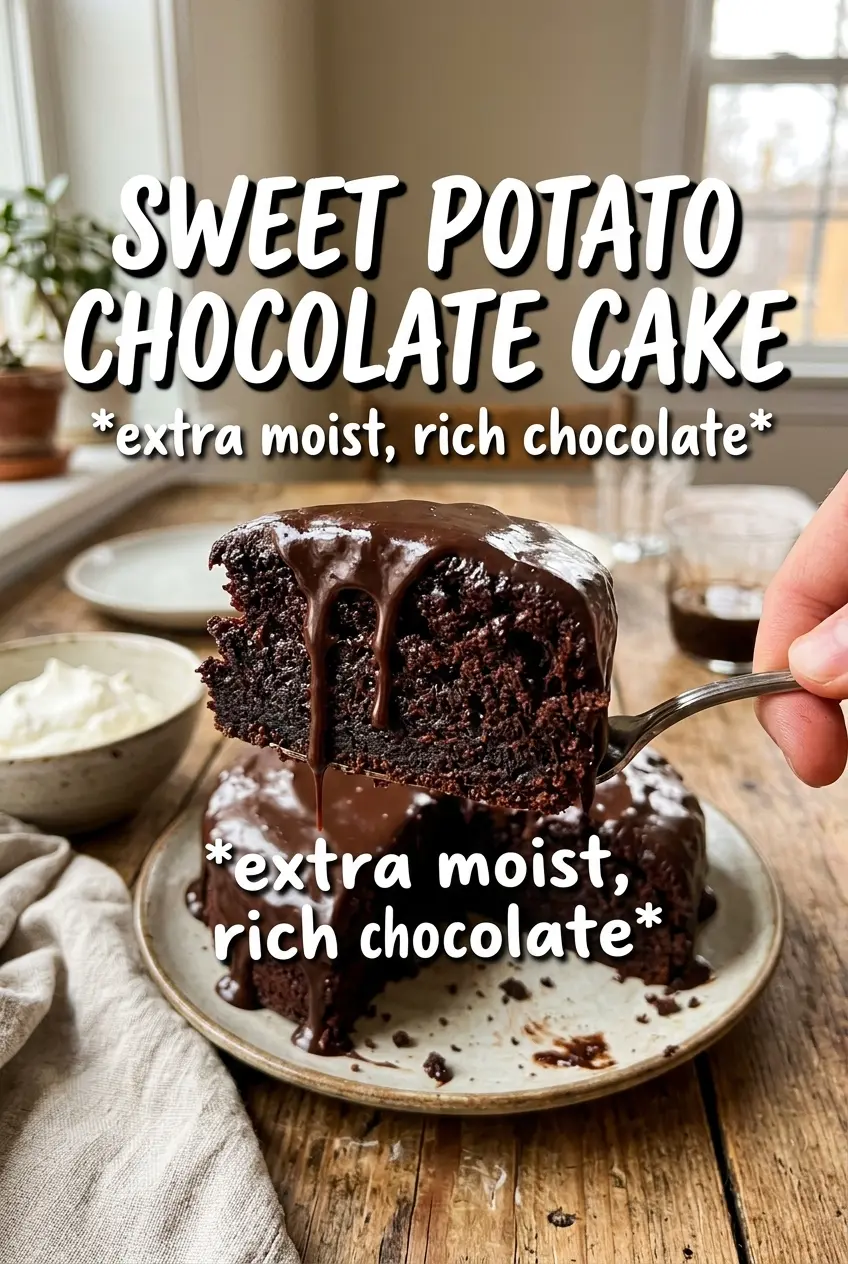
Sweet Potato Chocolate Cake
Ingredients
Equipment
Method
- Preheat the oven to 350F and grease two 9-inch round pans.
- Beat the butter and sugar until well combined, then add the eggs, sweet potato puree, buttermilk, and vanilla and mix to a smooth batter.
- Fold the dry ingredients (flour mixture) into the batter until no dry streaks remain.
- Divide the batter between the two pans.
- Bake for 35-40 minutes, until the centers spring back when lightly pressed.
- Cool the cakes completely in the pans before frosting.
- Heat the heavy cream until steaming, then pour it over the dark chocolate chips and unsalted butter.
- Rest for 2 minutes, then stir until the ganache is smooth.
- Cool the ganache until spreadable, then beat it with powdered sugar and vanilla until fluffy.
- Frost between the cake layers with a thick layer of frosting, then spread frosting all over the top and sides.