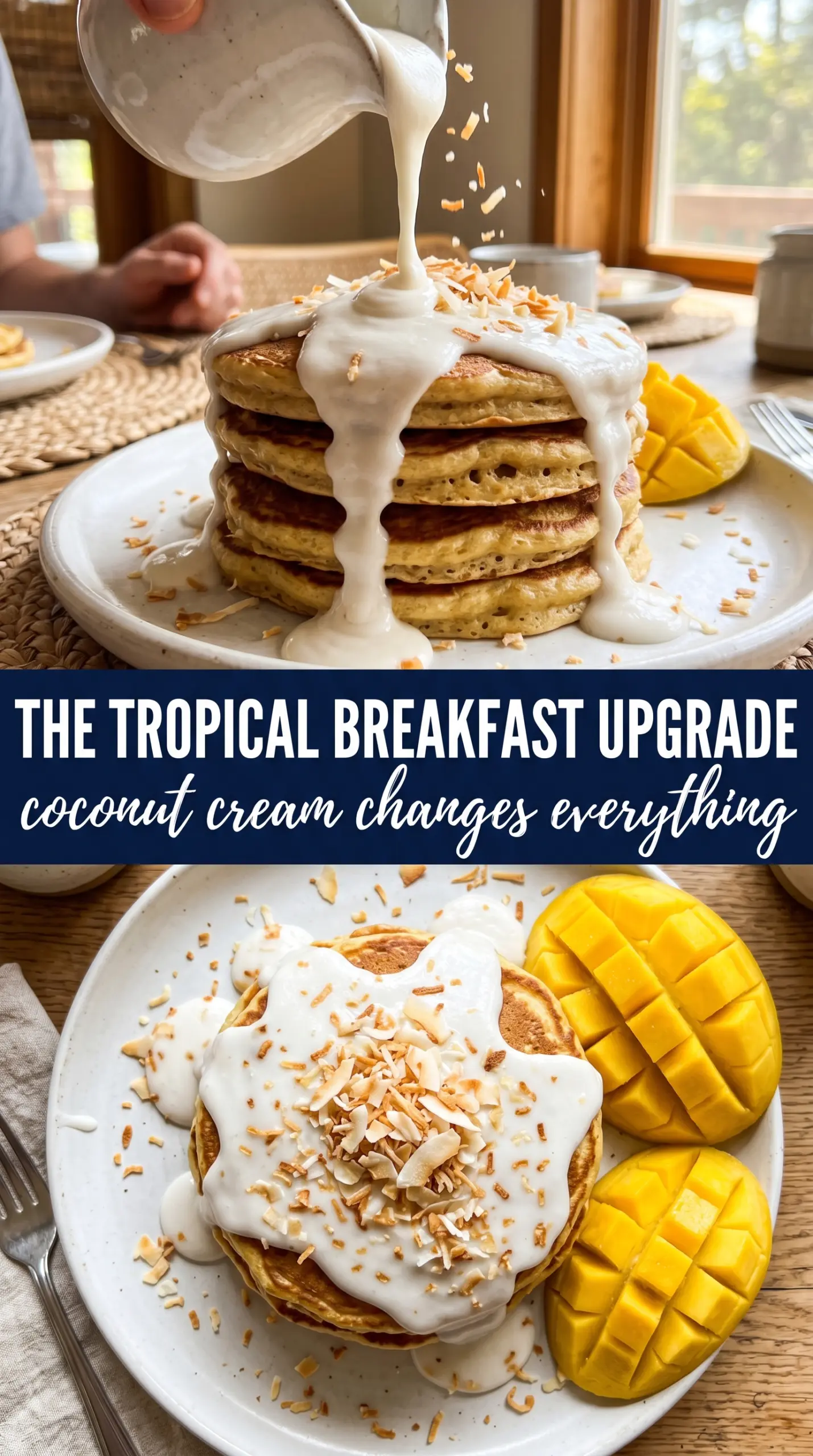
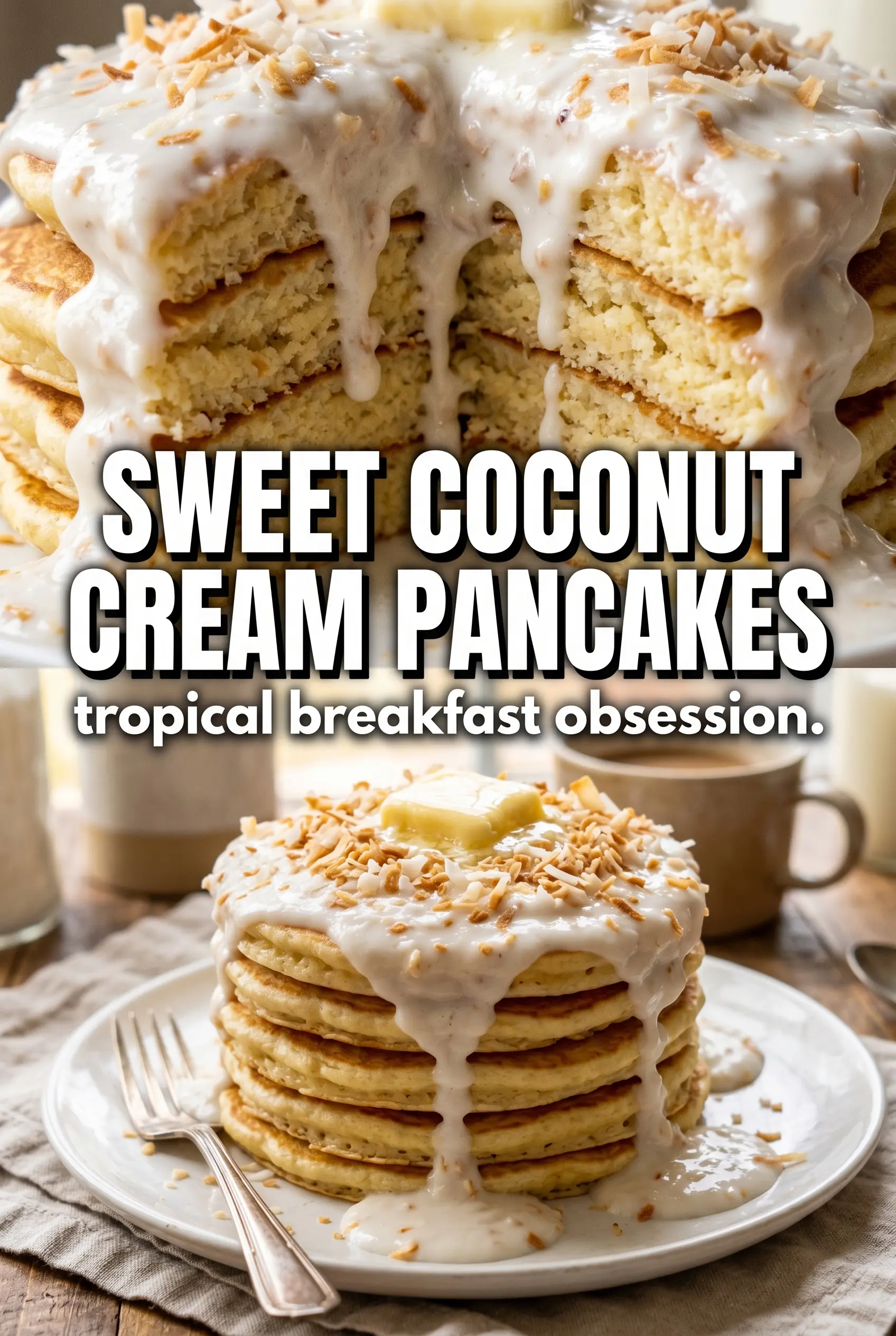
Thick, fluffy sweet coconut cream pancakes make the kind of breakfast stack that gets attention before the first bite. The edges turn lightly crisp on a hot griddle, the centers stay tender and plush, and the coconut cream syrup slides over the top in a glossy layer that soaks into every ridge without turning the pancakes heavy.
What makes this version work is the balance between canned coconut milk and cream of coconut. Coconut milk brings richness without making the batter greasy, while cream of coconut adds sweetness and a softer, almost custardy texture. Folding in shredded coconut at the end gives the pancakes little bits of chew and helps the coconut flavor show up in more than just the syrup. Keep the batter just barely mixed and the pancakes cook up tall instead of dense.
Below, I’ll walk through the small details that matter most: how to keep the batter from tightening up, how to know when the pancakes are ready to flip, and how to get the syrup smooth instead of separated.
The pancakes came out light and fluffy, and the coconut cream syrup thickened just enough to drip down the sides without soaking the stack. My kids asked for the toasted coconut on top again the next morning.
Pin these sweet coconut cream pancakes for the morning you want a fluffy stack with coconut syrup dripping down the sides.
The Trick to Tall Coconut Pancakes Is Not Overworking the Batter
Pancake batter gets tough fast once the flour is hydrated and stirred too much. With coconut cream pancakes, that matters even more because the batter is already richer than a standard mix. Stir until the dry streaks disappear, then stop. A few small lumps are fine and help keep the crumb tender.
The other place these can go wrong is heat. Coconut-based batters brown faster than plain buttermilk pancakes because of the sugar in the cream of coconut and the sweetened shredded coconut. Medium heat is the sweet spot. If the pan runs too hot, the outsides will darken before the centers set, and you’ll get pancakes that look done but still feel gummy in the middle.
- Canned coconut milk — Use the full-fat kind and shake the can well before measuring. That gives the batter richness and helps the pancakes cook up plush instead of dry. Light coconut milk won’t give the same body.
- Cream of coconut — This is what gives the batter its sweet coconut flavor and softer texture. Don’t swap in plain coconut milk here; it won’t add the same sweetness or thickness.
- Shredded sweetened coconut — Fold it in at the end so it stays distributed through the batter. If you only have unsweetened shredded coconut, use it, but the pancakes will be a little less candy-like and a little less tender.
- Butter — Melted butter adds flavor and helps with browning. You can use neutral oil in the batter, but the pancakes lose some of the round, bakery-style taste that butter gives them.
What Each Ingredient Is Actually Doing in This Breakfast Dish
- Eggs (the binder and richness) — These create structure and add richness. Room temperature eggs incorporate better.
- Flour or base (the structure) — This holds everything together. Don’t overmix or the dish becomes tough.
- Butter or oil (the richness) — This creates tender texture and carries flavors. Room temperature butter creams better.
- Sugar or sweetener (the sweetness) — This adds flavor and helps create browning. Adjust based on other ingredients.
- Leavening (baking powder or soda) — This creates rise and light texture. Too much makes it taste bitter.
- Dairy (milk, yogurt, or cottage cheese) — This adds moisture and protein. Choose based on desired texture.
- Flavorings (vanilla, cinnamon, fruit, or savory elements) — These define the personality. Use quality flavorings.
- Proper baking temperature and time — This creates the right texture without burning. Use a thermometer or toothpick test.
Building the Batter and Syrup Without Losing the Coconut Flavor
Mix the Dry Ingredients First
Whisk the flour, sugar, baking powder, and salt before any wet ingredients go in. That step keeps the baking powder evenly distributed, which helps the pancakes rise in a steady, even way instead of puffing in patches. A quick whisk also breaks up any flour clumps before they have a chance to hide in the batter.
Bring the Wet Ingredients Together Gently
In a separate bowl, whisk the coconut milk, cream of coconut, eggs, melted butter, and vanilla until smooth. The coconut milk should be fully shaken so the thick cream and liquid are combined before measuring. If you pour in separated coconut milk, the batter can end up unevenly rich and the first pancakes will cook differently from the last.
Stop Stirring Before the Batter Turns Heavy
Add the wet mixture to the dry ingredients and stir just until the flour disappears. Fold in the shredded coconut last. The batter should look a little lumpy and thick, not silky. If it seems too tight, let it rest for 3 to 5 minutes; the flour will hydrate and the pancakes will spread more evenly on the griddle.
Cook Until the Edges Set and the Centers Lose Their Shine
Spoon out 1/4-cup portions onto a greased griddle over medium heat. Wait until the edges look set and the tops lose their glossy wet sheen before flipping. That usually takes 3 to 4 minutes on the first side. If the pancakes smear when you flip them, the heat is too high or you turned them too early. The second side cooks faster, so keep an eye on it.
Warm the Syrup Until It Turns Smooth and Pourable
Heat the cream of coconut, maple syrup, and butter in a small saucepan over low heat, stirring until smooth. Keep the heat gentle. If it boils hard, the syrup can separate and turn greasy on top. You want a glossy sauce that pours in a ribbon and clings to the pancakes without hardening as soon as it hits the plate.
How to Adapt These Pancakes for Different Mornings
Make Them Dairy-Free
These are already close to dairy-free, but you’ll want to use a plant-based butter or neutral oil in both the batter and the syrup. The pancakes stay fluffy, though the flavor is a little less rich than with butter. The coconut still carries the breakfast on its own.
Use Unsweetened Coconut for a Less Sweet Stack
Swap the sweetened shredded coconut for unsweetened if you want a more restrained finish. The pancakes will still taste distinctly coconut, but they’ll lean less dessert-like. I’d keep the syrup as written so the stack still feels special.
Turn Them Into Gluten-Free Pancakes
Use a 1:1 gluten-free flour blend that includes xanthan gum. The batter may need a minute or two longer to thicken before cooking, and the pancakes often need a lower heat to set cleanly. You’ll get a slightly more delicate crumb, but the coconut flavor still comes through.
Storage and Reheating
- Refrigerator: Store cooked pancakes and syrup separately for up to 3 days. The pancakes soften a bit in the fridge, but they hold up well.
- Freezer: The pancakes freeze well. Lay them in a single layer until solid, then stack with parchment between each one. Freeze the syrup separately in a small container; it reheats better that way.
- Reheating: Warm the pancakes in a toaster oven or dry skillet until hot. Reheat the syrup gently over low heat or in short microwave bursts. Don’t blast either one on high heat or the pancakes dry out before the center warms through.
Questions I Get Asked About This Recipe
Sweet Coconut Cream Pancakes
Ingredients
Equipment
Method
- Whisk all-purpose flour, sugar, baking powder, and salt together in a bowl until evenly combined.
- In a separate bowl, mix canned coconut milk (shaken), cream of coconut, eggs, melted butter, and vanilla extract until smooth.
- Pour the coconut mixture into the dry ingredients and stir just until combined; fold in shredded sweetened coconut so the batter stays thick.
- Heat a greased griddle over medium heat until warm and ready to sizzle lightly.
- Spoon 1/4-cup portions onto the griddle and cook 3–4 minutes, or until bubbles form and the edges look set, with a golden top.
- Flip and cook the other side for 3–4 minutes until deeply golden and cooked through.
- Warm cream of coconut, maple syrup, and butter together in a small saucepan over low heat until smooth and pourable, stirring until glossy.
- Stack the pancakes and pour coconut cream syrup over the top so it runs down the sides, then scatter toasted coconut flakes on top.