Rotini pasta salad gets a lot better when the dressing has enough punch to stand up to cold noodles, and this one does exactly that. The sun-dried tomato oil brings depth, the balsamic and red wine vinegar keep it bright, and the mozzarella pearls and olives give every bite something creamy and briny to land on. It tastes layered instead of heavy, which is why it disappears fast at potlucks and always feels a little more thought-through than the average pasta salad.
The trick is starting with pasta that’s fully cooled before the dressing goes on. Warm pasta drinks up too much dressing and turns soft fast, while cooled rotini holds onto the coating and keeps its shape. I also like folding in the basil near the end so it stays fresh and fragrant instead of sinking into the dressing and turning dark.
Below, I’ve included the one detail that keeps the dressing balanced after chilling, plus a few smart swaps if you need to work with what’s in the fridge.
The dressing clung to every spiral and the pasta stayed flavorful after chilling. I made it the night before, and the basil still tasted fresh the next day.
Like this sun-dried tomato pasta salad? Save it to Pinterest for the next potluck, picnic, or make-ahead lunch.
The Difference Between a Bright Pasta Salad and a Bland One
Cold pasta salads go dull when the dressing is too timid or the pasta is still carrying extra moisture. This one avoids both problems by using the reserved oil from the sun-dried tomatoes as part of the dressing base, which gives you flavor that actually coats the noodles instead of sliding off them. The vinegar combo matters too: red wine vinegar gives the sharp edge, while balsamic adds roundness without making the salad taste sweet.
The other place pasta salads fall apart is texture. Rotini holds the dressing in its ridges, mozzarella gives soft richness, and the olives and roasted peppers keep the bowl from tasting one-note. If the salad tastes flat after chilling, it usually needs a pinch more salt or a small splash of vinegar, not more oil.
What Each Ingredient Is Doing in the Bowl
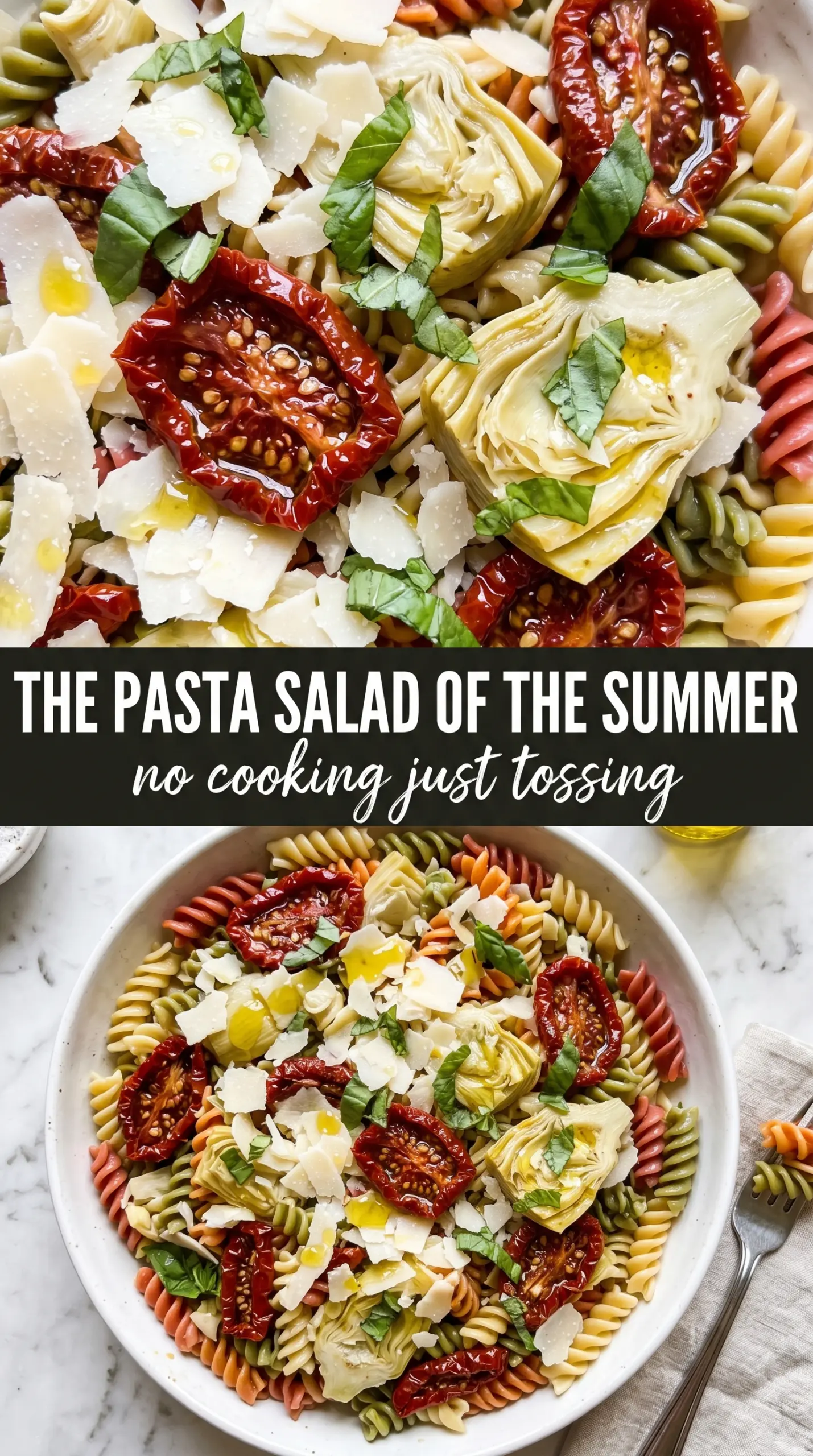
- Sun-dried tomatoes in oil — These are the backbone of the whole salad. The tomatoes bring concentrated sweetness and chew, and the oil adds flavor you can’t fake with plain olive oil. Drain them, but save the oil; that’s what gives the dressing its deeper tomato note.
- Rotini — The corkscrew shape grabs the dressing better than straight pasta. Any short pasta with ridges will work, but rotini gives you the best payoff for every toss.
- Fresh mozzarella pearls — They soften the acidity and keep the salad from feeling too sharp. Cubed mozzarella works if that’s what you have, but pearls distribute more evenly and look better in the bowl.
- Red wine vinegar and balsamic vinegar — The mix keeps the dressing lively without turning it harsh. If you only use balsamic, the salad gets too sweet; if you only use red wine vinegar, it can taste thin.
- Roasted red peppers and Kalamata olives — These bring the sweet-salty contrast that makes the salad taste finished. Jarred roasted peppers are perfect here, and they’re one place where store-bought is completely fine.
- Fresh basil — Add it after the salad is tossed so it stays green and aromatic. If you add it too early, it softens and disappears into the dressing.
How to Build the Dressing So It Stays Coated After Chilling
Whisking the Base Until It Looks Unified
Start with the reserved sun-dried tomato oil, olive oil, both vinegars, Dijon, honey, Italian seasoning, salt, and pepper, then whisk until the dressing looks glossy and slightly thickened. Dijon matters because it helps the oil and vinegar stay together long enough to coat the pasta evenly. If the dressing looks separated after resting, whisk again right before tossing; that’s normal and it comes back together fast.
Tossing the Pasta While It’s Fully Cooled
Cook the rotini until just tender, drain it well, and spread it out long enough to stop the steam. Warm pasta softens the mozzarella and steals the dressing faster than you want, which leaves the salad dry after a few hours. The pasta should feel cool to the touch before you combine everything.
Adding the Fresh Pieces at the End
Fold in the basil and most of the Parmesan after the dressing has coated the pasta. The basil keeps its color, and the cheese melts just enough against the cold noodles to give the salad a fuller taste without clumping. Save a little Parmesan for the top so the finish tastes sharp and fresh instead of buried.
Make It Vegetarian Without Losing the Savory Edge
This recipe is already vegetarian, and the Parmesan is the only ingredient some people may want to adjust. If you need it fully vegetarian-friendly with no animal rennet concerns, use a certified vegetarian Parmesan or swap in a hard, salty vegetarian cheese. The salad still keeps its sharp finish because the vinegar and sun-dried tomatoes are doing most of the heavy lifting.
Dairy-Free Version That Still Tastes Complete
Leave out the mozzarella and Parmesan, then add a handful of chopped artichokes or extra roasted peppers for more body. You’ll lose the creamy pockets, but the salad stays bright and punchy if you keep the dressing bold and add a little extra salt.
Gluten-Free Pasta Salad That Holds Together
Use a sturdy gluten-free rotini and cook it just to tender, not past it. Gluten-free pasta can go soft after chilling if it’s overcooked, so pull it a minute early and rinse briefly if the package calls for it. Toss gently so the spirals don’t break.
How to Stretch It for a Bigger Crowd
You can double this without changing the technique. Use a larger bowl than you think you need and season in layers, since cold pasta tends to mute salt and acid once it sits. If it’s being held for a party, keep back a little extra dressing and basil to refresh it right before serving.
Storage and Reheating
- Refrigerator: Store in an airtight container for up to 4 days. The basil will darken a little, but the flavor stays good.
- Freezer: Don’t freeze this salad. The mozzarella, tomatoes, and peppers lose their texture once thawed, and the dressing separates.
- Reheating: Serve it cold or let it sit at room temperature for 15 to 20 minutes. If it tastes muted after chilling, stir in a splash of vinegar and a pinch of salt instead of heating it.
Answers to the Questions Worth Asking
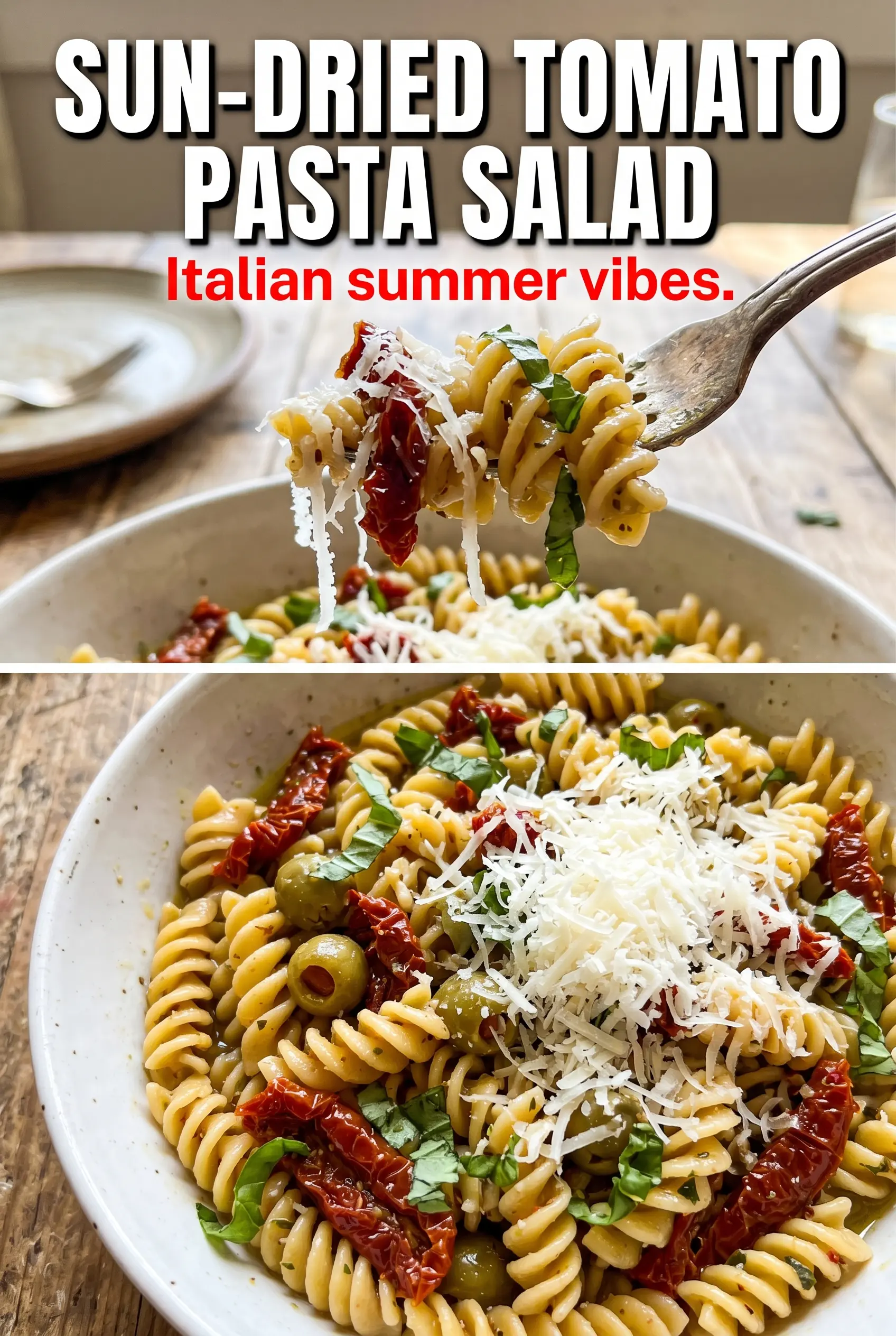
Sun-Dried Tomato Pasta Salad
Ingredients
Method
- Whisk together reserved sun-dried tomato oil, olive oil, red wine vinegar, balsamic vinegar, Dijon mustard, honey, Italian seasoning, salt, and pepper until emulsified, looking for a uniform sheen.
- Taste the dressing and adjust with more salt, pepper, or Italian seasoning so it’s flavorful enough to stand up after chilling.
- Combine cooled rotini pasta, sun-dried tomatoes, mozzarella, Kalamata olives, roasted red peppers, and red onion in a large bowl, spreading the ingredients evenly.
- Pour the dressing over the pasta and toss until every piece of rotini looks glossy and coated.
- Fold in fresh basil and most of the Parmesan until the basil is evenly distributed with bright green flecks.
- Refrigerate the pasta salad for at least 30 minutes, keeping it covered so it chills evenly and the flavors deepen.
- After 30 minutes, taste and adjust salt, vinegar, or Italian seasoning as needed for balance.
- Top with remaining Parmesan shavings and extra basil before serving, so the surface shows fresh green and bright cheese streaks.