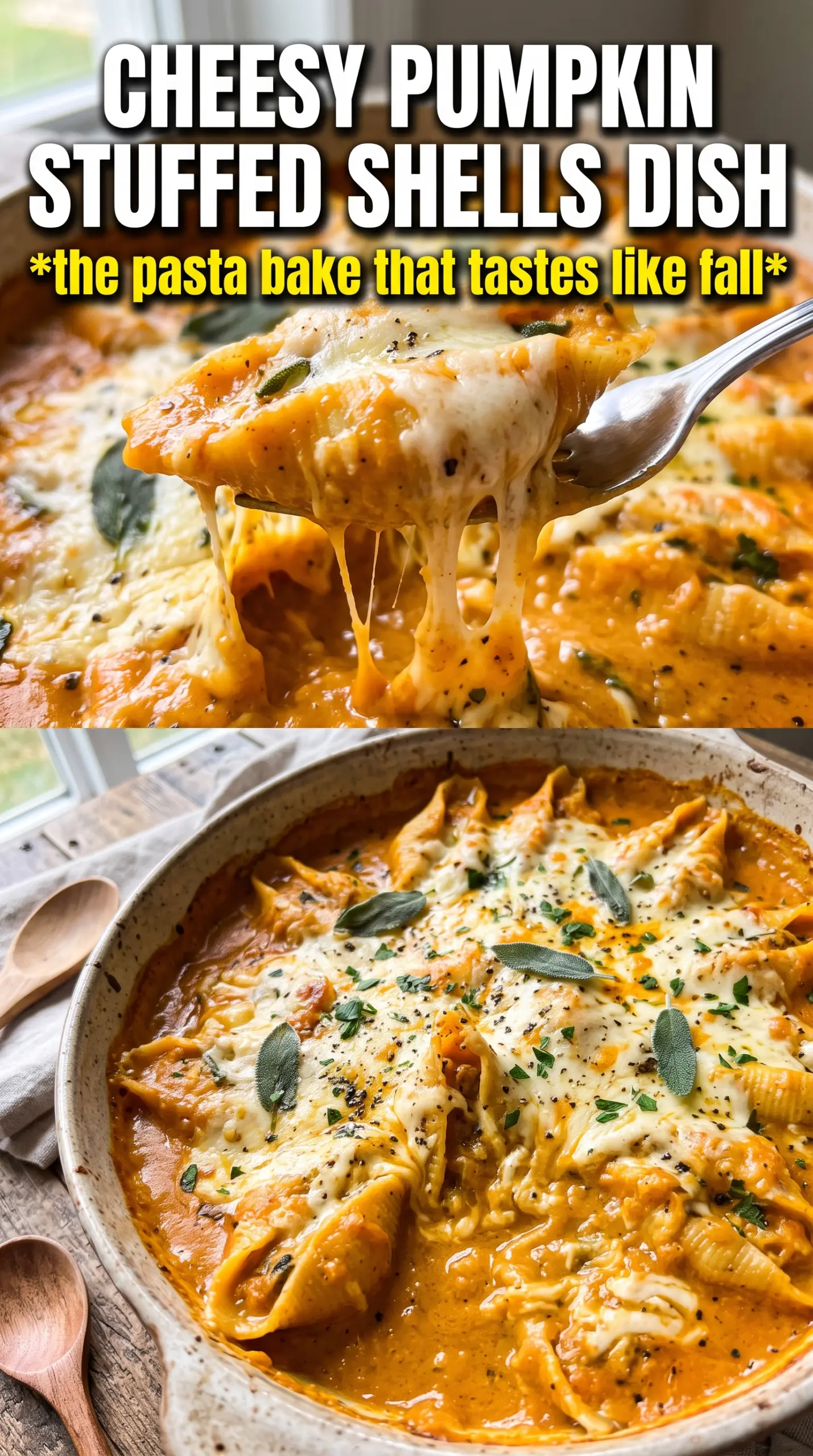
Stuffed shells with pumpkin cream sauce bake up rich, cozy, and sturdy enough to hold their shape on the plate. The shells stay tender but still have a little bite, the ricotta filling turns creamy without leaking everywhere, and the pumpkin sauce settles into that middle ground between silky and savory. It’s the kind of baked pasta that feels generous and a little special without asking for complicated work.
The trick is keeping the filling thick and the pasta just shy of fully done before it goes into the oven. Ricotta, parmesan, and egg give the shells structure, while the pumpkin cream sauce gets depth from garlic, nutmeg, and enough parmesan to taste like dinner, not dessert. If the sauce seems thin at first, that’s normal; it tightens up in the oven as the mozzarella melts and the shells release a little starch.
Below you’ll find the exact order that keeps the shells from splitting, the sauce from turning flat, and the top from browning before the center is hot. There’s also a few useful swaps if you want to make it meatless, lighter, or ahead of time.
The sauce thickened just enough in the oven and the shells held together perfectly. I was worried the pumpkin would taste sweet, but with the garlic and parmesan it came out savory and my husband went back for seconds.
Save these stuffed shells with pumpkin cream sauce for the nights when you want a creamy baked pasta with a little fall comfort and a golden mozzarella top.
The Reason the Filling Stays Creamy Instead of Running Loose
The biggest mistake with stuffed shells is packing the filling too wet and then wondering why the whole pan turns watery. Ricotta already carries moisture, and pumpkin sauce adds more, so the filling has to be thick enough to mound on a spoon before it goes into the shells. The egg helps bind it, and parmesan adds salt and structure, which matters more here than most people think.
Cooking the shells just to al dente keeps them from tearing when you stuff them and from collapsing into mush during baking. They finish in the sauce, so a little firmness going into the pan is what gives you clean, intact shells at the end. If they’re cooked all the way through before baking, they tend to split when you fill them and go soft in the oven.
- Ricotta — Whole-milk ricotta gives the best texture here. Part-skim works, but it’s looser and can make the filling less plush.
- Parmesan — This does more than add flavor; it tightens the filling and seasons the sauce at the same time. Freshly grated is worth it because pre-grated parmesan doesn’t melt as smoothly.
- Pumpkin puree — Use pure pumpkin, not pumpkin pie filling. Pie filling is sweetened and spiced in the wrong direction for this dish.
- Heavy cream — This is what keeps the sauce luxurious and stable. Half-and-half can work, but the sauce will be thinner and a little less rich.
What Each Ingredient Is Actually Doing in This Recipe
- Primary ingredient (the star) — Quality matters most. Choose the best you can find.
- Cooking medium (oil, butter, or broth) — This carries flavors and prevents dryness.
- Seasonings (salt, pepper, spices, herbs) — Layer flavors so nothing overpowers. Build depth gradually.
- Aromatics (garlic, onion, herbs) — Cook with fat to bloom flavors. Become the foundation.
- Supporting ingredients — Complement the main ingredient without overpowering it.
- Sauce or liquid (if applicable) — Brings flavors together. Balance richness with acid.
- Acid (lemon, vinegar, wine, or other) — Brightens and prevents flat-tasting results.
- Final finish (garnish, glaze, or sauce) — Prevents one-dimensional taste and adds visual appeal.
Building the Pumpkin Sauce So It Stays Silky in the Oven
Softening the Garlic First
Start the garlic in a little fat over medium heat and cook it just until fragrant, about a minute. You want the raw edge off, not color on the garlic, because browned garlic makes the sauce taste sharp and slightly bitter. If the heat is too high here, the garlic can scorch before the pumpkin even goes in.
Making the Sauce Taste Savory, Not Sweet
Once the pumpkin, cream, broth, parmesan, Italian seasoning, nutmeg, and red pepper flakes go in, let the sauce simmer gently for about five minutes. The goal is a smooth sauce that coats a spoon, not a boil that reduces it too far. Pumpkin needs salt, cheese, and a little spice to taste like dinner; without them, it leans flat and sweet.
Layering the Pan for the Best Texture
Spread most of the sauce in the baking dish before the shells go in, then spoon the rest over the top. That bottom layer keeps the pasta from sticking and lets the shells steam from underneath while the top browns. If you pour all the sauce on top, the bottoms can dry out before the center gets hot.
Baking Until the Cheese Bubbles at the Edges
Bake until the mozzarella is melted, bubbly, and getting golden in spots, usually 35 to 40 minutes. You’re looking for sauce that’s visibly simmering around the edges of the pan and shells that feel set when nudged with a spoon. If the top browns too fast, cover it loosely with foil and keep going until the center is hot.
What to Change When You Want a Different Version of These Shells
Make It Meatier
Brown a half pound of Italian sausage and stir it into the pumpkin sauce or tuck a little into each shell with the ricotta. It adds salt, richness, and a savory edge that balances the pumpkin even more. If you go this route, drain the sausage well so the sauce doesn’t turn greasy.
Dairy-Free Version
Use a thick dairy-free ricotta, unsweetened oat cream or cashew cream, and a melty plant-based mozzarella on top. The dish still bakes up well, but it won’t have the same tang or browning as the dairy version. Keep the sauce a little looser, because dairy-free substitutes tend to tighten more as they bake.
Gluten-Free Swap
Use gluten-free jumbo shells if you can find them, and cook them carefully because they can go soft faster than wheat pasta. The filling and sauce are naturally gluten-free as written, so the pasta is the only part that needs attention. Undercook the shells by a minute or two so they keep their shape in the oven.
Make It Ahead for an Easier Dinner
Assemble the pan up to a day in advance, cover it tightly, and refrigerate until baking time. The shells may need an extra 10 minutes in the oven if they go in cold from the fridge. This is one of those bakes that actually benefits from a little rest, because the filling firms up and the sauce settles around the pasta.
Storage and Reheating
- Refrigerator: Store covered for up to 4 days. The sauce will thicken as it chills, which is normal.
- Freezer: Freeze in a tightly wrapped baking dish or portioned containers for up to 2 months. Thaw overnight in the refrigerator before reheating for the best texture.
- Reheating: Cover and warm in a 350F oven until hot in the center, adding a splash of cream or broth if the sauce looks tight. Microwaving works for single portions, but go in short bursts so the ricotta doesn’t turn grainy.
Questions I Get Asked About This Recipe
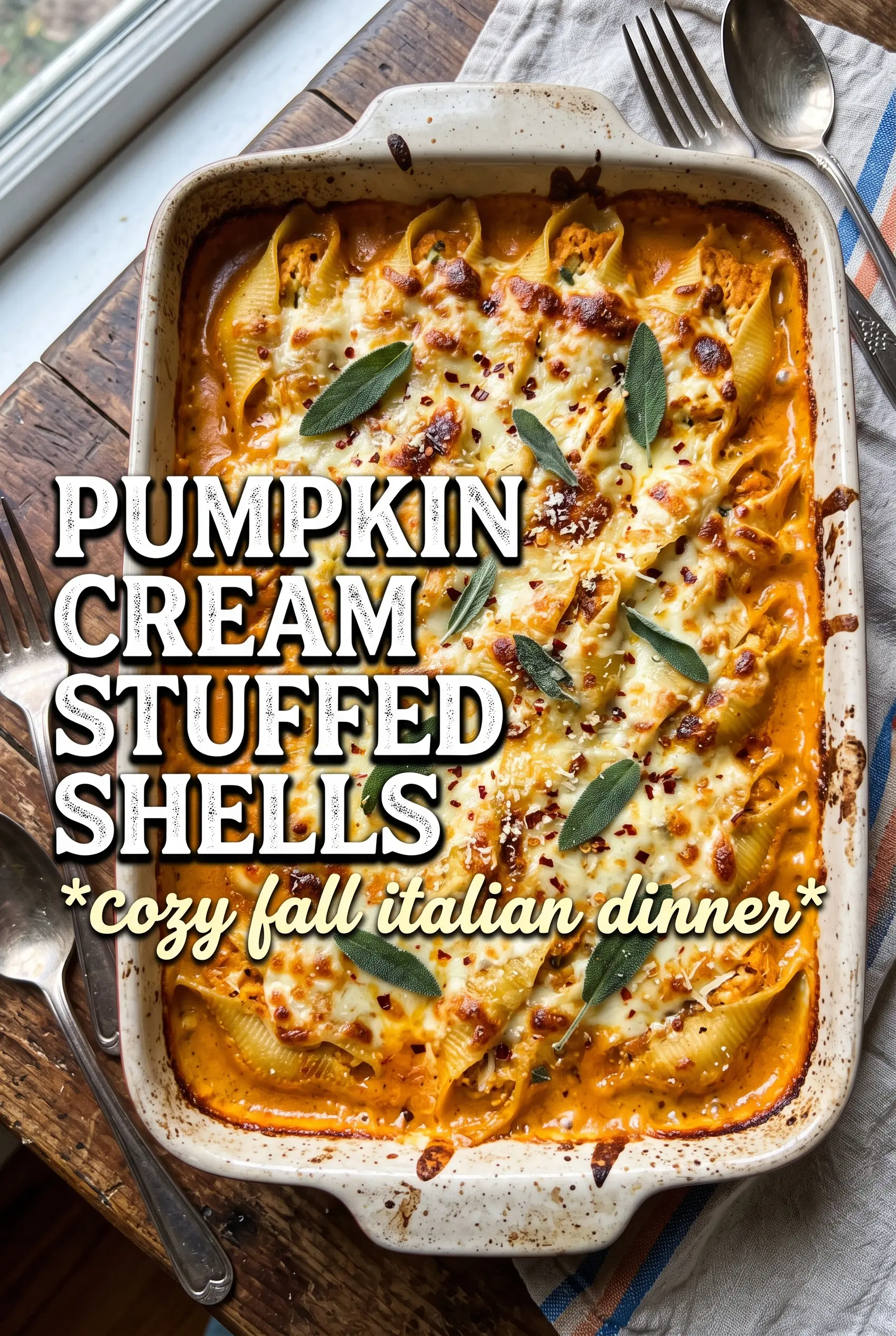
Stuffed Shells With Pumpkin Cream Sauce
Ingredients
Equipment
Method
- Preheat the oven to 375°F and grease a 9x13 baking dish so the stuffed shells release easily.
- Sauté minced garlic for 1 minute until fragrant, then add pumpkin puree, heavy cream, chicken broth, parmesan, Italian seasoning, nutmeg, and red pepper flakes.
- Simmer the sauce for 5 minutes, stirring occasionally, until it looks slightly thickened and cohesive.
- Pour most of the sauce into the greased baking dish, spreading it into an even layer to cushion the pasta.
- Mix ricotta with the egg, parmesan, Italian seasoning, salt, and pepper until the filling is smooth and evenly seasoned.
- Stuff each al dente jumbo shell with the ricotta mixture and nestle the shells into the sauce in the baking dish.
- Pour the remaining sauce over the shells so they are mostly covered.
- Scatter shredded mozzarella over the top so it will melt and brown in the oven.
- Bake for 35-40 minutes at 375°F until the sauce is bubbly around the edges and the mozzarella turns golden.
- Garnish with fresh sage right after baking for a bright herbal finish.