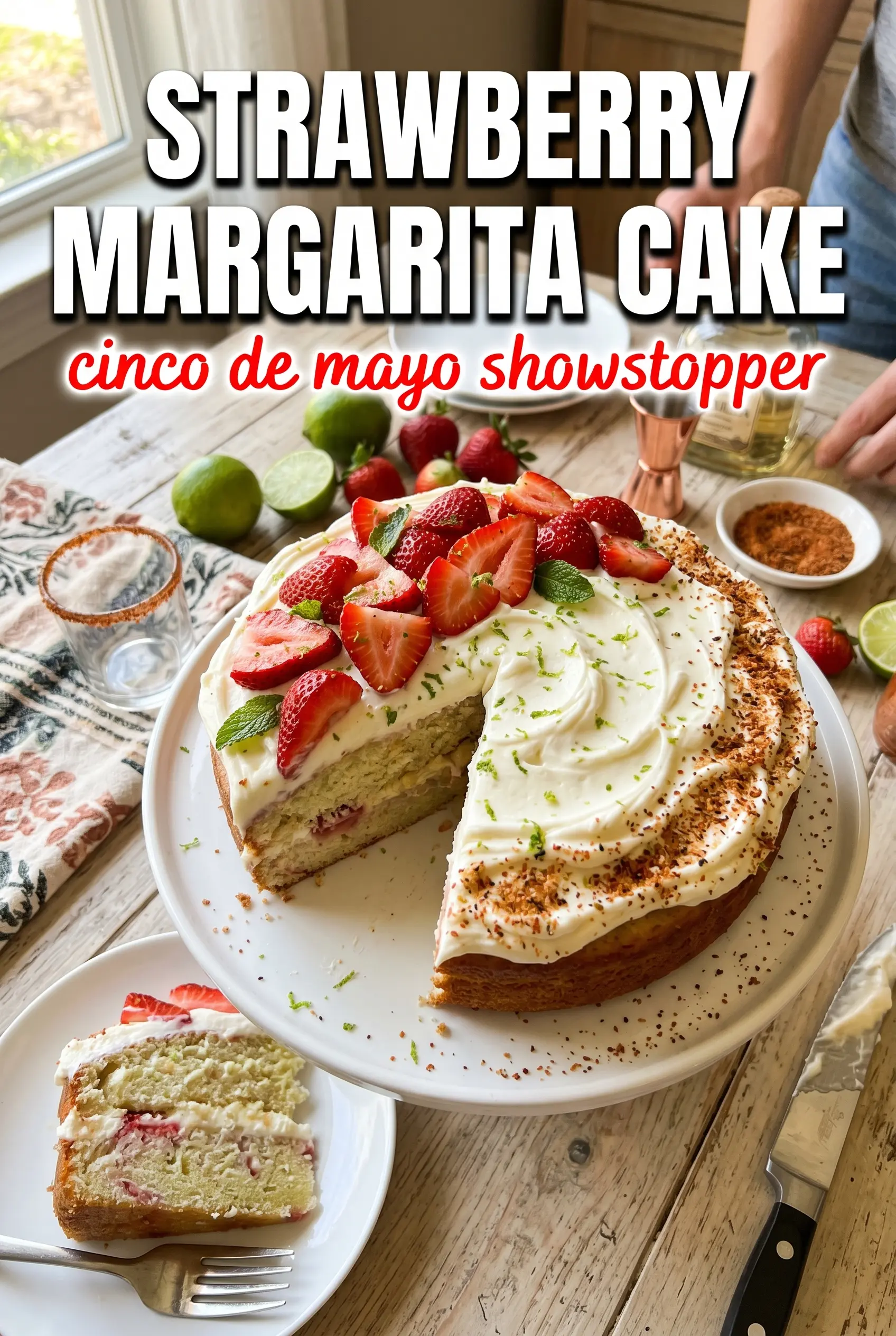
Strawberry Margarita Cake brings together a soft pink crumb, bright lime frosting, and fresh strawberry layers in a way that tastes festive without being fussy. The cake stays tender from the butter-and-egg base, then the strawberry puree gives it real berry flavor instead of just color. The lime keeps every bite lively, so the sweetness never feels heavy.
What makes this version work is the balance. The strawberry puree goes in with lime juice, which keeps the fruit flavor vivid, and the dry ingredients get added in stages so the batter stays smooth instead of turning dense. Cream cheese frosting finishes the whole cake with enough tang to echo the margarita idea without tasting like a drink mix dessert.
Below, you’ll find the little details that matter most: how to keep the layers from baking up dry, how to get a frosting that spreads cleanly, and a few smart swaps if you need to adjust for what’s in your kitchen.
The cake turned out so moist and the lime frosting kept it from being overly sweet. I loved that the strawberry slices in the middle didn’t make the layers slip around after chilling for an hour.
Love the pink layers, fresh strawberries, and tangy lime frosting in this Strawberry Margarita Cake? Save it to Pinterest for birthdays and celebrations.
The Trick to Keeping Strawberry Cake Light Instead of Dense
The biggest mistake with berry cakes is adding too much wet fruit and expecting the flour to handle it. Strawberry puree brings moisture and flavor, but it can also weigh the batter down if the mixing order is sloppy. This cake avoids that by alternating the flour mixture with the strawberry-lime mixture and milk, which keeps the batter emulsified and the crumb even.
The other thing that matters is the lime juice. It brightens the strawberry flavor, but too much acid without enough structure can make the cake tough. Here, the butter and sugar get beaten until fluffy first, which traps air and gives the layers enough lift to stay soft even with the fruit mixed in.
- Butter and sugar — Cream them until pale and fluffy. That step creates the lift you can’t get back later if you rush it.
- Strawberry puree — Use fresh puree if you can. It gives a cleaner berry taste than jam or syrup, which can make the cake taste candied.
- Lime juice — Fresh juice matters here. Bottled juice works in a pinch, but it flattens the frosting and loses the sharp finish that makes the cake taste balanced.
- Milk — Whole milk keeps the batter tender. Lower-fat milk will work, but the crumb won’t be quite as plush.
What Each Ingredient Is Doing in the Layers and Frosting
The cake batter and frosting are built to work together, not compete. The cake gives you soft strawberry flavor and a light crumb, while the frosting adds tang and a little richness so the whole dessert doesn’t lean too sweet. If one side gets too heavy, the balance disappears.
- Cream cheese — This gives the frosting its body and tang. Full-fat cream cheese is the right choice here; low-fat versions can turn loose and make the frosting harder to spread cleanly.
- Powdered sugar — It sweetens and thickens at the same time. If the frosting feels too soft after mixing, add a little more sugar rather than trying to chill it for too long.
- Lime zest — Don’t skip it. The juice adds acidity, but the zest is where the bright lime aroma lives, and that’s what makes the frosting taste fresh.
- Fresh strawberries — Slice them thin so the layers stay level. Thick pieces can slide around under the frosting and make the cake harder to stack.
- Vanilla extract — It rounds out the fruit and keeps the cake from tasting sharp. A good vanilla helps bridge the strawberry and lime instead of letting them feel separate.
How to Build the Layers Without Losing the Crumb
Mix the Batter in the Right Order
Start by whisking the flour, baking powder, and salt together so the leavening is evenly spread through the batter. Beat the butter and sugar until it looks fluffy and lighter in color, then add the eggs one at a time so the mixture stays smooth. If the batter looks curdled after the eggs, it usually means the eggs were cold; keep mixing and it will come back together once the dry ingredients go in.
Fold in the Fruit Without Overworking It
Add the flour mixture and the strawberry-lime mixture in alternating additions, beginning and ending with flour. That pattern helps the batter hold together and keeps the fruit from pooling at the bottom of the pans. Stop mixing as soon as the streaks disappear. Overmixing here is what makes a cake bake up tight instead of tender.
Bake Until the Center Springs Back
Divide the batter evenly between the pans so the layers bake at the same rate. Pull them from the oven when the tops spring back lightly and a toothpick comes out with a few moist crumbs, not wet batter. Let them rest in the pans for 15 minutes, then turn them out onto racks right away so the bottoms don’t trap steam and turn gummy.
Frost Only After the Layers Are Completely Cool
Beat the cream cheese and butter until smooth before adding the sugar, lime juice, and zest. If the frosting looks loose, the cream cheese was too warm or the cake wasn’t fully cool; both will make the frosting slide. Spread it on a cooled cake only, then chill the assembled cake long enough for the filling and frosting to firm up before slicing.
How to Adapt This Cake for Different Kitchens and Occasions
Make It Gluten-Free
Swap the all-purpose flour for a good 1:1 gluten-free baking blend that includes xanthan gum. The cake will still be soft, but it may need an extra minute or two in the oven and should cool fully before slicing so the crumb sets properly.
Make It Dairy-Free
Use plant-based butter in both the cake and frosting, then choose a dairy-free cream cheese with a firm texture. The flavor stays on track, but the frosting may be a little softer, so chill it before spreading if it feels loose.
Turn It Into a Sheet Cake
Bake the batter in a greased 9×13-inch pan and start checking a few minutes early, since the thinner layer bakes faster. You’ll lose the stacked look, but you gain easier serving and a little more room for the strawberry slices on top.
Storage and Reheating
- Refrigerator: Store covered for up to 4 days. The frosting stays stable, but the strawberries on top soften after the first day.
- Freezer: Freeze unfrosted layers wrapped tightly for up to 2 months. Frosted cake can be frozen, but the cream cheese texture changes a bit after thawing.
- Reheating: This cake is best served cold or at cool room temperature, not reheated. If it’s been chilled, let slices sit out for 20 to 30 minutes so the frosting softens and the lime flavor comes through.
Answers to the Questions Worth Asking
Strawberry Margarita Cake
Ingredients
Equipment
Method
- Preheat the oven to 350°F and grease two 8-inch round cake pans.
- Whisk together all-purpose flour, baking powder, and salt.
- Beat softened butter and granulated sugar until fluffy, with a lighter color and smoother texture.
- Add eggs one at a time, beating until each egg is fully incorporated before adding the next.
- Combine fresh strawberry puree with lime juice until evenly mixed.
- Alternate adding the flour mixture and strawberry-lime mixture with whole milk, beginning and ending with flour, just until the batter looks smooth.
- Stir in vanilla extract until the batter is uniform in color.
- Divide the batter between the pans and bake for 28-30 minutes, until a toothpick comes out clean and the tops spring back.
- Cool in the pans for 15 minutes, then turn out onto racks to cool completely.
- Beat softened cream cheese and softened butter until smooth and free of lumps.
- Add powdered sugar, lime juice, and lime zest, then beat until thick, glossy, and spreadable.
- Place one cake layer on a plate and spread frosting on top to the edges.
- Add the sliced fresh strawberries in an even layer over the frosting.
- Place the second cake layer on top and press gently so the layers align.
- Frost the top and sides until the surface looks smooth and bright.
- Garnish with fresh strawberries and fresh mint, then rest the cake for 1 hour for clean slices.