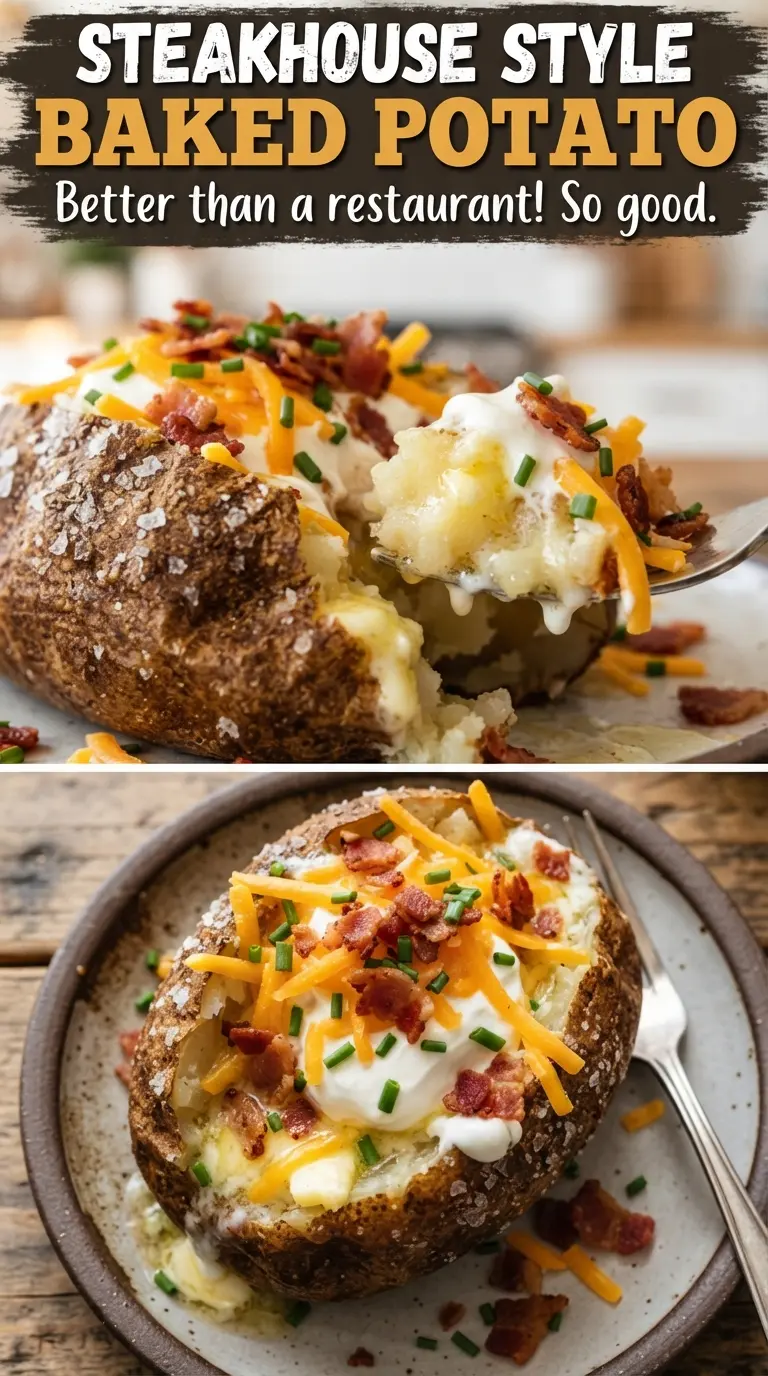
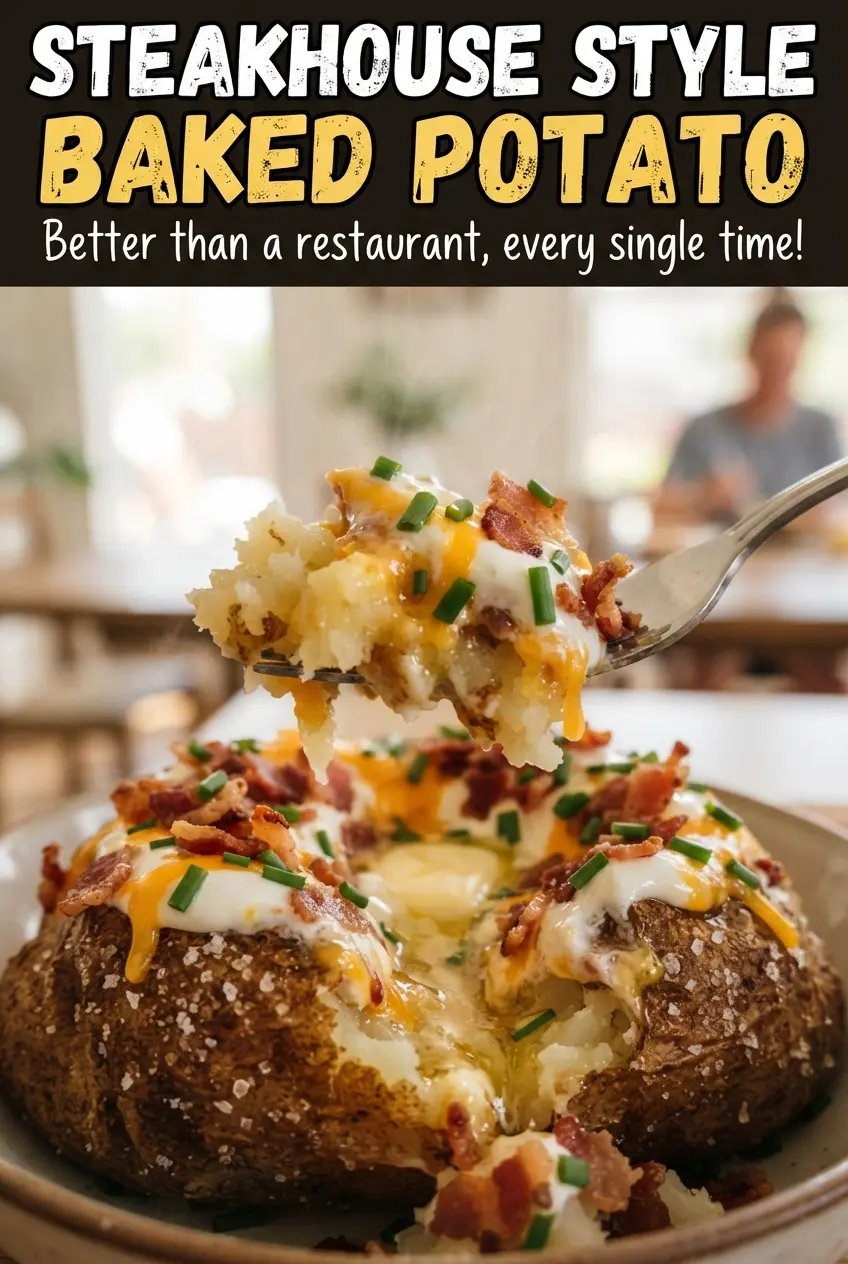
Steakhouse-style baked potatoes earn their place on the plate because the skin turns salty and crisp while the inside stays fluffy, dry, and ready to soak up butter. When done right, they don’t eat like a plain side dish at all. They land somewhere between comfort food and an event, especially when you split one open and the steam pours out.
The trick is starting with a dry russet potato, coating the skin with fat, and giving it a heavy roll in coarse salt before it goes straight onto the oven rack. That salt doesn’t just season the outside. It helps the skin bake up deeply savory and almost crackly, the way restaurant potatoes do. Bacon fat adds a little extra flavor, but canola oil works fine if that’s what you have.
Below, I’ve included the timing cue that matters most, a few smart swaps, and the best way to reheat leftovers without ending up with a soggy skin.
The skin got beautifully salty and crisp, and the potato stayed fluffy all the way through. I used bacon fat like suggested, and it tasted just like the steakhouse baked potato I always order.
Save this steakhouse style baked potato for steak night, loaded with crisp skin, fluffy potato, and all the classic toppings.
The Skin Is the Whole Point Here
A great baked potato fails long before the toppings go on if the skin stays soft. The dry heat needs direct contact with the rack, and the coating of fat plus coarse salt is what drives the skin toward crisp instead of leathery. Baking on a sheet pan traps a little more moisture underneath, which is why the rack method matters.
The other thing people miss is the potato itself. Russets are built for this job because their starch turns fluffy and airy after a long bake. Waxy potatoes hold their shape, but they stay dense and waxy inside instead of giving you that cloudlike center that splits open cleanly under butter.
- Russet potatoes — These are the right potatoes for the job. Their thick skin and high starch content give you a fluffy interior and a dry, steamy center instead of a gluey one.
- Bacon fat or canola oil — Bacon fat adds a deeper, savory note to the skin. Canola oil is the cleanest swap and still gives you crispness, though it won’t bring that steakhouse flavor.
- Coarse kosher salt — This is what gives the skin its signature crusty finish. Fine salt clings too aggressively and can taste harsh.
- Whipped butter — Whipped butter melts fast and spreads into the hot potato instead of sitting in one heavy chunk. Regular butter works too, but the texture won’t be as light.
- Sour cream, cheddar, bacon, and chives — These toppings bring the loaded baked potato effect, but don’t overpack them before serving or the skin will soften under the weight.
What Each Ingredient Is Actually Doing in This Recipe
- Primary ingredient (the star) — Quality matters most. Choose the best you can find.
- Cooking medium (oil, butter, or broth) — This carries flavors and prevents dryness.
- Seasonings (salt, pepper, spices, herbs) — Layer flavors so nothing overpowers. Build depth gradually.
- Aromatics (garlic, onion, herbs) — Cook with fat to bloom flavors. Become the foundation.
- Supporting ingredients — Complement the main ingredient without overpowering it.
- Sauce or liquid (if applicable) — Brings flavors together. Balance richness with acid.
- Acid (lemon, vinegar, wine, or other) — Brightens and prevents flat-tasting results.
- Final finish (garnish, glaze, or sauce) — Prevents one-dimensional taste and adds visual appeal.
How to Bake the Potato So the Middle Fluffs and the Skin Stays Crisp
Dry the Potatoes First
Scrub the potatoes and dry them completely before coating them. Any moisture on the skin turns to steam in the oven, and steam is what keeps the outside from crisping. Prick each potato with a fork so pressure can escape as the inside cooks and expands. If you skip that, you’re inviting split skins and uneven baking.
Coat and Salt Generously
Rub each potato with bacon fat or oil until the skin looks evenly slick, then roll it in coarse salt until the surface is well covered. You want visible salt crystals on the outside, not just a light dusting. That coating seasons the skin and helps it turn robust and savory instead of bland. If the potatoes look patchy at this point, they’ll bake patchy too.
Bake on the Rack Until the Skin Feels Firm
Set the potatoes directly on the oven rack and bake at 350F for 1 hour to 1 hour 15 minutes. The rack placement lets hot air move around every side, which is what dries the skin properly. They’re done when a knife slides in with no resistance and the exterior feels firm when you gently squeeze it with an oven mitt. If the center still feels dense, give it another 10 minutes rather than serving early.
Split, Fluff, and Top Right Away
Cut the potatoes open lengthwise as soon as they come out of the oven, then push the ends inward to open the center. That motion loosens the starch inside and makes room for the butter to melt down into the potato instead of pooling on top. Fluffing works best while the potato is piping hot, so have the toppings ready before the timer goes off. Start with butter, then cheddar so it melts, then sour cream, bacon, and chives.
How to Adapt This for Different Toppings and Diets
Dairy-Free Loaded Potato
Use oil instead of bacon fat if needed, then top the potato with a dairy-free butter and skip the sour cream and cheddar. The potato will still have the crisp skin and fluffy interior; you’ll just get a cleaner, more savory base that depends on the salt and chives for contrast.
Extra-Steakhouse Version
Add a spoonful of pan drippings, chopped scallions, or a drizzle of garlic herb butter over the opened potato before the sour cream goes on. The result tastes richer and a little more like the side you’d get next to a ribeye, but it works best if you don’t pile on too many wet toppings at once.
Make It a Meal
Turn each potato into a full dinner by adding chopped steak, pulled chicken, or black beans. That changes the dish from side to main, but the base method stays the same. The only real rule is to keep the filling hot so the butter melts and the potato stays soft underneath all the toppings.
Storage and Reheating
- Refrigerator: Store baked potatoes without toppings for up to 4 days. The skin softens a bit in the fridge, but the texture comes back well in the oven.
- Freezer: Whole baked potatoes don’t freeze well because the texture turns mealy after thawing. If you need to freeze anything, freeze the cooked bacon separately instead.
- Reheating: Reheat uncovered in a 375F oven until hot through, about 15 to 20 minutes for a chilled potato. The mistake to avoid is microwaving it straight from the fridge, which makes the skin limp and the inside unevenly hot.
Questions I Get Asked About This Recipe
Steakhouse Style Baked Potato
Ingredients
Equipment
Method
- Preheat oven to 350F and place a rack in the center position.
- Prick the potatoes with a fork, coat them in bacon fat, and roll them in coarse kosher salt.
- Bake potatoes directly on the rack for 1 hour to 1 hour 15 minutes, until crisp and tender.
- Slice each potato open lengthwise and push the ends to fluff the inside.
- Top the hot potatoes with whipped butter.
- Sprinkle shredded cheddar over the butter, then add sour cream.
- Finish with bacon and chopped chives and serve immediately.