Deeply charred steak kabobs hit the grill with the kind of sizzle that makes everyone drift toward the patio. The steak picks up a glossy, savory crust while the peppers and onions soften at the edges and keep a little bite, so every skewer gives you smoke, sweetness, and beefy richness in one forkful.
What makes this version work is the marinade balance: soy sauce and Worcestershire build depth, red wine vinegar keeps the steak from tasting flat, and a short marinating window is enough to season the surface without turning the meat mushy. Sirloin is the right choice here because it stays tender over high heat and still gives you those meaty charred edges that make kabobs worth firing up the grill for.
Below you’ll find the trick to grilling the steak and vegetables at the same pace, plus a few smart swaps if you want to change up the vegetables or make these kabobs fit what you already have on hand.
The marinade gave the steak a deep savory flavor and the kabobs cooked in exactly 10 minutes on my grill. The mushrooms and peppers picked up the best char without going limp.
Like these steak kabobs? Save them for the next grill night when you want charred sirloin, tender vegetables, and a fast marinade that does the heavy lifting.
The Marinade Window That Keeps Sirloin Tender Instead of Tight
Steak kabobs can go wrong fast when the meat is over-marinated or the grill is too gentle. Sirloin only needs about 30 minutes to pick up flavor from the surface, and that short soak gives you a seasoned crust without making the cubes soft or mealy. The goal isn’t to cure the steak. It’s to coat it, flavor it, and get it onto high heat while the outside is still dry enough to sear.
The other mistake is crowding the skewers or underheating the grill. Kabobs need space between the pieces so the edges can caramelize instead of steaming, and the grates should be hot enough that the steak starts browning within seconds. If the grill isn’t properly preheated, the vegetables turn limp before the beef gets that dark, glossy crust.
- Sirloin steak — This cut stays tender on a hot grill and gives you a clean beefy bite. Cut it into even cubes so it cooks at the same pace as the vegetables. Ribeye works if you want more richness, but it’s softer and can drip more fat onto the flames.
- Red wine vinegar — This adds brightness and keeps the marinade from tasting heavy. Don’t skip it unless you replace it with another acid like lemon juice. The vinegar also helps the garlic and paprika read more clearly after grilling.
- Soy sauce and Worcestershire — These do the salty, savory work that plain salt can’t do as deeply. Low-sodium soy sauce works fine if that’s what you keep on hand. Worcestershire brings a little tang and background sweetness that clings well to the meat.
- Cremini mushrooms — These soak up marinade and stay meaty on the skewer. If you use white mushrooms, they’ll work, but they won’t taste as deep. Keep them whole if they’re small enough; halved mushrooms tend to dry out faster.
What Each Ingredient Is Actually Doing in This Grilled Dish
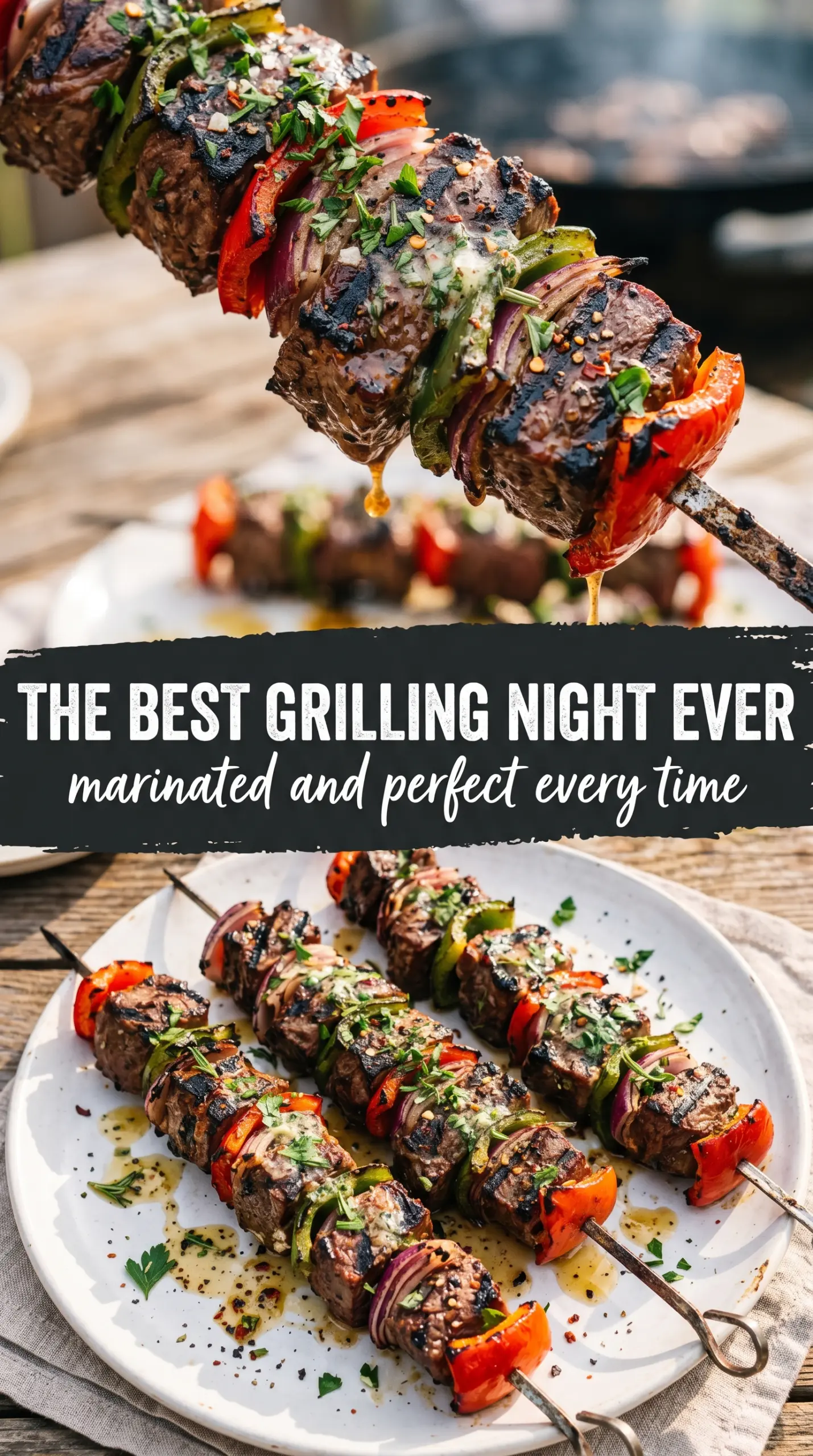
- Protein (meat, chicken, or seafood) — Cut into uniform pieces so everything cooks evenly. Marinade helps keep lean proteins moist.
- Vegetables (if using on skewers) — Cut by cooking time so everything finishes together. Hard vegetables go first; softer ones go last.
- Marinade (oil, acid, and aromatics) — This seasons the protein and keeps it moist. 30 minutes to 2 hours is ideal.
- Acid (vinegar, citrus, or wine) — This tenderizes slightly and adds brightness. Don’t marinate too long or the protein gets mushy.
- Aromatics (garlic, ginger, onion) — These add depth and complexity. Mince finely so they distribute throughout the marinade.
- Oil (the cooking medium) — This helps proteins brown and prevents sticking. High-heat oil is essential for proper searing.
- High heat (the technique) — This creates char marks and seals in juices. Don’t move proteins too early or you’ll lose the crust.
- Rest before serving (5 minutes minimum) — This allows juices to redistribute so the protein stays moist when sliced.
Getting the Char on the Steak Without Burning the Vegetables
Building the Skewers Evenly
Thread the steak, peppers, onion, and mushrooms in a repeating pattern so every skewer gets a mix of meat and vegetables. Keep the pieces close enough to cook evenly, but don’t pack them tight; steam is the enemy of a good char. If your vegetable chunks are too small, they’ll fall soft and slip on the skewer before the steak finishes.
Hitting the Grill at the Right Heat
Preheat the grill to high and oil the grates before anything goes on. You want an immediate sizzle when the kabobs hit the metal, not a slow warm-up. If the grates aren’t hot enough, the marinade will stick and the steak will release late, which tears the crust instead of setting it.
Turning for Color, Not for Timid Checking
Grill the kabobs for 2 to 3 minutes per side and turn them only when the steak releases easily. The edges should look deeply browned and a little blistered, especially on the peppers and onion. Pull the skewers when the steak reaches 130°F for medium-rare or 145°F for medium, then let them rest for 3 to 4 minutes so the juices settle back into the meat.
How to Change These Kabobs Without Losing the Grill Marks
Dairy-Free and Naturally Gluten-Free
As written, these kabobs are already dairy-free. For gluten-free kabobs, swap in tamari or a certified gluten-free soy sauce in place of standard soy sauce. The flavor stays savory and balanced, and the marinade still caramelizes well on the grill.
Swap the Vegetables by Cooking Time
Zucchini chunks, cherry tomatoes, or chunks of yellow squash can replace one of the vegetables, but keep in mind they cook faster than onion and mushrooms. If you use softer vegetables, cut them larger and place them between sturdier pieces so they don’t collapse on the grill. You’ll get a lighter, juicier kabob, but with less of the deep caramelized bite from the mushrooms.
Use Flank Steak When That’s What You’ve Got
Flank steak can work, but it needs to be cut against the grain and grilled carefully because it tightens faster than sirloin. Keep the cubes slightly larger and stay closer to the rare side when you pull them off the grill. You lose a little tenderness, but you gain a stronger beefy bite.
Storage and Reheating
- Refrigerator: Store leftovers in an airtight container for up to 3 days. The vegetables soften a little, but the steak stays tasty.
- Freezer: You can freeze the cooked steak and vegetables for up to 2 months, though the peppers and onions will lose some texture. Freeze in a single layer first if you want the best results, then move them to a bag or container.
- Reheating: Reheat in a skillet over medium-low heat or in a 300°F oven until just warmed through. High heat will overcook the steak before the center is hot, which is the fastest way to turn tender kabobs dry.
Answers to the Questions Worth Asking
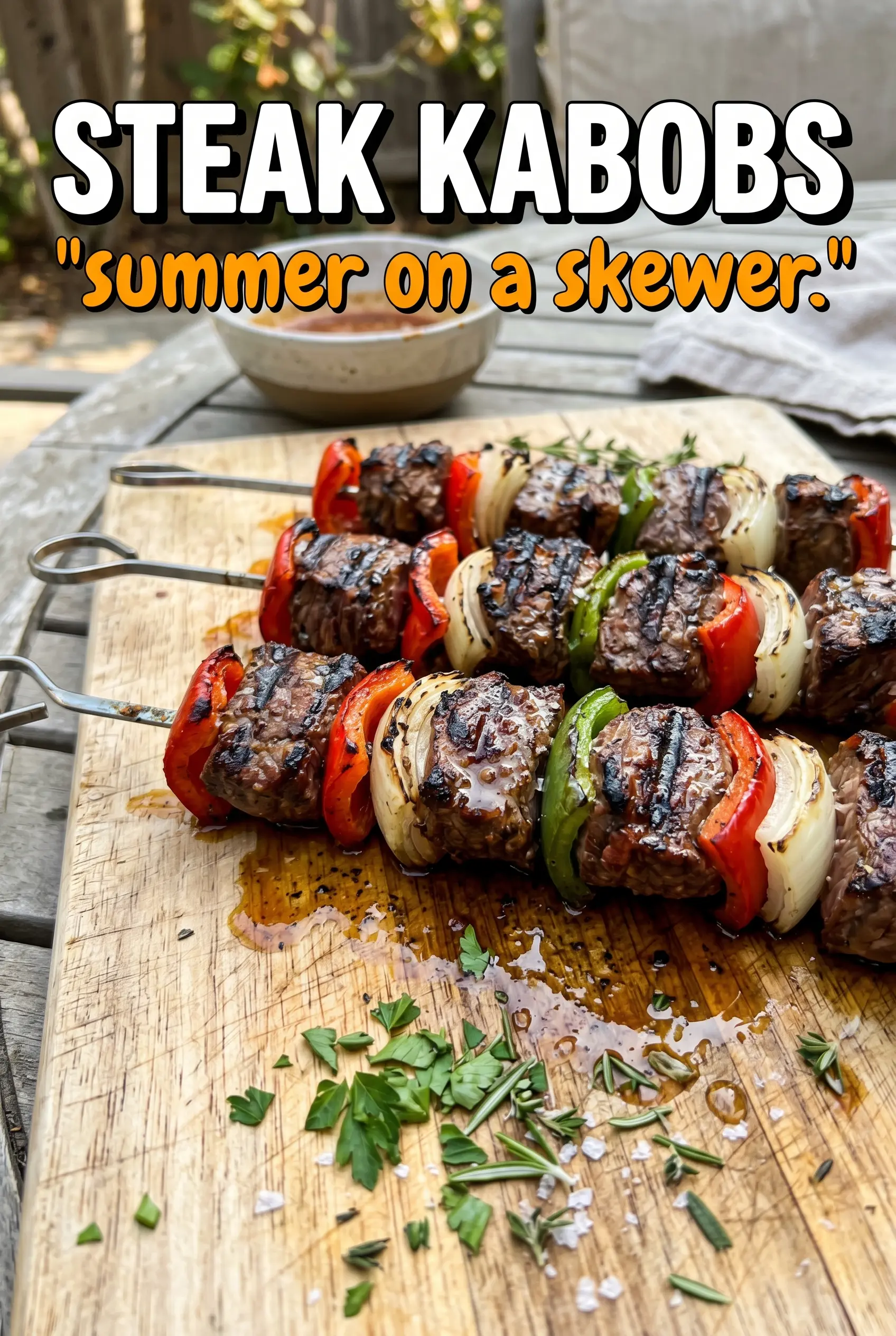
Steak Kabobs
Ingredients
Equipment
Method
- Whisk together olive oil, soy sauce, Worcestershire sauce, red wine vinegar, minced garlic, smoked paprika, garlic powder, and black pepper until smooth. Toss the sirloin cubes in the marinade, cover, and refrigerate for at least 30 minutes to coat well.
- Soak wooden skewers in water for 30 minutes to prevent scorching. Preheat the grill to high heat and oil the grates so the kabobs release cleanly.
- Thread steak cubes alternating with red bell pepper chunks, green bell pepper chunks, red onion wedges, and whole cremini mushrooms onto the skewers. Keep pieces snug so they char at the same pace.
- Grill skewers over high heat for 2-3 minutes per side (8-12 minutes total). Look for deeply charred sirloin cubes with caramelized edges and blistered vegetables while the marinade darkens into a glossy crust.
- Check doneness with an instant-read thermometer: remove at 130°F for medium-rare or 145°F for medium. Let the skewers keep cooking slightly off the grill for even results.
- Rest the skewers for 3-4 minutes off the grill before serving. Garnish with fresh parsley and serve with lemon wedges.