Steak crostini lands in that sweet spot between effortless and a little special: crisp toasted bread, cool horseradish cream, tender slices of medium-rare steak, and a sharp balsamic finish that keeps every bite from feeling heavy. It disappears fast at parties because it eats like a complete bite, not just a pile of toppings on bread.
The trick is balancing textures and temperature. The baguette needs to be toasted until it has real crunch so it can hold the cream and steak without turning soggy. The steak should rest before slicing, and it should be cut thinly against the grain so each piece stays tender on the crostini instead of chewing like a steak sandwich that lost its way. The horseradish cream is intentionally simple and cool; it gives the steak a clean bite without overpowering it.
Below, I’m walking through the small details that make this appetizer work, including the best way to sear the steak, when to slice it, and how to adapt the toppings if you want to change the flavor a little.
The crostini stayed crisp even after I assembled them, and the horseradish cream with the balsamic drizzle made the steak taste restaurant-level.
Save these steak crostini for the appetizer spread that needs crisp bread, horseradish cream, and a fast medium-rare steak finish.
The Part That Keeps the Bread Crisp After Topping It
Most crostini fail for one reason: the bread softens before the platter even reaches the table. That happens when the toast is underdone or when the toppings are too wet. Here, the baguette gets a real oven toast first, which gives it enough structure to hold the horseradish cream and steak without collapsing.
The other detail that matters is the order of assembly. The cream goes on first as a thin layer, then the arugula, then the steak, then the glaze. That little barrier between bread and meat helps protect the toast, and the arugula keeps the steak from sitting directly on a slick layer of sauce.
What Each Ingredient Is Doing in This Bite
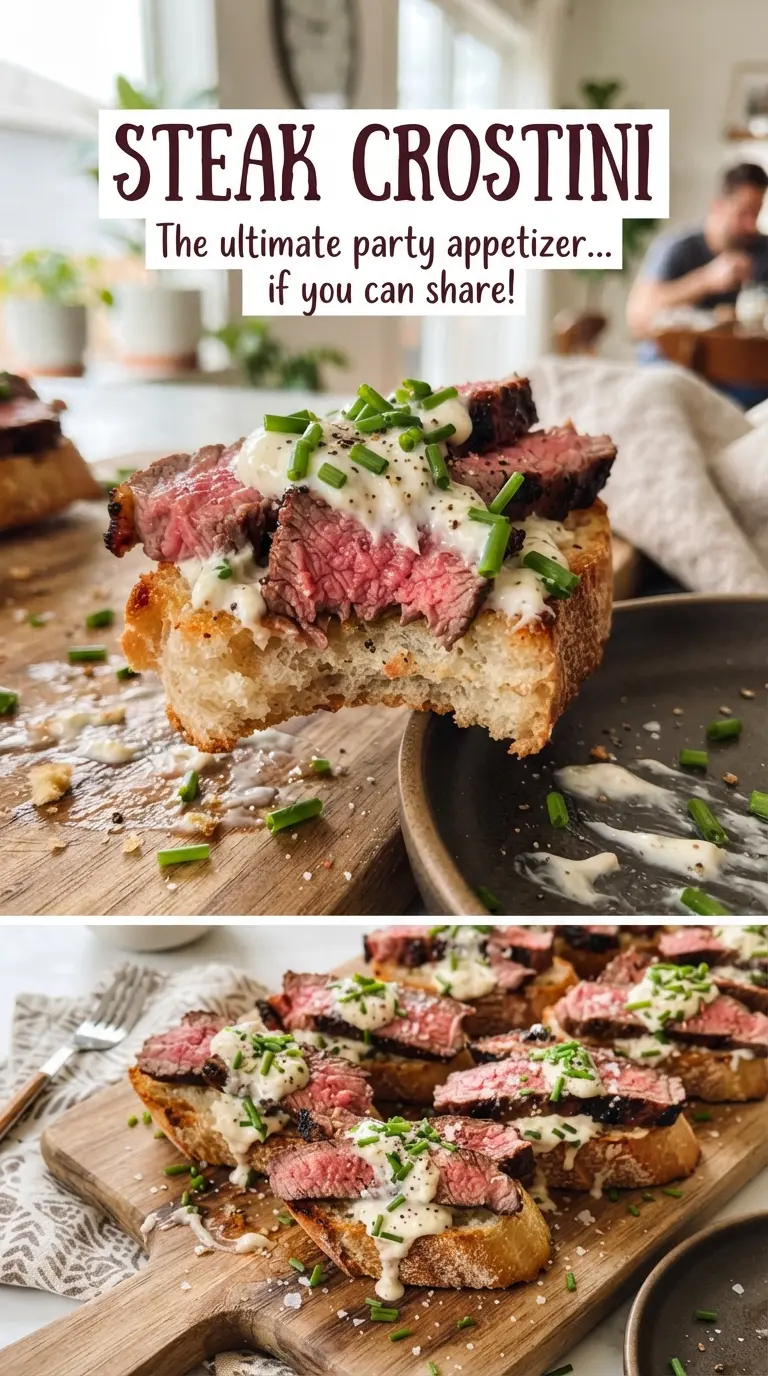
- Beef tenderloin or sirloin — Tenderloin gives you the softest, most elegant bite. Sirloin is a little meatier and more budget-friendly, and it still works well as long as you slice it thinly against the grain after resting. Either way, the steak should be cooked medium-rare so it stays supple on the crostini.
- Sour cream and horseradish — This is the backbone of the appetizer. Sour cream cools the heat and makes the spread luxurious, while prepared horseradish brings the sharp bite that wakes everything up. Plain Greek yogurt can stand in for sour cream, but it tastes tangier and a little leaner.
- Baguette — A sturdy baguette is the right bread here because it toasts into a crisp base without crumbling. Slice it about 1/2 inch thick so it can handle the toppings. Thinner slices turn brittle, and thicker slices start eating like sandwich bread.
- Balsamic glaze — This finishes the crostini with sweetness and acidity in one move. Use glaze, not straight vinegar, or it will run off the bread and make the topping messy. If you only have balsamic vinegar, reduce it first until syrupy.
- Arugula and chives — Arugula adds peppery freshness, and chives bring a mild onion note that bridges the steak and cream. Don’t skip the greens; they keep the appetizer from tasting one-note and heavy.
How to Sear the Steak and Build the Crostini in the Right Order
Toast the Bread Until It Snaps Cleanly
Brush the baguette slices with olive oil and bake them until the edges are golden and the centers feel dry to the touch. You want actual crunch here, not just light color. If the bread is still pale and soft, it will absorb the cream fast and go limp under the steak. Let the toast cool for a minute before assembling so the spread doesn’t melt and slide.
Cook the Steak Hot and Fast
Season the steak generously, then sear it in a hot oiled skillet until the outside is deeply browned and the center reaches about 130F for medium-rare. The pan should be hot enough to sizzle the moment the meat lands. If the skillet is only warm, the steak will steam and gray instead of building the crust you want. Pull it from the pan and rest it for 10 minutes so the juices settle back into the meat.
Slice Thinly Against the Grain
This is where a lot of people lose the texture. Look for the direction of the muscle fibers and cut across them, not with them, so each slice breaks down into tender bites instead of chewy strips. Use a sharp knife and keep the slices thin; thick pieces topple the crostini and make each bite awkward. If the steak seems to resist slicing cleanly, let it rest a few more minutes.
Assemble in Layers That Hold
Stir the sour cream, horseradish, and lemon juice together until smooth, then spread a modest layer onto each toast. Add a small tuft of arugula, top with a slice of steak, and finish with balsamic glaze and chives. Keep the toppings balanced; overloaded crostini look generous, but they fall apart fast. A clean, layered build gives you the best texture from first bite to last.
How to Adapt This for a Bigger Crowd or a Different Table
Use roast beef instead of seared steak
If you need to move faster, thinly sliced roast beef can replace the freshly seared steak. You lose the crust and the warm steakhouse feel, but the horseradish cream and balsamic glaze still carry the dish. Keep the slices very thin so the crostini still eats cleanly.
Make it gluten-free without changing the flavor
Swap the baguette for a sturdy gluten-free baguette or toasted gluten-free baguette slices. The key is still the same: toast until crisp enough to support the toppings. Softer gluten-free breads need a little extra oven time so they don’t collapse under the cream.
Go sharper or milder with the horseradish
If you want more heat, add another teaspoon of prepared horseradish. If you want a milder appetizer, cut it back and add a little extra sour cream. The spread should still taste bright and tangy; it just shouldn’t overpower the steak.
Storage and Reheating
- Refrigerator: Store the steak, crostini, and horseradish cream separately for up to 3 days. Assembled crostini soften quickly, so only build what you plan to serve right away.
- Freezer: The steak can be frozen after cooking, but the assembled appetizer and the cream do not freeze well. The toast turns stale and the dairy separates once thawed.
- Reheating: Warm the steak gently in a skillet over low heat or serve it at room temperature. Re-crisp the bread in the oven for a few minutes before assembling. High heat will overcook the steak and make it tougher.
Questions I Get Asked About This Recipe
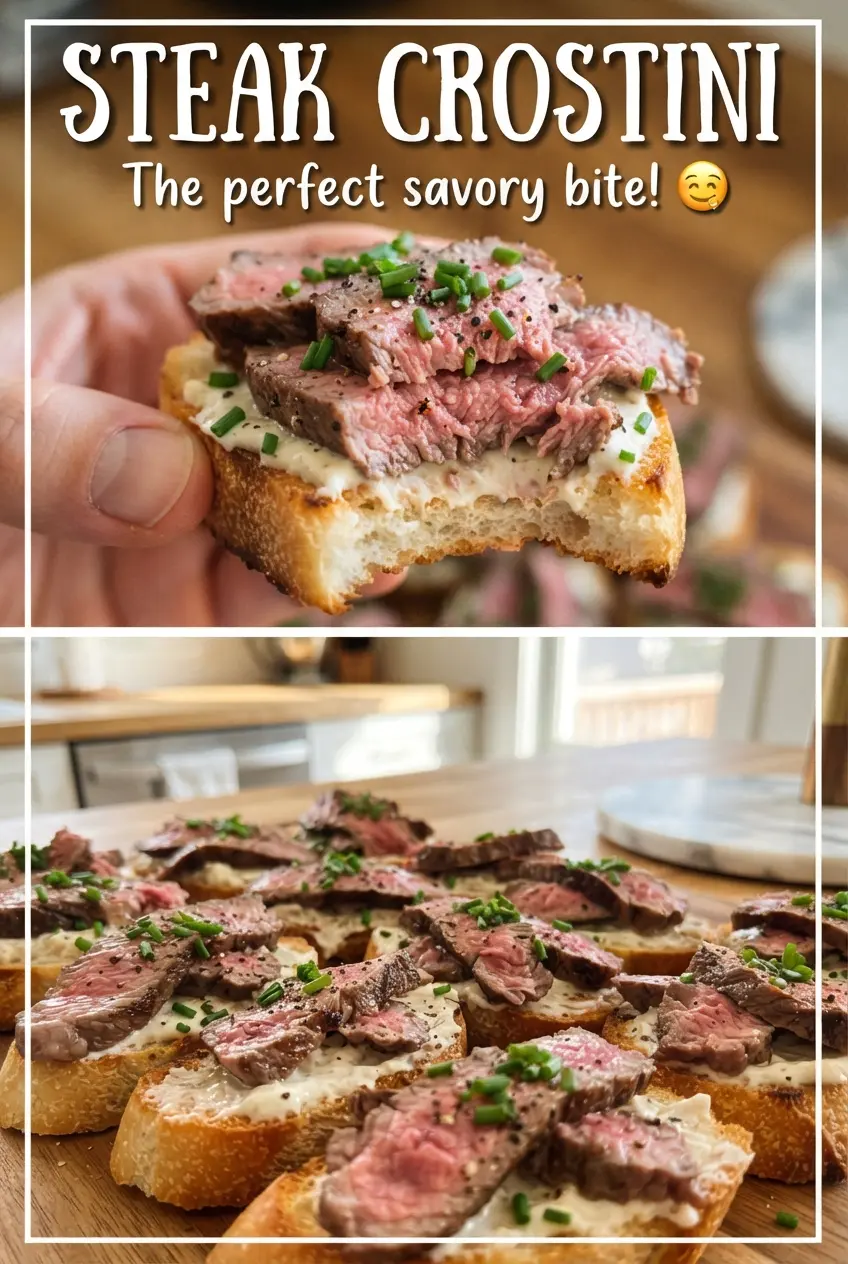
Steak Crostini
Ingredients
Equipment
Method
- Preheat the oven to 400F and line a sheet pan for easy loading. Brush baguette slices with olive oil and bake 6-8 minutes until golden, turning once if needed for even browning.
- Season the steak generously with salt and pepper. Heat a cast iron skillet with oil until very hot, then sear the steak 4-5 minutes per side.
- Check doneness and cook until the internal temperature reaches 130F for medium-rare. Remove the steak to a plate and rest 10 minutes.
- Slice the steak thinly against the grain. Keep slices covered loosely so they stay juicy while you finish the cream and toppings.
- Stir together sour cream, prepared horseradish, and lemon juice until smooth. Spread the horseradish cream on each crostini.
- Top each crostini with baby arugula and a slice of steak. Drizzle with balsamic glaze and garnish with fresh chives before serving.