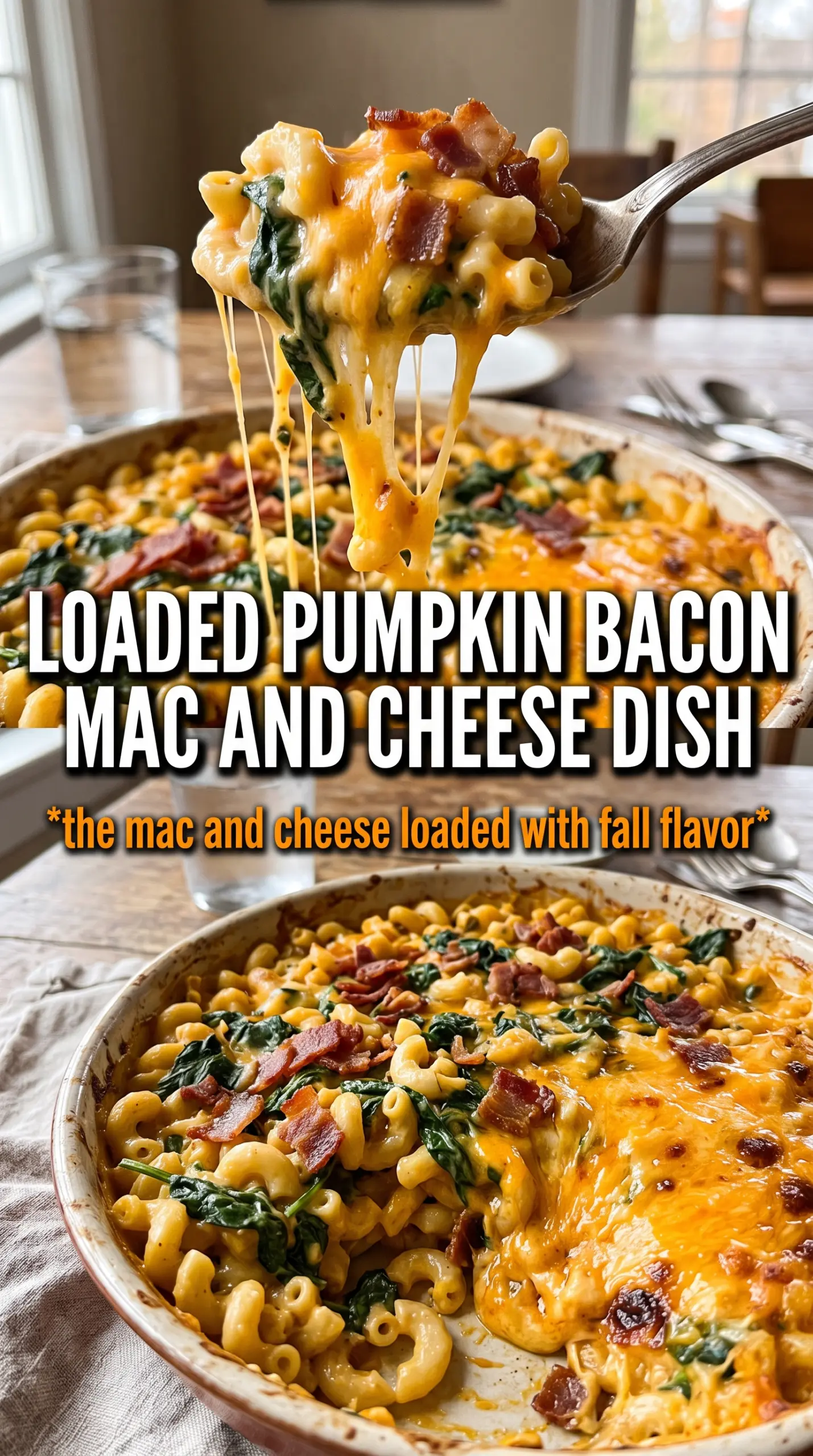
Golden breadcrumbs, smoky bacon, and a creamy pumpkin-cheese sauce turn this mac and cheese into the kind of baked pasta dish people go back for before they’ve even finished the first serving. The pumpkin doesn’t make it taste like pie or dessert; it gives the sauce body and a gentle sweetness that plays really well with sharp cheddar, gruyere, and salty bacon. The spinach softens into the sauce and keeps each bite feeling a little less heavy without disappearing completely.
The part that makes this recipe worth keeping is the way the pumpkin blends into the cheese sauce instead of sitting in obvious streaks. A quick roux, then slow whisking with milk and cream, keeps the base smooth enough to carry the cheeses without turning grainy. Bacon gets folded in before baking so the flavor runs through the whole dish, but a little goes on top at the end for that crisp, salty finish.
Below, I’ve included the small details that matter most: how to keep the sauce silky, when spinach should go in, and what to watch for if you want a deeply browned topping without drying out the pasta.
The sauce stayed creamy even after baking, and the pumpkin gave it this rich, velvety texture without making it taste sweet. My husband kept saying the bacon on top was the best part.
Save this spinach bacon pumpkin mac and cheese for the nights when you want a creamy baked pasta with a crisp top and plenty of smoky bacon in every bite.
The Reason the Sauce Stays Creamy Instead of Turning Grainy
Pumpkin mac and cheese can go wrong in one obvious way: the sauce gets pasty, then sandy, then the cheese never fully melts into the base. The fix is to treat the pumpkin like part of the sauce, not like an add-in at the end. Once the roux thickens the milk and cream, the pumpkin blends in cleanly and helps the sauce hold its shape in the oven without separating.
Sharp cheddar brings the tang, gruyere brings the melt, and the pumpkin brings body. That combination matters because cheddar on its own can turn tight and greasy when baked, while gruyere smooths the whole pan out. The cayenne doesn’t make it hot; it cuts through the richness just enough that the dish still tastes lively after a few bites.
If your sauce ever looks oily before baking, the heat was too high when the cheese went in. Pull the pan off the burner, stir until smooth, then add the cheese in handfuls so it melts into the sauce instead of clumping.
What Each Ingredient Is Actually Doing in This Pan
- Pumpkin puree — This is what gives the sauce its plush texture and warm color. Use plain pumpkin puree, not pumpkin pie filling, or the dish will come out sweet and spiced in the wrong way.
- Sharp cheddar — The cheddar carries the main cheese flavor, but it also gives the sauce structure. Buy a block and shred it yourself if you can; pre-shredded cheese often melts less smoothly because of anti-caking starches.
- Gruyere — Gruyere melts beautifully and keeps the sauce from feeling one-note. If you need a swap, fontina is the closest easy stand-in for texture, though it’s milder.
- Bacon — The bacon adds salt, smoke, and crunch. Cook it until crisp enough to crumble cleanly, but don’t let it burn or the top of the casserole will taste bitter after baking.
- Baby spinach — Spinach wilts fast and folds into the pasta without needing extra cooking. If you only have frozen spinach, squeeze it very dry first or the sauce will thin out.
- Panko and parmesan topping — This is what gives you the browned crust that makes the pan feel finished. Regular breadcrumbs work, but panko stays lighter and crisper over the creamy filling.
How to Build the Bake So the Top Browns and the Pasta Stays Tender
Cooking the Pasta Just Short of Done
Boil the pasta until it still has a firm bite in the center, then drain it right away. It’s going back into a hot sauce and then into the oven, so fully cooked pasta turns soft fast. Elbow macaroni and cavatappi both work well because their curves catch the sauce instead of letting it slide off.
Making the Cheese Sauce in the Right Order
Melt the butter, whisk in the flour, and let it cook for a full minute so the raw flour taste disappears. Add the milk and cream gradually while whisking, and keep the heat at a gentle simmer until the sauce thickens enough to coat a spoon. If it boils hard, the sauce can turn lumpy before the cheese even goes in.
Melting in the Pumpkin and Cheese
Stir in the pumpkin first, then add the cheeses a handful at a time. That keeps the base smooth and helps each handful melt before the next one goes in. The sauce should look glossy and thick, not stringy or grainy. Season at this point so the salt lands in the sauce itself instead of only on the pasta.
Finishing in the Oven
Fold the pasta, spinach, and most of the bacon into the sauce, then transfer everything to the baking dish. Scatter the panko mixture evenly over the top so the crust browns from edge to edge. Bake until the filling is bubbling at the sides and the top is deep golden; if you pull it too early, the center stays loose instead of settling into a creamy casserole.
How to Adapt This When You Need a Different Version
Gluten-Free Swap
Use your favorite gluten-free pasta and replace the flour with a 1:1 gluten-free all-purpose blend. Cook the pasta just until barely tender, since gluten-free shapes can turn soft faster in the oven. The sauce stays creamy, but the bake will be a little more delicate when you stir it together.
Dairy-Free Version
Swap the butter for a neutral dairy-free butter and use unsweetened oat milk plus canned coconut cream in place of the milk and heavy cream. You’ll lose a little of the classic sharp cheddar flavor, so use a good dairy-free shredded cheese that melts well. The texture will still be rich, but the sauce will set a touch softer.
No Bacon, Still Savory
Skip the bacon and add an extra pinch of salt plus a handful of toasted pumpkin seeds on top after baking. You lose the smoke, so the best replacement is a little smoked paprika in the sauce or a few drops of liquid smoke if you already use that ingredient comfortably. The dish becomes more vegetable-forward, but it still tastes complete.
Storage and Reheating
- Refrigerator: Store covered for up to 4 days. The pasta will soak up some sauce as it sits, so expect a thicker texture the next day.
- Freezer: It freezes well for up to 2 months, though the sauce may loosen slightly after thawing. Cool it completely, wrap it tightly, and thaw in the fridge before reheating.
- Reheating: Reheat covered in a 350°F oven until hot in the center, adding a splash of milk if the sauce looks tight. The common mistake is blasting it in the microwave until the cheese turns greasy and the pasta dries out around the edges.
Answers to the Questions Worth Asking
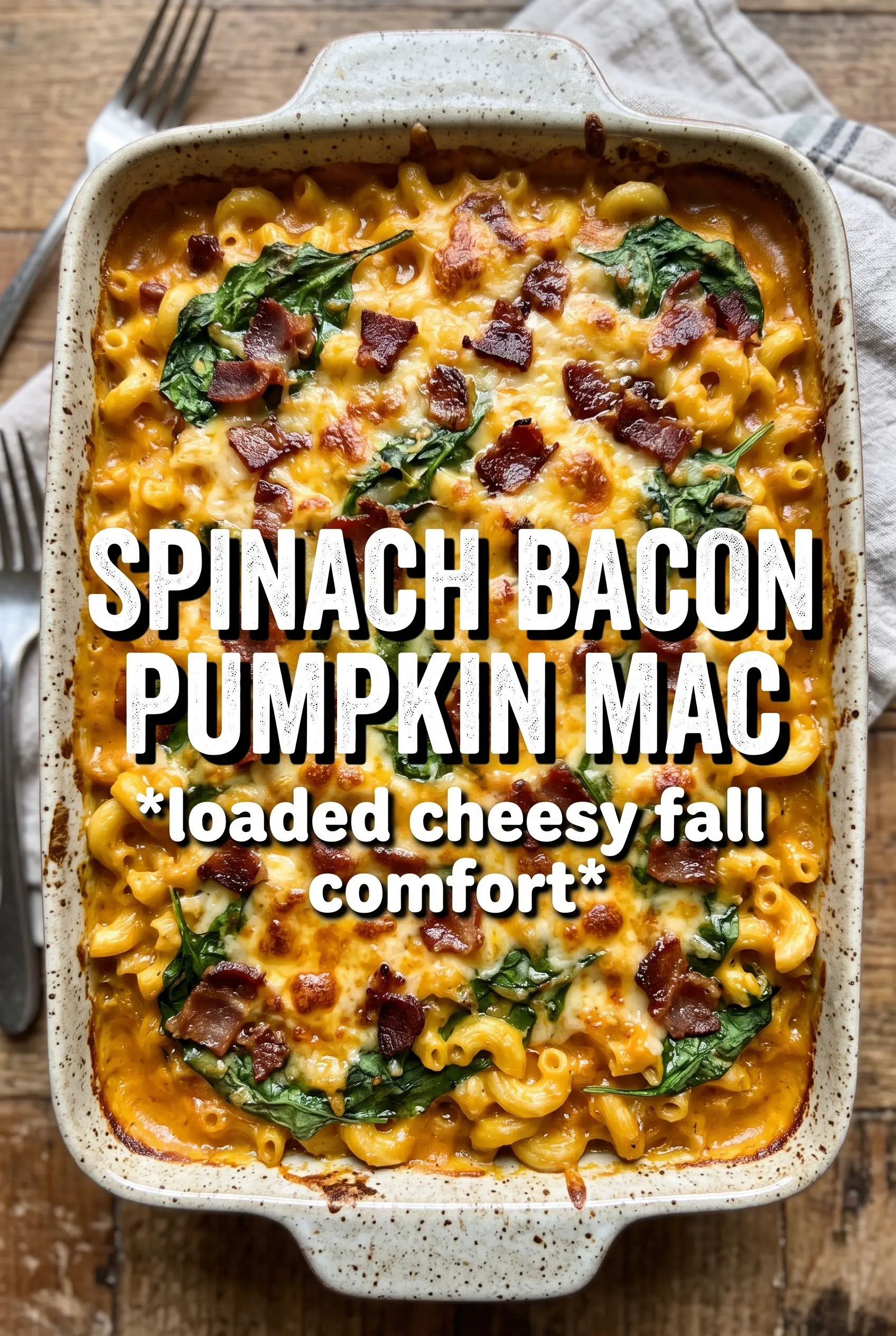
Spinach Bacon Pumpkin Mac and Cheese
Ingredients
Equipment
Method
- Preheat the oven to 375F and grease a 9x13 dish. Set it aside while you cook the pasta and sauce.
- Cook the elbow or cavatappi pasta until tender, then drain. Keep it warm while you make the cheese sauce.
- Melt the unsalted butter in a pot, then whisk in the all-purpose flour and cook for 1 minute. The mixture should look smooth and lightly cooked.
- Gradually whisk in the whole milk and heavy cream, then simmer until thickened. Stir often so the sauce stays silky.
- Stir in the pumpkin puree, sharp cheddar, and gruyere, plus nutmeg and cayenne, then season with salt and pepper. Cook just until the cheeses melt and the sauce turns glossy.
- Fold the drained pasta, baby spinach, and most of the cooked and crumbled bacon into the cheese sauce. Mix until everything is evenly coated.
- Transfer the mixture to the greased 9x13 dish, then scatter the panko topping over top. Mix panko with butter and parmesan first so it toasts evenly.
- Bake for 25-30 minutes at 375F until golden on top and bubbling at the edges. Rotate the dish if needed for even browning.
- Top with the remaining bacon immediately after baking and serve while hot. The crust should stay crisp as the cheese sets.