Spezzatino turns a tough cut of beef into spoon-tender pieces tucked into a red wine tomato broth that tastes deep, rustic, and quietly rich. The potatoes soak up the sauce without falling apart, the peas add a fresh pop at the end, and the whole pot ends up with that slow-cooked comfort that makes people hover near the stove before dinner is even ready.
The part that makes this version work is the layering. The beef gets floured and browned in batches, which builds a better crust and gives the sauce body later on. Then the wine goes in before the tomatoes and broth, so it can loosen all those browned bits and cook down into something rounded instead of sharp. Fresh rosemary and bay leaves do the heavy lifting for aroma, and the potatoes are added later so they stay intact instead of turning to mush.
Below, I’ve included the small timing details that matter, plus a few smart swaps if you need to work with what’s already in the kitchen.
The beef turned meltingly tender and the potatoes held their shape, but the red wine tomato sauce was the part I kept tasting with a spoon. I served it with bread and my husband went back for a second bowl before I sat down.
Like this spezzatino? Save it for the night you want tender beef, potatoes, and rosemary-red wine sauce in one pot.
The Step That Keeps Spezzatino Rich Instead of Cloudy
Spezzatino gets its depth from browning the beef in batches, not steaming it all at once. If the pan is crowded, the meat gives off moisture faster than it can brown, and you end up with gray beef and a thin sauce. A hot pan, a little space between pieces, and patience for a proper crust are what give this stew its backbone.
The wine matters here too. It needs time to reduce before the tomatoes and broth go in, or the stew can taste boozy and sharp instead of rounded. Scraping the browned bits from the pan while the wine simmers is not optional; that fond is part of the stew’s flavor, and it disappears into the sauce once the liquid has reduced by half.
What Each Ingredient Is Actually Doing In This Dish
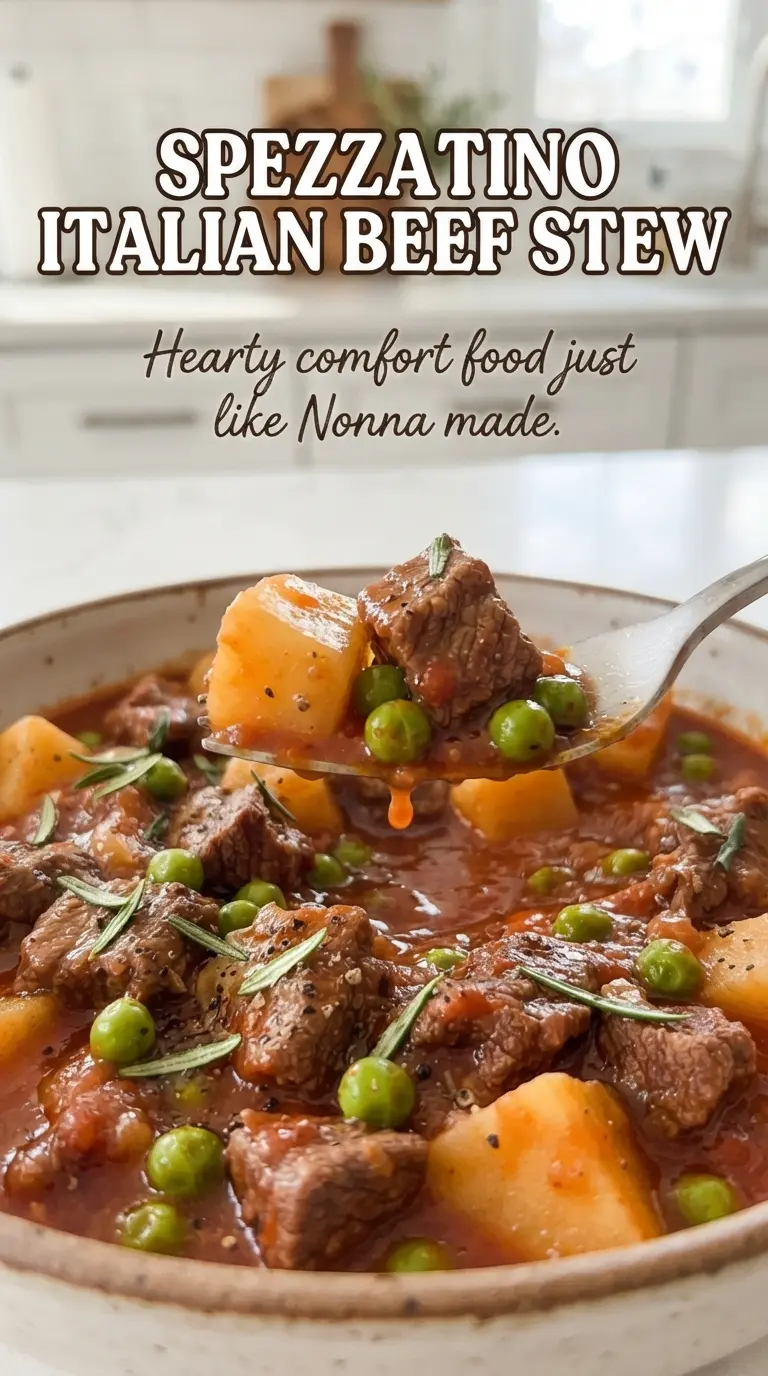
- Beef chuck — This is the right cut because the collagen breaks down during the long simmer and turns the stew silky. Lean stew meat won’t give you the same richness. Cut it into even chunks so it cooks at the same pace.
- Flour — The light coating helps the beef brown and gives the stew a little body as it simmers. You don’t want a thick gravy here, just enough structure to make the sauce cling to the potatoes and meat.
- Dry red wine — This brings the savory depth that water or extra broth can’t replace. Use something you’d actually drink; the cheapest bottle often tastes harsh after it reduces.
- Crushed tomatoes — They give the stew its red, slightly rustic base without making it overly thick. Tomato puree will make the sauce denser, while diced tomatoes leave it looser.
- Rosemary and bay leaves — These two carry the Italian herb flavor through the long simmer. Fresh rosemary is worth using if you can get it because dried rosemary can turn woody in a stew.
- Potatoes and peas — The potatoes make this dinner feel complete, and the peas go in at the end so they stay bright. Add the potatoes late enough that they hold their shape, or the whole pot gets starchy and heavy.
Building the Pot So The Beef Falls Apart At The End
Browning The Beef In Batches
Season the beef, dust it lightly with flour, and brown it in hot olive oil without crowding the pan. You’re looking for deep brown edges, not a gray sear. If the pan starts to sputter less and the meat releases easily, it is ready to turn. Transfer each batch out as it browns so the next pieces get direct contact with the pan.
Cooking The Aromatics Until Sweet
Add the onion, carrot, and celery to the same pot and cook them until soft and fragrant, about 8 minutes. They should look glossy and a little translucent before the garlic goes in. Garlic burns fast, so give it just a minute and move on as soon as you smell it bloom. If the pan looks dry, a small splash of broth or wine loosens the vegetables and keeps the bottom from scorching.
Reducing The Wine Before The Simmer
Pour in the wine and scrape up every browned bit from the bottom, then let it simmer until the liquid drops by about half. That reduction is what takes the edge off the wine and folds the beef drippings into the sauce. If you rush this step, the stew can taste thin and alcoholic even after hours on the stove.
Finishing The Long Simmer
Add the tomatoes, broth, rosemary, bay leaves, and beef, then cover and cook low and slow until the meat starts turning tender. Stir occasionally so nothing catches on the bottom, but don’t keep lifting the lid every few minutes; steady heat is what breaks down chuck properly. When the beef yields easily to a fork, add the potatoes and simmer until they’re cooked through but still holding their shape.
The Last Five Minutes
Stir in the peas near the end so they stay sweet and green instead of dull and mushy. Pull out the rosemary sprigs and bay leaves before serving. Taste the broth at the very end and adjust salt only if needed, since the sauce concentrates as it cooks and the potatoes drink up a fair amount of seasoning.
How To Adapt Spezzatino Without Losing The Soul Of It
Make It Gluten-Free
Swap the all-purpose flour for a gluten-free flour blend or skip it entirely and brown the beef bare. The stew will still work; you’ll just get a slightly looser sauce, which you can reduce uncovered for the last 15 minutes if you want more body.
Dairy-Free And Naturally Rich
This recipe is already dairy-free, so the main thing is keeping the olive oil and the long simmer. Don’t add butter at the end unless you want a softer, slightly heavier finish; the stew has enough richness from the beef and wine reduction.
Swap The Wine If You Need To
If you don’t cook with wine, use extra beef broth plus 1 to 2 teaspoons of red wine vinegar stirred in at the end. You won’t get the same roundness, but the vinegar adds back the brightness that keeps the stew from tasting flat.
Turn It Into A Bigger Batch
This stew scales well, but use a wider pot or Dutch oven so the beef can still brown instead of steaming. If you double it in the same pot, the first stage takes longer and the flavor ends up flatter.
Storage and Reheating
- Refrigerator: Store for up to 4 days. The flavor gets even better on day two, but the potatoes will soften a little more each day.
- Freezer: It freezes well for up to 3 months. Cool it completely first, then freeze in portions; the potatoes will be a little softer after thawing, but the stew still reheats well.
- Reheating: Warm it gently on the stove over medium-low heat with a splash of broth if needed. Don’t boil it hard or the beef can tighten back up and the potatoes can break apart.
Answers to the Questions Worth Asking
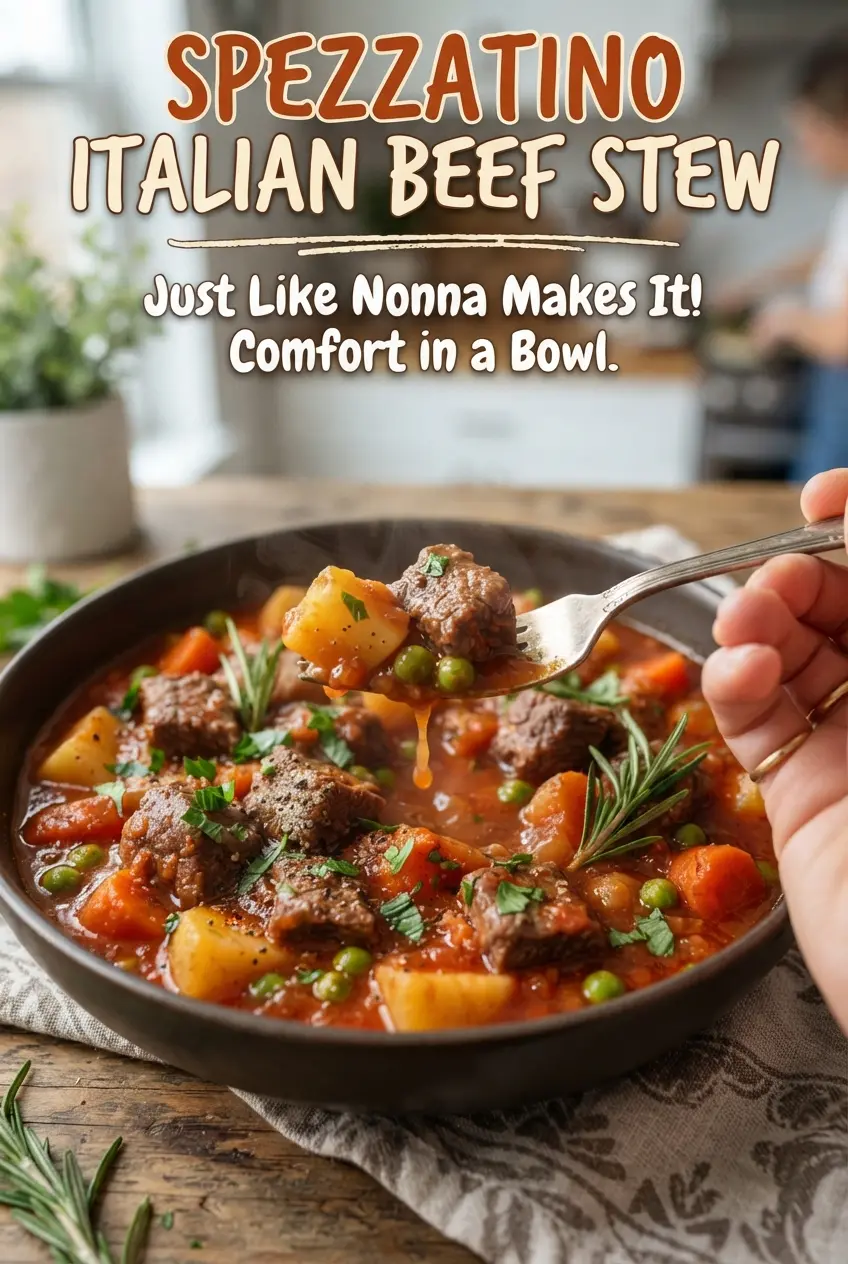
Spezzatino Italian Beef Stew
Ingredients
Equipment
Method
- Season the beef chuck with salt and black pepper, then dust it with all-purpose flour. Brown it in batches in olive oil over medium-high heat until well browned, about 6 to 8 minutes, and set aside.
- In the same Dutch oven, cook the onion, carrot, and celery until soft, about 8 minutes. Add the garlic and cook for 1 minute, stirring until fragrant.
- Pour in the dry red wine and simmer until reduced by half, 8 to 12 minutes, scraping the bottom to loosen browned bits and keep the fond moving.
- Add crushed tomatoes, beef broth, fresh rosemary, bay leaves, and the browned beef. Cover and simmer gently for 90 minutes, stirring once near the halfway mark.
- Stir in the cubed potatoes, then cover and simmer until tender, about 40 minutes, with occasional stirring and bubbling at the edges.
- Stir in the frozen peas and simmer uncovered for the last 5 minutes until hot and bright green.
- Remove the rosemary and bay leaves, then taste and adjust seasoning if needed. Serve the spezzatino with crusty Italian bread, showing the beef and potatoes submerged in the red wine tomato sauce.