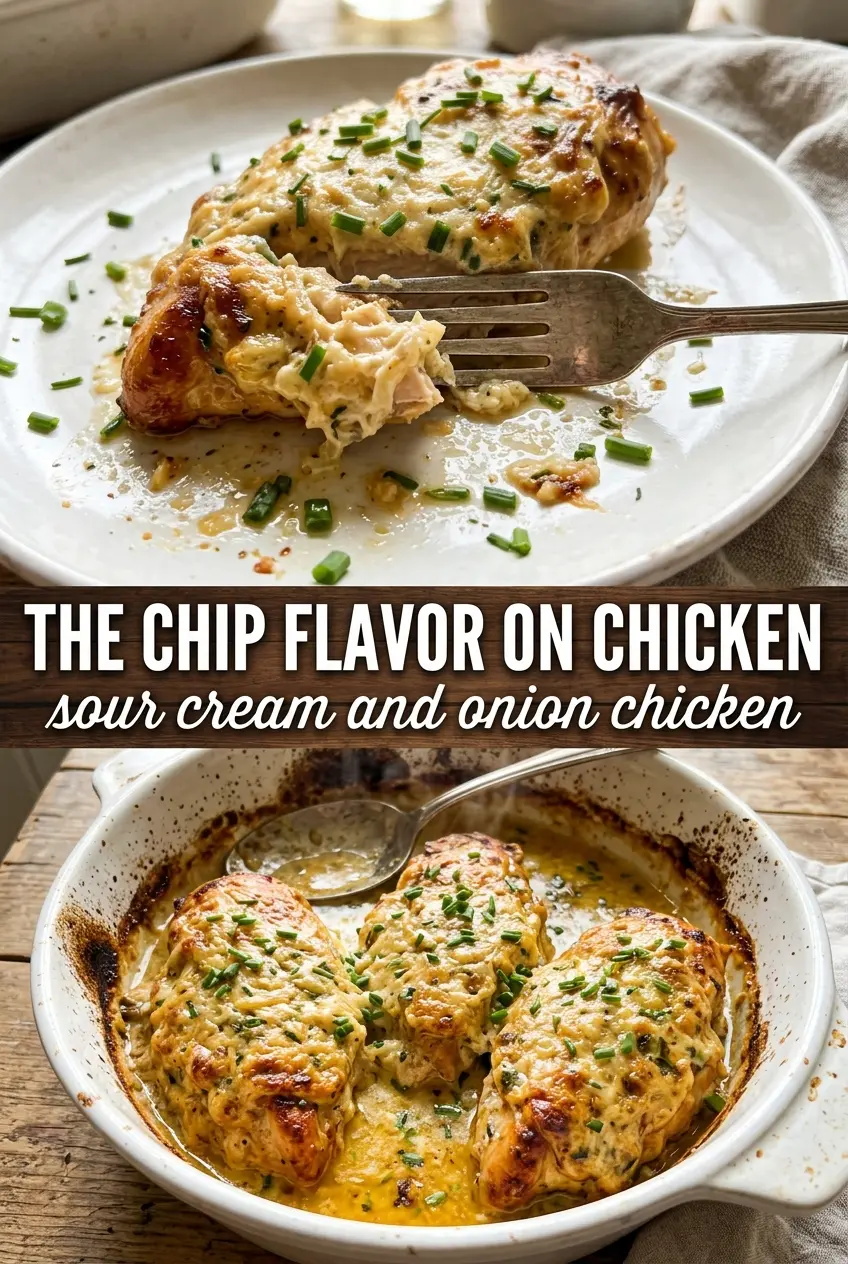
Golden, crackled sour cream and onion chicken hits that sweet spot between comfort food and weeknight practicality. The topping bakes into a crisp, puffy crust while the chicken underneath stays juicy and lightly tangy, with the kind of savory onion flavor that makes people go back for a second piece before the pan even cools down.
What makes this version work is the layering. The sour cream mixture keeps the chicken protected in the oven and gives the coating something rich and clingy to grab onto, while the crushed fried onions and Parmesan create a crust that actually browns instead of turning soggy. The onion soup mix carries most of the seasoning, so the chicken doesn’t need much else besides a little salt, pepper, and garlic powder.
Below, I’ve included the little details that matter here: how to keep the topping crunchy, what to do if your coating slides off, and the best swap if you only have chicken thighs on hand.
The sour cream stayed thick on the chicken and the onion topping browned up crunchy instead of burning. I baked it in about 27 minutes and the whole pan disappeared fast.
Love that crispy sour cream and onion crust? Save this chicken bake for the nights when you want something creamy, tangy, and crunchy with almost no fuss.
The Part That Keeps the Coating Crispy Instead of Gummy
The biggest trap with sour cream chicken is coating the meat too heavily and then packing the topping on too early. Sour cream softens fast in the oven, which is good for keeping the chicken juicy, but if the crust sits in a wet layer without enough structure, it turns pasty instead of crisp. The fix is the combination of crushed fried onions and Parmesan pressed on top after the sour cream goes on, not mixed into it.
That dry topping needs direct contact with heat to brown. If you press it gently into the sour cream layer, it stays put and forms a real crust instead of sliding off when you move the dish. Thin chicken breasts also matter here; if the pieces are wildly uneven, the topping browns before the thickest part cooks through. Pounding them to an even thickness saves the whole recipe.
What Each Layer Is Actually Doing in This Chicken Bake

- Sour cream — This is the moisture and tang in the dish. Full-fat sour cream gives the thickest coating and the best oven stability, but reduced-fat will still work if that’s what you have. Plain Greek yogurt can stand in, though it bakes a little sharper and less plush.
- Onion soup mix — This is doing most of the seasoning work, which is why the chicken tastes layered instead of just salty. The packet brings onion, garlic, and that savory backbone that’s hard to duplicate with a single spice. If you need to cut sodium, use a low-sodium version and add a little extra garlic powder and black pepper.
- Crispy fried onions — These give the crust its crunch and the browned, crackly top. Crushing them keeps the coating more even, so you get coverage instead of big loose pieces falling off in the pan. Don’t replace them with plain breadcrumbs if you want the same texture; breadcrumbs brown differently and won’t give you that oniony bite.
- Parmesan — Parmesan helps the topping set and brown while adding a nutty edge that balances the sour cream. Grated Parmesan works better than the dusty shelf-stable kind here because it melts and clings more cleanly. If you’re out of Parmesan, finely grated pecorino is the closest swap, though it will taste saltier.
Building the Crust So It Bakes Up Golden
Mix the Creamy Base First
Stir the sour cream and onion soup mix until the mixture looks uniform and glossy, with no dry pockets left behind. That base should be thick enough to coat the chicken in a visible layer, not run off the sides. Season the chicken lightly before you spread it on, because the topping brings plenty of salt but not enough seasoning deep into the meat. If the chicken is wet from packaging, pat it dry first or the coating will slide.
Press on the Crunchy Topping
Combine the crushed fried onions, Parmesan, and garlic powder in a separate bowl, then press that mixture firmly onto the sour cream layer. The goal is contact, not a loose sprinkle. Pressing helps the crust stay intact as it bakes and keeps the bottom from steaming. If the topping looks patchy, it usually means the sour cream layer was too thin in that spot.
Bake Until the Center Reaches 165°F
Slide the dish into the oven and bake until the topping is deep golden and the thickest part of the chicken reads 165°F. Don’t wait for the crust to look dark brown; by then, the Parmesan can tip into bitter territory. A little bubbling around the edges is normal. Once the chicken comes out, let it sit for a few minutes so the juices settle before you cut in.
Finish With Fresh Onion Bite
Add extra crispy fried onions and chopped chives after baking so the top keeps its crunch. The fresh chives brighten the richness and give the plate a clean onion note that the oven can’t provide. If you add them before baking, the chives lose their color and the extra onions soften. This last step makes the whole dish taste sharper and more finished.
How to Adapt This for Thighs, a Gluten-Free Version, or a Bigger Crunch
Chicken thighs instead of breasts
Boneless skinless thighs work well here and stay juicy, but they usually need a few extra minutes in the oven. Use pieces that are similar in size so the topping browns evenly. The flavor gets a little richer and the texture turns more tender, though you’ll lose the neat sliceability of chicken breasts.
Gluten-free sour cream and onion chicken
Use a gluten-free onion soup mix and certified gluten-free crispy onions if you can find them. The texture stays close to the original, but the exact salty-savory punch depends on the seasoning blend you choose. Check the label on the fried onions, since that’s the ingredient most likely to hide wheat.
Extra-crunchy topping
For a harder, crisper crust, toast the crushed fried onions in a dry skillet for a minute or two before pressing them on. That gives the topping a head start on browning and keeps the final texture loud and crunchy. Watch them closely; they go from golden to burnt fast.
Storage and Reheating
- Refrigerator: Store leftovers covered for up to 3 days. The topping softens a bit, but the flavor holds up well.
- Freezer: It freezes best after baking, though the crust won’t stay crisp. Wrap portions tightly and freeze for up to 2 months.
- Reheating: Reheat in a 350°F oven, uncovered, until hot in the center. The microwave makes the coating soggy, so use it only if you don’t mind losing the crunch.
Answers to the Questions Worth Asking
Sour Cream and Onion Chicken
Ingredients
Equipment
Method
- Preheat oven to 375°F and grease a baking dish so the coated chicken releases easily.
- In a bowl, mix sour cream and onion soup mix until well combined.
- In a separate bowl, combine crushed crispy fried onions, Parmesan cheese, and garlic powder.
- Season chicken with salt and pepper, then coat each breast thickly with the sour cream mixture.
- Press the onion-Parmesan mixture firmly onto the top of each sour cream-coated breast to help it adhere and crisp.
- Bake for 25-28 minutes at 375°F until the topping is golden and the internal temperature reaches 165°F, with a visibly set, crackled crust.
- Garnish with extra crispy fried onions and fresh chives right after baking for added crunch and color.