Slow cooker wine braised beef stew turns tough chuck into spoon-tender pieces in a dark, glossy sauce that tastes like it took all day because it did — just mostly hands-off. The wine cooks down with tomato paste, herbs, and beef broth until the stew tastes deep and rounded, not sharp or thin. By the time the carrots are soft and the pearl onions have melted into the sauce, you’ve got a bowl that wants nothing more than a pile of creamy polenta underneath it.
The trick is starting with a good sear and then taking a minute to cook the tomato paste before anything goes into the slow cooker. That little step pulls out the raw edge and gives the finished stew a richer color and a more braised flavor. The flour on the beef helps the liquid cling to the meat and thickens the sauce just enough without turning it gummy.
Below, I’m walking through the part that matters most: how to build enough flavor before the slow cooker lid ever goes on, plus the swaps that still keep the stew sturdy and rich.
The sauce turned out rich and glossy, and the beef was falling apart after 8 hours on low. I served it over mashed potatoes and my husband asked if there was enough left for lunch tomorrow.
Save this slow cooker wine braised beef stew for a low-and-slow dinner with a deep red wine sauce and tender beef.
The Sear and the Simmer That Give This Stew Its Body
Slow cookers are great at tenderness, but they’re not great at building flavor from scratch. If you put raw beef and everything else straight into the pot, the stew will still be edible, but it can taste flat because you missed the two places where depth actually gets created: browning the meat and concentrating the tomato paste. Those browned bits in the skillet are not a mess to clean up later. They’re the base of the stew.
The other mistake is adding wine without giving it a minute on the stove. It needs a short simmer to lose the harsh alcohol edge and pick up the fond from the pan. That’s what turns the liquid from “wine in a crockpot” into a braising sauce with some backbone.
- Beef chuck — This cut has enough connective tissue to turn silky over a long cook. Leaner beef will dry out before it gets tender.
- Dry red wine — Pick something you’d actually drink. Cheap cooking wine tastes blunt and salty; a straightforward cabernet, merlot, or pinot noir works best.
- Tomato paste — Cooking it for 3 minutes deepens the stew and keeps it from tasting raw or metallic.
- Flour — It helps the meat brown and gives the broth just enough body. If you need gluten-free, skip it and thicken the finished stew with a cornstarch slurry instead.
Building the Braise Before the Slow Cooker Takes Over
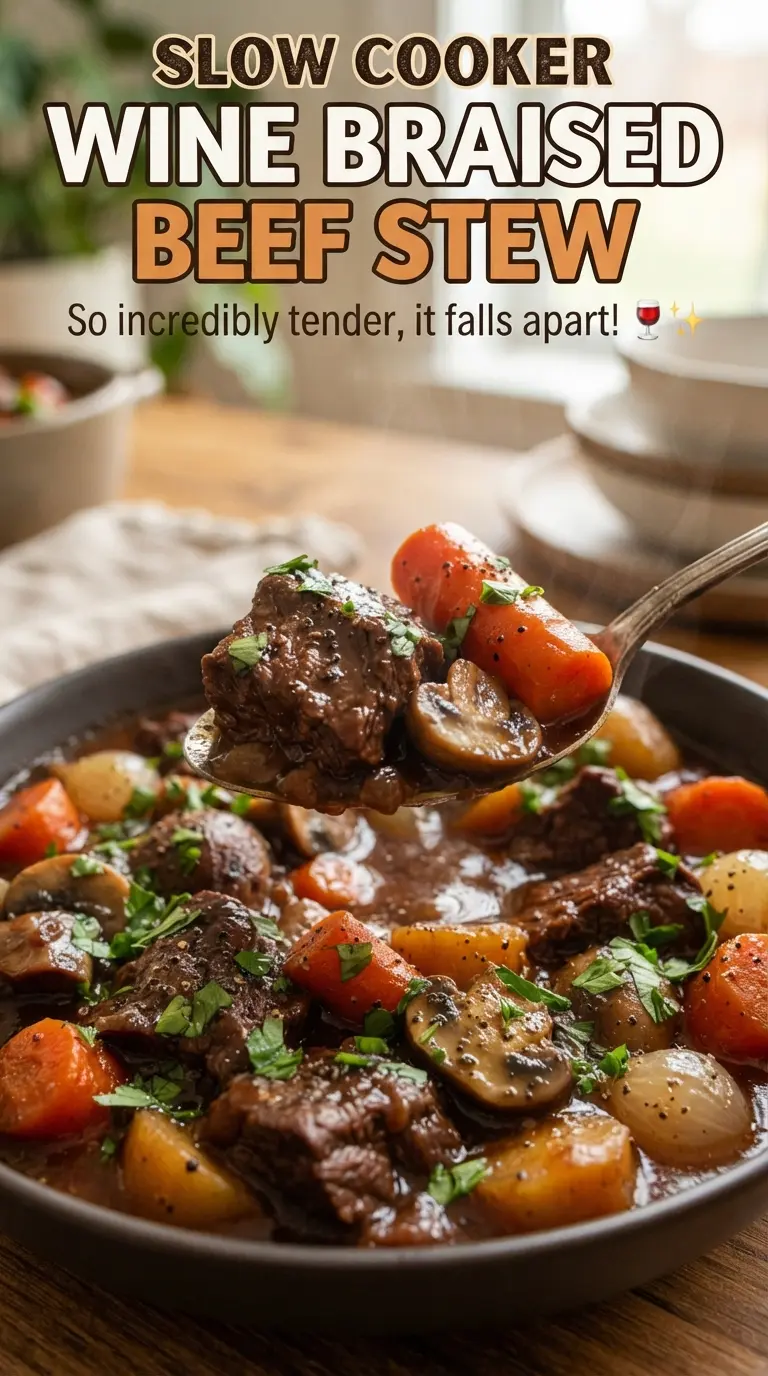
- Beef chuck — Cut it into large 2-inch pieces so it stays hearty after 8 hours. Smaller pieces can shred too soon and disappear into the sauce.
- Dry red wine — This is where the stew gets its braised flavor. Let it bubble for a few minutes in the skillet so the raw alcohol cooks off and the sauce tastes round instead of sharp.
- Beef broth — Use a good broth here because it makes up a large part of the braising liquid. If yours is very salty, reduce the added salt slightly.
- Fresh rosemary and thyme — Fresh herbs give the stew a cleaner, woodsy finish than dried herbs do. Leave the sprigs whole so you can pull them out easily at the end.
- Pearl onions and carrots — They hold up well through the long cook and add sweetness that balances the wine. Frozen pearl onions work fine and save a lot of peeling.
From Browning to Tender: The Hands-Off Part
Coating and Browning the Beef
Toss the beef with flour, salt, and pepper until every piece looks lightly dusted, then brown it in batches in hot oil. You want a deep brown crust, not gray steaming meat, so leave space in the pan and don’t rush the batches. If the skillet gets crowded, the beef will release liquid and lose the browning you need for flavor. Move the browned pieces straight to the slow cooker as you go.
Cooking Down the Aromatics
Use the same pan for the onion, garlic, and tomato paste. The onion should soften and pick up the browned bits from the bottom, and the garlic only needs a brief minute before it can go bitter. When the tomato paste darkens a shade and smells sweet instead of raw, you’re in the right place. That short cook changes the whole stew.
Deglazing and Loading the Pot
Pour in the wine and scrape the bottom until the pan looks clean, then let it simmer for about 3 minutes. Add that liquid to the slow cooker with the broth, balsamic, herbs, carrots, and pearl onions. The balsamic doesn’t make the stew taste vinegary; it sharpens the sauce just enough so the richness doesn’t feel heavy. Cover and cook on LOW for 8 hours, until the beef breaks apart easily with a fork.
Finishing for a Bowl Worth Serving Twice
Pull out the herb stems before serving, then spoon the stew over creamy polenta or mashed potatoes. If the sauce looks thinner than you want, leave the lid off for the last 15 to 20 minutes on high, but only after the beef is tender. Thickening too early can make the sauce tighten before the meat is done.
How to Adapt the Braise When You Need a Different Ending
Gluten-Free Version Without the Flour
Skip the flour and brown the beef plain, then thicken the finished stew with a cornstarch slurry if needed. The sauce will be a touch looser at first, but the flavor stays just as deep.
No Wine, Still Braised
Replace the wine with more beef broth plus 1 tablespoon extra balsamic vinegar and a splash of red grape juice if you want a little sweetness. You’ll lose some of the classic winey depth, but the stew still tastes rich and savory.
Turn It Into a Thicker, Heartier Gravy
For a thicker finish, mash a few carrots into the sauce once the beef is tender, or simmer the liquid uncovered for a bit after cooking. That gives you more body without adding cream or extra starch.
Storage and Reheating
- Refrigerator: Keep covered for up to 4 days. The sauce thickens as it chills, which actually helps the flavor.
- Freezer: This freezes well for up to 3 months. Cool it completely first and freeze in portions so the beef doesn’t overcook when reheated later.
- Reheating: Warm it gently on the stove over low heat or in the slow cooker on warm. A hard boil can make the beef stringy and push the sauce greasy.
Questions I Get Asked About This Recipe
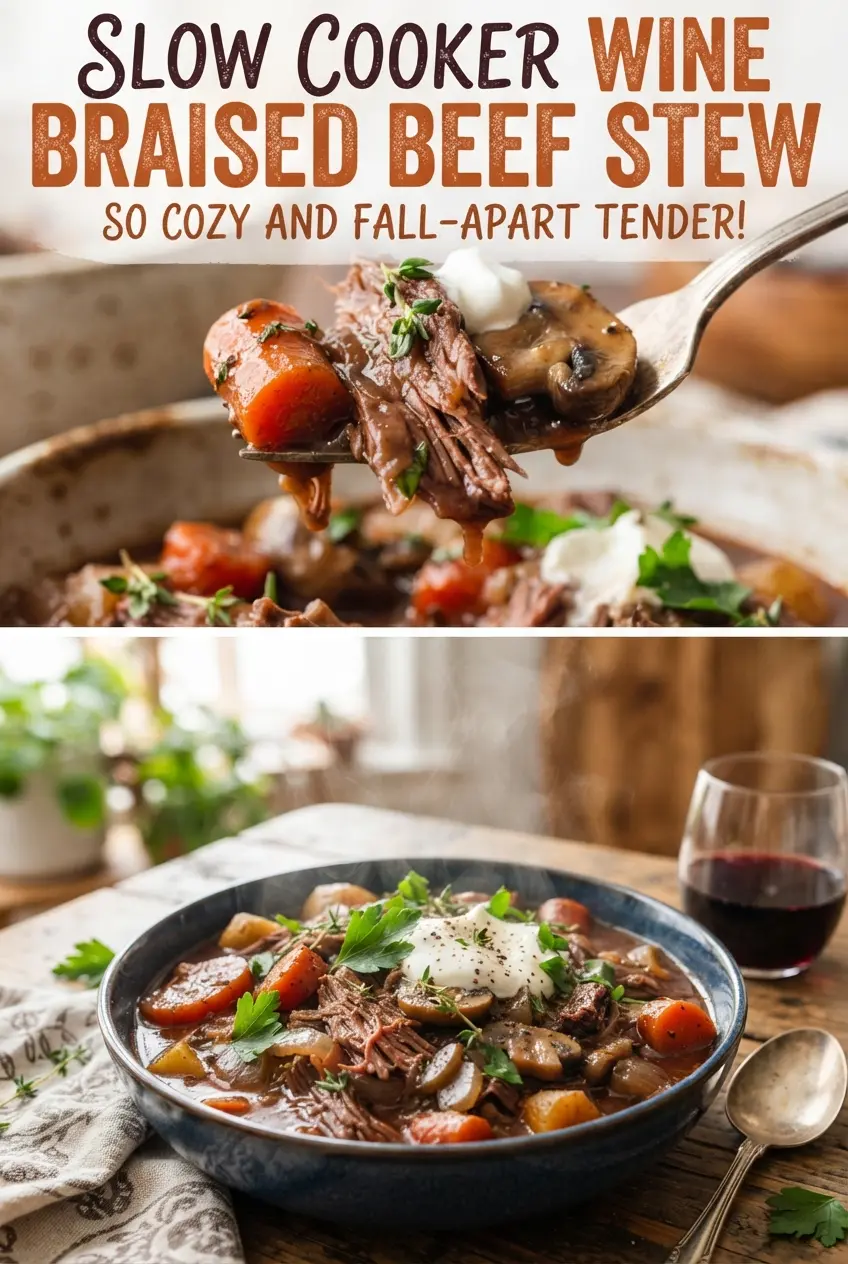
Slow Cooker Wine Braised Beef Stew
Ingredients
Equipment
Method
- Toss beef chuck with all-purpose flour, salt, and black pepper, then pat off any excess flour. Brown in batches in olive oil in a hot pan, searing until well browned, and transfer to the slow cooker.
- In the same pan, cook the diced onion, minced garlic, and tomato paste for 3 minutes. Stir often so the tomato paste darkens slightly without burning.
- Pour in the dry red wine and scrape the bottom of the pan to release browned bits. Simmer for 3 minutes, then pour the mixture into the slow cooker.
- Add beef broth, balsamic vinegar, rosemary, thyme, carrots, and frozen pearl onions to the slow cooker. Stir gently to distribute the vegetables.
- Cover and cook on LOW for 8 hours, until the beef falls apart easily with a fork. Keep the lid on during cooking to maintain heat and moisture.
- Remove the herb stems from the stew before serving. Serve the wine-braised beef stew over creamy polenta or mashed potatoes.