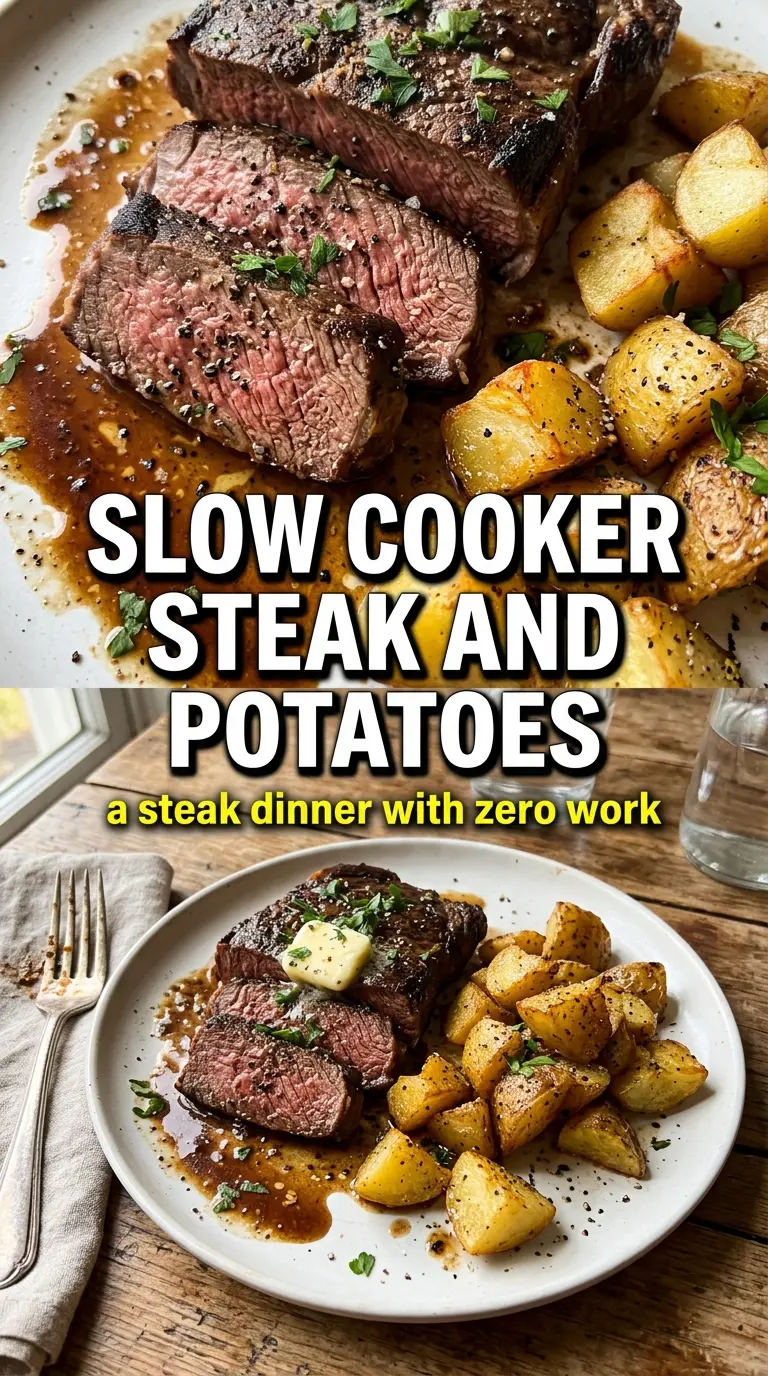
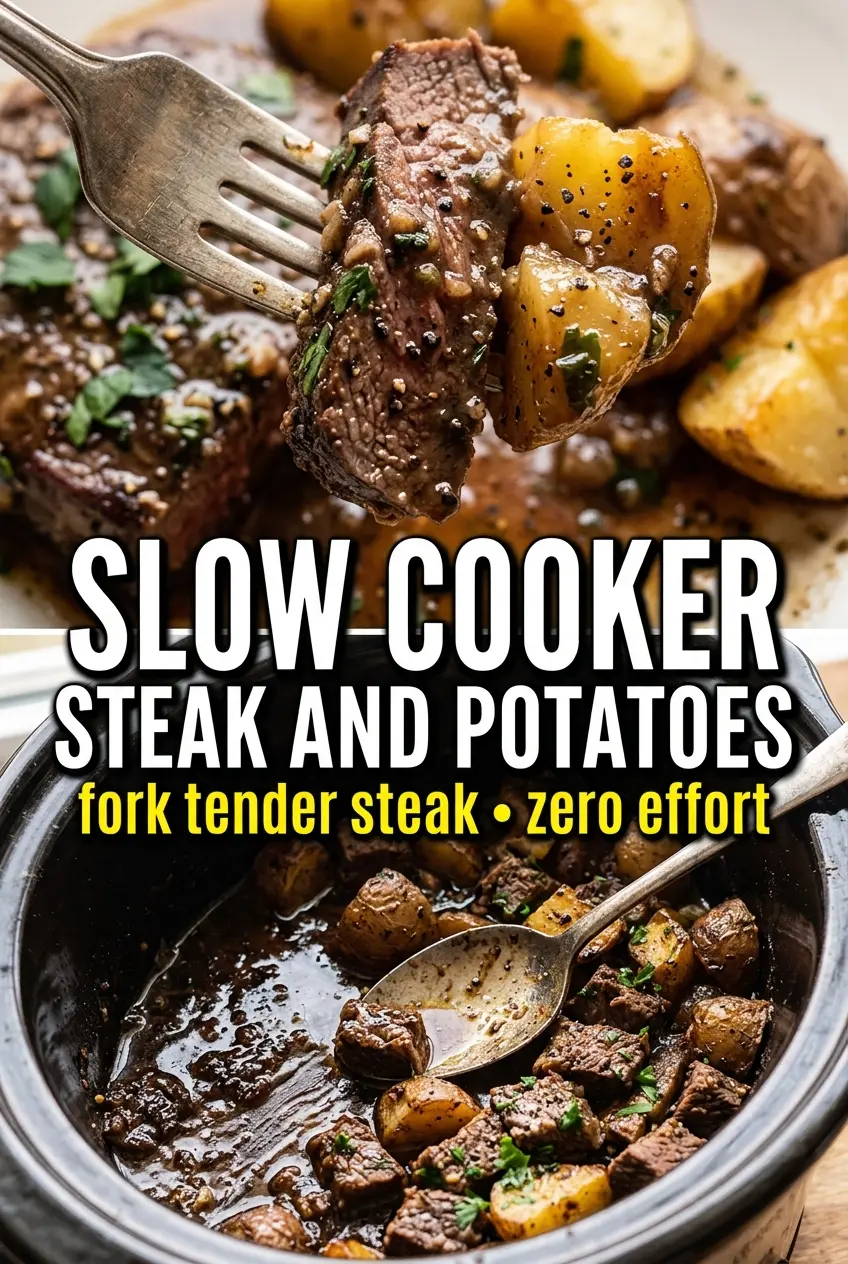
Slow Cooker Steak and Potatoes turns a humble cut of beef into fork-tender pieces tucked over buttery baby potatoes, all soaked in a savory broth that tastes like it cooked all day for a reason. The potatoes catch the juices from the steak and soften into the kind of side that doesn’t need any help at the table.
The trick here is layering the ingredients so the potatoes sit underneath and don’t dry out, while the steak cooks in the steam and broth above them. Chuck steak does the best job because it has enough connective tissue to relax into tenderness over the long cook. Sirloin works too, but it stays a little firmer, so I only use it when I want a leaner result.
Below you’ll find the one placement detail that keeps the potatoes from turning mushy, plus the small finish that makes the broth taste fuller without turning the dish salty. It’s a simple slow cooker meal, but a few smart choices make the difference between decent and dinner people ask for again.
The steak came out tender enough to cut with a fork, and the potatoes soaked up all that garlicky broth without falling apart. I used chuck and cooked it on low all day, and the whole pot had that rich, homemade taste you usually only get from a roast.
Save this slow cooker steak and potatoes recipe for a hands-off dinner with tender beef, buttery potatoes, and rich herb broth.
The Reason the Steak Stays Tender Instead of Turning Stringy
Slow cookers reward the right cut and punish the wrong one. Chuck steak has enough marbling and connective tissue to relax over hours, which is why it comes out soft instead of dry and chewy. Sirloin can work, but it doesn’t have the same built-in forgiveness, so it needs the low-and-slow treatment more than ever.
The other mistake that ruins this dish is overcrowding the liquid. You don’t need to drown the beef; the potatoes and onion release moisture, the butter melts into the broth, and the whole pot creates its own braising liquid. That’s enough to keep everything juicy without washing the seasoning off the meat.
- Chuck steak — This is the cut that gives you the best texture after a long cook. If you use sirloin, cut it into larger pieces so it doesn’t dry out as fast.
- Baby Yukon Gold potatoes — They hold their shape better than russets and get creamy instead of crumbly. Halving them gives the broth more surface area to cling to.
- Worcestershire and soy sauce — These add depth fast. Worcestershire brings tang and savoriness, while soy sauce fills in the beefy backbone without needing extra salt.
- Butter — It melts over the top and rounds out the broth. Don’t skip it; this is what keeps the cooking liquid from tasting thin at the end.
What Each Layer Is Doing Inside the Slow Cooker
- Potatoes on the bottom — They sit closest to the heat and catch the drippings as the steak cooks. If you put the beef on the bottom, the potatoes can overcook while the meat stews unevenly.
- Seasoned steak on top — The beef cooks through the steam and broth while staying protected from direct contact with the hottest slow cooker surface. That helps the outside stay tender instead of shredding before the center is ready.
- Garlic, herbs, and broth — The garlic and rosemary need time to mellow and blend into the liquid. Fresh garlic works best here; pre-minced garlic can taste flat after six hours.
- Butter on top — It melts slowly and bastes the meat as it cooks. Those little pockets of fat make the final juices taste fuller and less watery.
How to Layer and Cook It Without Losing the Texture
Start with the Potatoes and Onion
Scatter the halved potatoes and sliced onion across the bottom of the slow cooker in an even layer. This keeps the potatoes from sitting in one thick pile, which is how they turn gummy on the edges and underdone in the middle. The onion softens into the broth and disappears into the background, giving the whole dish a sweet, savory base.
Season the Steak Before It Goes In
Toss the steak pieces with the garlic powder, onion powder, smoked paprika, salt, and black pepper before adding them to the cooker. That seasoning sticks to the meat instead of drifting into the broth, and it gives the beef a better crust of flavor after the long cook. If the pieces are cut too small, they’ll break apart by the end, so keep them around 2 inches.
Add the Liquid and Let the Slow Cooker Do the Work
Pour the broth, Worcestershire sauce, soy sauce, minced garlic, and rosemary over the meat, then lay the butter on top. Resist the urge to stir everything hard at this point; you want the layers intact so the potatoes stay under the beef and the seasoning doesn’t all wash into one spot. Cook on low for 6 to 7 hours, or on high for 3 to 4, until the steak is tender enough to pull apart with a fork and the potatoes yield without collapsing.
Finish Gently
Stir just enough to coat everything in the pan juices, then taste the broth before serving. If it needs more salt, add it in small pinches because the soy sauce has already brought a good amount of salt to the pot. A handful of chopped parsley at the end gives the dish a fresh finish that keeps the broth from tasting heavy.
How to Adapt This for Different Kitchens and Different Pans
Use sirloin for a leaner result
Sirloin works when you want a meatier, less fatty finish, but it won’t melt the same way chuck does. Keep the pieces larger and check them at the early end of the cook time so they stay tender instead of turning dry and grainy.
Make it gluten-free without losing depth
Swap the soy sauce for gluten-free tamari or coconut aminos. Tamari keeps the salty, savory edge closest to the original, while coconut aminos taste a little sweeter and softer, so you may want a small extra pinch of salt at the end.
Add mushrooms for a deeper, earthier pot
A cup or two of whole or halved mushrooms can go in with the potatoes. They absorb the broth and give the dish a more roast-like feel, but they also release extra liquid, so don’t add more broth unless the cooker looks dry halfway through.
Storage and Reheating
- Refrigerator: Store in an airtight container for up to 4 days. The potatoes soften a bit more as they sit, but the flavor deepens.
- Freezer: It freezes well for up to 2 months, though the potatoes will be softer after thawing. Freeze in portions with a little of the broth so the beef stays moist.
- Reheating: Warm gently on the stove over low heat or in the microwave at medium power. High heat can tighten the beef and make the potatoes fall apart before the center is hot.
Questions I Get Asked About This Recipe
Slow Cooker Steak and Potatoes
Ingredients
Equipment
Method
- Add the halved baby Yukon Gold potatoes and sliced onion to the bottom of the slow cooker and spread them into an even layer (visual cue: potatoes visible across the base).
- Season the steak pieces with garlic powder, onion powder, smoked paprika, salt, and black pepper, then place the steak on top of the potatoes (visual cue: steak covers the center area).
- Add the minced garlic, beef broth, Worcestershire sauce, soy sauce, and dried rosemary into the slow cooker (visual cue: liquid pools around the steak and onion).
- Place butter slices on top of the steak (visual cue: small butter dots melt into the surface).
- Cook on low for 6–7 hours until the steak is tender and the potatoes are fork-soft (visual cue: steak breaks with a fork and potatoes look creamy).
- If cooking on high, cook for 3–4 hours until the steak is tender and the potatoes are fork-soft (visual cue: fork easily pierces potatoes and steak fibers separate).
- Stir gently to coat everything in the pan juices (visual cue: potatoes and steak take on an even glossy herb-brown color).
- Serve immediately garnished with fresh parsley (visual cue: bright green parsley scattered over the top).