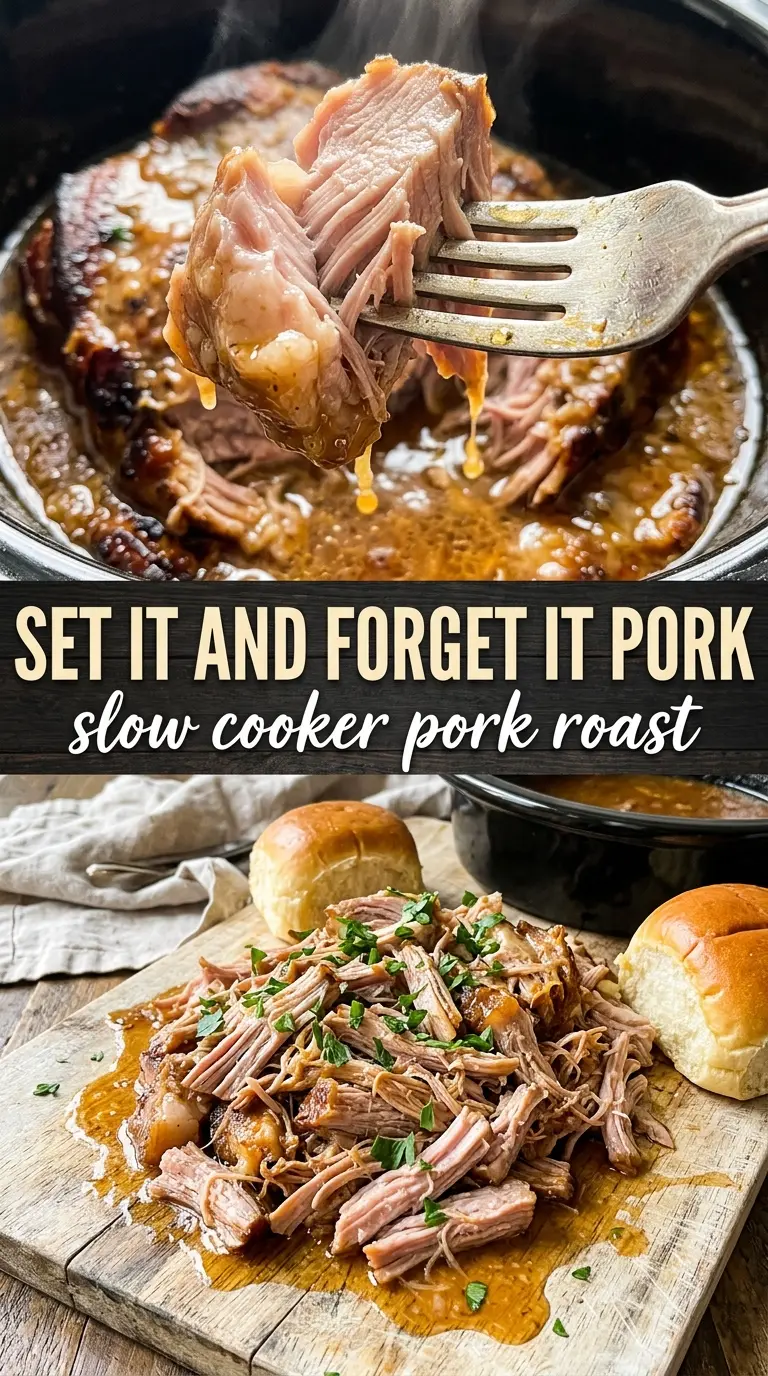
Slow cooker pork roast earns its place in the dinner rotation because it gives you that fall-apart, fork-tender meat without babysitting a pot for half the day. The outside picks up a seasoned crust from the quick sear, then the slow cooker turns the roast into juicy shreds that soak up every bit of the savory cooking liquid. Served over mashed potatoes or rice, it lands somewhere between Sunday dinner comfort and weeknight practicality.
The part that makes this version work is restraint. The pork shoulder gets a proper seasoning rub and a fast browning in a hot skillet, which builds flavor before anything goes into the crock. The broth, Worcestershire, soy sauce, onion, garlic, rosemary, and thyme don’t overwhelm the meat; they create a rich, salty base that tastes like it cooked longer and with more effort than it actually did.
Below, you’ll find the small details that keep the roast from tasting flat or ending up dry, plus the best way to shred it so it stays juicy instead of turning stringy.
The pork was fall-apart tender after 8 hours on low, and the juices had enough flavor that I barely needed to add anything to the mashed potatoes.
Like this slow cooker pork roast? Save it for the nights when you want tender, shredable pork and rich pan juices without hovering over the stove.
The Sear Is What Keeps This Roast From Tasting Flat
A slow cooker can turn pork shoulder tender, but it can’t build flavor on its own. That’s why the quick browning step matters: it gives you the deep, savory notes that the low-and-slow cook can’t create after the fact. If you skip the sear, the roast will still shred, but the flavor lands softer and a little duller.
The other thing that trips people up is drowning the meat. This recipe uses just enough liquid to carry flavor and keep the bottom from scorching, not enough to poach the roast. You want the pork sitting above a layer of onion and garlic, with the broth mixture coming partway up the sides so the meat braises gently instead of boiling.
- Pork shoulder or butt — This cut has the fat and connective tissue that break down into succulent shreds. Leaner pork loin won’t give you the same texture and is much easier to dry out over a long cook.
- Worcestershire sauce and soy sauce — These bring salt, depth, and a little fermented savoriness that plain broth can’t match. Together they make the juices taste round and meaty instead of watery.
- Fresh rosemary and thyme — Fresh herbs hold up better in a long cook and give the roast a clean, woodsy finish. Dried herbs work in a pinch; use about one-third the amount so they don’t take over.
- Chicken broth — A low-sodium broth is the safest choice because the seasoning mix and sauces already add plenty of salt. If you use regular broth, taste the juices before serving and hold back on any extra salt.
What Each Ingredient Is Actually Doing in This Pork Dish
- Pork (pat dry for browning) — Pat completely dry so it browns instead of steams. Even thickness ensures uniform cooking.
- Oil or butter (the browning medium) — High-heat oil essential for proper searing. Creates pan flavor.
- Seasonings (salt, pepper, spices) — Build flavor boldly. Lean pork needs bold seasoning.
- Aromatics (garlic, ginger, herbs) — Cook with fat to bloom flavors. Become the foundation.
- Sauce or liquid (broth, cream, or glaze) — This keeps lean pork from drying. Balance richness with acid.
- Vegetables (if using) — Layer by cooking time so everything finishes together.
- Acid (vinegar, wine, citrus, or soy) — This brightens and prevents heavy pork flavor.
- Proper doneness (145°F with slight pink center) — Pork is safe and stays juicy here. Higher temps dry it out.
How to Build the Flavor Before the Roast Falls Apart
Seasoning and Searing the Pork
Coat the pork generously on all sides with salt, pepper, garlic powder, and smoked paprika. The seasoning has to go on before the sear so it can cling to the meat and darken a little in the pan. Heat the oil until it shimmers, then brown the roast for 2 to 3 minutes per side. If the pan looks crowded or the pork is sticking hard, the heat is too low and you’re steaming instead of building crust.
Layering the Slow Cooker
Sliced onion and minced garlic go in the bottom of the slow cooker first. That creates a bed that keeps the pork from sitting directly in the liquid and gives the juices a sweeter, fuller base as everything cooks down. Pour the broth mixture around the roast, not over the top, so you don’t wash away the seasoning you just built on the surface. The herbs can sit on top or tuck around the sides; they’ll perfume the sauce either way.
Cooking Until It Shreds Cleanly
Cook on Low for 8 to 10 hours or High for 4 to 5 hours, but use the fork test instead of the clock as your final cue. The roast is ready when it gives up easily and the muscle fibers pull into shreds without resistance. If it’s still tight in the center, it needs more time. Pork shoulder gets more tender as it goes; stopping early is the main reason people end up with tough, sliceable meat instead of the pull-apart texture they wanted.
Shredding and Tossing Back in the Juices
Move the pork to a bowl or cutting board, discard any obvious fat pieces, then shred with two forks. Put the meat back into the slow cooker and toss it through the juices so every strand gets coated. That last step matters because the shredded pork will keep soaking up flavor for a few minutes before serving. If the juices look thin, let the pork sit in them uncovered for a few minutes rather than trying to thicken the sauce aggressively.
What to Change When You Want a Different Kind of Dinner
For a richer gravy-style finish
After shredding, spoon the pork into a bowl and pour the cooking liquid into a saucepan. Simmer it until it reduces slightly and tastes concentrated, then spoon it back over the meat. This gives you a tighter, more gravy-like sauce instead of thin pan juices.
Gluten-free version
Use a gluten-free Worcestershire sauce and certified gluten-free soy sauce or tamari. The flavor stays deep and savory, and the texture doesn’t change at all.
Lower-sodium dinner
Use low-sodium broth and reduce the soy sauce slightly if needed. The roast still tastes full because the pork shoulder, onion, garlic, and herbs carry a lot of the flavor, but you keep the final juices from turning too salty.
Turning it into sandwiches
Shred the pork a little finer and let it sit in the juices for 10 minutes before piling it onto rolls. That extra soak makes it juicy enough to stand up to bread without tasting dry, and the oniony broth acts like a built-in sauce.
Storage and Reheating
- Refrigerator: Store the pork with its juices in an airtight container for up to 4 days. The flavor deepens overnight, and the meat stays much juicier when it isn’t packed dry.
- Freezer: It freezes well for up to 3 months. Freeze in meal-size portions with some of the cooking liquid so the pork doesn’t dry out when thawed.
- Reheating: Warm it gently on the stove or in the microwave with a splash of broth or juices. High heat is what makes shredded pork tough and stringy, so heat it just until steaming.
Questions I Get Asked About This Recipe

Slow Cooker Pork Roast
Ingredients
Equipment
Method
- Season pork shoulder or butt generously on all sides with salt, pepper, garlic powder, and smoked paprika.
- Pat the seasoning in so it adheres before searing.
- Heat olive oil in a skillet over medium-high heat until shimmering.
- Sear pork on all sides until browned, about 2–3 minutes per side.
- Place sliced onion and minced garlic in the bottom of the slow cooker, then set the pork on top.
- Combine chicken broth, Worcestershire sauce, and soy sauce and pour around the pork.
- Add rosemary and thyme to the slow cooker so the aromatics infuse the juices.
- Cook on Low 8–10 hours or High 4–5 hours until the pork shreds easily.
- Shred the pork with two forks, then toss it with the juices in the slow cooker.
- Serve the tender shredded pork over mashed potatoes or rice.