Slow cooker Korean beef turns out glossy, tender, and deeply savory, with just enough sweetness to cling to every strand of shredded chuck roast. The sauce gets rich in the crockpot, then finishes with a clean cornstarch thickening so it coats the meat instead of pooling at the bottom of the bowl. Spoon it over rice and you get that perfect mix of sticky sauce, soft beef, and sharp green onion in every bite.
What makes this version work is the balance: soy sauce for salt and depth, brown sugar for that classic Korean-American sweetness, sesame oil for roundness, and ginger and garlic to keep the sauce from tasting flat. Chuck roast is the right cut here because the slow heat breaks it down into spoon-tender pieces without drying it out. Flank steak can work too, but it won’t shred quite the same way and needs a little more attention so it doesn’t go stringy.
Below, I’ve included the one step that keeps the sauce from turning thin and greasy, plus a few swaps that still give you the same sticky, savory finish when you need to work with what’s in the pantry.
The sauce thickened up beautifully after the cornstarch went in, and the beef was fall-apart tender after 6 hours on low. My husband kept asking if there were leftovers for lunch the next day.
Save this slow cooker Korean beef for the nights when you want glossy, shredded beef and rice with almost no hands-on work.
The Reason the Sauce Stays Glossy Instead of Watery
The biggest mistake with slow cooker beef like this is treating the sauce like it should reduce on its own. It won’t. A slow cooker traps moisture, so the sauce needs a little help at the end if you want that clingy, takeout-style finish instead of a thin braising liquid.
That’s why the cornstarch slurry goes in after the beef is shredded. If you add it at the start, the thickening power weakens over the long cook and you can end up with a sauce that looks cloudy but still runs off the meat. Stir it into the hot sauce on high heat for a short burst, then give it time to turn silky and coat the back of a spoon.
- Chuck roast — This is the best choice because the marbling breaks down into tender, shreddable beef. Flank steak works if that’s what you have, but it stays a little leaner and should be sliced against the grain instead of expecting a true shred.
- Sesame oil — A little goes a long way here. Toasted sesame oil gives the dish its unmistakable nutty depth, and there isn’t a substitute that lands in the same place. If yours is old and flat, the whole sauce will taste dull.
- Soy sauce — Use a regular soy sauce, not low-sodium unless you’re intentionally cutting back on salt. The beef absorbs a lot during the long cook, and the sauce needs that strength to stay bold after the rice is added.
- Brown sugar — Packed brown sugar gives the sauce its sticky sweetness and helps it glaze the beef at the end. Honey can work in a pinch, but it tastes brighter and the finished sauce won’t have quite the same deep caramel note.
Building the Beef So It Shreds Cleanly
Whisking the Sauce First
Mix the soy sauce, brown sugar, sesame oil, garlic, ginger, red pepper flakes, and black pepper before it hits the beef. That keeps the seasoning even and prevents a pocket of sugar or garlic from landing in one spot. The sauce should look dark, smooth, and slightly thickened from the sugar before you pour it over the meat.
Cooking Until the Meat Gives Up Easily
Cook on low for 6 to 7 hours if you can. That gentler heat gives chuck roast time to relax into soft, shreddable strands instead of tightening up. If you’re in a hurry and use high, start checking earlier; the beef is ready when a fork slides in without resistance and the pieces pull apart with almost no pressure.
Thickening Without Breaking the Sauce
Move the beef out before thickening the sauce so you can see what’s happening in the pot. Whisk the cornstarch with cold water until smooth, stir it into the hot liquid, and let it cook on high for about 15 minutes. If the sauce still seems loose, give it a few more minutes — it should look glossy and lightly nappé, not gluey.
Returning the Beef to Finish
Once the sauce has thickened, add the shredded beef back in and toss until every piece is coated. This final toss matters because the beef picks up the last of the flavor right here. Serve it over hot white rice so the sauce soaks in, then finish with green onions, sesame seeds, and a little sriracha if you want heat.
How to Adapt This for a Smaller Pot, a Leaner Cut, or a Gluten-Free Bowl
Use flank steak when you want a quicker shred
Flank steak gives you a leaner result and a slightly firmer bite. It still works in the slow cooker, but it’s best when cut into smaller pieces and cooked just until tender, because going too long can make it stringy instead of silky.
Make it gluten-free with one swap
Use a certified gluten-free soy sauce or tamari. The flavor stays close to the original, but tamari tends to taste a touch rounder and less sharp, which works nicely with the brown sugar and sesame oil.
Turn down the heat without losing the Korean-American feel
Cut the red pepper flakes in half or leave them out completely, then finish each bowl with sriracha at the table. That keeps the base sauce balanced and gives everyone control over the heat instead of locking it into the whole pot.
Storage and Reheating
- Refrigerator: Store in an airtight container for up to 4 days. The sauce thickens as it chills, which actually helps it cling to the beef when reheated.
- Freezer: It freezes well for up to 3 months. Freeze the beef and sauce together in a sealed container or freezer bag, then thaw overnight in the refrigerator before reheating.
- Reheating: Warm gently on the stove or in the microwave with a splash of water if needed. The main mistake is blasting it on high heat, which can dry out the beef and make the sauce tighten too much.
Questions I Get Asked About This Recipe
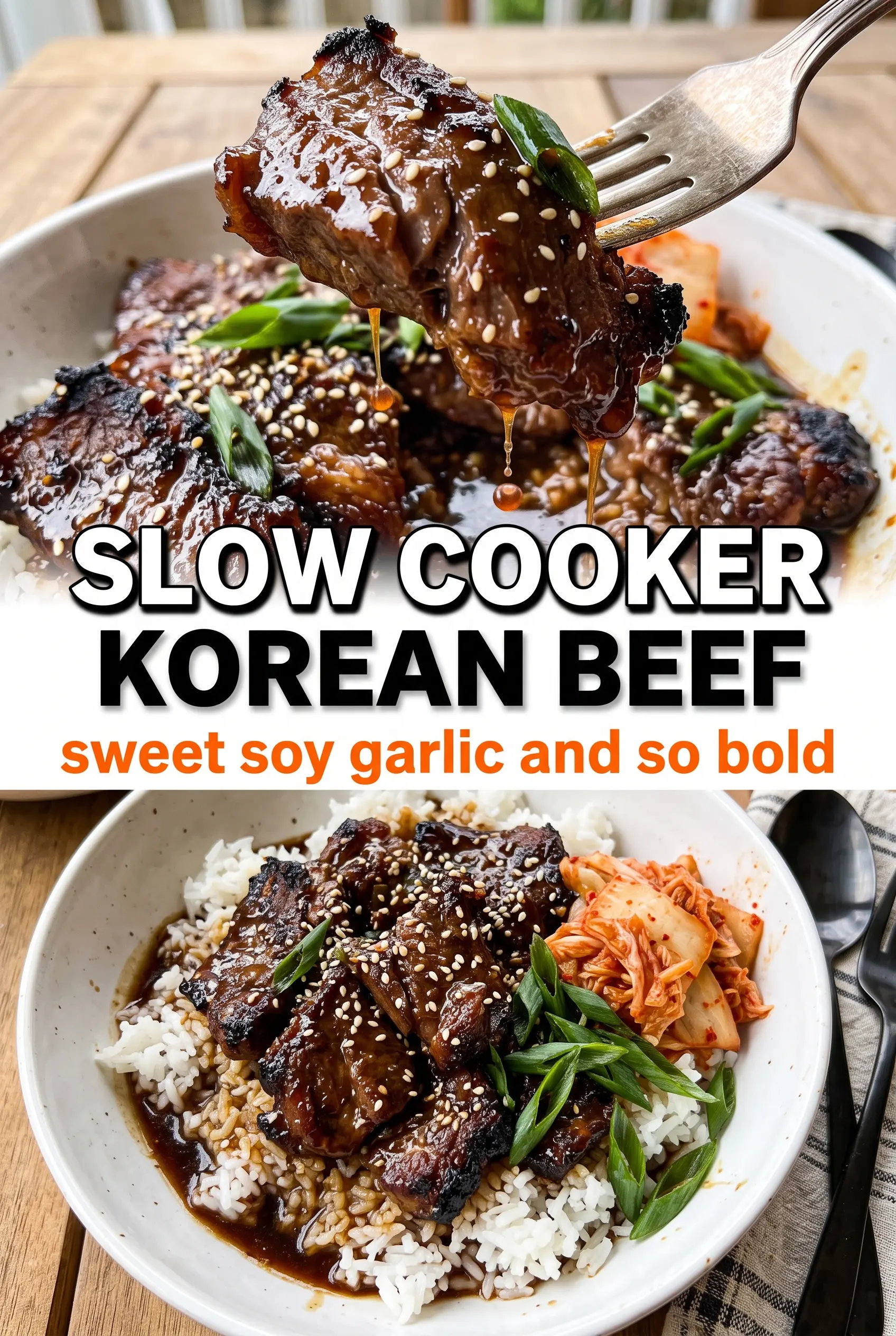
Slow Cooker Korean Beef
Ingredients
Equipment
Method
- Place the beef pieces into the slow cooker in an even layer.
- Whisk together the soy sauce, brown sugar, sesame oil, garlic, ginger, red pepper flakes, and black pepper until the sugar dissolves.
- Pour the sauce over the beef so the pieces are coated as much as possible.
- Cook on LOW for 6-7 hours (or HIGH for 3-4 hours) until the beef is very tender and shreds easily.
- Remove the beef to a plate and shred it with two forks.
- Whisk the cornstarch with the cold water, then stir the slurry into the slow cooker sauce.
- Cook on HIGH for 15 minutes until the sauce thickens to a glossy consistency.
- Return the shredded beef to the sauce and toss to coat thoroughly.
- Serve the Korean beef over cooked white rice.
- Garnish with sliced green onions and sesame seeds, and drizzle with sriracha if using.