Slow Cooker Guinness Beef Stew turns tough chuck into spoon-tender bites in a dark, glossy gravy that clings to potatoes and carrots instead of pooling at the bottom of the bowl. The stout doesn’t make it taste like beer; it gives the stew a deep, malty backbone that makes the beef taste richer and the vegetables taste sweeter. After a long, low cook, the broth tightens into something sturdy enough for crusty bread but still loose enough to seep into every crevice of the meat.
What makes this version work is the order of the cooking. Browning the beef first builds flavor, and cooking the tomato paste in the pan before adding the Guinness keeps the stew from tasting flat. Scraping up the browned bits matters here. That’s where most of the depth comes from, and the slow cooker can’t create that on its own.
Below you’ll find the small details that keep the sauce from turning muddy and the vegetables from falling apart. There’s also a tip for getting the gravy just right if you want it thicker at the end.
The beef came out fall-apart tender and the sauce thickened up beautifully after 8 hours. The Guinness flavor was deep but not bitter, and the potatoes held their shape.
Slow Cooker Guinness Beef Stew is the kind of hearty bowl that gets even better as the gravy settles overnight.
The Browning Step That Gives This Stew Its Backbone
The beef needs color before it ever hits the slow cooker. Tossing it with flour first gives the juices something to cling to, and browning the cubes in hot oil creates the deep flavor that turns the finished broth from thin and one-note into something with body. If the pan looks crowded, work in batches. Packed meat steams, and steamed beef tastes dull no matter how long it cooks.
The second place people lose flavor is right after the meat comes out. Onion, garlic, and tomato paste need a quick turn in that same pan so they pick up the browned residue and lose their raw edge. That step also keeps the tomato paste from tasting sharp in the finished stew. A short simmer with the Guinness is enough to cook off the harsh alcohol bite while keeping the stout’s roasted, malty depth.
What the Stout, Flour, and Potatoes Are Each Doing Here
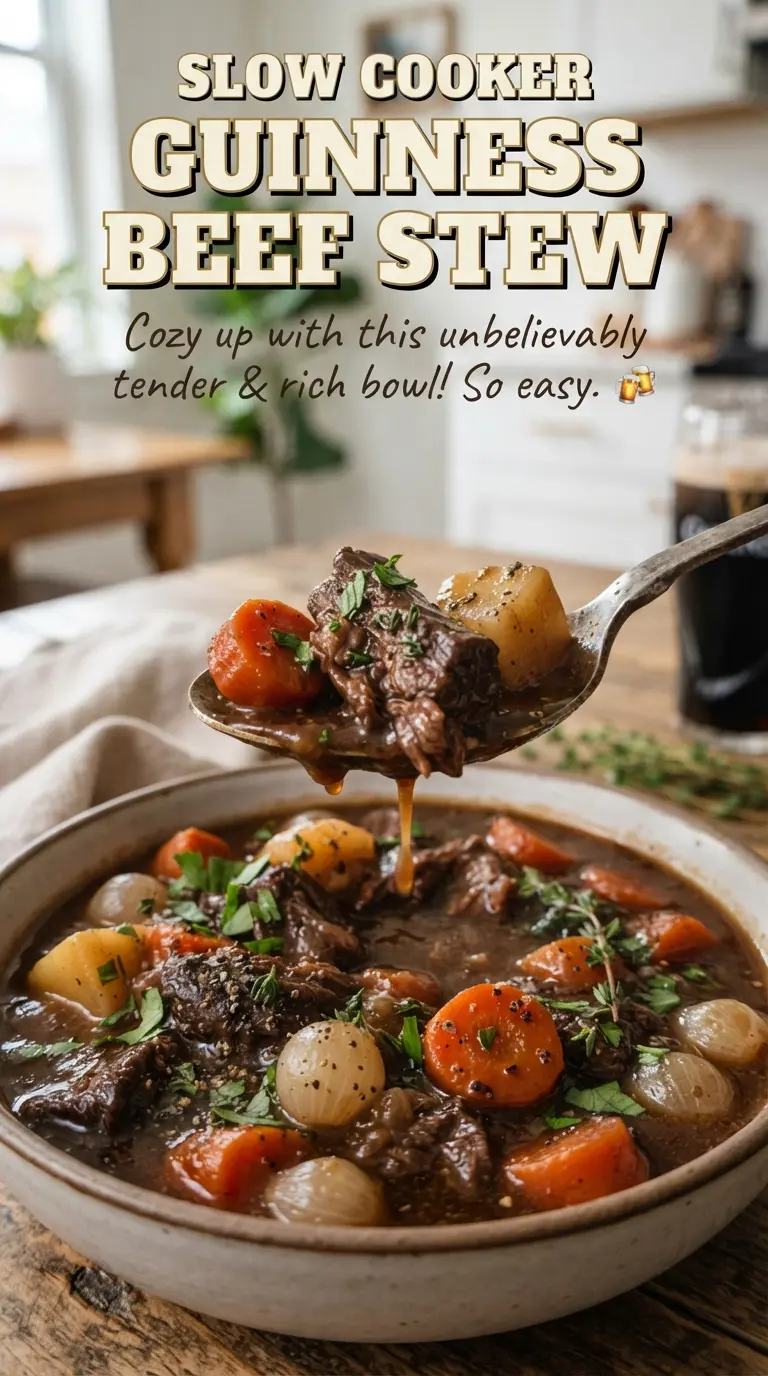
- Beef chuck — This cut has enough connective tissue to turn silky after hours of low heat. Lean stew meat won’t give you the same tenderness or the same rich gravy, so chuck is the cut worth buying here.
- Flour — A light coating helps the beef brown and gives the stew a little natural thickness. If you need this gluten-free, use a 1:1 gluten-free flour blend and brown the beef the same way.
- Guinness stout — The stout adds depth, color, and a roasted note that plain broth can’t replicate. Let it simmer in the pan for a couple of minutes so the raw edge softens before it goes into the slow cooker.
- Baby potatoes — Halving them keeps them intact through the long cook. Bigger chunks can work, but cut them evenly so they finish at the same time as the carrots and don’t collapse.
- Carrots — Thick slices hold their shape better than thin coins. Thin carrots disappear into the gravy by hour eight.
Building the Stew So the Gravy Stays Deep and Rich
Coating and Browning the Beef
Shake the beef with flour, salt, and pepper until every piece looks lightly dusted, then brown it in hot oil without moving it too much. You want a dark crust on the outside, not gray cubes sitting in their own steam. If the flour looks pasty in the pan, the heat is too low. The goal is a brown surface that smells nutty and looks dry at the edges before you transfer the meat to the slow cooker.
Cooking Down the Aromatics
Once the beef is out, cook the onion, garlic, and tomato paste in the same skillet. Stir often and watch the tomato paste darken a shade or two; that’s when it starts tasting round instead of sharp. If the garlic starts to brown hard, lower the heat right away because bitter garlic will carry through the whole pot. This is a small step, but it keeps the finished stew from tasting like boiled ingredients.
Letting the Guinness Work in the Pan
Pour in the stout and scrape every browned bit from the bottom of the pan. Those little stuck-on pieces are concentrated flavor, and they dissolve into the beer as it simmers. Give it a couple of minutes on the heat so the harsh edge softens and the liquid picks up a darker, more unified taste. If you skip this, the stew can end up tasting flat instead of layered.
Long, Slow Finishing in the Crock
Add the broth, Worcestershire sauce, brown sugar, thyme, carrots, and potatoes, then cook on LOW for 8 hours. The stew is ready when the beef pulls apart easily with a fork and the carrots are tender but not mushy. If your potatoes are collapsing, they were cut too small or cooked too hot. Stir gently at the end so you don’t break them up any more than necessary.
How to Adapt This Stew Without Losing the Heart of It
Make it gluten-free
Use a gluten-free 1:1 flour blend to coat the beef, and check that your Worcestershire sauce is gluten-free. The stew still thickens nicely, and the flavor stays close to the original because the stout and browned beef are doing the heavy lifting.
Use a different stout or dark beer
Any dry stout or porter will work, but the flavor will shift a little. Guinness gives the cleanest roasted note; a sweeter dark beer makes the stew richer but can also make it taste heavier.
Add mushrooms for a deeper, earthier pot
Brown sliced cremini mushrooms with the onions if you want a more savory, woodsy stew. They won’t replace the beef, but they do make the gravy taste fuller and give the bowl a little more body.
Keep it potato-free
Leave out the potatoes and serve the stew over mashed potatoes, polenta, or buttered noodles. That gives you more control over the starch and keeps the stew itself a little lighter while still feeling hearty.
Storage and Reheating
- Refrigerator: Keep covered for up to 4 days. The flavor gets deeper on day two, and the sauce thickens as it chills.
- Freezer: It freezes well for up to 3 months. Cool it completely first, then portion it into airtight containers so the potatoes don’t take on extra freezer damage from repeated thawing.
- Reheating: Warm it gently on the stove over low heat or in the microwave at medium power. Hard boiling can break up the potatoes and make the beef stringy before the center is hot.
Questions I Get Asked About This Recipe
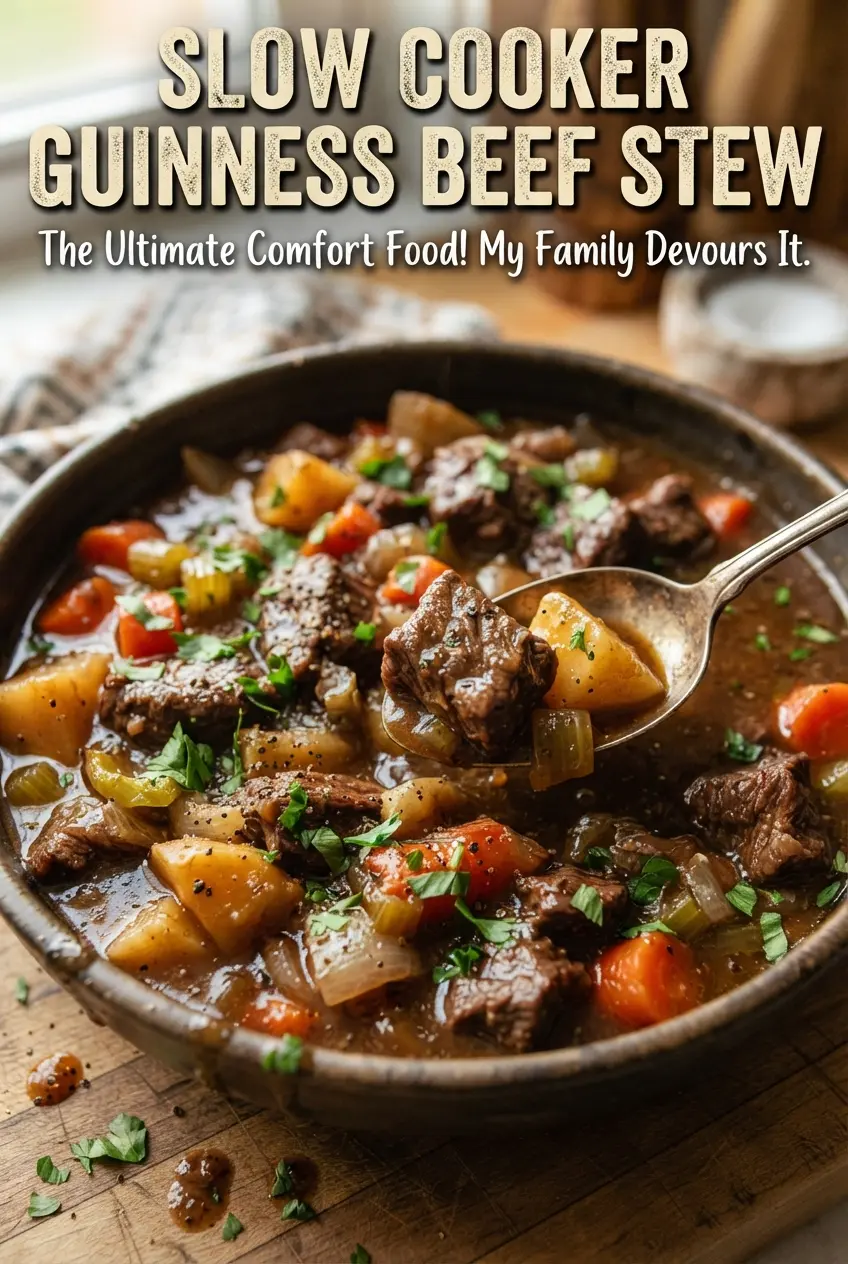
Slow Cooker Guinness Beef Stew
Ingredients
Equipment
Method
- Toss beef with flour, salt, and pepper, coating all sides.
- Heat vegetable oil in a hot cast iron skillet and brown the beef until deeply colored, then transfer it to the slow cooker.
- In the same pan, cook onion, garlic, and tomato paste for 3 minutes, scraping up browned bits as needed.
- Pour in Guinness stout and scrape the bottom, simmering for 2 minutes until slightly reduced, then pour into the slow cooker.
- Add beef broth, Worcestershire sauce, brown sugar, dried thyme, carrots, and baby potatoes to the slow cooker.
- Cover and cook on LOW for 8 hours, until the beef is very tender and the vegetables are softened.
- Season the stew to taste, adjusting salt and pepper as needed.
- Garnish with fresh parsley and serve hot with the thick, dark gravy.