Slow cooker corned beef and cabbage turns into a fork-tender, deeply savory dinner with almost no hands-on work, and that’s exactly why it earns a place in the regular rotation. The brisket comes out sliceable but soft, the cabbage keeps enough structure to hold on the plate, and the potatoes soak up the seasoned broth instead of turning bland or mushy. It’s the kind of meal that feels old-school in the best way.
What makes this version work is the order. The potatoes, carrots, and onion go in first so they sit in the broth long enough to absorb flavor, while the cabbage waits until the last stretch so it stays tender instead of collapsing into strings. Rinsing the brisket before it goes in also matters; it pulls off some of the surface brine so the finished pot doesn’t taste aggressively salty.
Below, I’ve laid out the timing that keeps the vegetables intact, the cut that makes the brisket eat tender instead of chewy, and the small mustard detail that pulls the whole plate together.
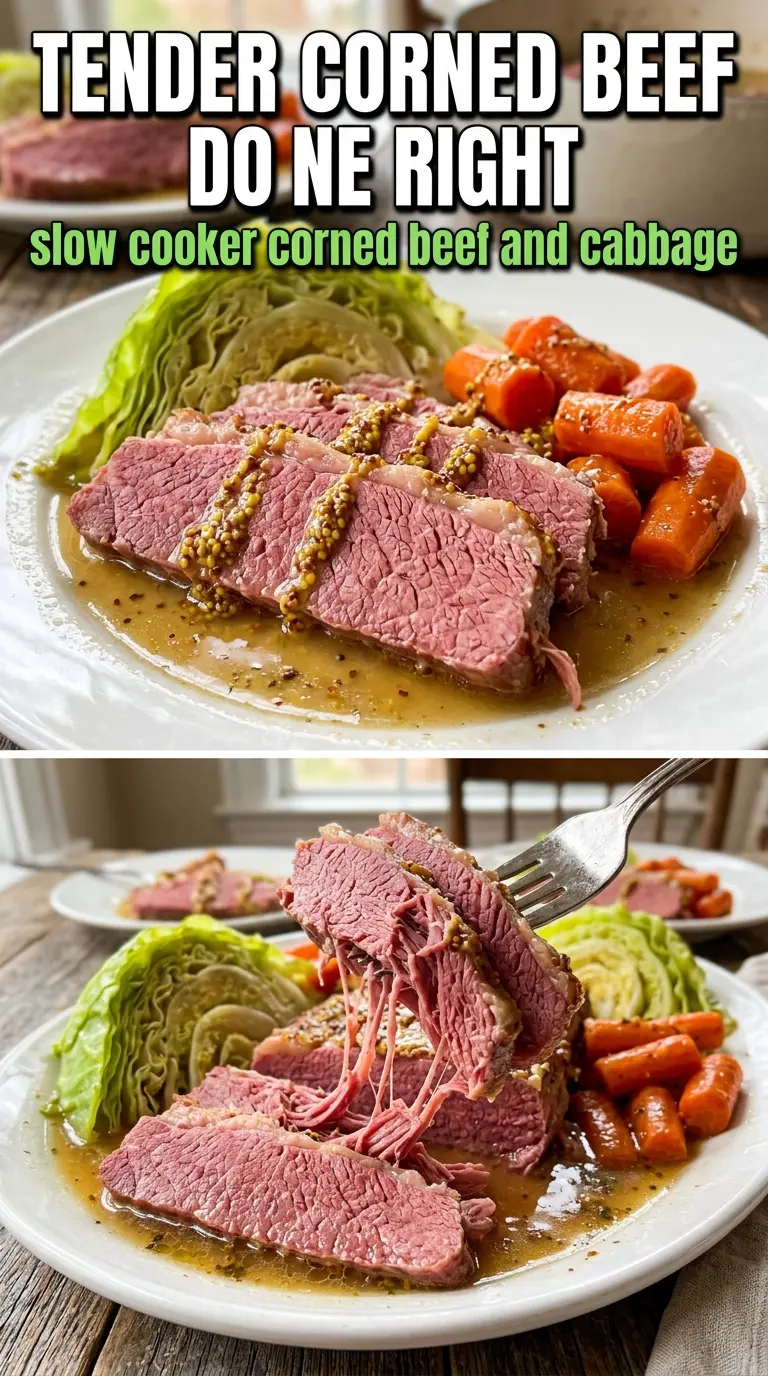
I loved that the cabbage went in later and stayed in wedges instead of turning to mush. The brisket sliced cleanly after resting, and the potatoes soaked up all that seasoned broth.
Save this slow cooker corned beef and cabbage for a hands-off dinner with tender brisket, buttery potatoes, and cabbage that still has shape.
The cabbage goes in late for a reason
Slow cooker corned beef can go from tender to stringy if it sits over heat for the full cook, and cabbage is even less forgiving. The trick here is giving the brisket the full 8 to 9 hours it needs, then adding the cabbage only for the last 2 hours so the wedges soften without breaking apart. That timing keeps the pot balanced: the meat gets fully tender, the potatoes are cooked through, and the cabbage still looks like cabbage when it hits the plate.
Fat-side up matters, too. As the brisket cooks, the fat melts down over the meat and helps keep the slices juicy. If you flip it fat-side down, the leaner top can dry out before the center is tender.
- Flat-cut corned beef brisket — This is the cut you want for clean slicing. The spice packet that comes with it carries most of the classic flavor, so don’t toss it. Rinsing the brisket under cold water helps pull back some of the surface salt, especially if your brand runs on the salty side.
- Yukon Gold potatoes — They hold their shape better than russets and get creamy instead of mealy. Quarter them so they cook evenly without falling apart before the brisket is done.
- Beef broth plus apple cider vinegar — The broth gives the pot body, while the vinegar brightens the finish and keeps the whole dish from tasting flat. Use a decent broth here; this is the base the vegetables cook in for hours.
- Brown sugar — Just enough to round out the saltiness and pull the spice packet together. It doesn’t make the dish sweet. It softens the edges.
What Each Ingredient Is Actually Doing in This Crockpot Recipe
- Primary ingredient (meat, vegetables, or combination) — Layer ingredients by cooking time so everything finishes together.
- Liquid (broth, sauce, wine, or other) — This is essential for slow cooker. Without it, food dries out.
- Aromatics (garlic, onion, ginger, herbs) — These flavor the entire dish as they slow-cook. Don’t skip them.
- Seasonings (salt, pepper, spices) — Layer boldly. Slow cooking mellows spices, so build flavor intentionally.
- Cooking time (proper duration on high or low) — Timing is critical. Too long makes food mushy. Too short leaves it tough.
- Delicate ingredients (added near end) — Fresh herbs, cream, or tender vegetables go in the last 30 minutes.
- Acid (vinegar, wine, citrus, or tomato) — This brightens slow-cooked flavors and prevents flatness.
- Final finish (garnish, cheese, or sauce) — These add brightness and prevent one-dimensional taste.
Building the Pot So Every Layer Cooks at the Right Speed
Start with the sturdy vegetables
Layer the potatoes, carrots, and onion in the bottom of the slow cooker first. They need the longest time in the liquid, and they also act like a rack so the brisket isn’t sitting directly on the bottom of the pot. Smash the garlic and scatter it in with the broth and vinegar. If the broth doesn’t come halfway up the vegetables, that’s fine; the slow cooker traps steam and the vegetables don’t need to be fully submerged.
Set the brisket fat-side up
Rinse the corned beef under cold water, then lay it on top of the vegetables with the fat side facing up. Sprinkle the spice packet and brown sugar over the top. That placement lets the rendered fat baste the meat as it cooks, which is why the slices stay juicy instead of dry at the edges. Don’t stir the pot after the brisket goes in; you want the meat to stay intact and the vegetables to hold their shape underneath.
Add the cabbage near the end
After 6 to 7 hours, tuck the cabbage wedges into the broth and press them down gently so they pick up some liquid. Two hours is enough for tender cabbage with a little bite left in the core. If you add it at the beginning, it turns limp, sulfurous, and dull. The wedges should be fork-tender but still wide enough to lift onto a plate without falling apart.
Rest before slicing
Pull the brisket out and give it 10 minutes on a cutting board before you slice it. That short rest lets the juices settle back into the meat, which makes each slice cleaner and more flavorful. Cut against the grain; if you slice with the grain, even a perfectly cooked brisket will eat stringy. Serve it with whole grain mustard on the side, because that sharp bite wakes up the whole plate.
How to Adapt This Pot for Different Eaters and Different Leftovers
Gluten-Free Without Changing the Texture
This recipe is naturally gluten-free as long as your broth and corned beef seasoning packet are certified gluten-free. The method doesn’t change, and the vegetables still pick up the same savory broth flavor.
A Less Salty Version
Rinse the brisket well and use low-sodium beef broth if you know your corned beef runs salty. You’ll lose a little punch, but the vinegar and mustard bring the flavor back without pushing the dish into briny territory.
Turning Leftovers Into a Second Meal
Leftover brisket slices reheat best in a splash of the cooking liquid so they don’t dry out. The potatoes and carrots can be chopped and folded into a skillet hash the next morning, and the cabbage is good warmed gently in the same broth.
Storage and Reheating
- Refrigerator: Store in an airtight container for up to 4 days. The vegetables soften a little more as they sit, but the flavor deepens.
- Freezer: The brisket freezes well, sliced or whole, with a little broth. The cabbage and potatoes don’t freeze as nicely, so freeze the meat separately if you can.
- Reheating: Warm gently on the stovetop or in the microwave with a spoonful or two of broth. High heat dries the brisket out fast, so reheat only until it’s hot through.
Questions I Get Asked About This Recipe

Slow Cooker Corned Beef and Cabbage
Ingredients
Equipment
Method
- Add the quartered onion, quartered Yukon Gold potatoes, and 2-inch carrot pieces to the bottom of the slow cooker in an even layer.
- Add the smashed garlic and pour the beef broth and apple cider vinegar over the vegetables so the bottom is well covered.
- Rinse the flat-cut corned beef brisket under cold water, then place it fat-side up on top of the vegetables.
- Sprinkle the included corned beef spice packet and the brown sugar evenly over the brisket.
- Cover and cook on LOW for 8–9 hours, until the brisket is very tender and easily pulls apart with pressure.
- During the last 2 hours, add the cabbage wedges to the slow cooker and press them into the liquid so they steam evenly.
- Remove the brisket from the slow cooker and let it rest for 10 minutes so juices redistribute.
- Slice the brisket against the grain, then serve with the potatoes, carrots, and cabbage, with whole grain mustard on the side.