Coconut curry chicken turns deeply savory and spoon-tender in the slow cooker, with a sauce that tastes like it simmered all day because, well, it did. The coconut milk softens the curry paste into something silky instead of sharp, and the chicken thighs stay juicy long after the peppers and onions have given up their bite. Served over jasmine rice with basil and lime, it lands in that sweet spot between comforting and lively.
The key here is balance. Red curry paste needs fat to bloom, which is why full-fat coconut milk matters more than a lighter version that can taste thin and flatter the spices. A little brown sugar rounds out the heat, fish sauce gives the sauce its depth, and lime juice at the end keeps the whole dish from tasting heavy. The peas go in near the finish so they stay bright instead of dull and mushy.
Below, you’ll find the one timing detail that keeps the vegetables from turning soft, plus a few smart swaps if you need to work around what you have on hand. I also included storage notes, because this one reheats well and earns its keep the next day.
The sauce came out silky and the chicken was fall-apart tender after 6 hours on low. I added the peas at the end like suggested and they stayed bright, not soggy.
Save this slow cooker coconut curry chicken for nights when you want tender chicken, creamy sauce, and jasmine rice without standing over the stove.
The Part That Keeps the Curry Creamy, Not Broken
The biggest mistake in slow cooker curry is treating coconut milk like any other braising liquid. If the sauce gets too hot for too long, especially with a lighter coconut product, it can separate and taste flat. Full-fat coconut milk gives you enough body to carry the curry paste, and the broth keeps it loose enough to coat rice instead of clumping on the spoon.
Chicken thighs are the right cut here because they stay tender through a long cook. Breasts can work in a pinch, but they dry out faster and don’t forgive extra time the way thighs do. The onion and bell pepper soften into the sauce, which is what you want in a dish like this — they add sweetness and structure without turning the curry muddy.
- Full-fat coconut milk — This is what gives the sauce its creamy body. Light coconut milk will taste thinner and can leave the curry tasting more like broth than curry.
- Red curry paste — This is the backbone of the dish. Brands vary a lot in heat and salt, so start with the amount listed and adjust at the end instead of guessing early.
- Fish sauce — It doesn’t make the curry taste fishy; it adds the savory depth that keeps the sauce from tasting one-note. Soy sauce can stand in if that’s what you have, but the flavor will land a little differently and less Thai-inspired.
- Fresh lime juice — Add it at the end. Heat dulls citrus fast, and the finishing squeeze is what lifts the coconut milk and keeps the dish from feeling heavy.
What Each Ingredient Is Actually Doing in This Crockpot Chicken Recipe
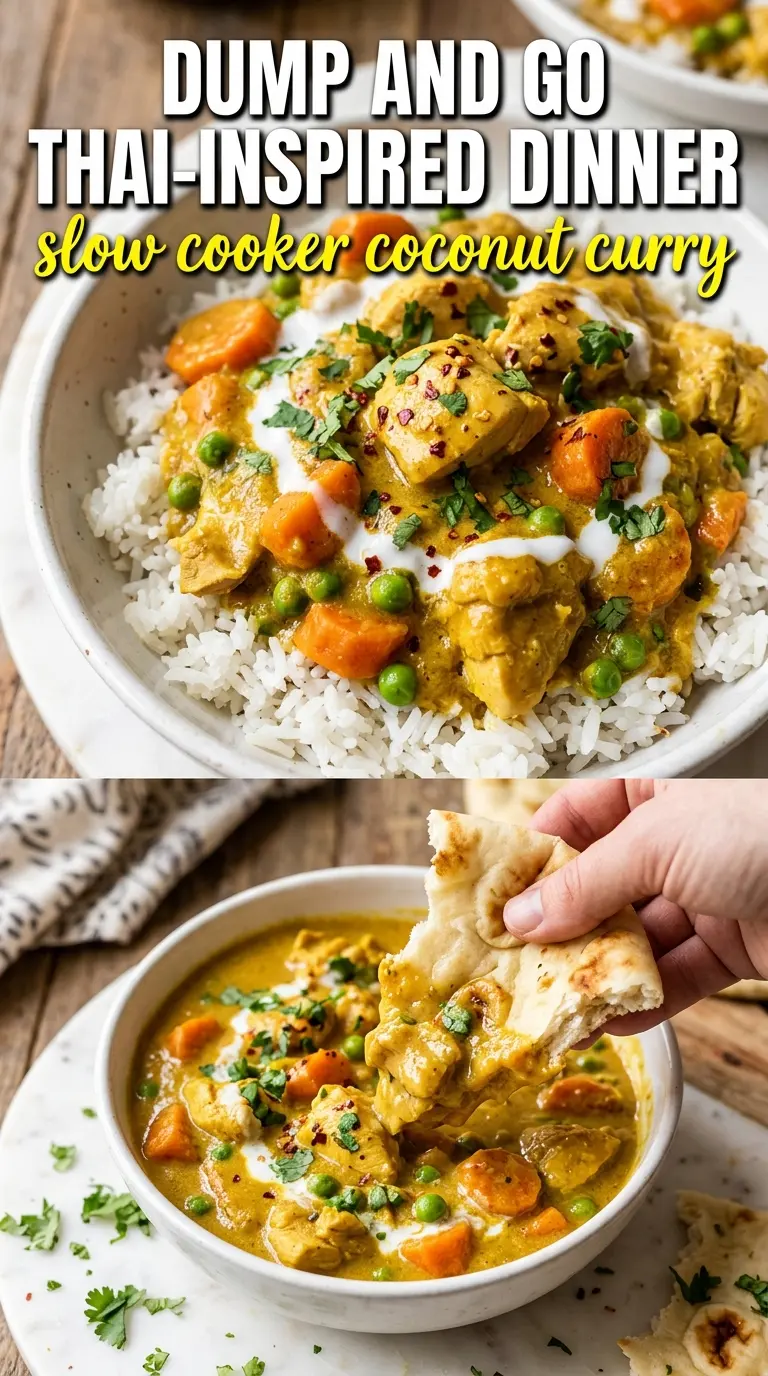
- Chicken (skin optional, cut into pieces) — Boneless thighs work better than breasts for slow cooker. They stay moist longer.
- Aromatics (garlic, onion, peppers) — These layer flavor as they slow-cook. Don’t skip aromatics or the dish tastes flat.
- Sauce or liquid (broth, cream, wine, BBQ sauce, salsa) — This is essential for crockpot cooking. The liquid keeps chicken moist during long cooking.
- Seasonings (salt, pepper, spices) — Layer flavors boldly. Slow cooking mellows spices, so don’t hold back.
- Cooking time (4-6 hours on high, 6-8 on low) — Proper timing matters. Too long and chicken becomes mushy. Too short and it’s tough.
- Add timing (fresh ingredients near end) — Add delicate ingredients (cream, fresh herbs) in the last 30 minutes so they don’t overcook.
- Acid (lime, vinegar, wine, or tomato) — This brightens slow-cooked flavors and prevents one-dimensional taste.
- Final garnish or finish (cheese, cilantro, sour cream) — These add freshness and prevent heavy, bland results.
Let the Slow Cooker Do the Work, Then Finish Like a Cook Who Tastes
Building the Curry Base
Whisk the coconut milk, curry paste, broth, garlic, ginger, fish sauce, brown sugar, lime juice, and turmeric until the paste dissolves as much as it can. You want a smooth, rusty-gold sauce before it goes over the chicken, not streaks of paste sitting in the liquid. That first mix decides whether the curry tastes evenly seasoned or patchy at the end.
Setting Up the Slow Cook
Put the chicken, onion, and bell pepper in the slow cooker, then pour the sauce over the top. Don’t stir aggressively at this stage; the chicken doesn’t need to be perfectly submerged, and overmixing can tear the pieces before they ever get tender. Cover and cook on low for the full 6 to 7 hours if you can, because low heat gives the thighs time to soften without squeezing out their juices.
Finishing the Last 20 Minutes
Stir in the frozen peas near the end, when the chicken is already tender and the sauce has thickened a little. They only need enough time to heat through and turn bright green. If they go in too early, they lose their snap and start looking tired, which drags down the whole bowl.
Tasting Before You Serve
Taste the curry before ladling it over rice. If it feels flat, it usually needs salt in the form of more fish sauce, a little more lime for brightness, or another pinch of brown sugar if the curry paste came in hotter than expected. That final adjustment is what makes the sauce taste finished instead of just cooked.
What to Change When You Need a Different Version
Dairy-Free by Default
This recipe already fits a dairy-free table as written, which is one reason it works so well in the slow cooker. Keep the full-fat coconut milk, because it gives the sauce its body without needing cream or butter.
Make It Gluten-Free Without Changing the Flavor
Check the curry paste and fish sauce labels, since those are the two ingredients most likely to hide gluten. Once those are confirmed, the rest of the dish is naturally gluten-free and serves the same over rice.
Swap the Chicken Thighs for Chicken Breast
Use boneless skinless breasts cut into larger chunks, and shorten the cook slightly so they stay juicy. They won’t be quite as forgiving as thighs, so check early and stop as soon as the chicken is opaque and pulls apart easily.
Stretch It for More Servings
Add another bell pepper or a handful of green beans during the last hour if you need more volume without changing the sauce. The curry will feel lighter on chicken but still hearty over rice, which is the easiest way to feed more people without watering anything down.
Storage and Reheating
- Refrigerator: Store in an airtight container for up to 4 days. The sauce may thicken as it chills, which is normal.
- Freezer: It freezes well for up to 2 months. Cool it completely first and freeze in portioned containers so the coconut sauce stays smoother when thawed.
- Reheating: Warm gently on the stove over low heat or in the microwave at medium power. High heat can make the coconut milk look oily, so go slow and add a splash of broth if the sauce has tightened up too much.
Questions I Get Asked About This Recipe
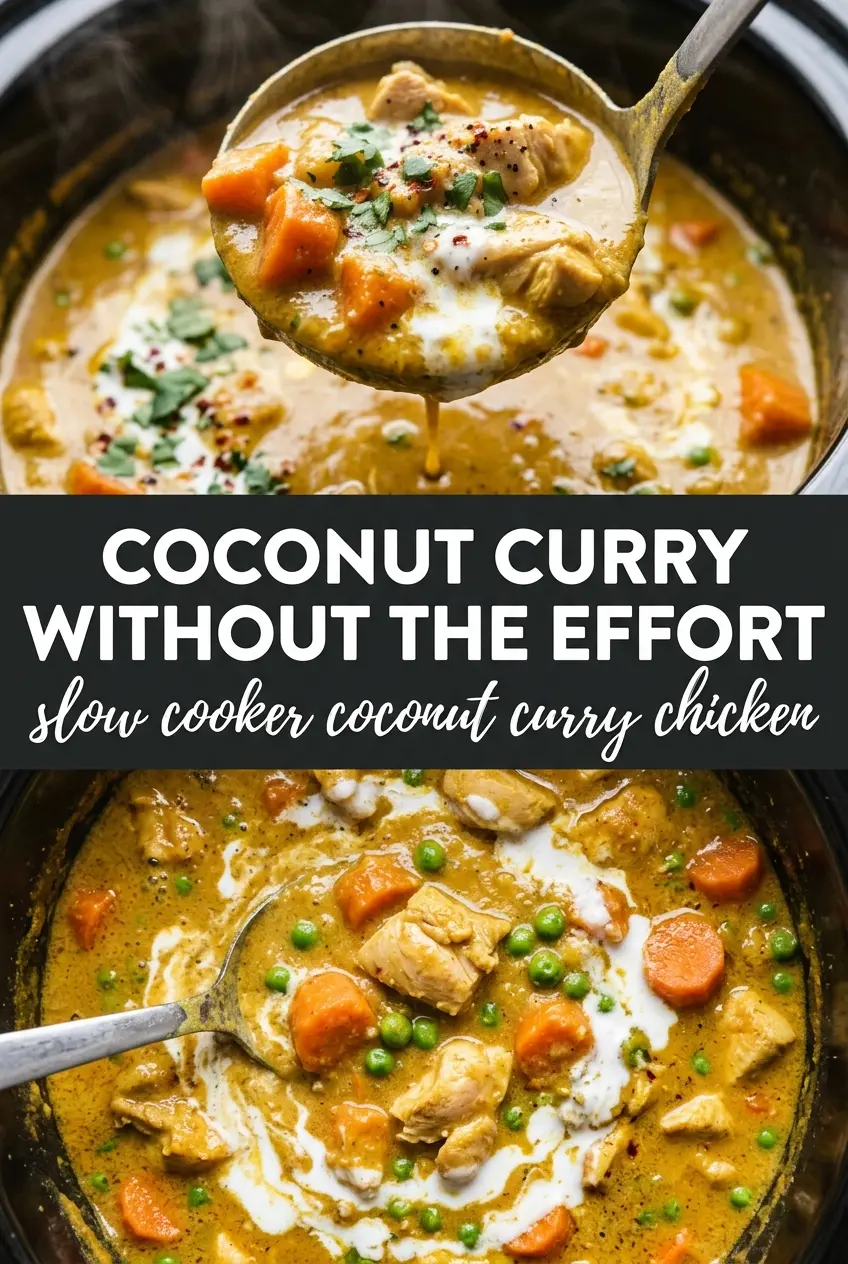
Slow Cooker Coconut Curry Chicken
Ingredients
Equipment
Method
- Place the chicken thighs in the slow cooker in an even layer.
- Whisk together the coconut milk, red curry paste, chicken broth, garlic, ginger, fish sauce, brown sugar, lime juice, and turmeric until smooth.
- Pour the sauce over the chicken, then add the diced onion and sliced red bell pepper.
- Cook on low for 6–7 hours until the chicken is very tender and the sauce looks golden and cohesive.
- Stir in the frozen peas during the last 20 minutes of cooking so they turn bright green and tender.
- Taste the curry and adjust seasoning with additional fish sauce, lime juice, or brown sugar as needed.
- Serve over jasmine rice topped with fresh Thai basil and lime wedges.