Slow cooker chicken breasts can be unbelievably tender when they’re treated like a gentle braise instead of a set-it-and-forget-it afterthought. The meat stays juicy, slices cleanly, and soaks up every bit of the seasoned broth underneath it, which is exactly why this version earns a spot in the regular dinner rotation.
The trick is restraint. Chicken breasts need enough liquid to steam and baste, but not so much that the flavor gets washed out. A short ingredient list keeps the broth clean and savory, while butter and garlic round out the sauce at the end without making it heavy. Cook it too long and the texture turns stringy, so the timing matters more here than in a lot of slow cooker meals.
Below, I’m walking through the part that matters most: how to keep chicken breasts tender in the slow cooker, how to know when they’re done, and what to do with the cooking juices so you don’t miss the easiest pan sauce in the whole recipe.
The chicken came out so tender I could slice it with a fork, and the little bit of butter and broth at the bottom made the best sauce over rice. I used the LOW setting and it was perfect at 3 1/2 hours.
Save this tender slow cooker chicken breasts recipe for nights when you want juicy sliced chicken and a built-in pan sauce with almost no prep.
The Difference Between Tender Chicken and Dry Chicken in the Slow Cooker
The biggest mistake with slow cooker chicken breasts is treating them like a forgiving all-day roast. Breasts are lean, and the slow cooker keeps going even after the meat is technically done. Once the fibers tighten past that point, you get chalky chicken no matter how good the seasoning is.
What saves this recipe is the combination of broth underneath and butter over the top. The liquid keeps the environment moist, but the chicken isn’t submerged, so the seasoning stays on the meat instead of disappearing into the pot. Cooking on LOW gives you a wider window for tenderness, and that matters more than speed here.
- Low heat is the safer path. It gives the chicken time to turn tender without racing straight past done into dry.
- The broth should come up around the chicken, not cover it. That’s enough moisture for gentle cooking and better flavor concentration.
- Butter adds body to the juices. It turns the drippings into something spoonable instead of watery.
- Resting matters. A few minutes off the heat lets the juices settle before you slice.
What Each Seasoning Is Actually Doing in This Dish
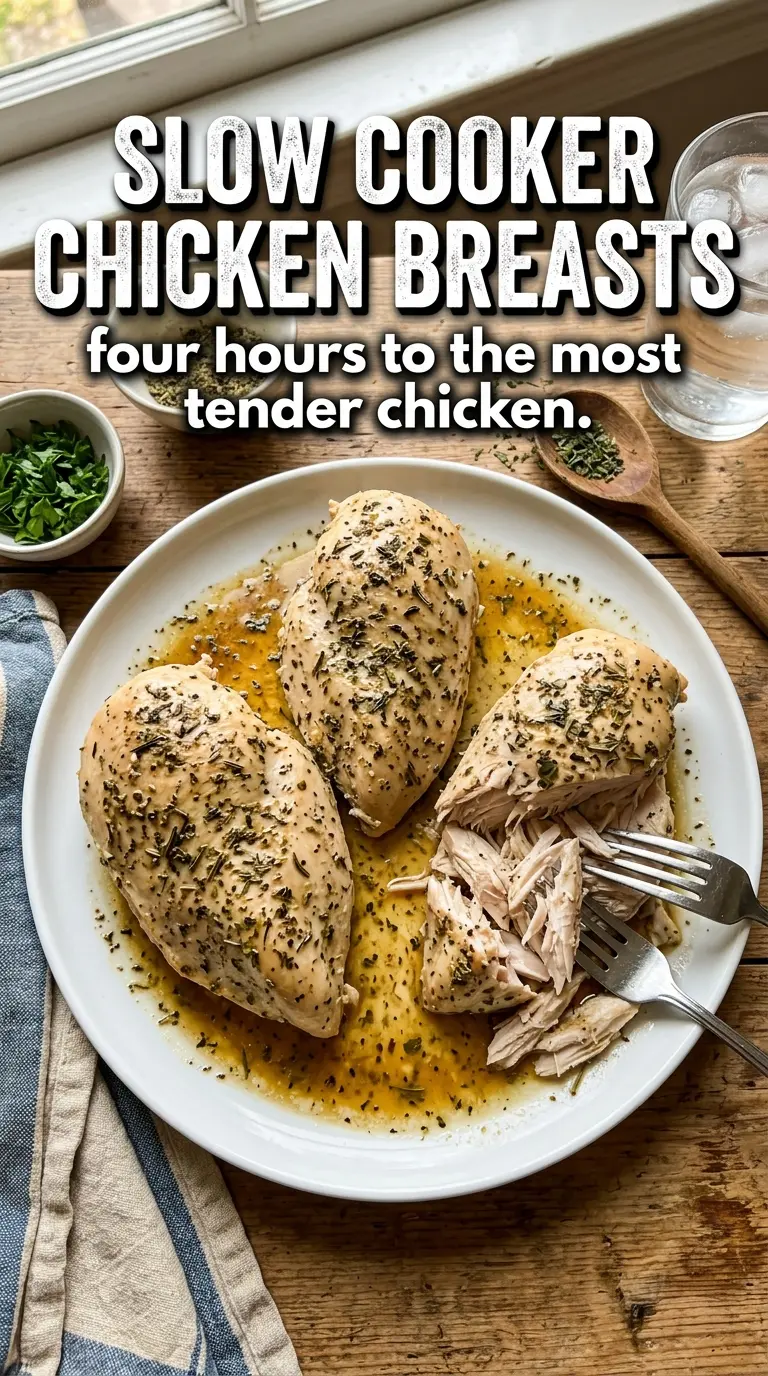
Here’s the ingredient logic: every seasoning has a job, and none of them is there just to fill space. This is the kind of recipe where a few smart choices matter more than a long list.
- Chicken breasts — Use boneless, skinless breasts that are similar in size so they finish at the same time. If one is much thicker, pound it lightly so it doesn’t lag behind and dry out while the smaller piece cooks through.
- Garlic powder, onion powder, smoked paprika, and Italian seasoning — These cling to the outside and season the meat directly. Fresh herbs can work, but they won’t give you the same evenly distributed base flavor in a slow cooker.
- Chicken broth — Use a broth you’d actually drink if you tasted it straight. The drippings become your sauce, so a flat broth makes a flat finish.
- Butter — This is what gives the cooking liquid a richer, silkier texture at the end. Olive oil won’t produce the same glossy spoonable sauce.
- Garlic — Fresh minced garlic softens in the heat and perfumes the broth. If all you have is garlic powder, the chicken will still work, but the final sauce loses some depth.
- Lemon and parsley — Add them at the end, not at the start. The lemon wakes up the sauce and keeps the dish from tasting heavy.
Building the Sauce So the Chicken Stays Juicy
Season the meat before it goes in
Coat both sides of the chicken breasts generously so the spices have direct contact with the meat. If you season only the top, the bottom comes out bland because the slow cooker environment doesn’t aggressively redistribute flavor the way a stovetop pan does. Let the chicken sit for a minute or two after seasoning so the spices start to cling.
Add just enough liquid to braise, not drown
Pour the broth around the chicken instead of over the top. That keeps the seasoning in place and allows the chicken to cook in a moist pocket of steam and broth rather than floating in bland liquid. If the breasts are submerged, the sauce gets thinner and the seasoning tastes diluted.
Watch for the change in texture, not just the clock
At the end of cooking, the chicken should feel firm but springy when pressed gently in the thickest part. If you can pull it apart with little resistance, it’s ready. If it shreds easily in the cooker itself, it’s already gone a little too far, so pull it out right away before the fibers tighten more.
Finish with the drippings
Rest the chicken for five minutes, then slice it and spoon the juices over the top. That’s where the dish turns from plain cooked chicken into something you’d actually want with rice, potatoes, or bread. If the sauce seems thin, let it sit for a minute after the butter melts; it thickens slightly as it cools.
How to Adapt This for Different Meals and Dietary Needs
Make it dairy-free
Skip the butter and add 1 to 2 teaspoons of olive oil or a dairy-free butter substitute at the end. You’ll lose a little richness, but the broth still makes a clean, savory sauce that works well over rice or vegetables.
Turn it into meal prep chicken
Cook the chicken just until tender, then slice or shred it before storing it with a few spoonfuls of the juices. That keeps it from drying out in the fridge and makes it easy to use in wraps, salads, grain bowls, or quick sandwiches.
Use chicken thighs instead
Boneless skinless thighs are more forgiving and can sit in the slow cooker a little longer without drying out. The texture is richer and the sauce tastes deeper, but the final dish won’t slice as neatly as breast meat.
Storage and Reheating
- Refrigerator: Store in an airtight container for up to 4 days. The chicken stays moist if you keep it with some of the juices.
- Freezer: It freezes well for up to 3 months. Freeze sliced chicken with a little sauce in freezer bags or containers so it reheats evenly.
- Reheating: Warm gently in a covered skillet over low heat or in the microwave at 50% power. High heat is the fastest way to turn already-cooked chicken dry and stringy.
Answers to the Questions Worth Asking

Slow Cooker Chicken Breasts
Ingredients
Equipment
Method
- Season the chicken breasts generously on both sides with garlic powder, onion powder, smoked paprika, Italian seasoning, salt, and cracked black pepper.
- Place the seasoned chicken in the slow cooker and pour the chicken broth around the chicken.
- Add the butter and minced garlic to the slow cooker.
- Cover and cook on LOW for 3-4 hours, or on HIGH for 2-2.5 hours, until the chicken is tender and shreds easily; do not overcook.
- Remove the chicken and let it rest for 5 minutes before slicing, then keep the cooking juices in the slow cooker.
- Slice the chicken and pour the cooking juices over the top as a pan sauce.
- Garnish with fresh parsley and lemon wedges.