Slow cooker beef stew should come out thick, savory, and full of beef that breaks apart with a fork without turning dry or stringy. The potatoes hold their shape, the carrots soften without going mushy, and the broth turns glossy enough to coat a spoon. When it’s done right, you get that old-fashioned stew comfort without standing over the stove all afternoon.
The part that makes this version work is the browning. Tossing the beef with flour helps the surface pick up color, and those browned bits left in the pan build the base of the stew once they’re scraped up with broth. Tomato paste cooks for a minute with the onion and garlic, which deepens the flavor before everything goes into the slow cooker. That small bit of upfront work is what keeps the finished stew from tasting flat.
Below, I’ve included the timing details that matter most, the one ingredient swap that still gives good results, and the reheating note that keeps the beef tender instead of overcooked.
The gravy turned out thick and glossy, and the beef was fall-apart tender after 8 hours on low. I loved that the potatoes stayed intact instead of dissolving into the broth.
Save this slow cooker beef stew for a hands-off dinner with tender beef, chunky vegetables, and a rich broth.
The Browning Step That Keeps the Stew from Tasting Flat
The slow cooker does the long, gentle work, but it can’t create deep flavor on its own. That’s why the beef gets browned first and the onion cooks in the same pan afterward. You’re pulling flavor from the meat, the flour coating, and the pan itself, then carrying all of it into the pot.
If you skip the sear, the stew still cooks, but the broth tastes thinner and the beef leans gray instead of rich. Brown the meat in batches so it has room to color; crowded pieces steam, and steamed beef never develops the crust that gives stew its backbone. The flour helps the exterior turn into a light coating that thickens the broth later without turning pasty.
What Each Ingredient Is Actually Doing in This Stew
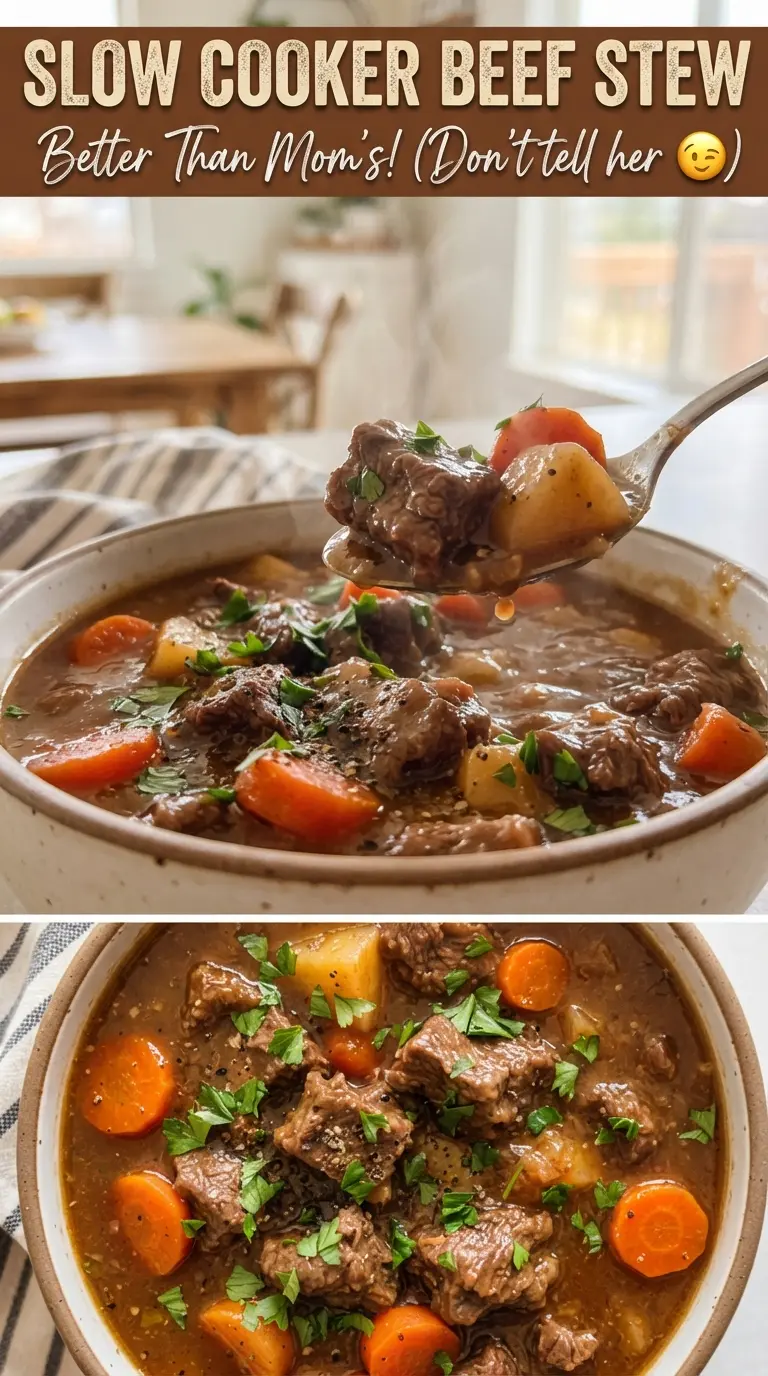
- Beef chuck roast — This cut has the connective tissue that turns silky after hours in the slow cooker. Leaner beef turns dry before the vegetables are done.
- Flour — It clings to the beef, helps with browning, and gives the broth body as it cooks. Cornstarch doesn’t give the same flavor base at the beginning, so don’t swap it here.
- Tomato paste — A small amount adds depth and a little sweetness once it cooks with the onion and garlic. Let it darken slightly in the pan; that cooked tomato flavor matters.
- Yukon gold potatoes — They hold together better than russets and stay creamy instead of breaking into the broth. Cut them into even chunks so they finish at the same time as the carrots.
- Frozen peas — Add them at the end only. If they go in at the start, they lose their color and turn dull and mealy.
Building the Stew So the Vegetables and Beef Finish at the Same Time
Searing for the Base
Toss the beef with the flour, salt, and pepper until the cubes look lightly coated, then brown them in hot oil in batches. You’re looking for dark edges and a good crust, not a full cook-through. If the pan looks crowded or the meat sticks at first, give it a minute; once the crust forms, it usually releases cleanly. Transfer each batch to the slow cooker as it finishes.
Cooking Down the Onion and Tomato Paste
Use the same pan for the onion, then add the garlic and tomato paste once the onion starts to soften. The tomato paste should darken a shade and smell a little sweet and concentrated after about a minute. That brief step pulls out the raw edge and builds a richer stew base. If the pan seems dry, the onion moisture is usually enough, but a splash of broth keeps the paste from scorching.
Letting the Slow Cooker Do Its Job
After deglazing the pan with broth and adding everything to the slow cooker, leave it alone. Low heat for 8 hours gives the beef time to break down gently; high heat shortens the cook, but the texture is a little less luxurious. The stew is done when the beef gives easily with a fork and the potatoes are tender all the way through, not just at the edges. Stir in the peas during the last 10 minutes so they stay bright.
How to Adapt This Beef Stew for Your Pantry and Schedule
Gluten-Free Version
Use a gluten-free all-purpose flour blend for coating the beef. The stew will still thicken nicely, though the broth may be a touch less velvety than with regular flour. Stir the beef well so the coating stays light and even.
No Wine, No Problem Broth Swap
This stew doesn’t need wine to taste deep, but if you want extra richness, replace 1 cup of the beef broth with more broth plus 1 teaspoon of balsamic vinegar. The vinegar won’t make it sour; it just brightens the long-cooked flavor.
Vegetable Changes That Still Work
You can swap the peas for green beans or leave them out entirely, but keep the potatoes and carrots in similar-sized pieces so they finish evenly. Root vegetables hold up best here; softer vegetables need to go in late or they’ll disappear into the broth.
Storage and Reheating
- Refrigerator: Keep covered for up to 4 days. The broth thickens as it chills, so it may look extra dense the next day.
- Freezer: It freezes well for up to 3 months. Cool completely first, then pack into airtight containers with a little headspace.
- Reheating: Warm gently on the stovetop or in the microwave until hot. Don’t boil it hard again or the beef can tighten up and the potatoes can break apart.
Answers to the Questions Worth Asking
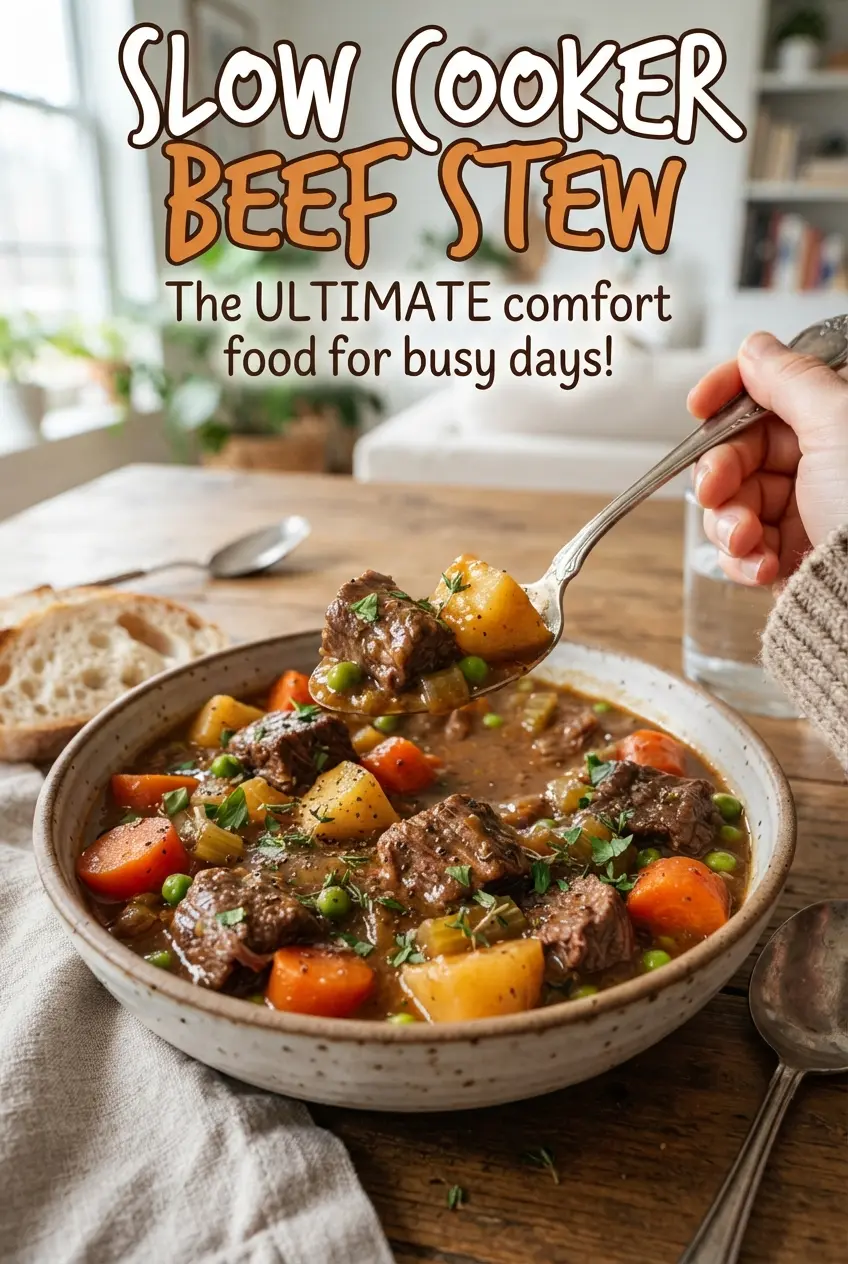
Slow Cooker Beef Stew
Ingredients
Equipment
Method
- Toss the beef cubes with flour, salt, and black pepper until evenly coated. Heat the olive oil in a hot skillet over medium-high until shimmering.
- Brown the beef in batches for 4-5 minutes per batch, turning as needed for deep color. Transfer the browned beef to the slow cooker as you finish each batch.
- Cook the diced onion in the same pan for 4 minutes, stirring to soften and lightly brown. Add the minced garlic and tomato paste and cook for 1 minute, stirring to prevent scorching.
- Pour in 1 cup beef broth and scrape up the browned bits from the pan. Pour the mixture into the slow cooker.
- Add the remaining beef broth, Worcestershire sauce, potatoes, carrots, celery, dried thyme, and bay leaves to the slow cooker. Stir to distribute everything evenly.
- Cover and cook on LOW for 8 hours or HIGH for 4-5 hours until the beef is fork-tender. Visual cue: the meat should break apart easily when pressed with a fork.
- Stir in the frozen peas and cook for the last 10 minutes to warm through. Remove the bay leaves before serving.
- Top the stew with chopped fresh parsley right before serving for a fresh green finish. Serve hot with crusty bread.