Slow cooker beef stew gets a lot of leeway in the comfort-food category, but this version earns its keep with a broth that turns glossy and rich, beef that stays spoon-tender, and butternut squash that keeps its shape instead of dissolving into the pot. The result is hearty without feeling heavy, with sweet squash, earthy sage, and a little tomato backbone holding everything together.
The trick is building flavor before the slow cooker ever comes into play. Browning the beef gives the stew its depth, and cooking the tomato paste for a minute or two brings out a deeper, rounder taste that plain broth can’t do on its own. Adding the squash later matters too; if it goes in at the beginning, it turns soft and loses its edges long before the beef is ready.
Below, I’ve laid out the timing that keeps every ingredient where it should be, plus the one adjustment that helps the kale stay bright instead of fading into the stew.
The gravy turned out thick and silky, and the squash stayed in perfect cubes instead of getting mushy. I loved how the kale held up at the end and gave the stew a fresh finish.
Save this slow cooker beef stew with butternut squash for a rich, hands-off dinner with tender beef and sturdy vegetables.
The Step That Keeps the Beef Tender Instead of Tough
Beef chuck needs time, but it also needs the right start. Tossing it with flour before browning does two jobs here: it helps the surface take on better color, and it lightly thickens the stew later without needing a separate slurry. Skip the browning and you lose the deep savory base that makes this taste like it cooked all day in the best possible way.
The other mistake is rushing the heat. The slow cooker will tenderize chuck, but it won’t fix meat that was steamed instead of seared. Brown the beef in batches until you see a real crust on the outside and some browned bits stuck to the pan. Those bits are not residue to throw away. They’re the beginning of the gravy.
What Each Ingredient Is Actually Doing in the Pot
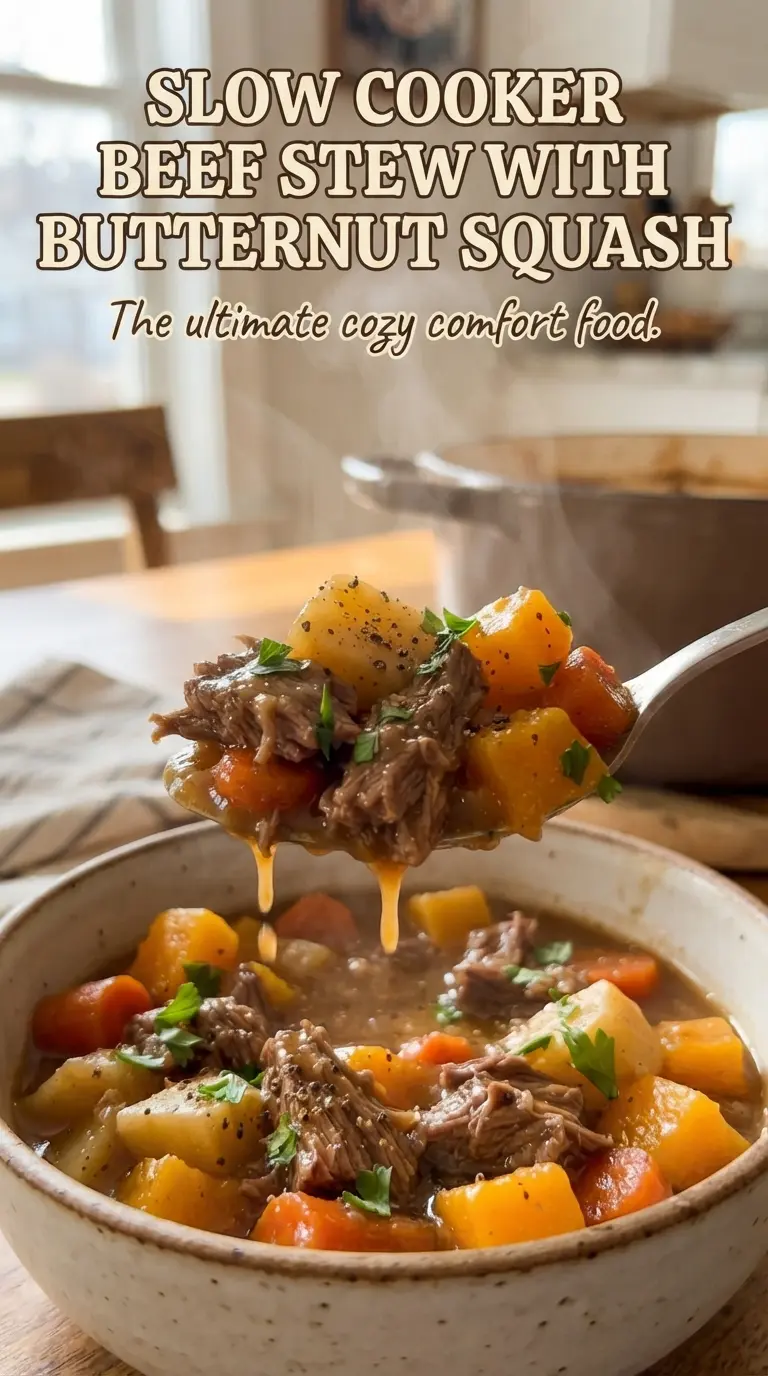
- Beef chuck — This cut has enough fat and connective tissue to become silky after a long cook. Leaner beef dries out before it gets tender, so chuck is the right place to spend your money.
- Flour — A light coating helps the beef brown and gives the broth a gentle body. If you need gluten-free, use a gluten-free all-purpose blend with a similar texture.
- Tomato paste — Cooking it briefly with the onions and garlic deepens the flavor and takes away the raw edge. That small step makes the broth taste fuller and more rounded.
- Dry red wine — Wine adds acidity and a little complexity, but it should cook for a minute or two so the harsh alcohol note burns off. If you don’t use wine, extra broth works fine, though the stew will taste a little softer.
- Butternut squash — Add it later so the cubes hold their shape. It brings sweetness that plays against the savory broth, and it turns mealy if it cooks for the full eight hours.
- Kale — Stirring it in at the end keeps it green and slightly chewy. If you add it too early, it fades into the stew and loses its fresh bite.
Building the Stew in the Right Order
Browning the Beef First
Season the beef with flour, salt, and pepper, then brown it in hot oil in batches. The pan should sizzle the moment the meat goes in, and the pieces should release easily once a crust forms. If you crowd the pan, the meat steams and stays pale, which means weaker flavor in the final stew.
Cooking the Aromatics Until the Pan Smells Deeply Savory
After the beef comes out, cook the onion, garlic, and tomato paste for about three minutes. The onion should soften, the garlic should smell sweet rather than sharp, and the tomato paste should darken a shade. When you add the wine, scrape the browned bits off the bottom of the pan; that is where the best flavor lives.
Adding the Vegetables in Stages
Pour the broth mixture over the beef, then add the carrots and let everything cook low and slow for five hours before the squash goes in. That staggered timing keeps the carrots from turning chalky and gives the beef a head start before the squash softens. Once the squash is added, it needs only enough time to become tender at the center without collapsing into the broth.
Finishing with Kale and Final Seasoning
Stir in the kale during the last 15 minutes so it wilts but still holds some body. Taste before serving, because slow cooking mutes salt and pepper more than people expect. If the broth tastes flat, it usually needs a bit more salt, not more time.
How to Adapt This Stew Without Losing the Good Part
Gluten-Free Version
Use a gluten-free all-purpose flour blend to coat the beef, or skip the flour and thicken the finished stew with a small cornstarch slurry if needed. The flavor stays the same, but the broth will be a little looser until the end.
Dairy-Free and Naturally Hearty
This stew is already dairy-free as written, which is part of why it works so well for a crowd. The richness comes from the browned beef, tomato paste, and slow reduction, not from cream or butter.
No Wine, No Problem
Use extra beef broth in place of the wine. You lose a little acidity and depth, so a small splash of vinegar at the end can help wake the broth back up if it tastes heavy.
Storage and Reheating
- Refrigerator: Store in an airtight container for up to 4 days. The broth thickens as it chills, which is normal.
- Freezer: It freezes well for up to 3 months, though the squash softens a bit after thawing. Cool it completely before freezing in portions.
- Reheating: Warm gently on the stove over medium-low or in the microwave at reduced power. A hard boil can break down the squash and make the beef stringy.
Answers to the Questions Worth Asking
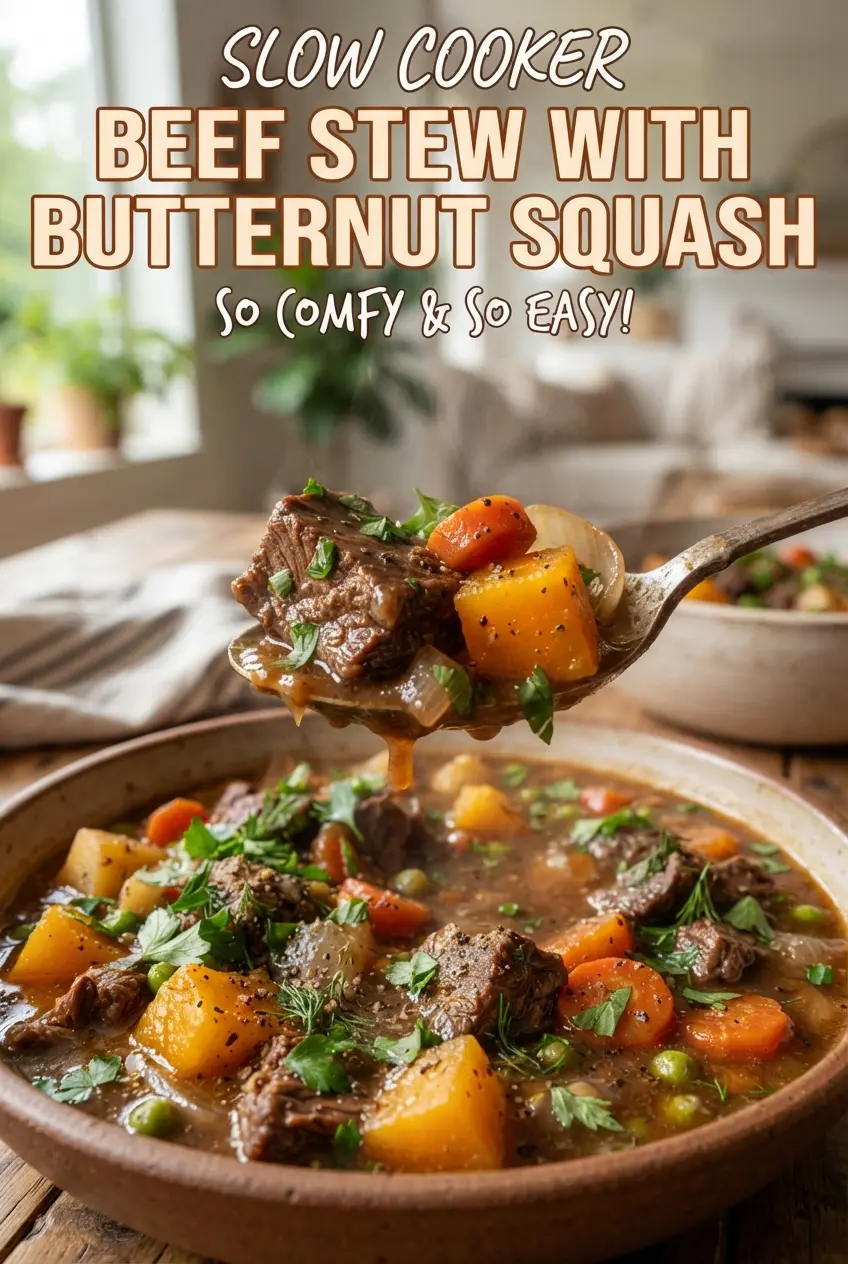
Slow Cooker Beef Stew with Butternut Squash
Ingredients
Equipment
Method
- Toss the beef with flour, salt, and black pepper. Heat the olive oil in a hot cast iron skillet until shimmering, then brown the beef in batches and transfer it to the slow cooker.
- Add the diced onion, minced garlic, and tomato paste to the skillet and cook for 3 minutes until fragrant and glossy. Deglaze with the red wine or extra broth, scraping up browned bits, then pour everything into the slow cooker.
- Add the beef broth, Worcestershire sauce, dried thyme, dried sage, and sliced carrots to the slow cooker. Cover and cook on LOW for 5 hours.
- Add the butternut squash cubes to the slow cooker, stir to distribute, and keep it covered. Cook on LOW for 2-3 hours more until the beef and squash are tender.
- Stir in the chopped kale and cook uncovered or covered on LOW for the last 15 minutes until bright green. Taste and season if needed, then serve.