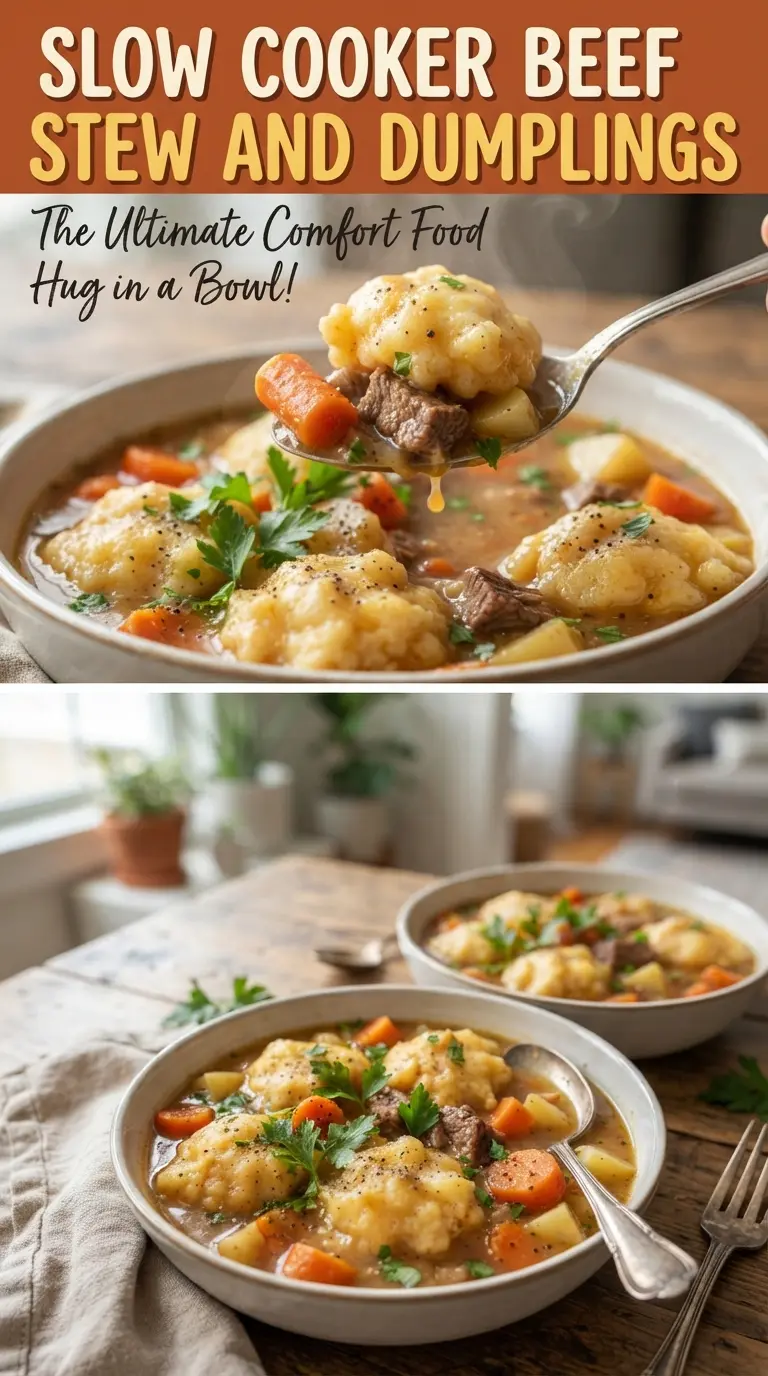
Slow cooker beef stew and dumplings gives you the kind of dinner that settles in thick and savory, with beef that turns spoon-tender and dumplings that steam up fluffy right on top of the stew. The broth doesn’t stay thin and brothy here; it cooks down into something rich enough to coat the back of a spoon, with the dumplings soaking up just enough sauce to stay light instead of doughy.
The trick is starting with a quick flour dredge and browning the beef first. That extra step gives the stew a deeper flavor and helps the broth thicken naturally as it cooks. Tomato paste adds a quiet richness, Worcestershire sharpens the beefy base, and the potatoes hold their shape instead of fading into the background. By the time the dumpling dough goes on top, the stew underneath should already be fully developed, because that final covered steam finishes the whole pot without drying anything out.
Below, I’ll walk through the one part people usually get wrong with slow cooker dumplings, plus the ingredient swaps that still keep this dinner hearty and dependable. If you’ve ever wanted a beef stew that eats like a full meal in one bowl, this is the version to keep.
The stew got nice and thick, and the dumplings cooked up fluffy instead of gummy. I was nervous about leaving the lid on, but they came out perfect after 35 minutes.
Save this slow cooker beef stew and dumplings for a hands-off dinner with tender beef and fluffy herb dumplings.
The Part That Keeps the Dumplings Light Instead of Dense
Slow cooker dumplings fail most often for two reasons: the stew is too cool when they go in, or the lid gets lifted before they set. The dough needs steady steam and a hot surface underneath it, which is why the stew should already be bubbling at the edges before you drop the spoonfuls on top. If the base is barely warm, the dumplings sit there and absorb liquid without ever cooking into that tender, biscuit-like texture.
Browned beef matters here too. It gives the stew a deeper, roasted flavor that plain slow-cooked meat never quite develops, and the flour clinging to the cubes helps the broth thicken as it cooks. The result is a stew that can support the dumplings instead of turning soupy and dragging them down.
- Beef chuck — This cut breaks down into tender pieces during the long cook, which is exactly what you want. Leaner beef gets dry and stringy before the stew ever tastes rich.
- Tomato paste — A small amount adds depth and a darker, fuller base. Cook it with the onion and garlic for a minute so it loses its raw edge.
- Bisquick — It makes the dumplings reliable and soft without needing extra handling. If you swap it out, you’ll need a biscuit-style dough that can hold together in steam.
- Fresh parsley — Stirred into the dumplings, it cuts through the richness and keeps the topping from tasting flat. Dried parsley won’t give the same fresh finish, but it will work in a pinch.
What Each Ingredient Is Actually Doing in This Recipe
- Primary ingredient (the star) — Quality matters most. Choose the best you can find.
- Cooking medium (oil, butter, or broth) — This carries flavors and prevents dryness.
- Seasonings (salt, pepper, spices, herbs) — Layer flavors so nothing overpowers. Build depth gradually.
- Aromatics (garlic, onion, herbs) — Cook with fat to bloom flavors. Become the foundation.
- Supporting ingredients — Complement the main ingredient without overpowering it.
- Sauce or liquid (if applicable) — Brings flavors together. Balance richness with acid.
- Acid (lemon, vinegar, wine, or other) — Brightens and prevents flat-tasting results.
- Final finish (garnish, glaze, or sauce) — Prevents one-dimensional taste and adds visual appeal.
Building the Stew Before the Dumplings Ever Go On
Coating and Browning the Beef
Toss the beef with flour, salt, and pepper until every piece looks lightly dusted, then brown it in hot oil in batches. You want a deep brown crust on the outside, not gray meat steaming in the pan. If the pan looks crowded, the beef will release liquid and boil instead of sear, and that lost browning means less flavor in the finished stew.
Letting the Slow Cooker Do the Long Work
Add the browned beef to the slow cooker with the onion, garlic, tomato paste, broth, Worcestershire, carrots, celery, potatoes, and thyme. Cook it on LOW for 8 hours until the beef falls apart easily with a spoon. The vegetables should be tender but still hold shape; if the potatoes are collapsing before the beef is tender, your heat is running too high and the stew will go soft instead of hearty.
Dropping on the Dumplings and Leaving Them Alone
Switch the slow cooker to HIGH, stir the Bisquick, milk, and parsley into a soft dough, then drop tablespoonfuls over the hot stew. Cover and cook for 30 to 35 minutes without lifting the lid. If you peek, you lose the steam that cooks the dumplings through, and the tops stay wet and underdone while the centers turn heavy.
Make It Gluten-Free Without Losing the Hearty Texture
Use a gluten-free baking mix in place of Bisquick and swap the flour on the beef for a gluten-free all-purpose blend. The stew will still thicken, though the dumplings may be a little softer and less fluffy than the original. Keep the lid closed for the full cooking time so the topping sets through before the steam escapes.
Use Red Wine for a Deeper, Richer Stew
Replace 1 cup of the beef broth with dry red wine and add it after the tomato paste so it has a chance to cook down before the slow simmer. That gives the broth a deeper savory edge and a slightly more layered finish. Don’t use sweet wine here; it throws the stew off balance fast.
Make It Dairy-Free
The stew itself is already dairy-free, so the main change is in the dumplings. Use an unsweetened non-dairy milk with enough body to make a soft dough, such as oat milk or plain almond milk. The dumplings may be a touch less rich, but they’ll still steam up tender if the dough stays thick enough to hold its shape.
Storage and Reheating
- Refrigerator: Store leftovers up to 4 days. The dumplings will absorb more broth as they sit, so the stew thickens a lot overnight.
- Freezer: The stew freezes well without the dumplings for up to 3 months. Freeze the stew in portions and make fresh dumplings when you reheat it.
- Reheating: Warm the stew gently on the stovetop or in the microwave with a splash of broth to loosen it. If you reheat too aggressively, the beef can tighten up and the dumplings turn gummy.
Answers to the Questions Worth Asking
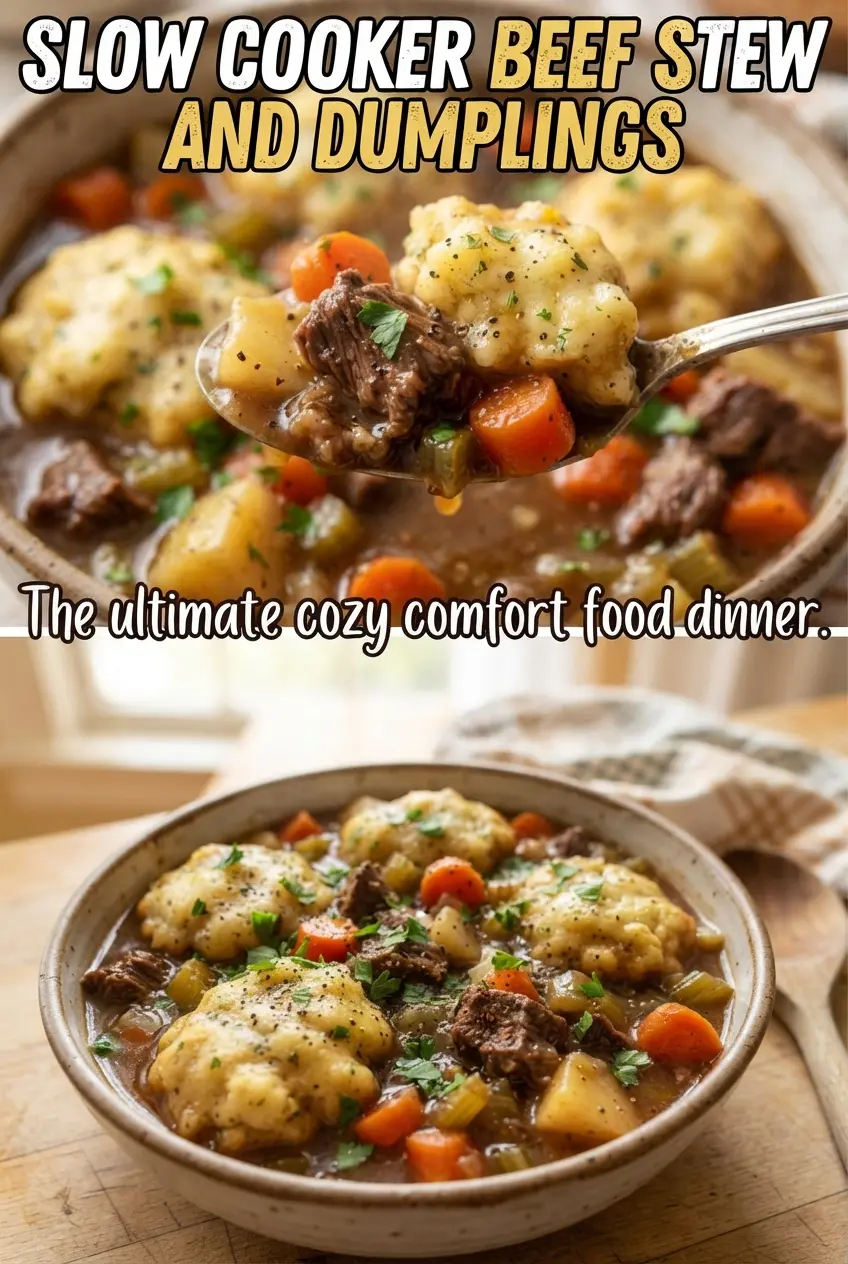
Slow Cooker Beef Stew and Dumplings
Ingredients
Equipment
Method
- Toss the beef with flour, salt, and black pepper. Heat the olive oil in a Dutch oven over high heat until shimmering, then brown the beef in batches and transfer to the slow cooker.
- Add the onion, garlic, tomato paste, beef broth, Worcestershire sauce, carrots, celery, baby potatoes, and dried thyme to the slow cooker. Stir to combine, scraping up any browned bits from the bottom of the Dutch oven into the cooker if possible.
- Cover and cook on LOW for 8 hours, until the beef is tender. Visual cue: the stew should look thick and the meat should pull apart easily.
- Turn the slow cooker to HIGH and stir Bisquick, milk, and fresh parsley into a soft dough. Visual cue: the dough should be thick but spoonable, with no dry flour pockets.
- Drop tablespoons of the dough over the hot stew, spacing them apart. Cover and cook on HIGH for 30-35 minutes without lifting the lid, until the dumplings are cooked through.