Slow cooker beef ragu is the kind of dinner that quietly does its best work while you go about the day, then shows up at supper with deep tomato flavor, fork-tender beef, and a sauce that clings to pasta instead of sliding off it. The long cook gives the chuck roast time to loosen into shreds, while the tomatoes, wine, and aromatics melt together into something that tastes like it simmered on the stove all afternoon.
What makes this version worth keeping is the balance. The red wine cuts through the richness, the tomato paste adds backbone, and the carrots and onion bring enough natural sweetness to round out the sharp edges of the tomatoes. I like using crushed San Marzano tomatoes here because they cook down into a thicker, more cohesive sauce without needing extra fuss at the end.
Below, I’ve included the small details that keep the ragu from tasting flat or turning watery, plus a few smart swaps for different pasta shapes and make-ahead planning. If you’ve ever had a beef sauce come out greasy, thin, or oddly one-note, this is the version that fixes those problems.
The beef shredded into perfect pieces and the sauce was thick enough to coat the pappardelle without pooling at the bottom of the bowl. I made it on a Sunday and the flavor was even better the next night.
Slow Cooker Beef Ragu turns out rich, silky, and spoonable — save it for the nights when you want a pasta sauce that tastes like it cooked all day because it did.
The Step That Keeps the Sauce from Tasting Flat
The biggest mistake with slow cooker ragu is treating it like a dump-and-go stew and skipping the seasoning balance. Beef chuck needs enough salt up front to taste like something after eight hours, and the wine needs time to mellow under the tomatoes instead of reading sharp or boozy. The tomato paste also matters more than it looks like it should; it gives the sauce that slow-cooked depth you usually only get after a long simmer on the stove.
Another thing worth knowing: the sauce should be thick enough to coat a spoon before the beef goes back in. If it looks thin when you shred the meat, keep the lid off and let it sit on low for a bit longer. That extra evaporation is what keeps the final sauce from puddling under the pasta.
What Each Ingredient Is Actually Doing in This Ragu
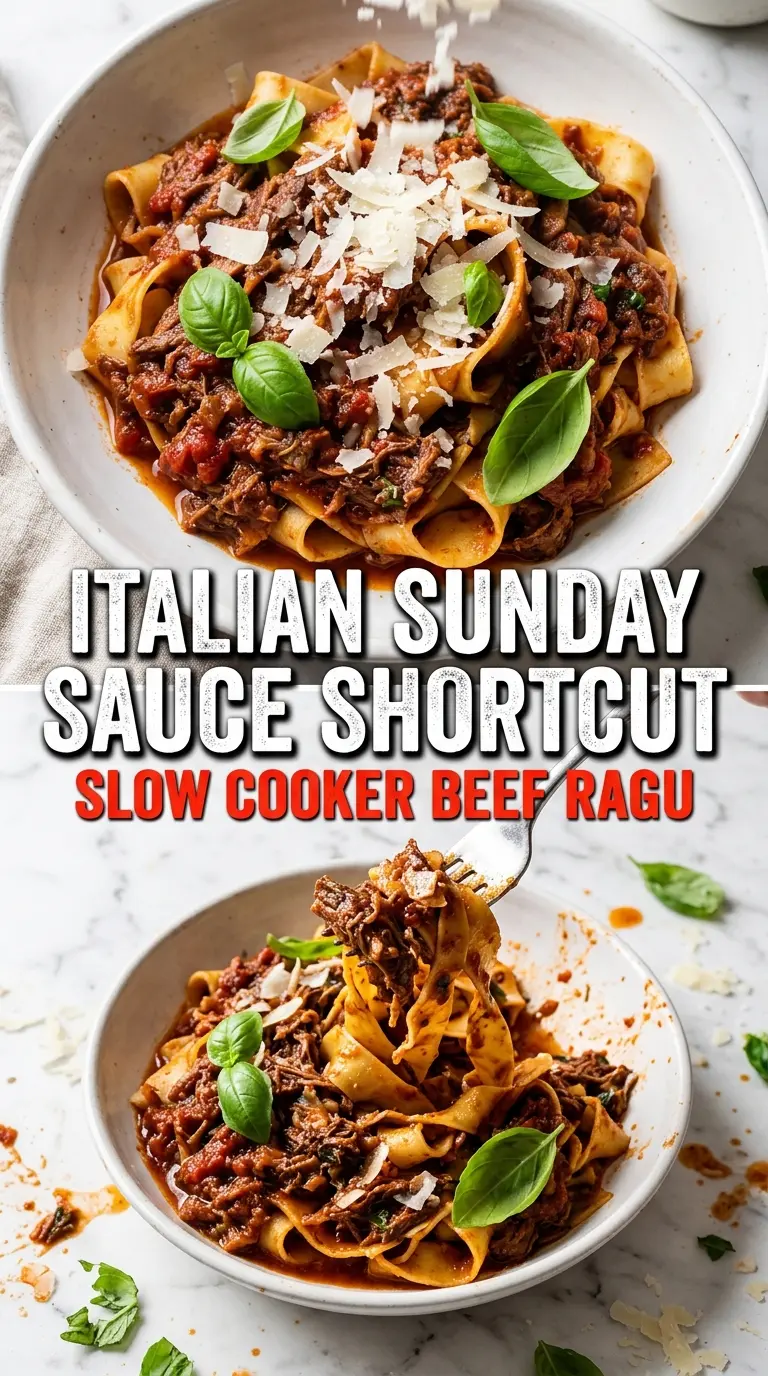
- Beef chuck roast — This is the cut that gives you the shreds and body you want. Chuck has enough marbling to stay juicy through a long cook, and leaner beef will turn dry before the sauce gets the same depth.
- Crushed San Marzano tomatoes — These cook down into a smoother, sweeter sauce than watery generic tomatoes. If you use another brand, choose the best canned tomatoes you can find because the sauce has nowhere to hide.
- Dry red wine — Chianti or Cabernet Sauvignon adds acidity and a darker, more rounded flavor. Don’t use a sweet wine here; it throws off the whole balance.
- Tomato paste — This is concentrated backbone. Stir it in with the sauce so it disperses evenly instead of clumping into little bitter streaks.
- Carrot, onion, and celery — They melt into the sauce and soften the tomato edge. Dice them small so they break down fully during the long cook.
- Bay leaves and dried herbs — These give the ragu its Italian-leaning finish without making it taste herb-heavy. Pull the bay leaves before serving; they’ve done their job by then.
Building the Ragu So It Finishes Thick and Shreddable
Season the beef before it goes in
Salt and pepper the chuck roast generously before it touches the slow cooker. That first layer of seasoning has to reach the meat itself, not just the sauce around it. If you skip this, the finished ragu can taste like tender beef floating in tomato sauce instead of beef that has actually absorbed flavor.
Mix the sauce ingredients before pouring
Whisk the tomatoes, wine, tomato paste, garlic, onion, celery, carrots, herbs, sugar, and a bit of salt together before you add them to the pot. That keeps the tomato paste from sticking in one dense spot and helps the aromatics start distributing right away. The sugar here isn’t for sweetness; it softens the tomatoes so the sauce lands rounded instead of harsh.
Cook low and leave the lid alone
Set the slow cooker on low for 8 to 10 hours and don’t keep lifting the lid. Every peek drops the temperature and stretches out the cook. The beef is ready when a fork slides in with no resistance and the roast falls apart when you tug at it; if it still holds together in big slices, it needs more time.
Shred, return, and let the meat settle back in
Take the beef out, shred it into large pieces, and discard the bay leaves before you stir the meat back into the sauce. Keeping the shreds on the larger side gives the ragu a better texture and makes it cling to pappardelle. If the sauce looks a little loose after shredding, leave the lid off for 10 to 15 minutes so it tightens up naturally.
How to Adapt This for Different Pasta Nights
Pappardelle for the classic restaurant-style bowl
Wide pappardelle is the best match if you want the sauce to wrap around every strand of pasta. The broad noodles hold the shredded beef and catch the thick tomato base, which is why this pairing feels so full and luxurious.
Rigatoni when you want something sturdier
Rigatoni catches little bits of shredded beef inside the tubes and stands up well to a heavier sauce. It won’t feel quite as silky as pappardelle, but it gives you a heartier, more fork-friendly bowl.
Dairy-free serving with no loss in the sauce
Skip the Parmesan garnish and finish with basil plus a drizzle of good olive oil instead. The ragu itself is already dairy-free, so you’re only changing the final garnish, not the structure of the dish.
Make it ahead for better flavor the next day
This sauce gets even better after a night in the fridge because the tomato, wine, and beef settle into each other. Cool it fully before storing, then reheat it gently so the meat stays tender and the sauce doesn’t splatter or scorch.
Storage and Reheating
- Refrigerator: Store the ragu for up to 4 days. The sauce thickens as it sits, which is exactly what you want.
- Freezer: It freezes well for up to 3 months. Portion it into containers with a little headspace so it can expand, then thaw overnight in the fridge.
- Reheating: Warm it gently on the stove over low heat with a splash of water if needed. High heat can dry out the beef and make the sauce taste overcooked before it’s fully heated through.
Questions I Get Asked About This Recipe
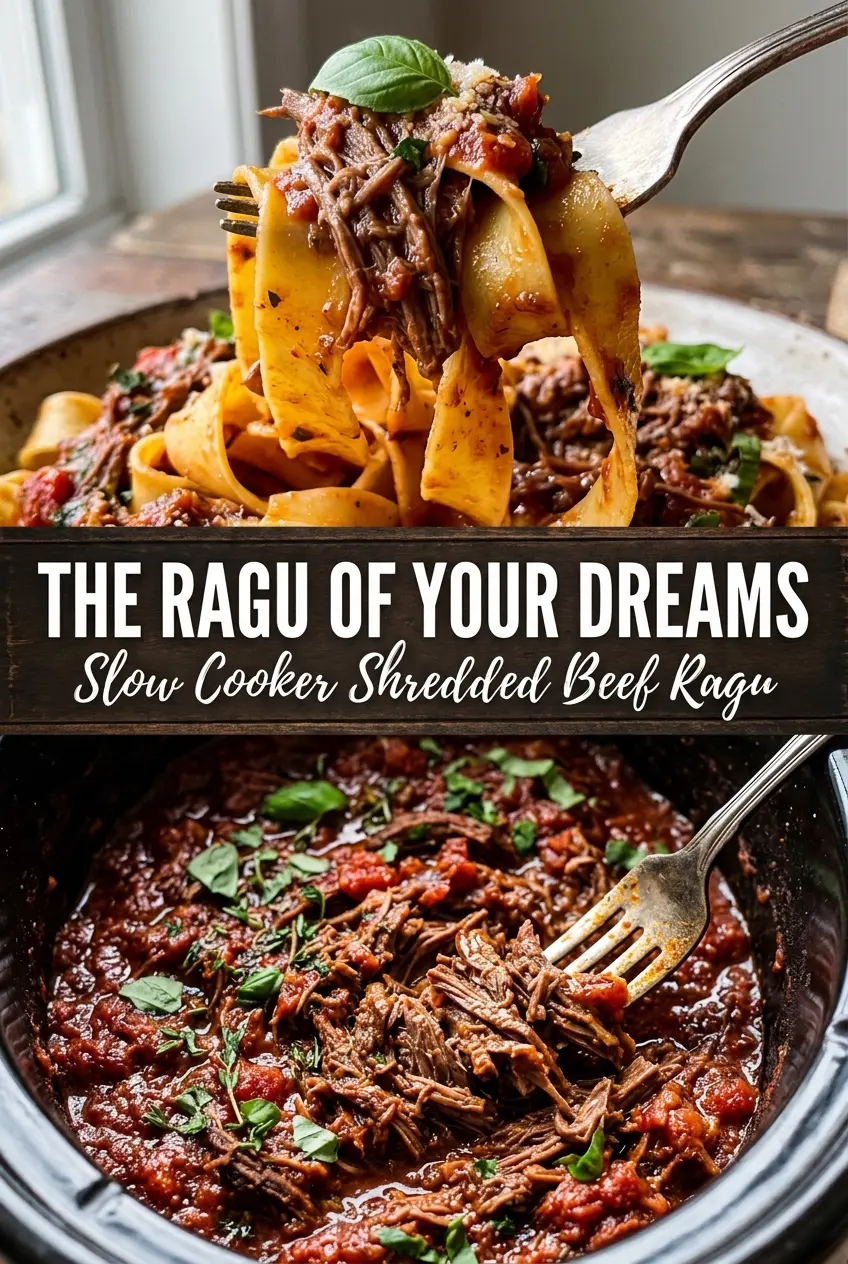
Slow Cooker Beef Ragu
Ingredients
Equipment
Method
- Season the beef chuck roast generously with salt and pepper, then place it in the slow cooker.
- Whisk together the crushed San Marzano tomatoes, red wine, tomato paste, garlic, onion, celery, carrots, dried basil, dried oregano, dried thyme, sugar, salt, black pepper, and bay leaves until evenly combined.
- Pour the sauce mixture over the beef in the slow cooker, making sure the meat is mostly covered.
- Cook on low for 8–10 hours, until the beef is completely fall-apart tender.
- Remove the beef and shred into large pieces with two forks, then discard the bay leaves.
- Return the shredded beef to the sauce and stir to combine, so the ragu turns thick and cohesive.
- Serve the beef ragu over pappardelle or rigatoni and garnish with fresh basil and freshly grated Parmesan.