Sliced skirt steak with chimichurri is one of those meals that disappears fast because every part of it pulls its weight. The steak gets a quick, punchy marinade that seasons the meat all the way through, then the hot grill gives it a crust that stays juicy instead of turning leathery. The chimichurri brings the lift: sharp, herby, garlicky, and just fiery enough to cut through the richness.
Skirt steak needs a short, focused approach. It takes on flavor quickly, but it also overcooks quickly, so the marinade stays simple and the grill stays hot. Chimichurri works best when the herbs are chopped fine enough to spoon cleanly but still look fresh and green, and the vinegar-to-oil balance is what keeps it from tasting flat. Slice the steak thinly against the grain and the texture changes completely.
Below, I’ve included the small details that matter most here: how to avoid a stringy steak, how to keep the chimichurri bright, and what to change if you’re cooking indoors instead of on the grill.
The steak picked up flavor in just a couple hours, and slicing it thin against the grain made it tender instead of chewy. The chimichurri was the part we kept spooning on after dinner.
Save this skirt steak marinade with chimichurri for the nights when you want grilled steak with bold, fresh sauce and almost no cleanup.
The Part Most People Miss With Skirt Steak Marinade
Skirt steak doesn’t need a long marinade to taste seasoned, and that’s where people usually go wrong. Leave it in too long and the lime juice starts working against the texture, softening the outside before the grill has a chance to build a proper crust. Two to four hours is the sweet spot here: long enough for the garlic, cumin, and citrus to get into the meat, short enough to keep the steak meaty and supple.
The other mistake is cooking it like a thicker cut. Skirt steak has a loose grain and a thin shape, so high heat and a short cook are what keep it tender. Pull it off the grill when it’s still a little springy in the center, then let the rest do its job. The sliced pieces will finish carrying heat across the board.
- Olive oil — This carries the lime, garlic, and cumin across the meat and helps the steak brown instead of drying out. Use a decent extra-virgin oil in the chimichurri, but the marinade doesn’t need anything fancy.
- Lime juice — It brightens the steak and gives the marinade enough acidity to season quickly. Don’t push the time much past 4 hours, or the surface can start to get mushy.
- Cumin — This is the quiet ingredient that makes the marinade taste deeper and more intentional. There isn’t a perfect substitute for its earthy note, but a little smoked paprika can give a similar warmth.
- Parsley and cilantro — These make the chimichurri taste fresh instead of oily. Flat-leaf parsley is ideal; cilantro can be adjusted up or down depending on how much you like its clean, green bite.
Building the Marinade and Chimichurri Without Losing the Freshness
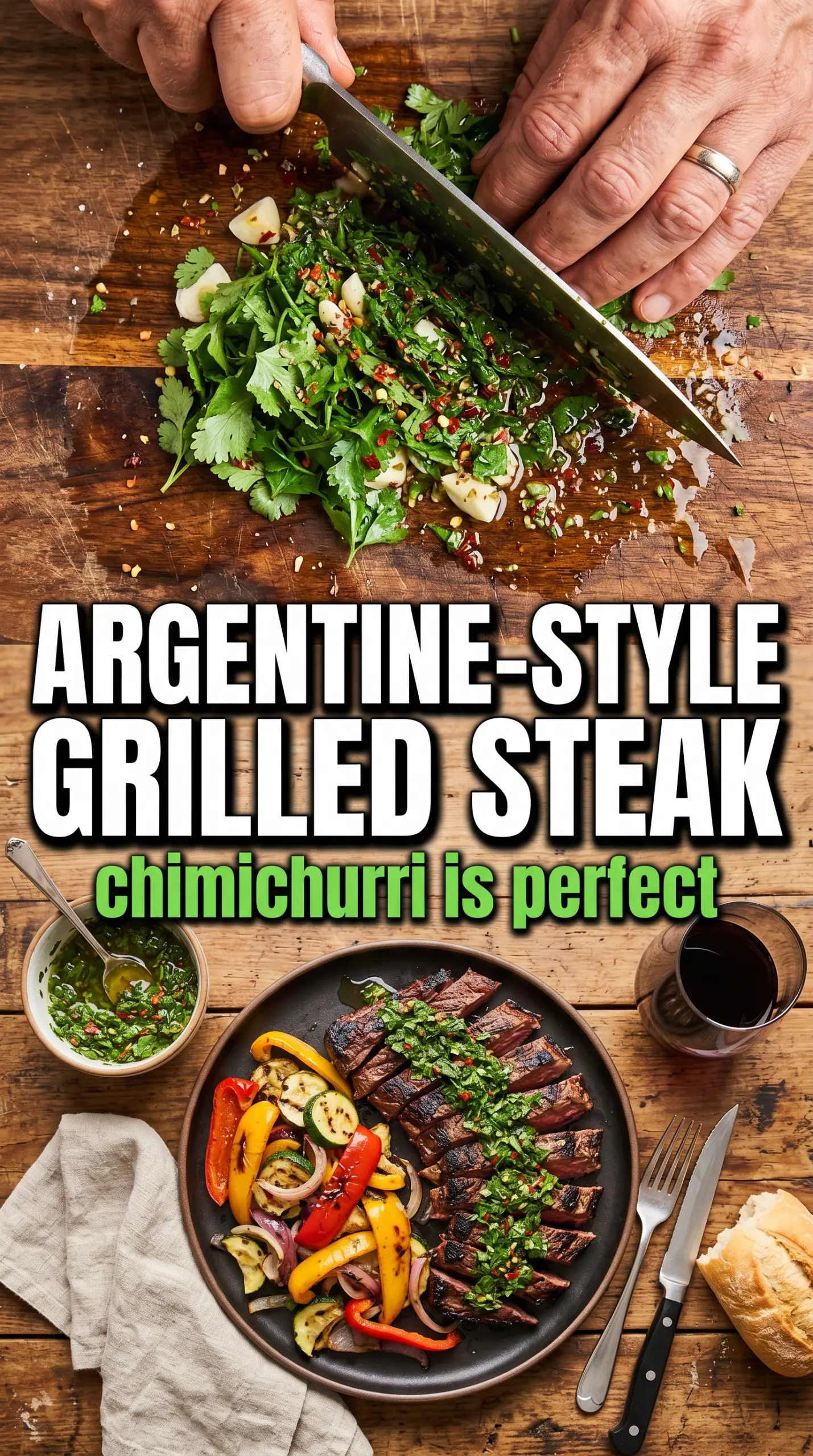
- Skirt steak — Look for a piece with even thickness and visible long grain. If it’s very wide, cut it into manageable sections before grilling so it cooks evenly and slices easier later.
- Garlic — Fresh minced garlic gives both the marinade and chimichurri their bite. Jarred garlic tastes dull here and won’t give the same punch, especially in the sauce.
- Red wine vinegar — This keeps the chimichurri sharp and classic. If you swap in lemon juice, the sauce gets brighter and a little softer, but it loses some of that Argentine edge.
- Red pepper flakes — They should add heat, not take over. Start with the listed amount, then add a pinch more after the sauce rests if you want more fire.
Grilling the Steak, Slicing It Right, and Finishing With the Sauce
Mixing the Marinade
Stir the olive oil, lime juice, garlic, cumin, salt, and pepper together, then coat the steak thoroughly. A shallow dish works better than a bowl because the meat sits in contact with the marinade instead of floating in it. Turn the steak once or twice while it rests so both sides pick up the seasoning evenly. If your steak looks pale and wet when it comes out, that’s fine; the grill will take care of the surface later.
Making the Chimichurri
Combine the parsley, cilantro, garlic, red wine vinegar, olive oil, red pepper flakes, and salt, then let it sit while the steak marinates. The herbs should stay bright, not turn into a paste, so chop them fine enough to spoon but not so fine they lose texture. If the sauce tastes too sharp at first, leave it alone for 10 to 15 minutes; the flavors settle and round out on their own.
Grilling Over High Heat
Heat the grill until it’s hot enough that the steak sizzles the second it hits the grates. Three to four minutes per side usually lands you in medium-rare territory, depending on thickness, and the goal is a deep sear before the center overcooks. If the steak sticks, it isn’t ready to turn yet. Let it release naturally, then flip it once.
Resting and Slicing Against the Grain
Give the steak a short rest before slicing so the juices settle instead of running all over the board. Then look for the direction of the grain and cut thin slices across it, not parallel to it. That’s the difference between tender steak and stringy steak. Spoon the chimichurri over the top just before serving so the herbs stay vivid and the sauce tastes fresh.
How to Adapt This When You Want a Different Finish
Dairy-Free and Naturally Gluten-Free
This recipe already fits both of those needs as written, which is part of why it works so well for a crowd. Just pair it with sides that stay simple, like roasted potatoes, grilled vegetables, or rice, so the chimichurri keeps the lead.
No Grill, No Problem
Use a cast-iron skillet or grill pan over high heat and cook the steak in the same short window. You want a hard sear and a little smoke, so don’t crowd the pan. If your kitchen gets hot, that’s normal; the crust is worth it.
Milder Chimichurri
For a softer sauce, cut the red pepper flakes in half and add a touch more olive oil. You’ll still get the sharp herb-and-vinegar profile, but the heat stays in the background instead of building with every bite.
Storage and Reheating
- Refrigerator: Store the sliced steak and chimichurri separately for up to 3 days. The sauce may darken a little, but it stays flavorful.
- Freezer: The cooked steak freezes well for up to 2 months, wrapped tightly. Chimichurri doesn’t freeze well because the herbs lose their fresh texture.
- Reheating: Warm the steak gently in a skillet over low heat or briefly in a covered pan. High heat dries it out fast, especially once it’s sliced, so keep the reheating short.
Questions I Get Asked About This Recipe
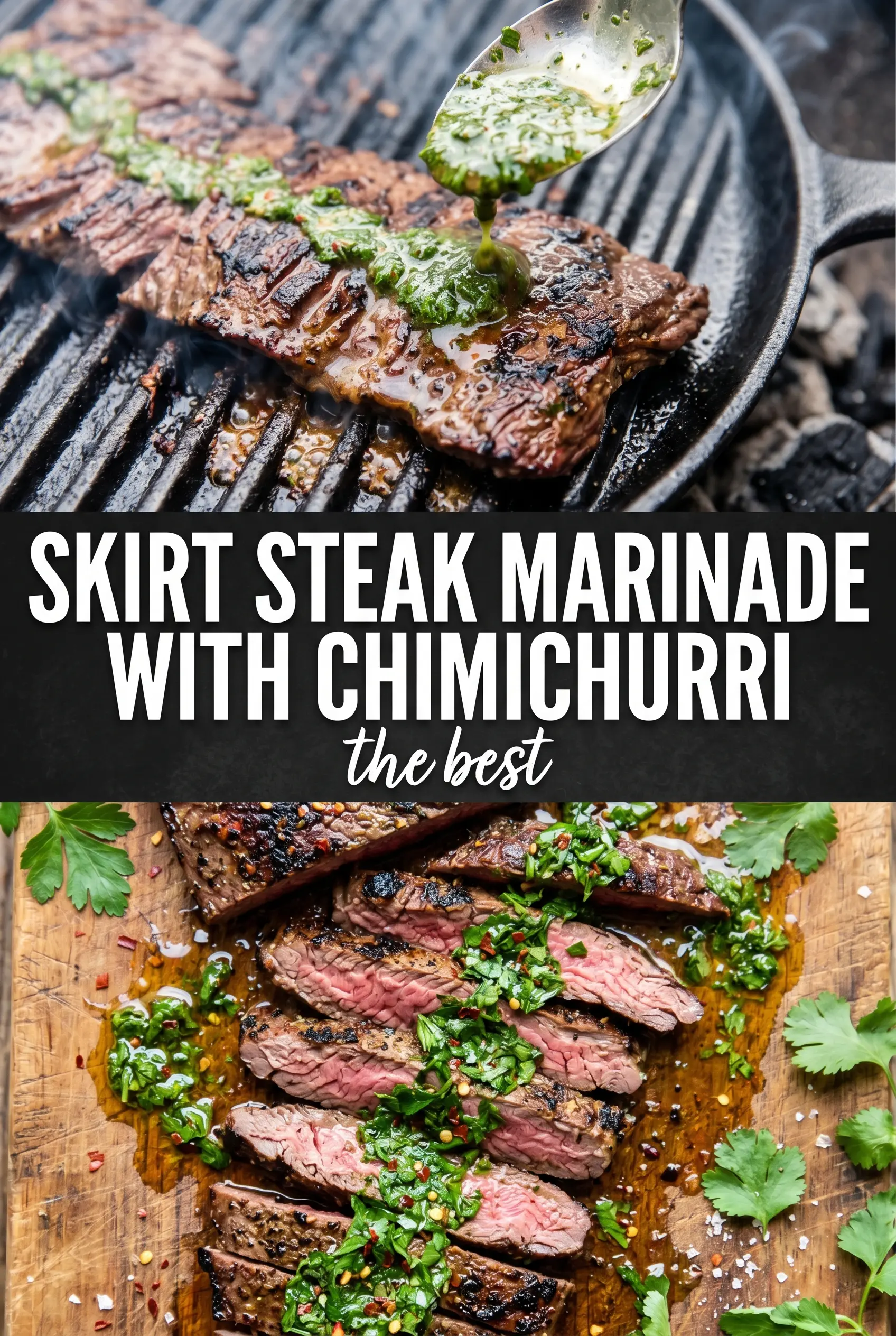
Skirt Steak Marinade with Chimichurri
Ingredients
Equipment
Method
- In a bowl, combine olive oil, lime juice, garlic, cumin, salt, and pepper until the mixture looks uniform.
- Add skirt steak to the marinade and turn to coat well, then refrigerate for 2-4 hours.
- In a bowl, mix fresh parsley, fresh cilantro, garlic, red wine vinegar, olive oil, red pepper flakes, and salt until evenly combined.
- Set chimichurri aside at room temperature while the grill preheats.
- Preheat the grill to high heat until hot.
- Place the marinated skirt steak on the grill and cook 3-4 minutes per side for medium-rare.
- Transfer steak to a plate and let it rest for 5 minutes so juices redistribute.
- Slice the steak thinly against the grain and arrange on a serving platter.
- Drizzle a generous portion of chimichurri over the sliced steak and serve immediately.