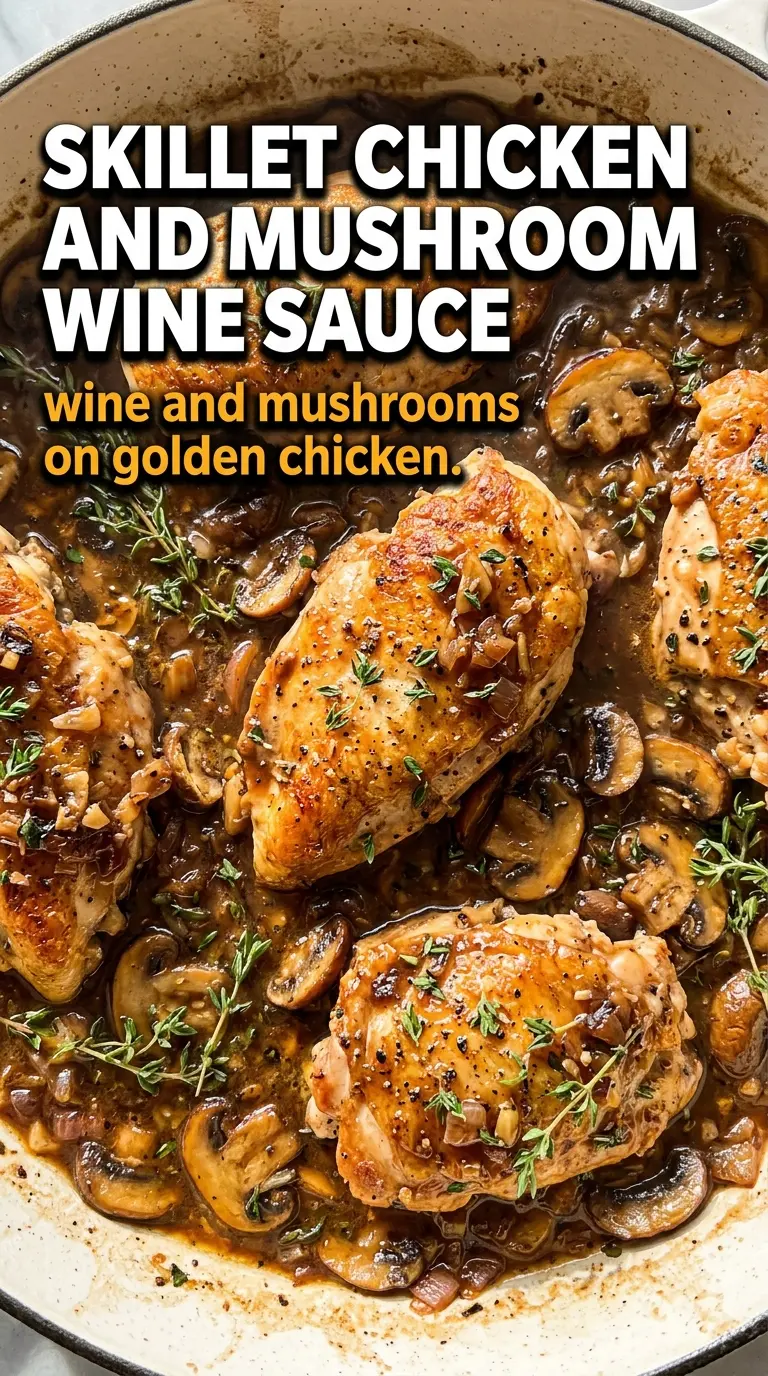
Golden chicken breasts tucked into a dark, glossy mushroom wine sauce never stay on the table long. The chicken stays juicy because it gets seared first and finishes in the sauce instead of spending the whole cook time in liquid, and the mushrooms bring that deep, savory edge that makes the pan taste like it cooked for hours instead of 25 minutes. The sauce clings to the back of a spoon without turning heavy, which is the sweet spot for a skillet dinner like this.
What makes this version work is the order. The chicken browns first, then the mushrooms cook in the same pan until they actually take on color, and only then do the wine and broth go in to pull up every browned bit from the bottom. That layer of fond is where the best flavor lives, and if you rush past it you end up with a sauce that tastes flat.
Below, I’ll walk through the one place people usually lose this dish — the sauce texture — plus the simple swaps that still keep it tasting balanced and rich.
The sauce turned out silky and reduced exactly like you said, and the mushrooms picked up so much flavor from the wine. I served it with mashed potatoes and the pan was scraped clean.
Like this skillet chicken and mushroom wine sauce? Save it for the nights when you want a glossy pan sauce, tender chicken, and one skillet to clean.
The Difference Between a Glossy Pan Sauce and a Broken One
The biggest mistake with this kind of chicken is cranking the heat and dumping in the cream too fast. That’s how the sauce turns greasy or grainy instead of velvety. The wine needs a few minutes to simmer down first, because you want the sharp alcohol note gone before the cream goes in.
The mushrooms matter here too. If they’re crowded, they steam and stay pale. Give them room in the pan and leave them alone long enough to brown on one side before stirring. That caramelization is what makes the sauce taste deep instead of one-note.
- Chicken breasts — Pounding them to an even thickness helps them cook at the same rate, which keeps the thin end from drying out while the thicker side finishes. If your breasts are large, split them horizontally for faster, more even cooking.
- Dry red wine — This is where the sauce gets its backbone. A cabernet, pinot noir, or merlot all work well; pick something you’d actually drink. If you need to skip wine, use extra broth plus a teaspoon of lemon juice, but the sauce will be milder and less layered.
- Cremini mushrooms — They have more flavor than standard white mushrooms and hold their shape better in the pan. Slice them thick enough that they brown instead of dissolving into the sauce.
- Dijon mustard — It doesn’t make the sauce taste like mustard. It sharpens the cream and helps everything taste brighter and more balanced.
What Each Ingredient Is Actually Doing in the Skillet
The butter and olive oil work together so the chicken can sear without burning the milk solids in the butter. You get better browning, plus the butter adds flavor where oil alone would taste a little bare. Don’t swap in all butter unless you plan to watch the pan closely.
Garlic goes in after the mushrooms have browned because it burns fast and turns bitter if it hits the hot pan too soon. Thyme fits this sauce naturally, especially with wine and mushrooms, and fresh thyme leaves give the best finish. Dried thyme works in the seasoning on the chicken, but fresh thyme at the end keeps the sauce tasting alive instead of dusty.
Getting the Chicken Sear and the Sauce Reduction in Sync
Season and Sear the Chicken First
Season the chicken generously on both sides, then sear it in a hot skillet until the outside is deep golden and the meat releases easily from the pan. If it sticks hard, it’s not ready yet. Pull it once it reaches 165°F, then set it aside while you build the sauce in the same skillet. That resting time keeps the meat juicy and gives you space to focus on the pan sauce without overcooking the chicken.
Brown the Mushrooms, Don’t Steam Them
Add the mushrooms to the pan and let them cook until they take on real color and their liquid cooks off. Stirring constantly slows that down, so let them sit undisturbed for a minute or two between stirs. Once they’re deeply golden, add the garlic and cook just long enough for it to smell fragrant. If the garlic browns, it’s gone too far and the sauce will taste harsh.
Deglaze With Wine and Build the Finish
Pour in the wine and scrape the bottom of the skillet until the browned bits lift free. That’s the flavor base of the whole dish. Let the wine simmer until it loses that sharp raw edge and the liquid drops slightly, then add the broth, cream, Dijon, and thyme. The sauce should thicken enough to coat a spoon, not turn into gravy; if it gets too tight, loosen it with a splash of broth.
How to Adapt This for a Different Pantry or a Lighter Plate
Dairy-Free Version With the Same Silky Finish
Use all olive oil instead of butter and swap the heavy cream for full-fat coconut milk or an unsweetened dairy-free cooking cream. The sauce will still be rich, but the flavor shifts slightly, so keep the Dijon and thyme in place to hold the savory balance. If you use coconut milk, don’t let it boil hard or it can separate.
White Wine Instead of Red
A dry white wine gives you a lighter, brighter sauce that leans a little more French bistro than Marsala-style comfort food. It works best with mushrooms that are well browned, since the sauce won’t have the same deep color from the wine itself. Choose a dry pinot grigio or sauvignon blanc, not anything sweet.
Gluten-Free Without Changing the Method
This recipe is naturally gluten-free as written, as long as your broth is certified gluten-free. The texture doesn’t depend on flour, so the sauce thickens through reduction and cream instead of a starch slurry. That means the pan has to simmer long enough for the liquid to concentrate.
Storage and Reheating
- Refrigerator: Store leftovers in an airtight container for up to 3 days. The sauce will thicken as it chills.
- Freezer: I don’t recommend freezing this one. Cream sauces can separate after thawing, and the chicken can get a little chalky.
- Reheating: Warm it gently in a covered skillet over low heat with a splash of broth or water. High heat is what breaks the sauce and dries out the chicken.
Questions I Get Asked About This Recipe
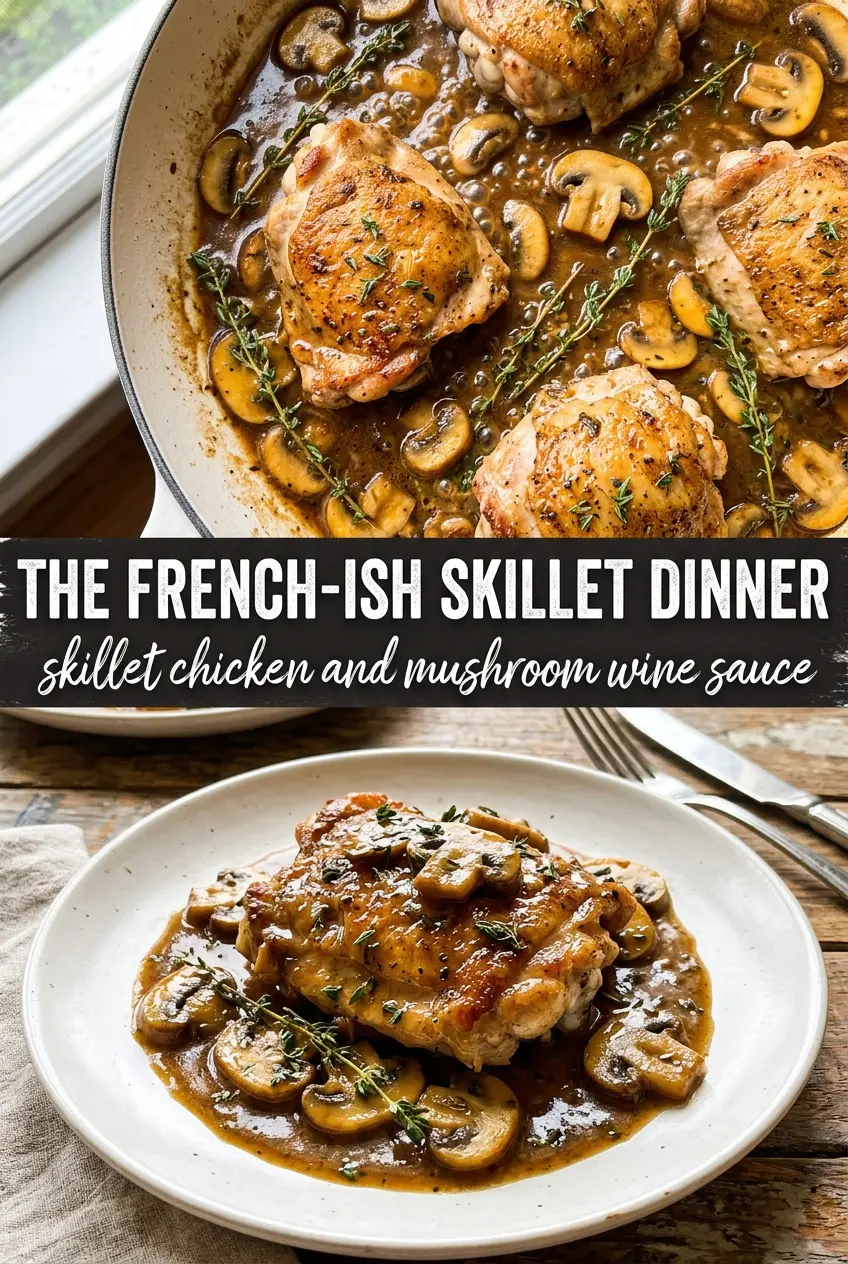
Skillet Chicken and Mushroom Wine Sauce
Ingredients
Equipment
Method
- Season the chicken breasts generously with salt, pepper, garlic powder, and dried thyme. Heat olive oil in a large skillet over medium-high heat until shimmering.
- Place chicken in the skillet and sear 5-6 minutes per side over medium-high heat until golden. Cook through to 165°F, then remove to a plate as you finish the sauce.
- Melt the butter in the same pan over medium-high heat. Add sliced cremini mushrooms and cook 5-6 minutes until deeply golden.
- Add minced garlic and cook 1 minute, stirring so it doesn’t brown. Keep the mixture sizzling for a fragrant base.
- Pour in the dry red wine and deglaze, scraping up all browned bits from the pan. Simmer 3 minutes so the liquid reduces and looks darker and glossier.
- Stir in chicken broth, heavy cream, Dijon mustard, and fresh thyme leaves. Simmer 5-6 minutes until the sauce thickens to a spoon-coating consistency.
- Return the chicken breasts to the pan and spoon sauce over each breast. Cook just until the chicken is warmed through while the sauce pools thickly around them.
- Garnish with fresh thyme sprigs and serve immediately. The herbs should be visibly flecked in the sauce for a fresh finish.