Golden pork chops, crispy-edged potatoes, and tender green beans all finish on one sheet pan, which means dinner lands hot at the table with hardly any cleanup. The potatoes get a head start so they can brown before the pork goes in, and that small bit of timing is what keeps everything from ending up pale and soft.
Bone-in chops hold onto moisture better than thin boneless cuts, and the 400°F oven gives the outside enough heat to caramelize the seasoning without drying out the center. A quick toss of the potatoes with garlic, smoked paprika, and olive oil builds a savory base, then the pork picks up rosemary and thyme for a straightforward, roasted-dinner flavor that never feels flat.
Below, I’ve included the one timing detail that keeps the chops juicy, plus a few smart swaps if you want to change up the vegetables or work with what you already have in the kitchen.
The potatoes came out crisp at the edges and the pork stayed juicy at 145 degrees. I loved that everything finished together on one pan and the lemon at the end pulled it all together.
Save this sheet pan pork chops and potatoes dinner for the nights when you want crispy potatoes, juicy chops, and one pan to wash.
The Timing Trick That Keeps the Pork Juicy and the Potatoes Crisp
The potatoes need a head start because they’re the slowest thing on the pan. If you add everything at once, the chops will be done before the potatoes have a chance to brown, and you’ll end up with soft potatoes and overcooked pork. That first 10-minute roast gives the potatoes a jump so they can finish with browned edges instead of steaming under the meat.
The other thing that matters here is spacing. When the pan is crowded, the vegetables release steam and the pork chops sit in it instead of roasting. Push the potatoes toward the edges and keep the chops in the center with a little breathing room; that’s how you get color instead of pale, wet food.
- Bone-in pork chops — These stay juicier than thin boneless chops and handle the oven heat better. If you use boneless, check them a few minutes early because they cook faster and dry out sooner.
- Baby potatoes — Halving them creates flat sides that brown against the pan. Larger potatoes work too, but cut them into even 1 to 1.5-inch pieces so they finish at the same time as the pork.
- Green beans — They soften and blister without turning mushy. If you swap in broccoli, add it with the pork; if you use asparagus, add it for the last 10 minutes so it stays crisp-tender.
- Smoked paprika, rosemary, and thyme — This mix gives the pan a roasted, savory edge without needing a marinade. If you only have regular paprika, it still works, but you’ll lose a little of that deeper, woodsy note.
What Each Ingredient Is Actually Doing in This Pork Chop Recipe
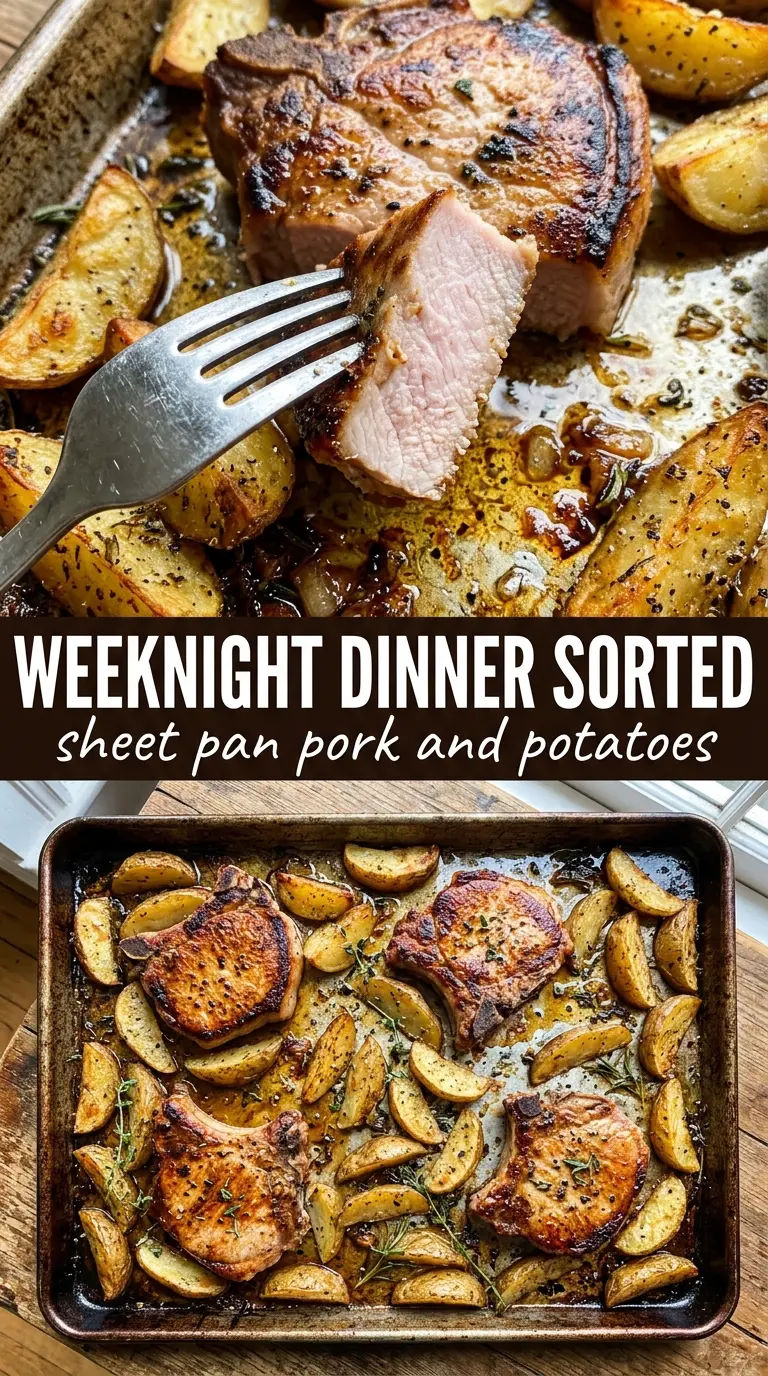
- Pork chops (pat dry for browning) — Pat completely dry so they brown properly. Room temperature cooks more evenly.
- Oil or butter (the browning medium) — High-heat oil essential for proper searing. Creates pan flavor through browning.
- Seasonings (salt, pepper, spices) — Apply generously. Lean pork needs bold seasoning to shine.
- Aromatics (garlic, onion, herbs) — Cook with oil to bloom flavors. These become the foundation.
- Sauce or liquid (cream, broth, pineapple, wine, or glaze) — This keeps lean pork from drying out. Balance richness with acid.
- Vegetables (mushrooms, peppers, or onions) — These add moisture and prevent one-dimensional taste.
- Acid (vinegar, wine, pineapple juice, or citrus) — This brightens sauce and prevents heavy pork flavor.
- Proper doneness (145°F with slight pink center) — Pork is safe at this temp and stays juicy. Higher temps dry it out.
Building the Pan So Nothing Ends Up Overcooked
Roasting the Potatoes First
Start with the potatoes tossed in olive oil, half the garlic, paprika, salt, and pepper, then spread them in a single layer on the foil-lined pan. Roast them for 10 minutes before anything else goes on. You’re looking for the cut sides to start taking on color and the edges to look a little dry and tight. If they’re piled up, they’ll steam, so give them space now or you’ll never get that crisp finish later.
Seasoning the Pork Properly
Rub the pork chops with the remaining garlic, rosemary, thyme, salt, pepper, and olive oil before they hit the pan. That oil helps the seasonings cling and encourages browning on the surface. Don’t dump the pork onto the pan bare; dry meat tends to roast with a tougher exterior and weaker color. If the chops are wet from the package, pat them dry first so they sear in the oven instead of steaming.
Finishing Everything Together
Once the potatoes have started roasting, push them outward and place the pork chops in the center. Scatter the green beans around the edges and roast until the pork reaches 145°F in the thickest part and the potatoes are golden. The pork should still have a little give when pressed, and the beans should be blistered in spots but still bright. Pull the pan from the oven as soon as the temperature hits target; if you wait for “a little more color,” the chops can dry out fast.
How to Adapt This Dinner Without Losing the Roast-Dinner Feel
Make It Dairy-Free and Naturally Gluten-Free
This recipe is already dairy-free and gluten-free as written, which makes it a strong weeknight option when you need something simple without extra label-checking. Just keep an eye on any seasoning blends you add beyond the base recipe, since some packaged mixes sneak in fillers or dairy powder.
Swap the Green Beans for a Heartier Vegetable
Broccoli florets, Brussels sprouts, or sliced carrots all work well here. Broccoli needs to go in with the pork, Brussels sprouts can roast the full remaining time if they’re halved, and carrots need to be cut smaller so they don’t lag behind the rest of the pan.
Use Boneless Pork Chops When That’s What You Have
Boneless chops will work, but they need less time and they dry out faster. Start checking them several minutes early and pull them the moment they hit 145°F. You’ll still get good seasoning and browning, but the final texture is a little leaner and less forgiving than bone-in.
Storage and Reheating
- Refrigerator: Store leftovers in an airtight container for up to 3 days. The potatoes will soften a bit, but the flavor holds up well.
- Freezer: The pork chops freeze better than the potatoes. If you want to freeze it, wrap the chops tightly and freeze them separately from the vegetables for up to 2 months.
- Reheating: Reheat in a 325°F oven, covered loosely with foil, until warmed through. The biggest mistake is blasting the whole pan in the microwave, which turns the potatoes gummy and the pork tough.
Answers to the Questions Worth Asking
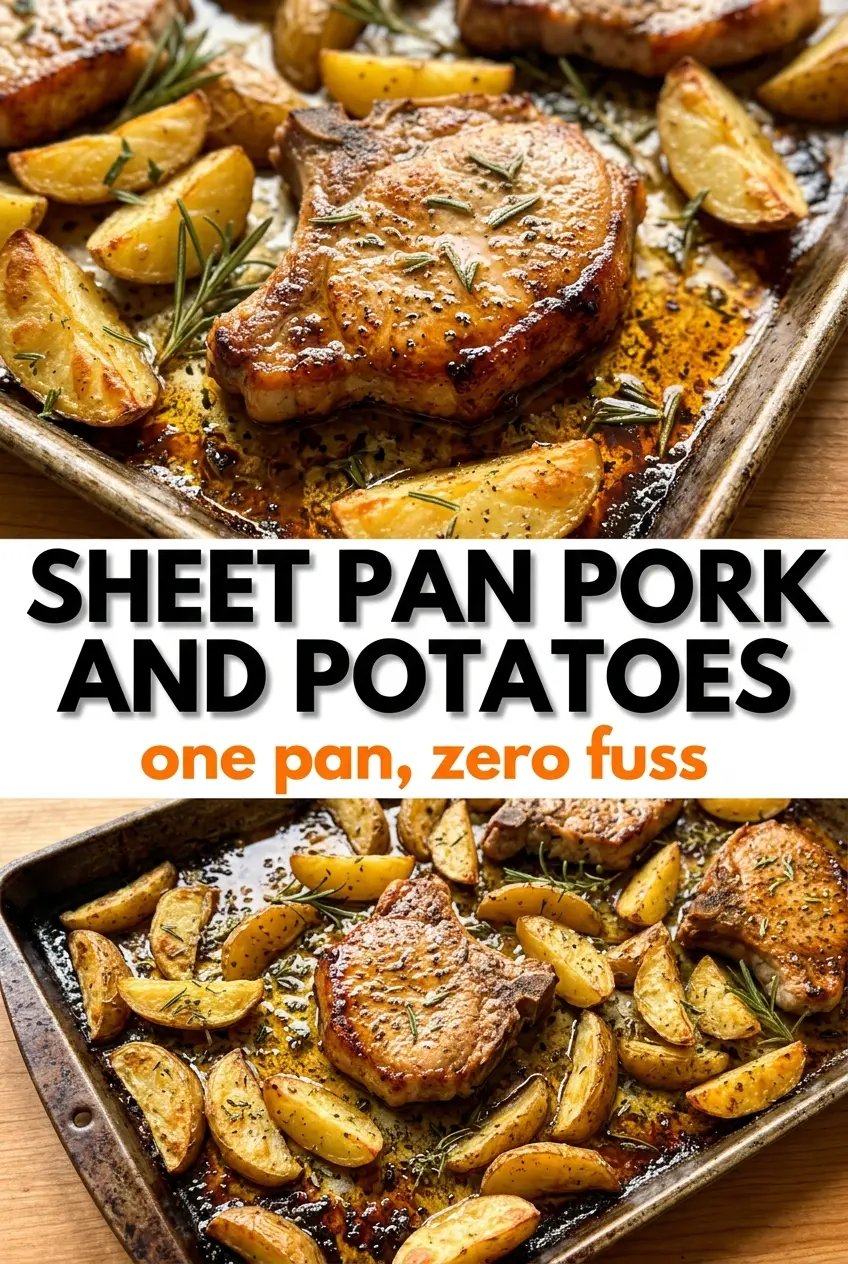
Sheet Pan Pork Chops and Potatoes
Ingredients
Equipment
Method
- Preheat oven to 400°F and line a large sheet pan with foil.
- Toss baby potatoes with 1.5 tablespoons olive oil, half the garlic, smoked paprika, salt, and black pepper, then spread on the pan and roast for 10 minutes.
- Season bone-in pork chops with remaining garlic, dried rosemary, dried thyme, salt, and black pepper.
- Brush the seasoned pork chops with the remaining olive oil.
- Push potatoes to the edges and place pork chops in the center of the sheet pan.
- Scatter green beans around the pan.
- Roast for 20 minutes, until the pork reaches 145°F and the potatoes are golden, then remove from the oven.
- Serve with lemon wedges.