Sticky honey-balsamic pork chops get their best texture when the glaze has time to caramelize on the hot sheet pan instead of steaming in a crowded skillet. The pork stays juicy, the Brussels sprouts turn crisp at the edges, and the cherry tomatoes collapse into little bursts of acidity that keep the whole pan from tasting heavy.
What makes this dinner work is the sequence. The vegetables start roasting first, so they have a head start on browning before the pork goes in. Then the glaze goes on just before the final roast, which gives it enough time to thicken and darken without burning. A quick broil at the end adds that deep mahogany finish people usually chase with a skillet sauce.
Below, I’ll walk through the one timing detail that matters most, plus a few easy swaps if you want to use what’s already in your fridge. There’s also a storage note for turning leftovers into a second dinner without drying out the pork.
The glaze thickened beautifully on the sheet pan and the pork stayed tender at 145. Even my picky kid ate the Brussels sprouts because the edges got caramelized and a little sweet.
Save these honey-balsamic pork chops for a sheet-pan dinner with caramelized glaze and roasted Brussels sprouts.
The Reason the Glaze Goes on Late, Not Early
The biggest mistake with honey-balsamic pork chops is putting the glaze on too soon. Honey burns faster than most people expect, and balsamic vinegar tightens up as it cooks. If the glaze coats the pork for the full roast time, it can go from glossy to bitter before the meat reaches temperature.
Starting the vegetables first gives the pan heat and a little moisture movement, then the pork goes in with the glaze for the final stretch. That timing lets the sauce reduce into a sticky coating instead of drying into a dark crust before the pork is done. The broil at the end is short on purpose; you want shine and color, not scorched sugar.
What Each Ingredient Is Actually Doing in This Sheet-Pan Dinner
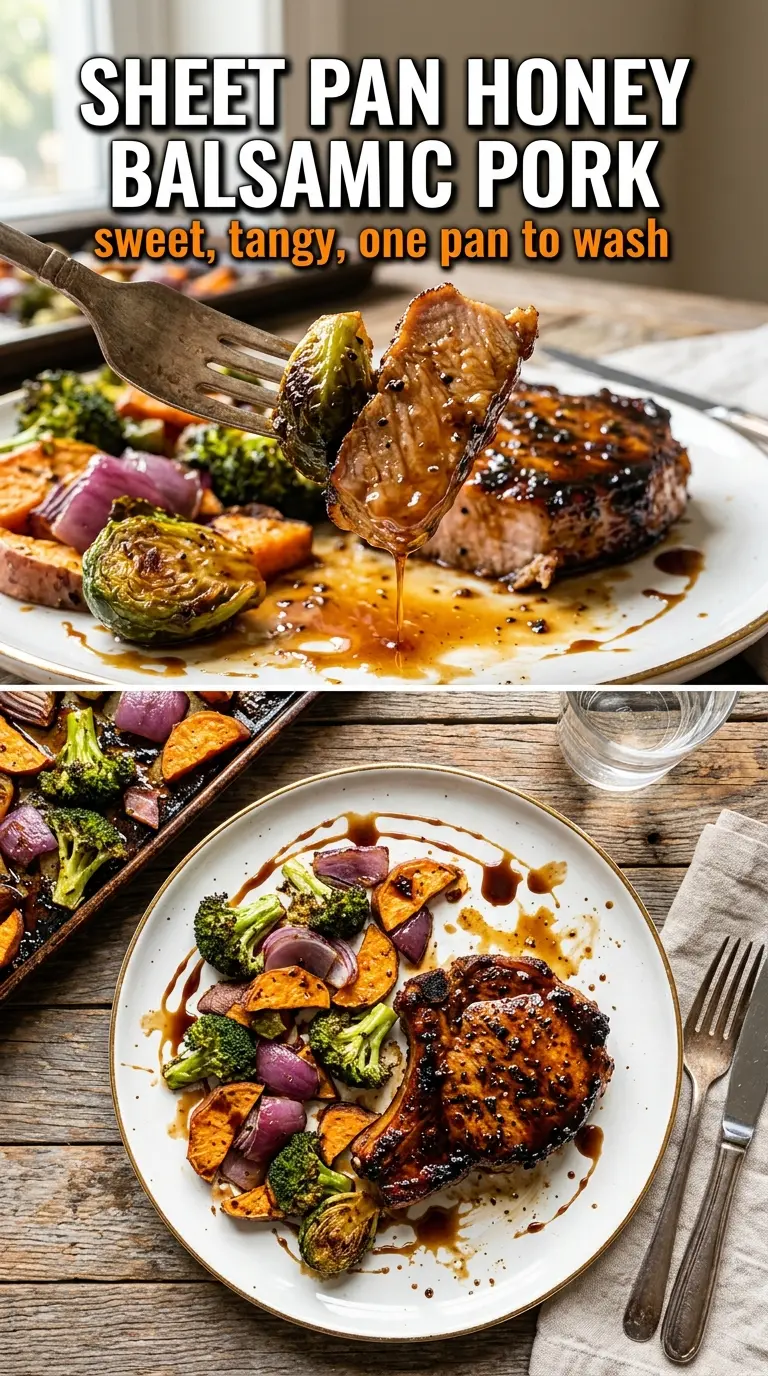
- Bone-in pork chops — Bone-in chops stay juicier than boneless here and handle the oven heat better. A 1-inch chop is the sweet spot: thick enough to stay tender, thin enough to cook in the same window as the vegetables.
- Balsamic vinegar — This brings the sharp backbone that keeps the glaze from tasting flat. Cheap balsamic works fine for cooking; save the fancy bottle for finishing if you want, but it isn’t necessary.
- Honey — Honey gives the glaze its shine and sticky finish. There isn’t a perfect substitute for the way it caramelizes, though maple syrup can step in if that’s what you have; the result will be a little less floral and a touch looser.
- Dijon mustard — Dijon helps the glaze emulsify so it clings instead of sliding off the pork. It also adds a quiet sharpness that keeps the sweetness in check.
- Brussels sprouts — Halving them gives you flat sides that brown instead of steam. If yours are especially large, quarter them so they cook at the same pace as the pork.
- Cherry tomatoes — These bring acidity and juice to the pan. As they burst, they loosen the glaze on the vegetables just enough to keep everything from tasting one-note.
The Sheet-Pan Timing That Keeps the Pork Juicy
Roast the Vegetables First
Spread the Brussels sprouts and tomatoes in a single layer and roast them before the pork goes in. That head start lets the sprouts brown instead of sitting in a puddle of pork juices, which is what happens when everything hits the pan at once. If the pan looks crowded, use two pans; overcrowding is the fastest way to lose caramelization.
Glaze the Pork Right Before It Goes Back Into the Oven
Season the chops, nestle them into the center, and brush on the glaze once the vegetables have started to color. The pork should look coated, not drowned. Too much glaze pooled under the chops can steam the bottom surface, so keep the extra in a thin layer over the meat and a light drizzle on the vegetables.
Watch for the Color, Then Trust the Thermometer
The glaze should turn dark and shiny in the last few minutes, while the pork reaches 145°F at the thickest part. Pull the pan when the center is just done and the edges still look juicy. If you wait for the glaze to look fully blackened, the sugar is already past the point you want.
Broil for the Final Finish
A brief broil deepens the color and gives the glaze that lacquered look. Stay close, because honey goes from glossy to burnt in a hurry under the broiler. One to two minutes is usually enough; as soon as you see the surface bubbling and darkening, pull it out.
Three Ways to Adjust This Dinner Without Losing the Good Parts
Use boneless pork chops
Boneless chops work, but they cook faster and dry out sooner, so start checking them a few minutes early. You’ll lose a little of the rich, juicy texture that bone-in chops give you, but the glaze still caramelizes nicely if the chops are thick.
Make it gluten-free
This recipe is naturally close to gluten-free already; just check your Dijon label, since a few brands use additives that aren’t always clear. The texture and roast time stay the same.
Swap the Brussels sprouts
Broccoli florets or green beans can take the Brussels sprouts’ place if that’s what you have. Broccoli browns a little faster, so add it with the pork instead of giving it the full 10-minute head start.
Trade honey for maple syrup
Maple syrup works if you want a deeper, woodsy sweetness. The glaze will be slightly thinner and less sticky than honey, so let it reduce a minute longer in the oven if you want the same cling.
Storage and Reheating
- Refrigerator: Store leftovers in an airtight container for up to 3 days. The glaze will thicken and the vegetables will soften, but the flavor holds up well.
- Freezer: The pork can be frozen, though the roasted vegetables won’t keep their best texture. Freeze the chops separately if you can, wrapped tightly and tucked into a freezer bag for up to 2 months.
- Reheating: Warm the pork covered at 325°F until heated through, or use a skillet over low heat with a splash of water to loosen the glaze. High heat dries out the chops fast, so don’t blast them in the microwave unless you’re okay with a tougher bite.
Questions I Get Asked About This Recipe
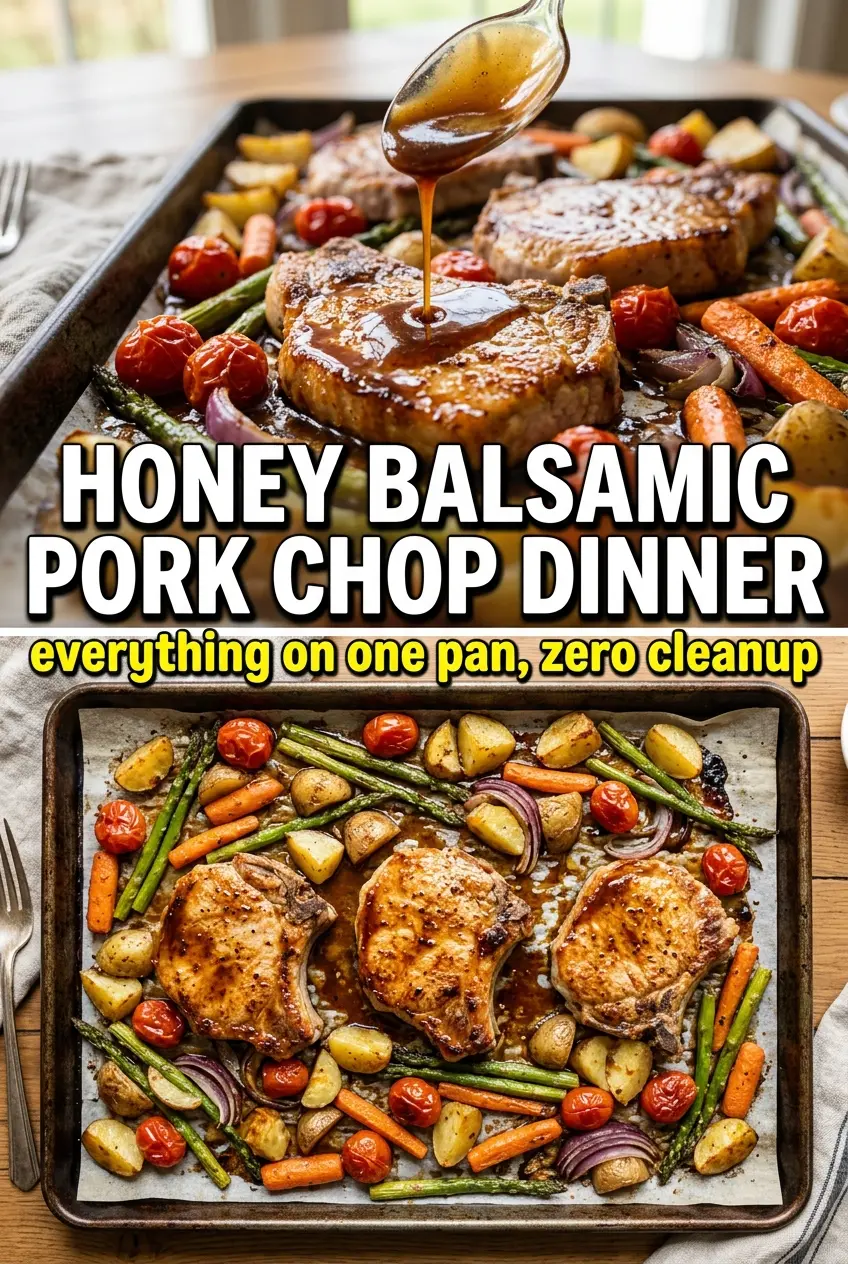
Sheet-Pan Honey-Balsamic Pork Chop Dinner
Ingredients
Equipment
Method
- Preheat the oven to 400°F so it’s hot enough to roast and caramelize the glaze quickly.
- Whisk balsamic vinegar, honey, Dijon mustard, minced garlic, and olive oil together until smooth.
- Toss Brussels sprouts and cherry tomatoes with olive oil, salt, and pepper, spread evenly on a large sheet pan, and roast for 10 minutes, until they start to blister at the edges.
- Season the pork chops with salt and pepper, push the vegetables to the edges of the sheet pan, and nestle the pork chops in the center.
- Brush the honey-balsamic glaze generously over the pork chops and drizzle any extra glaze over the vegetables so everything picks up caramel color.
- Roast for 18–22 minutes at 400°F until the pork reaches 145°F and the glaze looks caramelized, deep mahogany, and sticky.
- Broil for 2 minutes to add extra color to the glaze without drying out the pork.