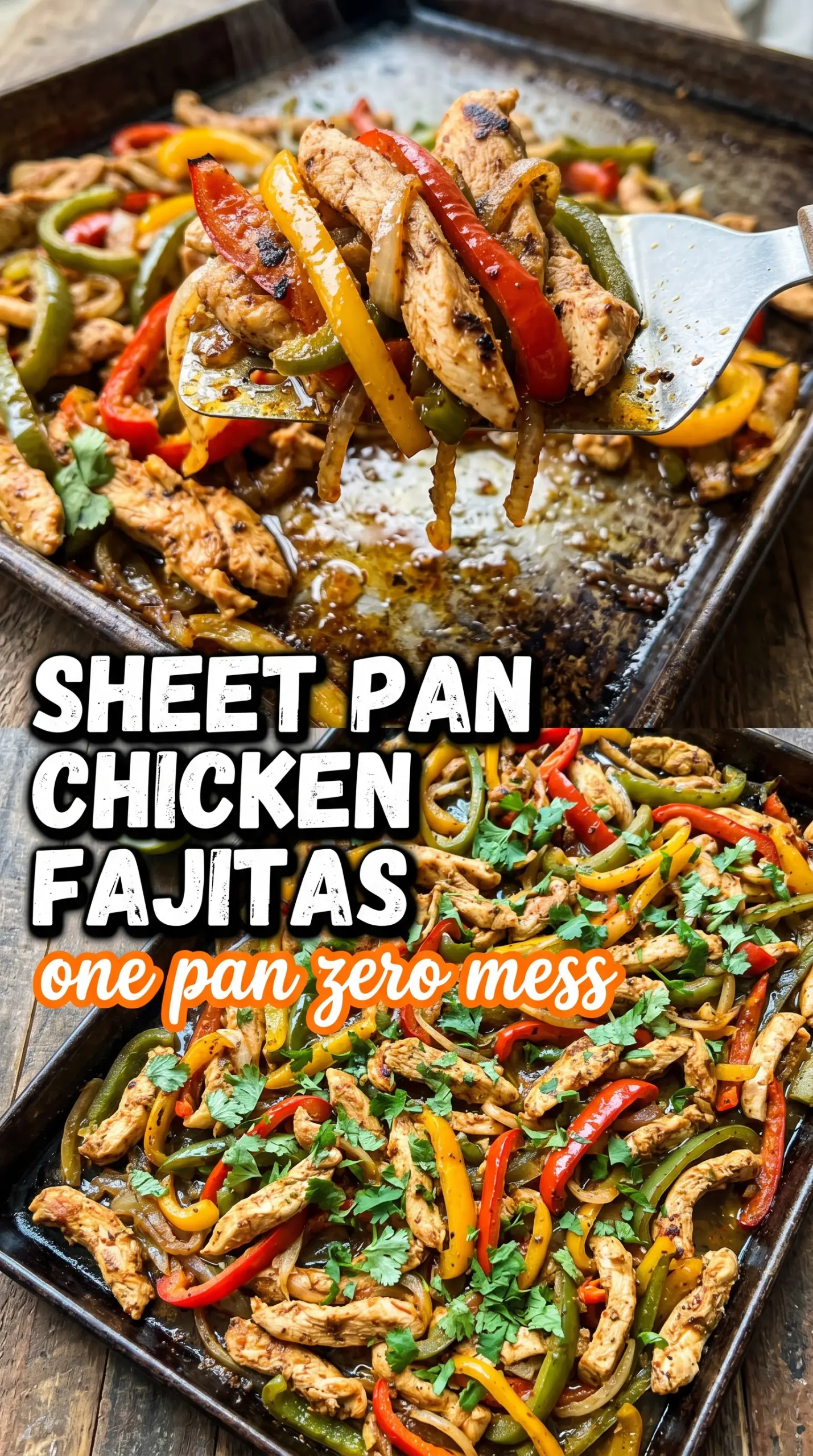
Sheet pan chicken fajitas hit the table with charred edges, juicy chicken, and peppers that still have a little bite, and that balance is what keeps this recipe in the regular dinner rotation. Everything roasts together in one pan, so the vegetables pick up the seasoned chicken drippings while the chicken stays tender instead of drying out in a skillet waiting its turn.
The trick is simple: slice the chicken and vegetables evenly so they roast at the same pace, then keep everything in a single layer. Crowding the pan is the fastest way to steam the peppers and dull the flavor, while a hot oven gives you those browned spots that make fajitas taste like fajitas. Lime juice goes in with the seasoning, but the real lift comes from the char you build in the oven.
Below, I’m sharing the small details that keep the chicken from overcooking, the vegetables from going limp, and the whole pan from tasting flat. There’s also a swap guide for the tortillas and toppings, plus the storage notes that make leftovers worth saving.
The chicken stayed juicy, the peppers charred at the edges, and everything was done in almost exactly 20 minutes. My husband kept piling the filling into tortillas until the pan was empty.
Love the charred chicken and peppers? Save these sheet pan chicken fajitas for a fast taco night with almost no cleanup.
The Pan Has to Stay Uncrowded for the Char to Happen
The biggest mistake with sheet pan fajitas is treating the pan like a bowl. If the chicken and vegetables pile up, they start releasing steam before they ever get a chance to brown, and you end up with soft onions and pale chicken instead of the kind of edges that taste smoky and bold. Spread everything out in one layer and use the largest pan you have.
Another detail that matters here is the cut size. Chicken strips that are too thick will still be raw in the middle when the peppers are already soft, and thin vegetables will overcook before the chicken is done. Even slices give you the best shot at that sweet spot where the chicken is cooked through and the peppers still have some structure left.
What Each Ingredient Is Actually Doing in These Fajitas
- Chicken breasts — Lean chicken breasts work well because they cook fast at high heat. Slice them into even strips so they finish with the vegetables instead of drying out while the pan waits on one thick piece.
- Bell peppers and onion — These are the backbone of the fajita texture. Red, yellow, and green peppers each bring a slightly different sweetness, and the onion softens into the pan juices while still holding some bite.
- Olive oil — This helps the spices cling and gives the vegetables enough fat to blister instead of sticking. A lighter oil works too, but don’t skip the oil or the seasoning will sit on the surface instead of coating everything evenly.
- Lime juice — The acid wakes up the spices and keeps the chicken tasting bright. Fresh lime is worth using here because bottled juice can taste dull once it roasts.
- Cumin, chili powder, paprika, and oregano — This is the fajita flavor base. Cumin and chili powder do the heavy lifting, paprika helps the color, and oregano adds the earthy note that keeps the seasoning from tasting one-dimensional.
- Flour or corn tortillas — Use flour for a softer, more flexible wrap, or corn if you want a more traditional gluten-free option with a little more chew. Warm them before serving or they’ll tear under the filling.
Roasting Everything So the Chicken Finishes With the Vegetables
Coating the Pan Evenly
Toss the chicken, peppers, and onion with the oil, lime juice, garlic, and spices until every piece looks lightly coated. If the seasoning pools in the bottom of the bowl, the pan will roast unevenly and some bites will taste stronger than others. The mixture should look glossy, not wet.
Using the Heat to Build Color
Spread the mixture on a large sheet pan and get it into a hot 425°F oven right away. That temperature is high enough to char the peppers at the edges while the chicken cooks through in about the same window. If your oven runs cool, give the pan a few extra minutes, but don’t keep roasting just to chase more browning or the chicken will start to dry out.
Knowing When It’s Done
The chicken should be opaque all the way through, and the vegetables should be tender with browned spots on the edges. If the peppers look limp and watery, they spent too long crowded in the pan or the oven wasn’t hot enough. Pull the pan as soon as the chicken is cooked through, because carryover heat will finish the last little bit while the fajitas rest on the counter.
How to Adapt These Fajitas for Different Tortillas, Toppings, and Leftovers
Gluten-Free Corn Tortillas
Corn tortillas work well here and keep the meal naturally gluten-free. Warm them in a dry skillet or directly over a burner for a few seconds per side so they become pliable; cold corn tortillas crack the second you fold them.
Dairy-Free Serving Style
Skip the sour cream and lean on salsa, cilantro, and extra lime for brightness. You won’t miss the dairy if the vegetables are properly charred, because the roasted edges give the filling enough richness on their own.
How to Use Thighs Instead of Breasts
Boneless skinless chicken thighs stay juicier and bring a little more richness, but they may need a couple extra minutes in the oven. Cut them to the same size as the vegetables so they don’t lag behind and overcook the peppers while they catch up.
Storage and Reheating
- Refrigerator: Store the chicken and vegetables in an airtight container for up to 4 days. The peppers soften a little after chilling, but the flavor holds up well.
- Freezer: The cooked filling freezes for up to 2 months, though the peppers will be softer after thawing. Freeze it flat in a bag or in a shallow container so it chills and thaws evenly.
- Reheating: Reheat in a skillet over medium heat or in a 350°F oven until hot. The common mistake is microwaving it too long, which makes the chicken rubbery and the vegetables watery before the center is warm.
Answers to the Questions Worth Asking
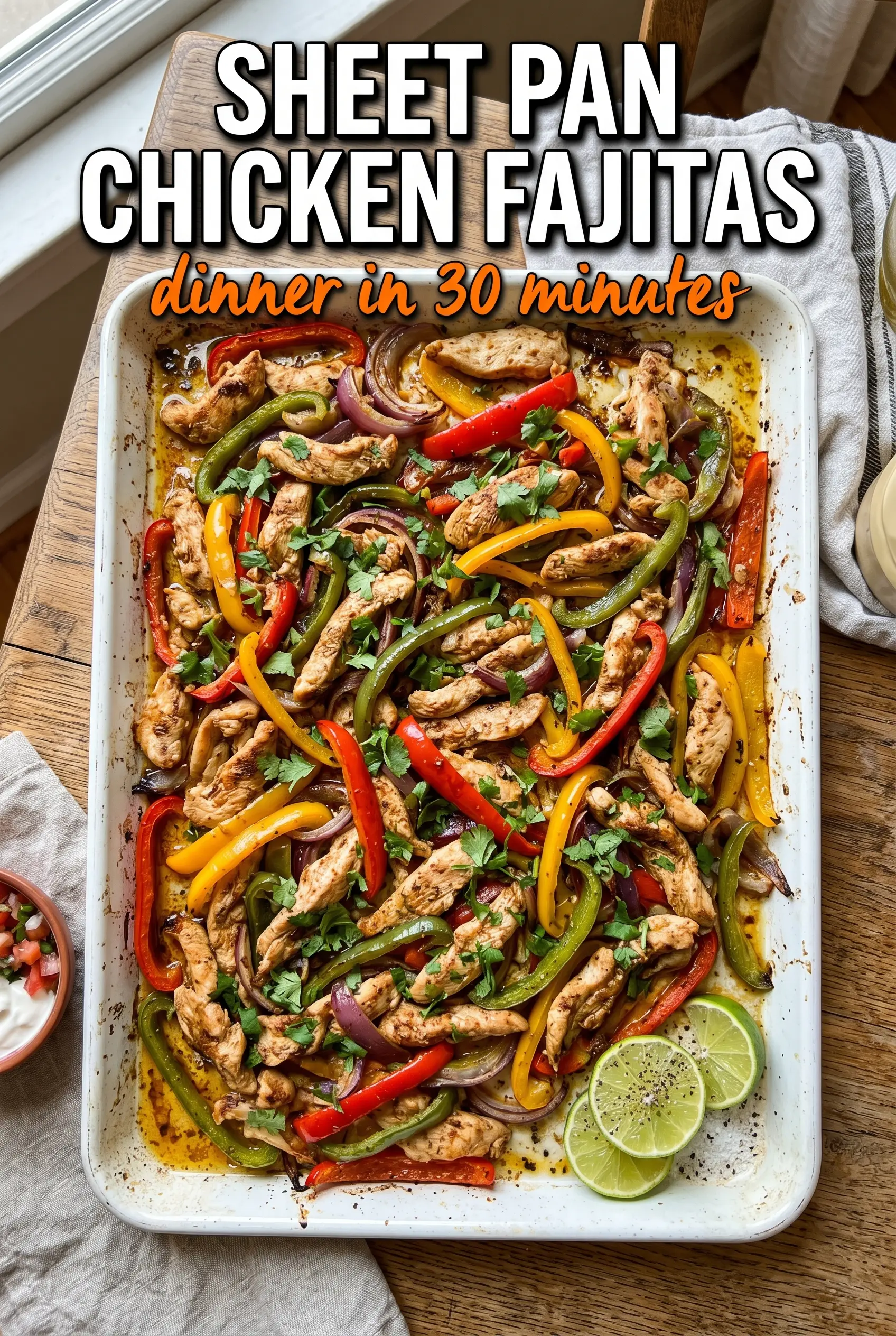
Sheet Pan Chicken Fajitas
Ingredients
Equipment
Method
- Preheat the oven to 425°F. This high heat helps the chicken cook through quickly and gives the vegetables slight charred edges.
- Toss the chicken, bell peppers, and onion with olive oil, minced garlic, lime juice, cumin, chili powder, paprika, oregano, salt, and pepper. Make sure everything is evenly coated for bold flavor.
- Spread the mixture in a single layer on a large sheet pan. Single-layer roasting promotes even browning instead of steaming.
- Roast for 18-22 minutes at 425°F, until the chicken is cooked through and the vegetables are tender with slightly charred edges. Give the pan a quick visual check at 18 minutes and continue if needed.
- Warm the tortillas until soft and pliable. Keep them warm so they roll without cracking.
- Fill the tortillas with the chicken and vegetable mixture. Distribute the charred peppers and onions for vibrant color in every fajita.
- Top with sour cream, salsa, cilantro, and lime. Serve immediately while the chicken is hot.