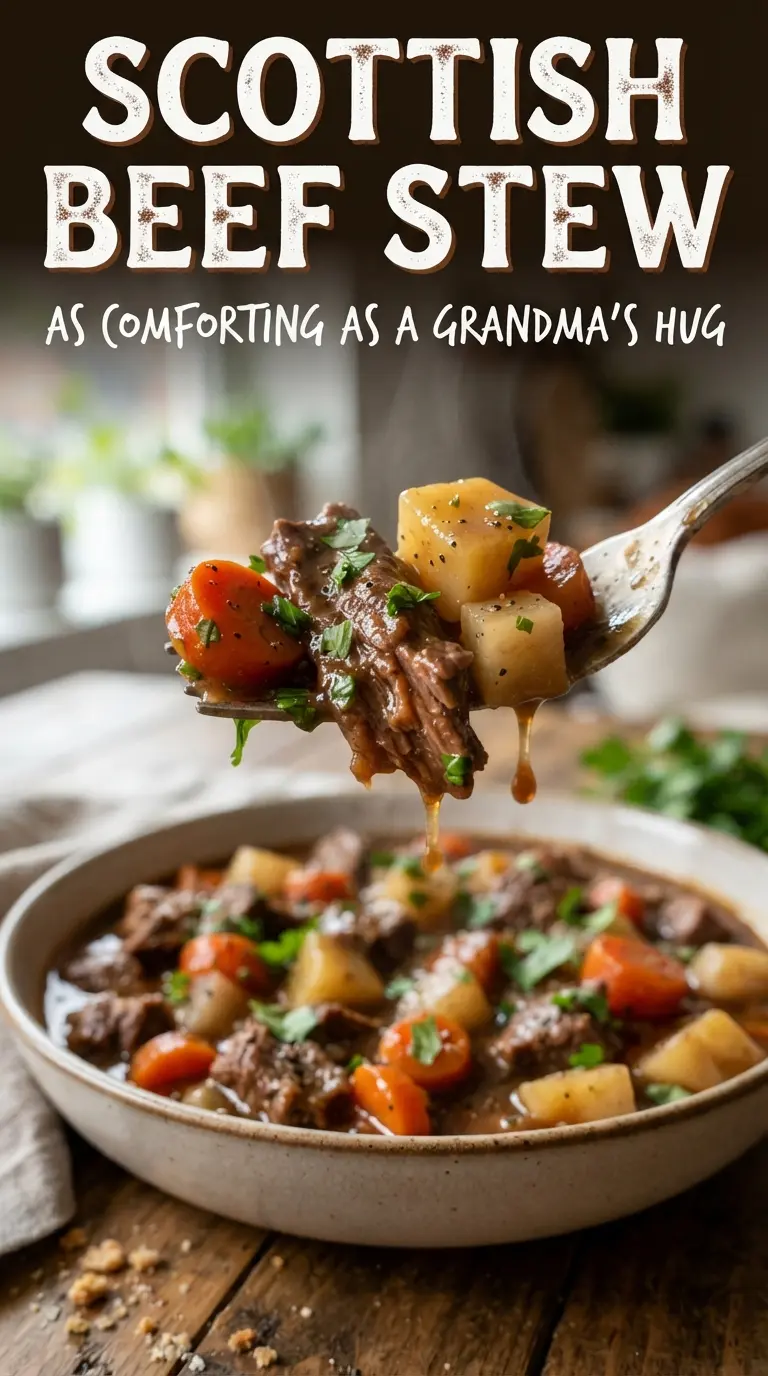
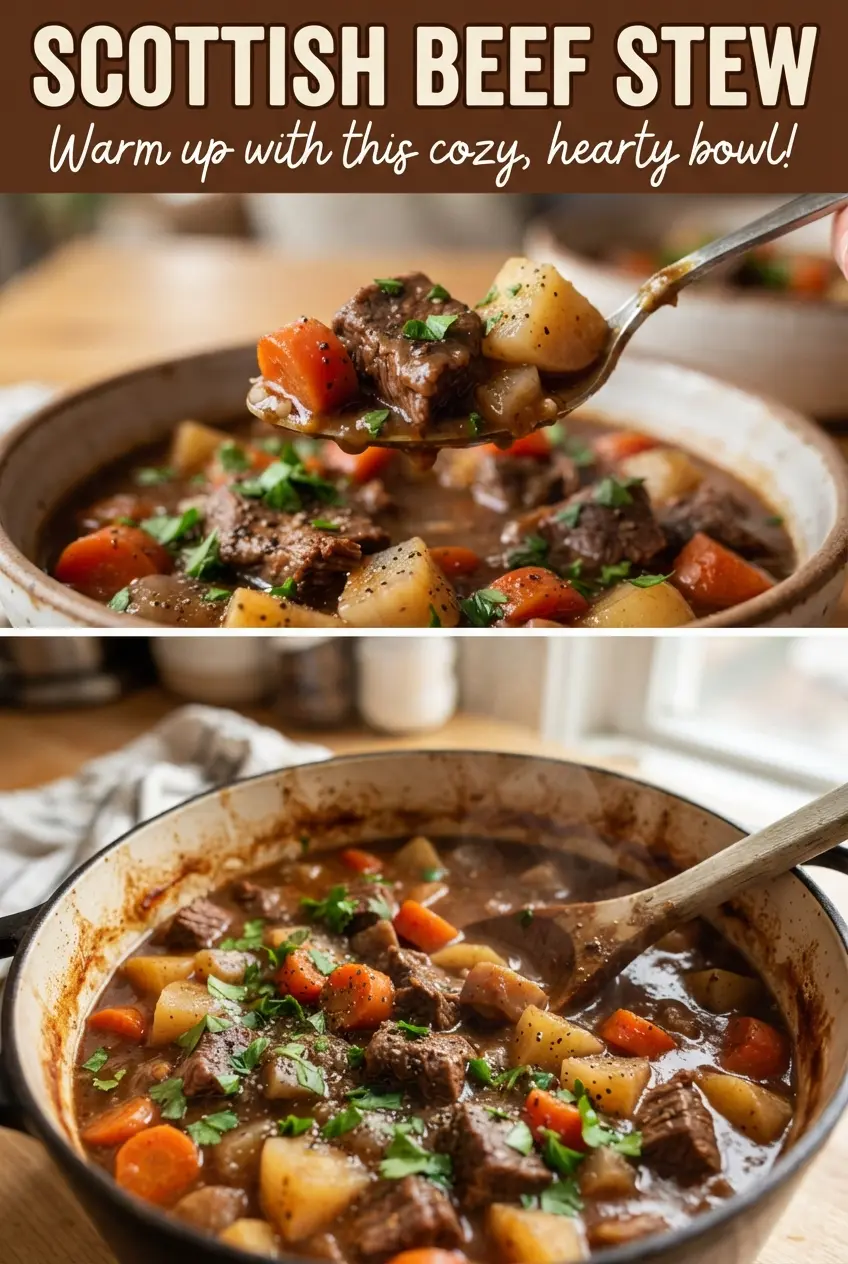
Deep, beefy gravy, tender chuck, and barley that swells into the broth give Scottish beef stew its old-fashioned comfort without turning it heavy. The pot ends up full of layered flavor: sweet onions, soft leeks, earthy turnip, and carrots that hold their shape just enough to keep every spoonful interesting.
The trick here is building the stew in stages. Browning the beef in batches gives you the base flavor, and a splash of ale loosens the browned bits from the pan before the broth goes in. Pearl barley gets added later so it stays intact instead of collapsing into mush, and the turnip comes in with it so it softens without disappearing.
Below, I’ve included the part that matters most: how to keep the gravy rich instead of cloudy, plus a few swaps that still keep the stew sturdy and satisfying.
The barley stayed chewy, the beef went fork-tender, and the gravy thickened up exactly the way a stew should. I made it on Sunday and the flavor was even better the next day.
Love this Scottish beef stew with barley and turnip? Save it for the kind of night that calls for a thick, slow-simmered bowl and oatcakes on the side.
The Browning Stage Is Where the Flavor Starts, Not the Broth
The most common mistake in a stew like this is crowding the pan and steaming the beef instead of browning it. You want a dark crust on the outside of the cubes before they go into the pot, because that crust is what gives the broth its deep, meaty backbone. If the meat looks pale and wet, keep cooking in smaller batches.
Flouring the beef helps the juices cling to the meat and gives the stew a little body as it simmers, but the flour only works if the pieces still get proper contact with the hot pan. Don’t dump all the beef in at once. You’re looking for a steady sizzle and browned bits stuck to the bottom, not a gray pile sitting in its own steam.
What Each Ingredient Is Actually Doing in This Recipe
- Primary ingredient (the star) — Quality matters most. Choose the best you can find.
- Cooking medium (oil, butter, or broth) — This carries flavors and prevents dryness.
- Seasonings (salt, pepper, spices, herbs) — Layer flavors so nothing overpowers. Build depth gradually.
- Aromatics (garlic, onion, herbs) — Cook with fat to bloom flavors. Become the foundation.
- Supporting ingredients — Complement the main ingredient without overpowering it.
- Sauce or liquid (if applicable) — Brings flavors together. Balance richness with acid.
- Acid (lemon, vinegar, wine, or other) — Brightens and prevents flat-tasting results.
- Final finish (garnish, glaze, or sauce) — Prevents one-dimensional taste and adds visual appeal.
What the Ale, Barley, and Turnip Each Do in the Pot
- Scottish ale — This adds a malty depth that plain broth can’t match. If you don’t have it, use more beef broth with a teaspoon of brown sugar or a splash of vinegar for balance, but the stew will lose a little of that rounded, pub-style flavor.
- Pearl barley — It thickens the stew naturally and gives each bowl a hearty chew. Rinse it before adding it, and don’t put it in too early or it will soak up too much liquid and go soft before the beef is done.
- Turnip or swede — This keeps the stew grounded and earthy. Swede is a little sweeter and softer than a sharp white turnip, so use either one based on what you can find; just cube it evenly so it cooks at the same rate as the carrots.
- Beef chuck — Chuck is the cut that rewards long, slow cooking. Leaner beef turns dry before the stew is tender, but chuck breaks down into rich, spoonable pieces without falling apart completely.
How to Build the Pot So the Broth Turns Thick and Deep
Searing the Beef in Batches
Season the beef, toss it in flour, then brown it in butter and oil a few pieces at a time. The butter brings flavor and the oil keeps the butter from scorching, which matters once the flour hits the pan. Pull the beef when it has a deep brown crust; if you rush this part, the stew tastes flat no matter how long it simmers.
Softening the Onions and Leeks
Cook the onions and leeks in the same pot until they turn soft and a little glossy, scraping up the browned bits as they release their moisture. Leeks need time to lose their raw edge, so don’t stop while they still look tight and pale. If the pan looks dry, add a splash of broth, but keep the heat low enough that the vegetables sweat instead of fry.
Deglazing and Starting the Simmer
Pour in the ale and stir hard to lift every browned bit from the bottom. That is where a lot of the flavor lives, and once the liquid goes in, those bits dissolve into the broth instead of burning. Add the broth, Worcestershire, thyme, and beef, then cover and let the pot settle into a low simmer; a hard boil will tighten the meat and make the broth cloudy.
Adding the Barley and Root Vegetables
After the beef has had time to get tender, stir in the barley, turnip, and carrots. Barley needs this later start or it turns pasty, and the vegetables hold their shape better when they aren’t simmering for the full two and a half hours. Keep the heat gentle and cook until the barley is plump and the beef gives way easily when pressed with a spoon.
Ways to Adapt This Without Losing the Character of the Stew
Make It Without Ale
Use an extra cup of beef broth in place of the ale and add 1 teaspoon of red wine vinegar or apple cider vinegar at the end. You’ll lose the malty edge, but the acidity keeps the stew from tasting one-note.
Gluten-Free Version
Swap the all-purpose flour for a gluten-free flour blend that browns well, or dust the beef lightly with cornstarch instead. The stew will still thicken from the barley, though the gravy may look a little lighter and less velvety.
Skip the Barley for a Lower-Carb Pot
Leave out the barley and add a little more turnip or extra carrots so the stew still feels substantial. The broth stays brothy instead of thickening naturally, so simmer uncovered for the last 15 minutes if you want it a touch richer.
Storage and Reheating
- Refrigerator: Keeps for 4 days. The barley will continue to soak up broth, so expect the stew to thicken overnight.
- Freezer: Freezes well for up to 3 months, though the barley softens a bit after thawing. Cool it completely before freezing in airtight containers.
- Reheating: Warm it slowly on the stove over low heat with a splash of broth. Microwaving over high heat can make the beef tough and the broth separate at the edges.
Answers to the Questions Worth Asking
Scottish Beef Stew
Ingredients
Equipment
Method
- Season the beef chuck cubes with salt and black pepper. Toss the seasoned beef with all-purpose flour until lightly coated.
- Heat the butter and vegetable oil in a Dutch oven over medium-high heat. Brown the beef in batches so it steams less, about 3-4 minutes per batch, until well browned, then transfer to a plate.
- Reduce heat to medium and add the onions and leeks to the Dutch oven. Cook for 6 minutes until soft, stirring as needed.
- Pour in the Scottish ale (or extra beef broth) and scrape the bottom of the pot to release browned bits. Bring to a simmer, then add beef broth, Worcestershire sauce, and dried thyme.
- Return the browned beef to the pot. Cover and simmer at a gentle bubble for 1 1/2 hours, stirring occasionally so it thickens evenly.
- Add the rinsed pearl barley, cubed turnip (or swede), and sliced carrots to the Dutch oven. Keep the stew at a simmer (covered if needed to maintain heat) for 45-60 minutes, stirring now and then, until the barley and beef are tender.
- Taste and adjust seasoning with more salt and black pepper if needed. Turn off the heat and top with chopped fresh parsley before serving.